The AI Tipping Point: What This Means for the Future of AI and How It Will Be Used
Something has quietly changed in the world of artificial intelligence. The conversation is no longer about whether AI can do something impressive in a demo. It is about whether AI can do real work, reliably, inside real organizations, without breaking things. That shift sounds small. It is not. It changes what gets built, who gets hired, and how companies decide where to spend their technology budgets.
This article breaks down what is happening, why it matters, and what smart leaders should do next. The short version: AI is moving from a tool you visit to a coworker that acts on your behalf, and the rules for using it are still being written.
From Chat Windows to Real Workflows
The first wave of modern AI was conversational. You typed a prompt, you got an answer, and you copied that answer into whatever system you actually used. It was useful, but it was also a detour. The human stayed in the middle of every step.
The current wave removes that detour. AI is being wired directly into the tools people already use, email, spreadsheets, customer support systems, code editors, design software, and internal databases. Instead of asking an assistant for a paragraph and pasting it in, the assistant drafts it in place, or sends it, or files it, or flags it for review.
That is a bigger change than it looks. When AI sits inside a workflow, the value comes from the workflow, not the model. A company that copies a generic chatbot into a broken process gets a faster broken process. A company that redesigns the process around what AI does well gets a real gain. Most of the gap between AI leaders and AI laggards will come from this distinction, not from which model they picked.
The Rise of Agentic AI Systems
The most talked-about development in the field is the move toward agentic AI, systems that can take a goal, break it into steps, use tools, check their own work, and keep going without a human clicking "next" on every move.
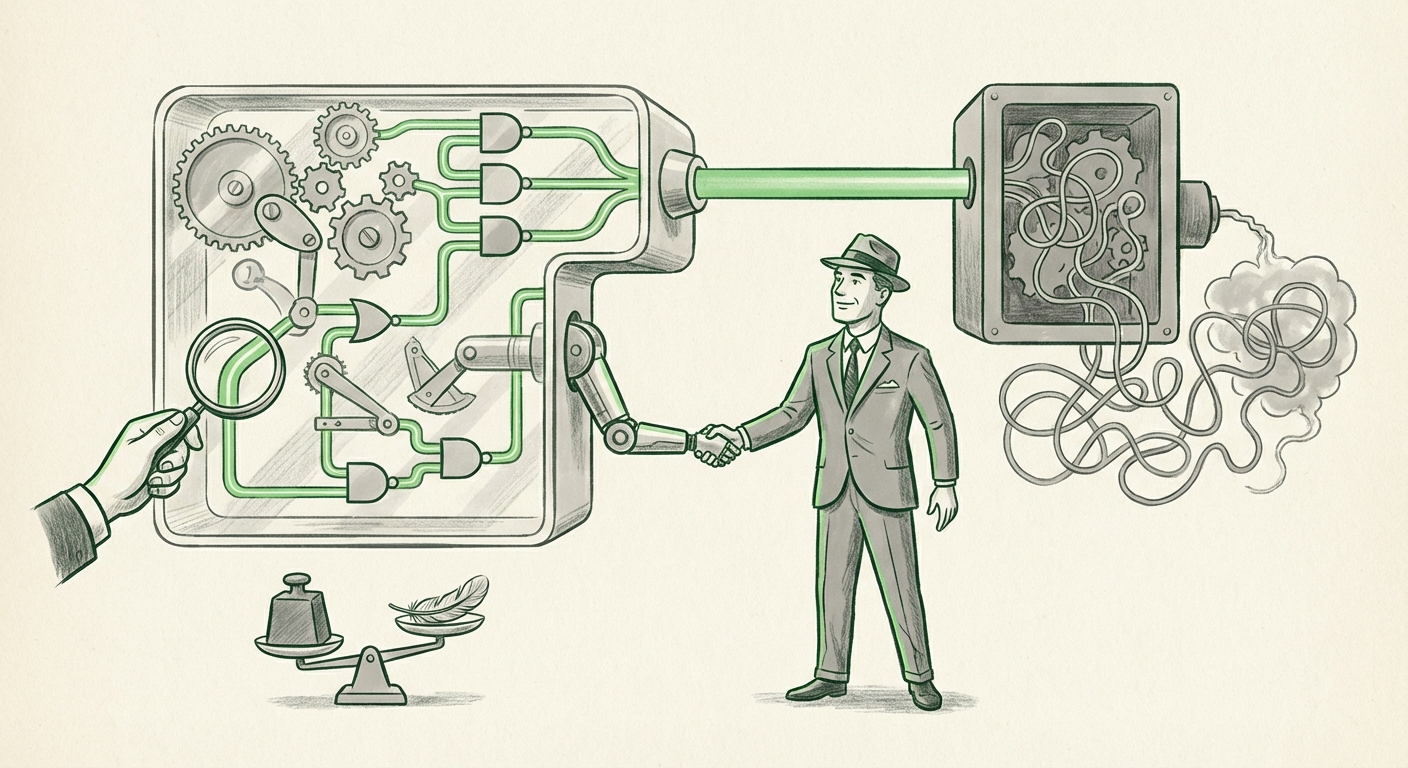
This is powerful and also risky. An agent that can send emails, move money, or change records is an agent that can make mistakes at machine speed. The organizations getting this right are not the ones with the most autonomous systems. They are the ones with the tightest guardrails.
What good guardrails look like
- Scoped permissions. An agent should be able to touch only what its job requires. Read access is not the same as write access.
- Reversibility. Prefer actions that can be undone. Drafts before sends. Staged changes before live changes.
- Checkpoints. High-stakes steps should pause for a human. Low-stakes steps should not, or the savings disappear.
- Full logging. If you cannot replay what the agent did and why, you cannot fix it when it goes wrong.
Think of it as hiring. You would not give a brand-new employee the keys to the bank account on day one. You would give them small tasks, watch the results, and expand their authority as trust builds. AI agents deserve the same onboarding.
Smaller, Cheaper, More Specialized Models
Another major trend is that bigger is no longer automatically better. A great deal of useful work can now be handled by smaller, faster, cheaper models that run closer to the user, on a laptop, a phone, or a company's own servers.
Why does this matter? Three reasons.
- Cost. Running every task through the largest available model is expensive. Matching model size to task size is one of the fastest ways to make AI budgets sustainable.
- Speed and privacy. Work that happens on-device does not need a round trip to a distant data center. Sensitive data can stay put.
- Reliability. A small model trained for one job, sorting support tickets, reading invoices, tagging images, is often more predictable than a giant general model asked to improvise.
The practical takeaway for business leaders is simple: stop treating "which model" as the main decision. The main decisions are what task you are automating, how you will measure success, and what happens when the system is wrong. Model choice follows from those answers.
Multimodal Is Becoming the Default
Text-only AI already feels dated. Modern systems read documents, understand images, listen to audio, and in some cases watch video. That matters because most real business information is not clean text in a neat box. It is a scanned invoice, a photo of a damaged part, a recorded call, a messy slide deck, a handwritten note.
This is quietly unlocking whole categories of work that were previously off-limits to automation, quality inspection, claims processing, accessibility tools, and document-heavy back-office jobs. The bottleneck is no longer "can the AI read this?" It is "is the data organized well enough to feed it?"
The Governance Gap Is the Real Story
Here is the uncomfortable part. Capability is moving faster than the rules for using it. Many organizations now have AI tools in use that no one centrally approved. Employees are pasting contracts, customer records, and strategy documents into whatever assistant they find most convenient. That is a real risk, and it is not solved by banning tools, bans simply push usage into the shadows.
The better path is to make the safe option the easy option. Give people approved tools that work well. Publish clear rules for what data can and cannot go where. Label AI-generated content. Keep a human accountable for every consequential decision. And build a habit of asking, before any deployment: who is responsible if this is wrong?
Regulators are moving too, though at different speeds in different places. Whatever the specific rules turn out to be, the direction is consistent: more documentation, more transparency, more proof that systems were tested before release. Companies that build those habits early will spend far less time scrambling later.
What This Means for Businesses
For most organizations, the question is no longer "should we use AI?" It is "where do we start, and how do we know it is working?" A few practical principles stand out.
Start with the workflow, not the model
Pick one process that is high-volume, low-risk, and clearly measured. Customer ticket triage. First-draft responses. Meeting summaries. Invoice extraction. Run it for a quarter. Measure time saved, error rates, and employee satisfaction. Then expand. Programs that start broad tend to stall; programs that start narrow tend to compound.
Fix your data before you scale
AI systems are only as good as what they can reach. If your documents live in five systems and none of them agree with each other, no model will save you. Data cleanup is unglamorous and it is the single highest-return investment most companies can make right now.
Design for the human in the loop
The goal is not to remove people. It is to move people up the value chain, from producing first drafts to reviewing, deciding, and taking responsibility. That requires training, not just tooling. Budget for the training or the tools will sit unused.
Measure honestly
Be careful with pilot programs that report impressive numbers but never reach production. Track the boring metrics: adoption rate, time per task, rework rate, cost per transaction, and how often the output gets edited or thrown away. Those numbers tell you whether the system is genuinely useful or just impressive in a slide.
What This Means for Society
The workforce story is less about mass replacement and more about task reshuffling. Specific activities, summarizing, drafting, sorting, translating, checking, are being automated quickly. Whole jobs are being reorganized more slowly. The people who thrive will be those who learn to direct AI systems rather than compete with them on speed.
There is also a genuine risk of a widening gap. Organizations with money, data, and technical talent can compound advantages quickly. Smaller players and public institutions can fall behind. Open-weight models and falling costs help, but they do not close the skills gap on their own. Training, accessible tools, and shared standards matter as much as the technology itself.
And there is the trust question. As AI-generated text, images, audio, and video get harder to tell apart from human work, the value of verification goes up. Expect provenance labeling, content authentication, and audit trails to become ordinary parts of digital life rather than niche technical features.
Actionable Insights: A Short Checklist
- Audit what is already in use. You almost certainly have more AI in your organization than your official inventory says.
- Pick one measurable workflow and run a focused, time-boxed pilot with clear success criteria.
- Set data rules that are simple enough for people to actually follow.
- Match model size to task, do not pay for a sledgehammer to crack a nut.
- Build logging and rollback before you grant an agent permission to act.
- Assign a named human owner to every AI system that affects customers, money, or safety.
- Invest in people, not just platforms. Adoption is a training problem as much as a technology problem.
- Review quarterly. The tools will change. Your standards should not.
The Road Ahead
The most important thing to understand about this moment is that the technology is no longer the hard part. Models are widely available, costs are falling, and capability keeps improving. What separates success from failure now is judgment, knowing which problems are worth solving, which tasks need a human, and which risks are acceptable.
That is good news for thoughtful organizations and bad news for those hoping to buy their way to an AI strategy. The winners will not be the ones with the most agents running. They will be the ones whose agents run in the right places, under the right rules, with people who know how to check the work.
The tipping point is here. The question is no longer whether AI will be used. It is how well it will be used, and by whom.