App Store Awards 2024: What Apple's Picks Reveal About the Future of AI in Apps
Every December, Apple names the apps and games it considers the best of the year. The 2024 App Store Award winners were announced on December 11, 2024. On the surface, it is a celebration of design, craft, and clever software. But look a little closer, and the list tells a bigger story, one about how artificial intelligence has quietly moved from a marketing gimmick into the very fabric of what makes an app feel great.
This is not a story about one flashy chatbot. It is a story about how AI has become the invisible engine inside the tools people use every day. And for anyone building, buying, or investing in software, the App Store Awards are one of the clearest signals we get all year about where things are heading.
Why an App Store Award Is More Than a Trophy
Apple does not hand out these awards by counting downloads. The company's editorial team picks winners based on design quality, usefulness, and cultural impact. That makes the awards a curated snapshot of what Apple thinks great software should be.
Because Apple controls both the hardware and the store, its picks also hint at where the company wants developers to go next. When Apple highlights apps that lean on a new capability, it is effectively sending a message: this is the direction. Developers pay attention. Investors pay attention. And so should anyone who wants to understand the next wave of computing.
The 2024 awards arrived at a moment when AI stopped being a side feature and started becoming the main event across the entire app economy.
The Quiet AI Story Behind This Year's Honors
A few years ago, AI in consumer apps meant one of two things: a novelty filter that turned your photo into a cartoon, or an assistant that mostly misunderstood you. The bar was low.
That bar has moved dramatically. In 2024, the apps that stood out were the ones where AI did the hard, boring, invisible work, cleaning up a photo in one tap, pulling the important line out of a long document, translating a conversation in real time, or turning a messy voice memo into a tidy set of tasks.
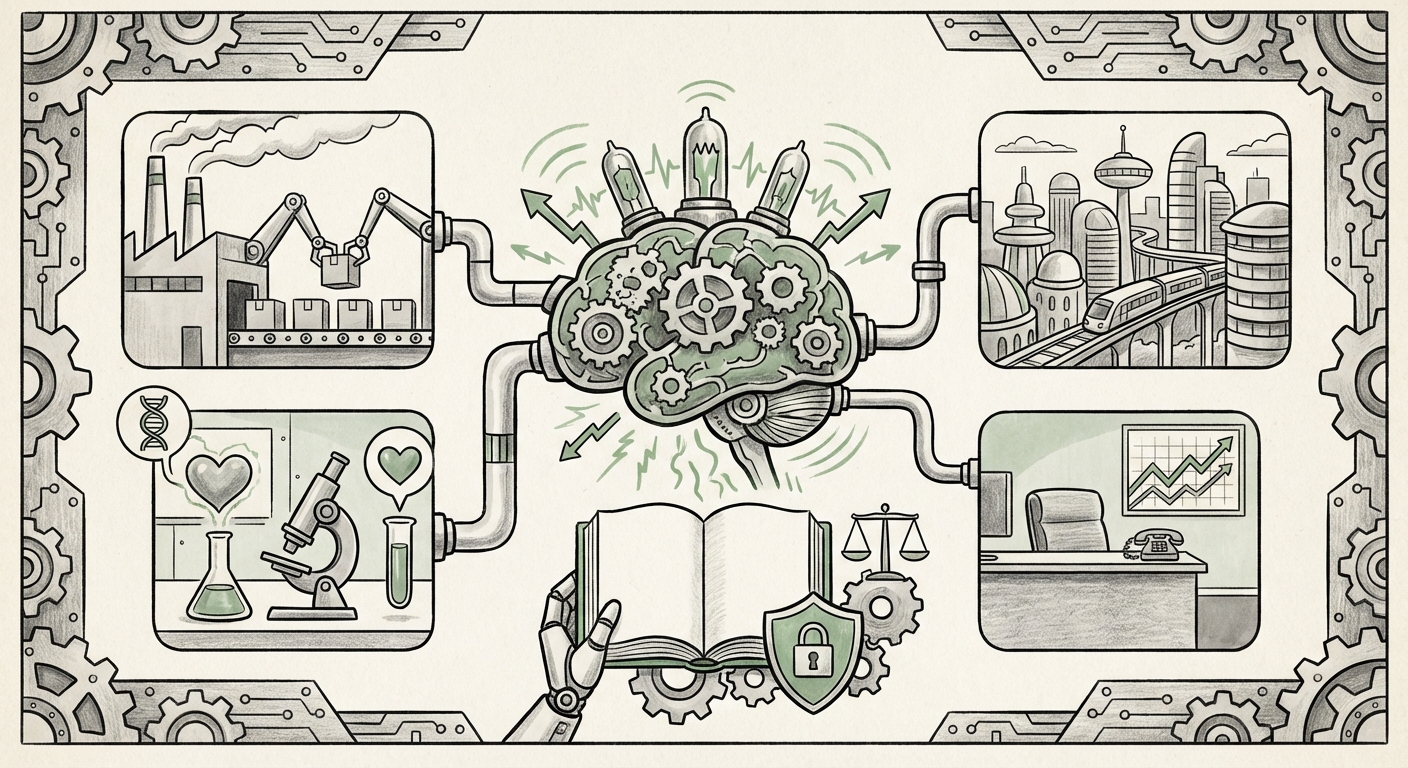
The pattern is consistent across categories. AI is no longer the headline feature. It is the plumbing. And that shift matters far more than any single product launch, because plumbing is what everything else gets built on top of.
Three signals worth watching
- AI is being tucked inside workflows, not bolted on top. The best apps do not ask users to "open the AI." They just make the task faster and better.
- Craft still wins. Apple's editors reward polish, accessibility, and thoughtful design. A clever model with a clumsy interface still loses.
- Small teams can compete again. Because AI capabilities can be rented or run on-device, a handful of developers can now ship features that once required a large engineering department.
From Novelty to Necessity: AI as Table Stakes
Here is the uncomfortable truth for anyone building software today: AI features are becoming expected, not impressive. Users no longer marvel at automatic photo clean-up or smart summaries. They simply notice when those features are missing.
That is what "table stakes" means. It is the price of entry. The App Store Awards reinforce this by rewarding apps where intelligence is woven into the experience rather than stapled to the side.
For product teams, the lesson is blunt. If your app involves text, images, audio, video, or data of any kind, users will soon assume some level of automation. The question is not whether to add AI. The question is where it removes the most friction for the least confusion.
On-Device AI and the Privacy Bargain
One of the most important shifts visible in the app landscape this year is the move toward running AI models directly on the phone, tablet, or computer rather than sending everything to a server farm.
Why does this matter? Three reasons.
- Speed. On-device processing means instant results, even without a connection.
- Privacy. Personal data, photos, messages, health notes, never has to leave the device.
- Cost. Developers do not pay cloud fees for every single request, which changes the economics of a free app.
Apple has been pushing hard in this direction, and its editorial awards are one way it nudges developers to follow. The message is clear: the future of AI is not only in giant data centers. Much of it will live right in your pocket.
For consumers, this is a genuinely good deal. It means smarter features without handing your life story to a remote server. For developers, it means new design constraints, smaller models, tighter memory budgets, and a lot more testing.
What This Means for Small Developers and Creators
The most exciting part of the AI shift is that it has lowered the barrier to entry in a way we have not seen since the early days of the app store itself.
A solo developer can now build a photo editor with pro-level retouching, a journaling app that reflects back insights, a language tutor that adapts to the learner, or a music tool that generates backing tracks. Five years ago, each of those required a specialized team and a research budget.
But there is a catch. When everyone can add AI, nobody wins by adding AI alone. Differentiation moves back to the things that were always hard: taste, trust, and a deep understanding of a specific user's problem.
The App Store Awards celebrate exactly that combination, new capability plus old-fashioned craft. That is the formula worth copying.
What This Means for Businesses Outside Tech
You do not have to build an app to feel this shift. Most companies will experience AI through the software they already buy, and the App Store Awards give a preview of what that software will feel like.
Expect the tools on your team's phones and tablets to become proactive rather than passive. A field service app that recognizes equipment from a photo. A note-taking tool that drafts the follow-up email. A scheduling app that resolves conflicts before you notice them.
Three practical implications stand out:
- Your vendors will change fast. Ask your software providers what AI features they have shipped in the last six months, and whether those features run on-device or in the cloud.
- Staff training matters more than tool selection. The productivity gap will not be between companies with AI and companies without it. It will be between teams that know how to use it and teams that do not.
- Privacy promises become a selling point. Customers will increasingly ask where their data goes. "It never leaves the device" is a powerful answer.
The Risks Nobody Is Talking About Enough
Award-winning apps show the best case. It is worth naming the worst case too, because the same tools that make software delightful can make it dangerous.
Hallucination and over-trust. When an app smoothly summarizes a contract or a medical note, users assume accuracy. Errors get harder to spot precisely because the output looks polished.
Homogenization. If every developer uses the same handful of models, apps start to feel the same. The personality that made mobile software exciting could flatten out.
Hidden costs. AI features can drain battery, eat storage, and burn through subscription budgets. A feature that looks free on the surface often is not.
Accessibility gaps. AI can be a massive win for people with disabilities, live captioning, screen reading, voice control. But only if developers take the time to build it well. Apple's editors have consistently rewarded those who do.
Actionable Insights: What to Do Now
Whether you build apps, buy them, or invest in the companies that make them, here is a practical checklist drawn from the direction the 2024 awards point toward.
If you build products
- Start with a single painful moment. Pick one task users hate and make it disappear. Do not add an "AI tab."
- Design for silence. The best AI features are the ones users never think about.
- Test on real devices with real constraints. On-device models behave very differently from cloud demos.
- Be honest about limits. Show confidence levels, allow undo, and never fake certainty.
If you run a business
- Audit your current tools. Identify which ones already have AI features you are paying for but not using.
- Set a data policy before you scale. Decide what can leave your devices and what cannot.
- Measure hours saved, not features shipped. Vanity metrics hide real value.
If you are a user or investor
- Watch the awards lists. They are an early map of where platform owners are steering the ecosystem.
- Prize privacy-friendly design. Choose and fund products that keep your data local when possible.
- Stay skeptical of demos. Ask what the product does on a bad connection, in a noisy room, or with messy real-world input.
The Road Ahead
The 2024 App Store Award winners will be forgotten by most people within a month. But the pattern they represent will not be. Announcements like the one on December 11 are less about celebrating a dozen products and more about marking a threshold.
We have crossed from the era of "AI as a feature" into the era of "AI as a foundation." In the next two years, expect three things to happen. First, on-device intelligence will become standard, not special. Second, the winning products will be the ones that hide the technology best. Third, the trust gap, who handles your data, and how honestly they say so, will become the single biggest differentiator in consumer software.
For developers, that is an invitation to compete on craft again. For businesses, it is a warning to move from experimenting to operationalizing. And for everyone who uses a phone, it means the apps you love are about to get quietly, unmistakably smarter.
The awards are a snapshot. The direction of travel is what matters, and it is pointed squarely at a future where the best AI is the AI you never have to think about.