Paramount+ and HBO Max Bundle: What Streaming's Next Big Team-Up Means for AI
Two of the biggest names in streaming are getting ready to sell themselves as a package. A Paramount+ and HBO Max bundle is on the way, and Skydance has laid out the timeline for its streamers joining forces. On the surface, this looks like a simple pricing story, two services, one bill, a discount for viewers. But look a little closer and it is really a story about data, machine learning, and who gets to train the smartest models on the most valuable audience signal in entertainment.
That is why this bundle matters far beyond the streaming wars. Every time two large content platforms combine their customer bases, even loosely, through a joint offer, they create a much richer pool of behavior data. And in 2026, behavior data is the fuel that powers recommendation engines, ad targeting, churn prediction, and increasingly, the AI tools used to decide what gets made in the first place.
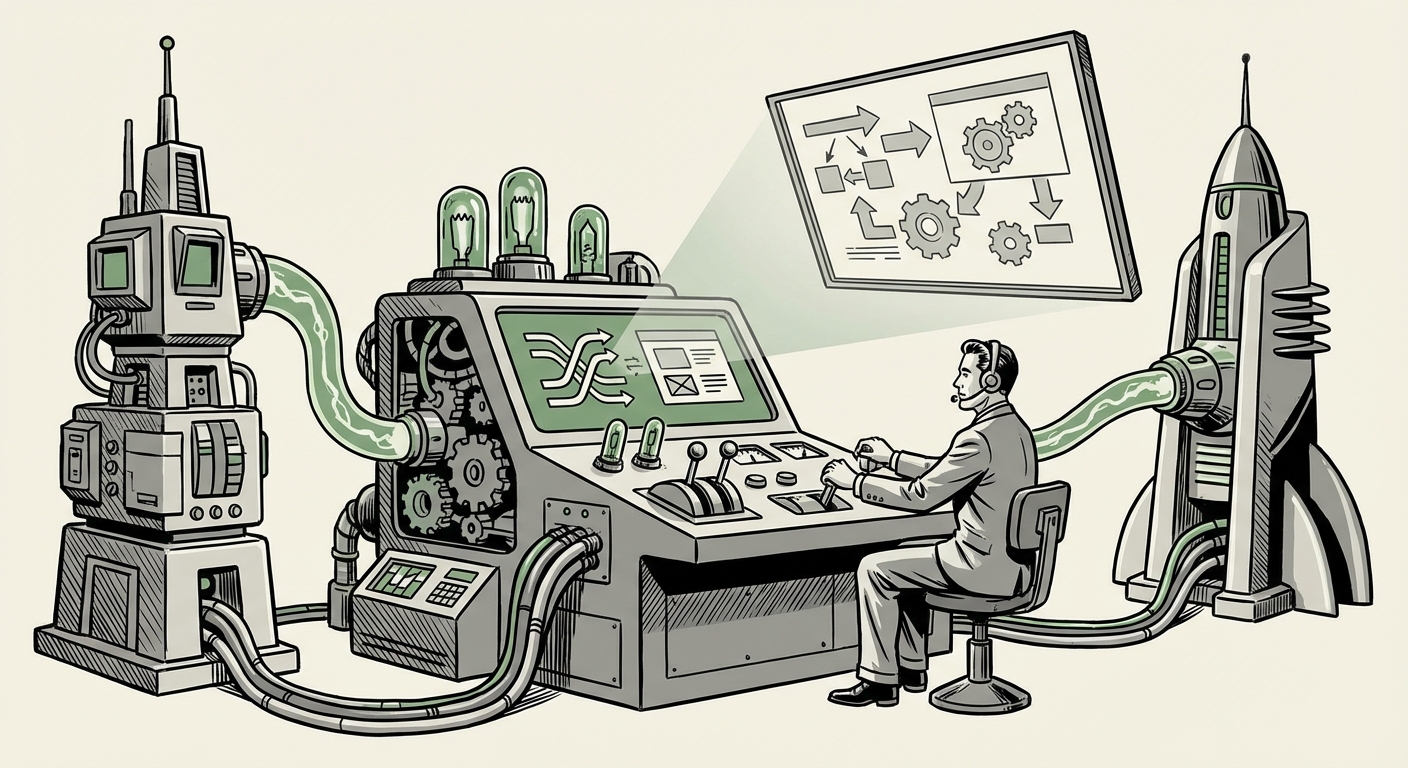
The Bundle Is Really a Data Merger in Disguise
Think about what a streaming service actually knows about you. It knows what you start watching and what you abandon after four minutes. It knows whether you binge at midnight or on Sunday morning. It knows which thumbnail made you click. It knows when you cancel and what you watched right before you did.
Now imagine combining two of those profiles. A bundle that links a Paramount+ account with an HBO Max account gives the combined operation a cross-platform view of a single household's taste. That is a dramatically stronger training set for any recommendation model. Instead of learning "this person likes dramas" from one catalog, the system can learn "this person likes prestige dramas on one service and reality competition shows on the other", a much more nuanced picture of a real human being.
For AI teams, that difference is enormous. Recommendation quality tends to improve with diversity of signal, not just volume. A bundle is one of the few ways to get diversity without buying it.
Recommendation Engines Get a Serious Upgrade
The most obvious AI beneficiary is the recommendation system. These systems are the quiet engine of streaming economics: better recommendations mean more watch time, lower marketing spend, and fewer people who feel like they've "run out of things to watch" and cancel.
A combined Paramount+ and HBO Max offering gives the underlying models a bigger catalog to draw from. That matters because recommendation quality is partly a matching problem. The more relevant titles available to suggest, the more likely a model can find something a viewer actually wants. When a platform only has its own library, the model sometimes has to choose the least-bad option. When the library is bigger, the model can choose the right option.
There is a second-order effect too. Bundles create natural experiments. Some households will take the bundle; others won't. That gives data teams a clean comparison group to measure how viewing habits change when a viewer suddenly has access to twice as much content. Those comparisons are gold for training models that predict what a new subscriber will do in their first 30 days, the period that decides whether they stay.
Advertising: Where the AI Money Actually Lands
Subscription revenue is predictable, but ad revenue is where machine learning has the most room to move the needle. Ad-supported tiers live or die on targeting accuracy, and targeting accuracy depends on how much you know about a viewer.
A bundle strengthens the advertising case in three ways:
- Bigger reach, cleaner measurement. Advertisers want to know how many unique households they reached, not how many impressions they bought. A bundle makes deduplication easier and measurement more honest.
- Better audience segments. Cross-platform viewing patterns reveal interests that a single service would miss. That lets AI systems build finer audience clusters for advertisers.
- Smarter frequency control. The most annoying thing in ad-supported streaming is seeing the same ad seven times. AI systems that see the whole household's viewing across both services can cap frequency properly, which improves the viewer experience and makes each ad more valuable.
None of this requires a merger of the companies. It requires shared data infrastructure, shared identity resolution, and shared measurement standards. That is precisely the kind of unglamorous plumbing work that decides whether an AI strategy succeeds or stalls.
Content Decisions Get More Mathematical
Streaming has quietly become one of the most data-driven businesses in media. Greenlight decisions, what show gets made, what gets renewed, what gets quietly buried, increasingly lean on predictive models that estimate audience size before a single frame is shot.
When two platforms bundle, the combined audience data improves those models. A show that underperforms on one service might actually be a strong performer for a specific slice of the other service's audience. Without combined data, that show gets cancelled. With combined data, it might get renewed, or repackaged for a different audience segment.
This is where AI starts to shape culture, not just clicks. Recommendation and greenlight models decide which stories get told and which voices get funded. As these systems consolidate around bigger datasets, the feedback loop tightens: what the model predicts people want shapes what gets made, which shapes what the model learns next.
The Churn Problem: AI's Most Valuable Job in Streaming
Every streaming executive loses sleep over the same number: churn. It costs far more to win a new subscriber than to keep an existing one, and the difference between a healthy business and a struggling one often comes down to a few percentage points of retention.
Churn prediction is a well-understood machine learning problem, and it gets better with more signal. A model that sees viewing across two services can spot the early warning signs, the slow drift from nightly viewing to weekly, the shift toward background noise, the sudden interest in shows that only exist elsewhere.
Bundles also change the economics of churn in a way AI can exploit. A household paying one bill for two services has a higher switching cost. That means the AI doesn't have to be perfect, it just has to be good enough to nudge people through the moments when they'd otherwise cancel. A well-timed recommendation, a personalized "here's what's new for you" email, or a smart re-engagement campaign can be the difference between a saved subscriber and a lost one.
Where This Gets Complicated
None of this is frictionless. Three issues deserve serious attention.
Privacy and consent
Combining viewing data across two brands raises real questions about what customers agreed to. Regulators in multiple markets are scrutinizing how streaming platforms share data across corporate boundaries. Any bundle-driven AI program needs a clear, honest consent story, not a paragraph buried in a terms-of-service update.
Model concentration
As a handful of platforms hold most of the meaningful viewing data, the best recommendation and prediction models cluster in a few hands. Smaller services and independent creators get shut out. That is a competitive problem and a cultural one.
Over-optimization
Recommendation models that optimize purely for watch time tend to push viewers toward comfort content, familiar franchises, sequels, and low-risk formats. That's good for engagement metrics and bad for the kind of risky, original storytelling that built these brands in the first place. Smart teams will need to build explicit guardrails so the AI doesn't slowly sand down everything interesting about their catalogs.
What This Means for Businesses Outside Streaming
The Paramount+ and HBO Max bundle is a useful case study for any company running an AI strategy, because it illustrates a pattern playing out everywhere: the winners in AI are increasingly the companies that control the best combined data, not the companies with the cleverest models.
Three lessons transfer directly:
- Partnerships beat builds. If your data is thin, the fastest path to better AI is a partner who sees a different slice of the same customer. Bundles, co-marketing deals, and data clean rooms are AI strategy, whether or not anyone calls them that.
- Identity resolution is the bottleneck. Most combined-data projects fail not on modeling but on matching records. Invest in the plumbing before the fancy stuff.
- Measure the boring metric. Retention, frequency capping, and deduplication aren't glamorous, but they're where the money is. AI programs that tackle them pay back fast.
Actionable Takeaways
If you're leading a team that touches customer data, personalization, or content, here is what to do with this news:
- Audit your data partnerships now. List every partner that sees a different view of your customer. Rank them by how much better your models would be with their signal. Then start a conversation.
- Build a consent-first data sharing framework. Make it easy for customers to understand and control what's shared. This will become a competitive differentiator, not just a compliance checkbox.
- Test recommendation diversity deliberately. Track whether your models are narrowing your audience's taste or broadening it. Build a metric for it and put it on a dashboard.
- Treat churn models as revenue models. Fund them accordingly. In subscription businesses, a one-point retention improvement often beats an entire quarter of acquisition spend.
- Plan for cross-brand measurement. If a bundle or partnership is on your horizon, define how you'll measure unique reach and ad frequency across both services before you launch, not after.
The Bigger Picture
Streaming's consolidation wave is often framed as a fight over content budgets and subscriber counts. The more interesting fight is over signal. Every bundle, every partnership, every shared login is a move in a longer game about who has the richest picture of what people actually want to watch, and therefore who can train the models that predict it best.
Paramount+ and HBO Max joining forces is one more step in that direction. The immediate story is a discount for viewers. The lasting story is a deeper dataset, a better-trained recommendation engine, and a clearer demonstration that in the AI era, the most valuable asset a media company owns isn't its library. It's what it knows about the people watching it.