Physicists Discover "Astonishing" Property of Light, and It Could Reshape How AI Is Built
On October 13, 2026, physicists announced something that made them reach for a word they do not use lightly: astonishing. They found a property of light that defies expectations, a behavior that does not fit the way light is supposed to act.
That single sentence may sound like a small lab curiosity. It is not. Light is the backbone of the modern internet, the sensing layer of every camera and lidar unit, and the most promising candidate for the next generation of computer chips. When the rules around light shift, the ripple effects reach all the way to artificial intelligence, how it is trained, where it runs, how fast it can go, and how much energy it burns.
Here is what the finding means, in plain terms, for the future of AI and the businesses that will depend on it.
Why Light Matters to Artificial Intelligence
Today's AI runs on electrons. Data moves through copper wires and silicon transistors as tiny pulses of electricity. This works, but it has a cost. Moving electrons through wires creates heat. That heat is now one of the biggest limits on AI. Data centers that train large models draw enormous amounts of power, and a large share of that power goes into cooling.
Light does not have that problem in the same way. Photons, the particles of light, can travel through glass fibers or waveguides with very little energy loss. They can also pass through each other without interfering, which means many streams of data can share the same path at once. That is why fiber optics already carry the world's internet traffic.
Scientists have spent years trying to build computers that think with light instead of electricity. The dream is an optical neural network, a chip where light beams, not electric currents, perform the math that powers AI. Such a chip could, in theory, run certain AI tasks far faster while using a fraction of the energy.
Every one of those designs rests on a model of how light behaves. When physicists report a property of light that breaks that model, they are effectively handing engineers a new set of building blocks, and a warning that some old assumptions were incomplete.
What "Defies Expectations" Really Signals
The full technical details of the reported result are still being absorbed by the research community, but the headline itself carries weight. In physics, "defies expectations" is not a marketing phrase. It usually means one of three things:
- A known limit turns out to be softer than believed. Some behavior that engineers assumed was fixed, how light bends, scatters, stores, or couples into a material, turns out to be tunable.
- A new way to control light emerges. Instead of needing bulky lenses or exotic materials, a simpler or cheaper route appears.
- A measurement technique gets better. Scientists can now see something they could not see before, which opens the door to designing around it.
Any one of these is a big deal for photonics, the field of controlling and using light. And photonics is the field that AI hardware desperately needs to advance.
Faster AI Chips That Use Far Less Power
The most direct impact of a new light property is on chip design. AI models do two things constantly: multiply numbers and move data. Both operations are slow and hot when done with electrons. Both can be done with light.
In an optical chip, a beam of light passes through a pattern of microscopic structures. The way the light comes out the other side is the answer to a calculation. This happens almost instantly, at the speed of light, with almost no wasted heat.
If a newly discovered property of light makes these patterns easier to control or more precise, engineers could build optical chips that handle more complex math in a smaller space. That would mean:
- Lower energy bills for AI data centers, which is currently one of the largest hidden costs in the industry.
- Faster response times for AI features that people expect to be instant, like voice assistants, translation, and image editing.
- AI that runs on smaller devices, including phones, cars, drones, and medical tools, without draining the battery or overheating.
For businesses, the practical translation is simple. Cheaper inference, the act of running an AI model rather than training it, means more AI features can be affordably offered to more customers. That changes product economics across the board.
Better Sensors Mean Better Real-World AI
Not all AI progress comes from bigger models. A lot of it comes from better data. And light is how machines see.
Cameras, lidar, medical scanners, and industrial inspection gear all depend on light behaving in predictable ways. A newly understood property of light could improve the sensitivity of these instruments. That means:
- Clearer images in low light, which helps self-driving cars and security systems.
- More precise medical imaging, which helps doctors spot problems earlier.
- Better industrial quality checks, where a camera must catch tiny flaws at high speed.
Better sensors feed better AI. Models trained on cleaner, richer data make fewer mistakes. That is a quiet but enormous win.
The Data Center Bottleneck Nobody Talks About
One of the least glamorous problems in AI is moving data around. A modern AI cluster links thousands of processors. The links between them, the cables and switches, are often the slowest part of the system. Processors sit idle, waiting for data to arrive.
Optical connections already help here. Light-based links carry more data, over longer distances, with less energy than copper. Any advance in controlling light makes those links faster, cheaper, or more reliable. If the new discovery makes it easier to route or split light signals on a chip, the entire interconnection layer of AI computing could get both faster and more affordable.
That matters because the biggest gains in AI performance over the next several years will come from better plumbing, not just bigger models. Better plumbing is exactly what photonics delivers.
New Possibilities for Security and Privacy
Light-based systems have a security advantage that is easy to overlook. Photons cannot be copied without changing them. That is the basis of quantum key distribution, a method for sending secrets that cannot be quietly intercepted.
A deeper understanding of light's behavior could strengthen these systems or make them easier to build. For businesses handling sensitive data, finance, healthcare, government work, light-based encryption is a long-term hedge against the day when today's encryption becomes breakable.
There is a flip side. Any new physical capability can be used for good or bad. Optical systems are also used for surveillance and for reading data off screens at a distance. As light becomes more controllable, the gap between what is private and what is observable may narrow. Companies should expect more scrutiny on how they collect and store visual and sensor data.
What Businesses Should Do Now
Breakthroughs in physics take years to become products. But the companies that prepare early tend to capture the value. Here are concrete steps.
1. Track photonic computing seriously
Assign someone to follow optical computing developments. You do not need to build a photonic chip. You need to know when a vendor offers one that fits your workload.
2. Audit your AI energy costs
If power and cooling are a meaningful line item, you already have a reason to care about light-based hardware. Build a baseline now so you can measure future savings.
3. Design for cheaper inference
Assume that running AI models will get dramatically cheaper over the next decade. Build products that make sense at scale, not just at today's prices.
4. Invest in data quality
Better sensors will raise the bar. Companies with clean, well-labeled data will benefit most from improved capture hardware.
5. Stay skeptical of headlines
A lab result is not a product. Most discoveries take a long time to leave the lab, and some never do. Treat "astonishing" as a reason to pay attention, not a reason to rewrite the budget.
The Bigger Picture
For seventy years, computing has been built on electrons. That era is not ending, but it is running into hard physical limits. Chips cannot get much hotter or much smaller without breaking. The next big leap in computing performance is likely to come from changing the medium, not just shrinking the transistor.
Light is the leading candidate. It is fast, it is cool, and it is already the way the world moves information across oceans. Each new discovery about how light behaves removes one more obstacle between the laboratory and the data center.
The finding announced on October 13, 2026, does not mean optical AI chips arrive next year. It means the physics that would make them possible keeps getting richer and less predictable, in the best sense. Every surprise in the lab is a design option that did not exist before.
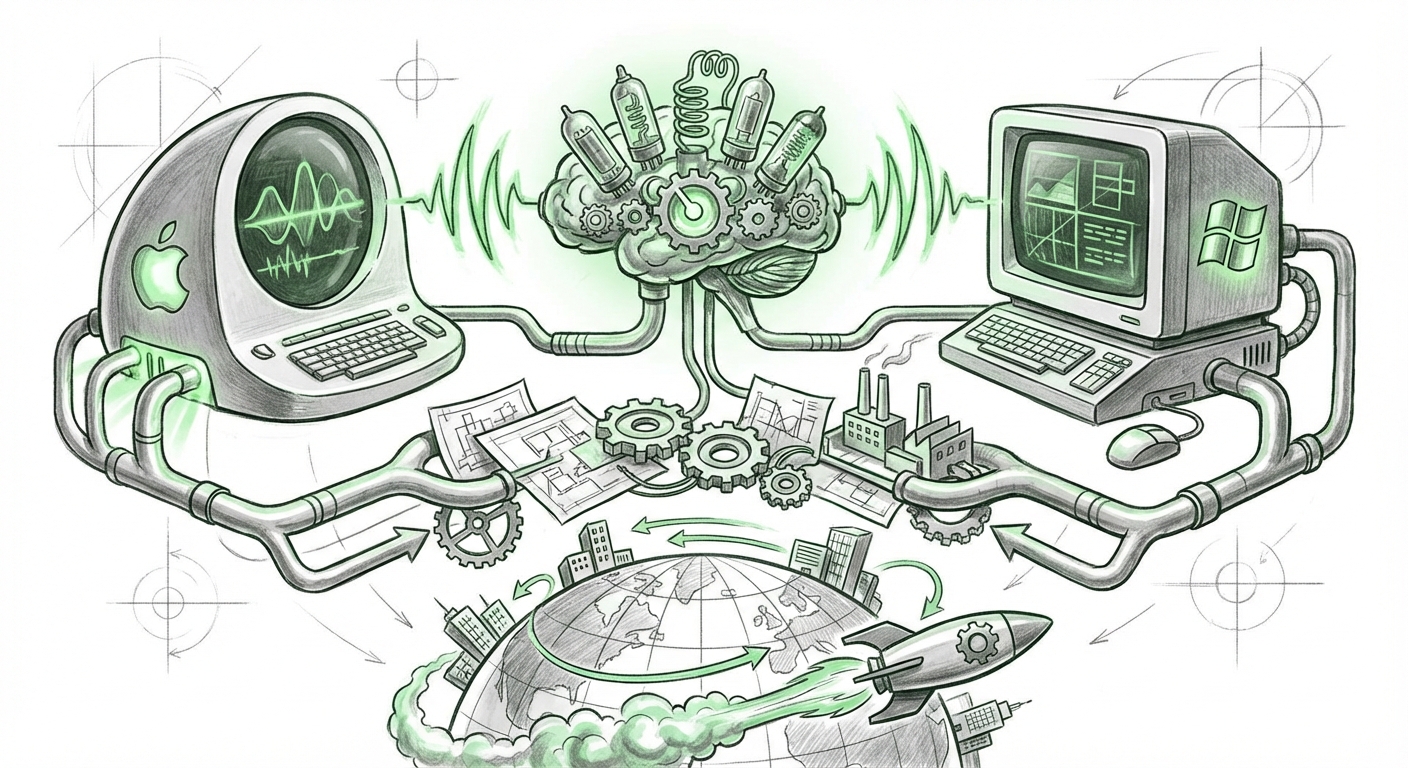
For AI, the practical arc looks like this: better light control leads to better optical chips. Better optical chips lead to faster, cheaper, cooler AI. Cheaper AI leads to AI everywhere, in cars, clinics, factories, and phones, doing work that today still needs a warehouse full of servers.
That is why a headline about light is really a headline about the future of computing. The most important AI breakthrough of the next decade might not come from a new model at all. It might come from a physicist who noticed that light does not behave the way everyone assumed.