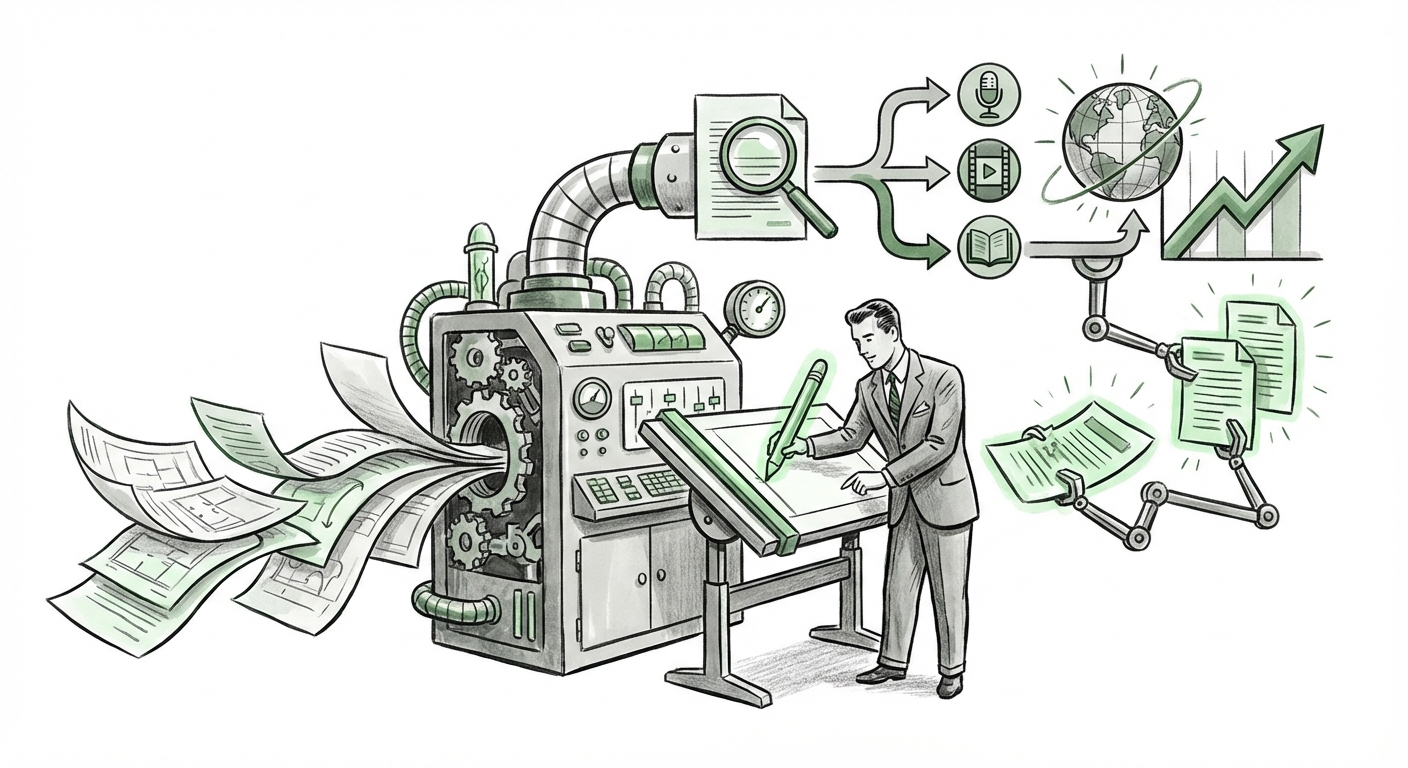
TimeScope: How Long Can Your Video AI Really Watch? The Answer Will Shape the Future
Video is the richest form of digital content we have. It captures motion, context, emotion, and cause-and-effect in a way that text and images alone cannot. Yet for all the advances in artificial intelligence, most video-capable models still struggle to understand anything beyond short clips. They can tell you what’s happening in a ten-second snippet, but ask them to follow a story across an hour-long lecture, a security camera feed, or a full-length movie, and their performance falls apart. A new evaluation framework called TimeScope is putting a spotlight on this exact problem. Its central question is simple but profound: how long can your video large multimodal model go before it loses the plot? The answer to that question will determine how AI is used in everything from healthcare to entertainment, and the race to extend that limit is already heating up.
Why Long Video Understanding Is the Next Big Frontier
For years, AI research focused on static images. Then came short video clips, a few seconds to a minute, where models learned to recognize actions and objects. But the real world doesn’t happen in ten-second bursts. A patient’s recovery unfolds over days of hospital footage. A manufacturing defect might appear only after hours of assembly line video. A student’s understanding of a subject develops across a forty-minute lecture. To be truly useful, AI needs to process and reason over long videos without forgetting what happened earlier.
This is where video large multimodal models come in. These models combine visual, audio, and text understanding to interpret video content. But they face a fundamental challenge: the longer the video, the more data they must hold in memory. Most current models have a limited “context window”, a cap on how much information they can consider at once. When a video exceeds that limit, the model either truncates the input, losing critical context, or it tries to compress the video into a summary, which often misses subtle but important details. TimeScope is designed to measure exactly where those limits lie and how gracefully models degrade as video length increases.
What TimeScope Reveals About the State of Video AI
Although the details of the benchmark are still emerging, its core purpose is clear: to provide a standardized way to test how well a video large multimodal model handles increasingly long inputs. Instead of just asking “can the model describe this clip?”, TimeScope likely evaluates whether the model can answer questions that require remembering information from early in the video, connecting events that are minutes apart, and understanding the overall narrative. This kind of temporal reasoning is far harder than recognizing objects in a single frame.
The introduction of TimeScope sends a signal to the AI community. It says that short-clip performance is no longer enough. Just as image recognition benchmarks like ImageNet drove a decade of progress, video-length benchmarks will push researchers to build models that can handle longer and more complex inputs. Early adopters of such benchmarks often find that their models perform well on short videos but fail dramatically on longer ones. That gap is the next great challenge to close.
The Technical Hurdles: Memory, Compute, and Forgetting
Why is long video so hard? The naive approach is to feed every frame into the model. But a one-hour video at 30 frames per second contains over 100,000 frames. Even with aggressive downsampling, the amount of visual data is enormous. Storing and processing that data requires massive memory and compute power. More importantly, models tend to “forget” earlier information as they process new input, a phenomenon similar to how humans lose focus during a long meeting.
Researchers are exploring several solutions. Some are building models with larger context windows, allowing them to consider more frames at once. Others are developing hierarchical approaches that first summarize short segments and then combine those summaries into a longer narrative. Still others are working on memory mechanisms that selectively store important moments and discard the rest. TimeScope will likely become the testing ground for these ideas, helping the community compare different strategies and identify what actually works.
For businesses, this means that the video AI tools available today may not be ready for long-form content. A retail store wanting to analyze a full day of security footage, or a media company wanting to automatically tag a two-hour film, will need models that can handle extended context. The companies that invest early in understanding these limitations, and in the infrastructure to support longer video processing, will gain a significant edge.
What This Means for the Future of AI
The ability to understand long videos will unlock a new wave of AI applications. In healthcare, AI could monitor patient movement over hours to detect early signs of complications. In education, it could analyze a full lecture and generate personalized study guides that reference specific moments. In entertainment, it could automatically create trailers, highlight reels, or content warnings by understanding the entire plot. In robotics, it could help machines learn from long demonstrations rather than brief clips.
But the implications go beyond convenience. Long video understanding is essential for AI to develop a more human-like sense of time and causality. A model that can only see ten seconds at a time cannot understand that a car accident was caused by a driver running a red light thirty seconds earlier. It cannot follow a character’s emotional arc across a movie. It cannot track the progression of a disease over days of footage. TimeScope is a step toward AI that grasps the full story, not just isolated moments.
This also raises important questions about privacy and surveillance. As models become capable of processing hours of video, the potential for misuse grows. Continuous monitoring of public spaces, workplaces, or homes becomes technically feasible. Society will need to decide how to balance the benefits, such as improved safety and efficiency, against the risks of mass surveillance and data misuse. The development of benchmarks like TimeScope should go hand-in-hand with discussions about ethical guidelines and regulations.
Actionable Insights for Businesses and Researchers
So what should you do with this information? Here are a few practical steps:
- Audit your video AI use cases. If your organization uses video analysis, check whether current models are limited to short clips. Identify where longer context would add value, such as full-meeting transcription, extended security monitoring, or long-form content moderation.
- Invest in data infrastructure. Processing long videos requires efficient storage, fast retrieval, and scalable compute. Prepare your systems for larger inputs before the models are ready.
- Follow benchmark developments. TimeScope and similar evaluations will become key indicators of model progress. Use them to compare vendors and to set realistic expectations for what your AI can do.
- Prioritize temporal reasoning. When evaluating AI models, don’t just test on short clips. Create your own tests that require remembering information from earlier in a video. This will help you identify models that truly understand context.
- Engage in ethical planning. As long-video capabilities improve, develop clear policies for how video data is collected, stored, and analyzed. Transparency and consent should be central.
For researchers, TimeScope highlights the need for new architectures that can handle long sequences efficiently. The next breakthrough may come from combining attention mechanisms with memory compression, or from hybrid models that use symbolic reasoning to summarize long videos. The race is on, and benchmarks will light the way.
The Road Ahead
TimeScope asks a question that will define the next generation of video AI: how long can your model go? The answer today is often “not very long.” But as researchers tackle the challenges of memory, compute, and temporal reasoning, the limits will expand. In a few years, we may look back at short-clip video AI the way we now look at early image recognition, useful, but only a stepping stone. The models that can watch hours of video and truly understand what they see will be the ones that transform industries and daily life. TimeScope is more than a benchmark; it is a compass pointing toward that future.