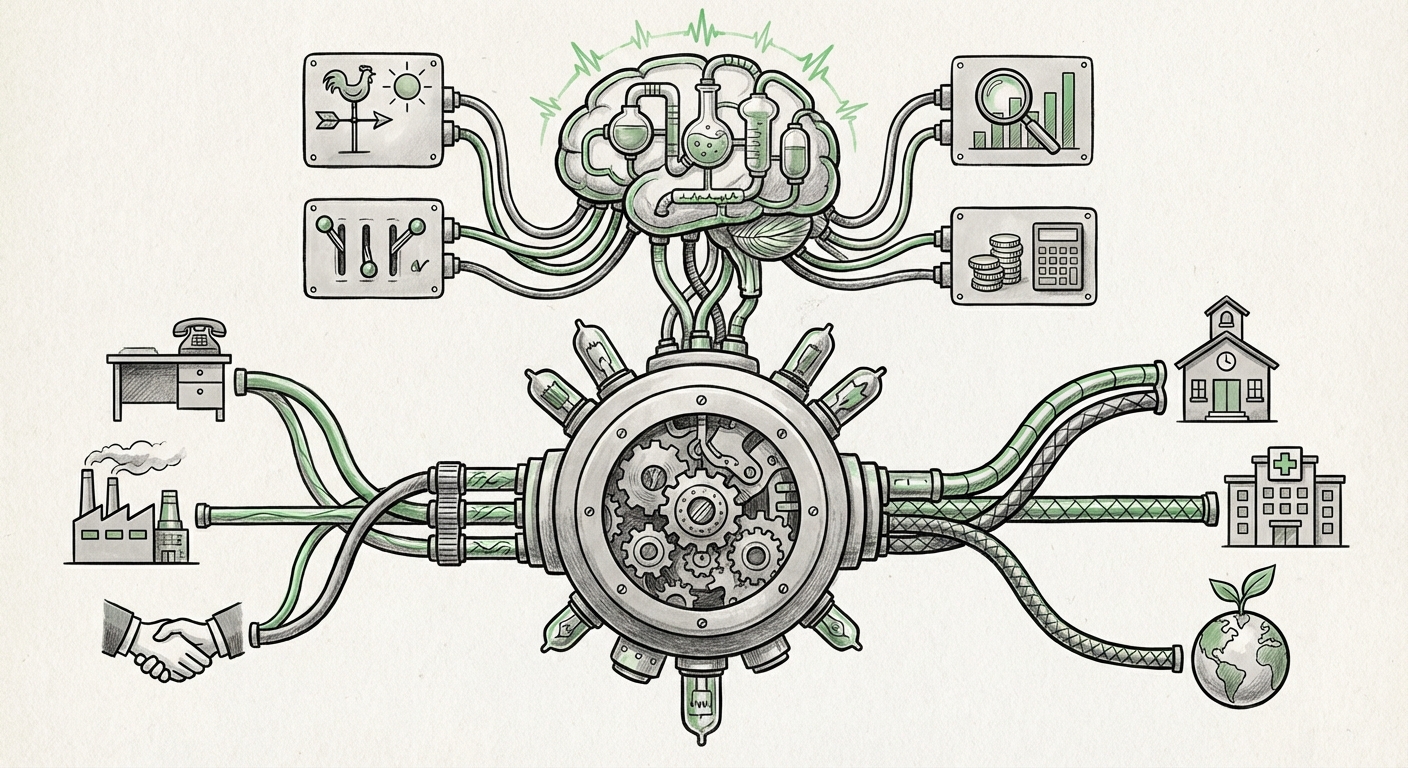
AI Layoffs Are Now Hitting the People Who Run Them, What That Means for the Future of Work
The story is simple and brutal: someone spends their days helping to carry out layoffs, then becomes one of the people laid off. That twist is more than personal irony. It is a warning about how AI is reshaping work. The people who deliver change are not safe from it. In fact, they may be first in line.
For years, layoffs felt like something that happened to other people. Managers were the ones with the bad news and the badge. They sat in the meetings. They read the script. They walked people to the door. The system depended on a quiet belief: the person holding the clipboard is not on the list. That belief is now breaking.
The Layoff Story That Hits Different
A first-person account of helping oversee layoffs and then getting laid off is not just a sad story. It is a signal. It shows that companies are changing how they think about management itself. The old model had layers of people to plan, track, report, and push work forward. AI can now do more of that coordination work. So companies are asking a hard question: if the tools can handle the busywork, how many managers do we really need?
That question is already changing org charts. Middle managers are often the "translation layer" between high-level strategy and daily work. They turn goals into tasks. They turn tasks into updates. They turn updates into reports. A lot of that is information processing. AI is very good at information processing. It can draft status reports, summarize meetings, track budgets, flag delays, and schedule work. It does not need to be perfect. It only needs to be good enough to make companies rethink the headcount.
The person who helped oversee layoffs then got laid off is a preview of that shift. The role that once felt like a safe seat, the person who runs the process, is now part of the process. That is a big change in how work feels. It tells workers that no role is automatically protected. It tells companies that efficiency can cut deeper than they expected. And it tells all of us that AI is not just a tool for frontline tasks. It is becoming a tool for organization design.
Why AI Makes Middle Managers Vulnerable
AI does not have to replace a whole job to change it. It can take over the parts of a job that are routine, repeatable, and easy to measure. Middle management is full of those parts. Managers spend time in meetings, writing updates, reviewing performance dashboards, tracking deadlines, and moving information from one team to another. AI can help with all of that.
When companies see that AI can handle more coordination, they face a choice. They can use the extra time to help managers coach teams, solve problems, and improve work. Or they can use it to cut costs. Too often, the second path is easier to sell to investors. The result is a leaner management layer. Sometimes that is real automation. Sometimes it is "AI washing", using AI as a cover for financial pressure. The story of the layoff manager shows what that feels like from the inside. The person who had to deliver bad news becomes the bad news.
This is not only about technology. It is about trust. When a company cuts the people who enforce cuts, workers notice. They see that loyalty is not reciprocal. They see that performance and seniority may not protect them. That can change how people work. Some may disengage. Some may leave. Some may stop speaking up because they do not see the point. The short-term savings can come with a long-term cost: a workforce that trusts less and shares less.
The Hidden Cost of Efficiency
Layoffs are often framed as efficiency. But efficiency is not just a number on a spreadsheet. It is also the ability of an organization to learn, adapt, and catch problems early. Middle managers often do that work. They know which projects are really behind. They know which teams are burning out. They know which customer complaint is a warning sign. AI can summarize data, but it does not always know what matters. It can flag a problem, but it may not know how to fix it.
When companies cut too many managers, they can lose institutional memory. They can lose the people who train new hires. They can lose the people who hold teams together during hard changes. The result may look efficient for a quarter. Then the hidden costs show up: slower decisions, more conflicts, lower morale, and more surprises. The layoff manager story is a reminder that organizations are not just collections of tasks. They are networks of people. You can cut a role, but you cannot always cut the work that role quietly did.
There is also a message effect. When the person who oversees layoffs gets laid off, it sends a signal to everyone else. No one is safe. That can make people more defensive. It can make them less likely to take risks. It can make them focus on looking busy instead of doing good work. In the age of AI, companies need people who can adapt and learn. Fear is a bad way to build that kind of culture.
What This Means for the Future of AI and How It Will Be Used
This story points to three big shifts in how AI will be used at work.
1. AI will move from task tool to org design tool
Companies will stop asking only "What tasks can AI do?" They will start asking "What roles do we need if AI does those tasks?" That is a much bigger question. It will hit coordination roles first. It will also change how teams are built. Instead of layers of managers, companies may use smaller teams with more AI support. The people who remain will need to do more than pass information along. They will need to make judgment calls, build trust, and design work.
2. The human layer will become premium, or it will be ignored
As AI takes over routine management, the remaining human work will be the hard stuff: coaching, conflict resolution, ethical judgment, and leading through uncertainty. Those skills are valuable. But they are also harder to measure. Companies may say they value them, then cut them anyway because they do not show up clearly in cost savings. The future of AI at work depends on whether leaders treat the human layer as a cost or as a capability.
3. Layoffs will become more continuous
AI changes work all the time. That means companies may restructure more often. Instead of one big layoff every few years, there may be a steady stream of role changes. That is harder on workers. It means people need portable skills and strong safety nets. It also means managers need to be better at leading through constant change. The layoff manager story is an early example of what that feels like when the change comes for the change-makers.
Practical Implications for Workers
For individual workers, the lesson is not "panic." It is "prepare." The old deal, work hard, keep your head down, and you will be safe, is not reliable. Workers need to build skills that AI cannot easily copy. That means judgment, communication, problem-solving, and the ability to design better ways of working.
- Do not be only the person who executes bad news. If your job is mostly coordination, add skills in AI tool use, data interpretation, process design, and coaching. Show that you can improve work, not just keep it moving.
- Track your impact in plain numbers. If your role is hard to measure, make it easier to see. Show how you cut delays, improved quality, or helped a team hit a goal. Do not wait for a layoff to explain your value.
- Ask hard questions early. If your company is cutting roles and talking about AI, ask which tasks are being automated and how decisions are made. You may not get clear answers, but you will learn a lot about the risk.
- Build a network inside and outside your company. The manager who oversaw layoffs may have thought they were safe. No one is fully safe. Relationships and portable skills are your best protection.
- Learn to use AI to do your job better, not just faster. The workers who can redesign their own work with AI will be more valuable than the ones who only use it to speed up old tasks.
Practical Implications for Business Leaders
For leaders, the story is a warning about how you use AI. AI can help you cut costs. It can also help you build a better organization. The difference is in the choices you make.
- Do not confuse automation with cost-cutting. Be clear about what AI can and cannot do. If layoffs are driven by finances, say so. If AI is a factor, explain it. Mixed messages destroy trust.
- Keep a human layer for trust. If you cut too many managers, you may lose the people who catch problems early and hold teams together. That can cost more than it saves.
- Invest in redeployment. If AI takes over tasks, train people for new roles. That costs money, but it keeps knowledge in the company and sends a signal that people are not disposable.
- Measure what matters. Do not just count cost savings. Track quality, retention, customer satisfaction, and innovation. If those numbers get worse, your efficiency may be a mirage.
- Protect trust during layoffs. How you treat people who leave affects how people who stay feel. The layoff manager story shows that no one forgets how the process was handled.
Actionable Insights
So what should people and companies do now? Here are a few clear steps.
- For individuals: Build a T-shaped skill set. Go deep in one area, but get broad skills in AI, data, communication, and process design. The more you can connect work across teams, the harder you are to replace with a dashboard.
- For managers: Become a work designer, not just a work tracker. Use AI to remove low-value tasks and free up time for coaching, problem-solving, and strategy. If your main value is passing information, you are exposed.
- For HR teams: Create clear policies for AI and layoffs. Train managers to handle transitions with dignity. Make sure people know what is changing and why. Silence creates fear.
- For policymakers: Update safety nets for a world of more frequent job changes. Support retraining that leads to real jobs. Require transparency when AI affects employment decisions.
- For companies: Pilot AI in one team and measure the full effect. Do not use AI as an excuse for mass cuts without a plan. The cheapest option today may be the most expensive option tomorrow.
Conclusion: The Change-Makers Are Not Immune
The story of the manager who helped oversee layoffs and then got laid off is a mirror. It shows that AI is not just coming for factory floors or entry-level tasks. It is coming for the people who manage the work. The person who delivers change can become the target of change. That is the new reality of AI at work.
But this is not a story about technology alone. It is a story about choices. Companies can use AI to build better organizations, flatter, faster, and more human where it matters. Or they can use it to cut costs without thinking about the long-term damage. Workers can prepare, but they cannot do it alone. They need honest communication, real retraining, and safety nets that match the speed of change.
The lesson is clear: in the age of AI, no one is just the person who delivers change. Everyone is subject to it. The best response is to make sure the change is humane, transparent, and designed for long-term capability, not just short-term savings. If companies forget that, they may find that the people they cut were the ones holding the organization together. And by then, the layoff will not just be personal. It will be structural.