Why Getting Your Apps and Games Ready for the Holidays Is Now an AI Story
Every year, as the holiday season gets close, app and game makers get the same message: get your products ready. Ship the update. Fix the bugs. Line up the promotions. Make sure nothing breaks when millions of new users show up at once.
It sounds like a routine yearly chore. But look closer and something bigger is happening. The holiday rush has become the toughest stress test in the software world, and AI is quietly moving into the middle of it. Not as a flashy feature on a store listing, but as the engine room of how apps get built, tested, shipped, and kept alive during the busiest weeks of the year.
That shift tells us a lot about where AI is heading next. The interesting question is no longer "can AI write code?" It is "can AI carry a product safely through the one week when you cannot afford a mistake?"
The Holiday Crunch Is a Deadline Like No Other
Most of the year, software teams move at their own pace. A bug can sit for a week. A release can slip. A small visual glitch can be fixed "next sprint."
Holiday season breaks all of that. Three things happen at once:
- Traffic spikes. Huge numbers of people install apps and games, many of them first-time users who found the product as a gift, a recommendation, or a seasonal promotion.
- Freeze windows. Many teams lock down their code and stop shipping risky changes right before the big weeks. After the freeze, there is no easy way to fix something that goes wrong.
- Higher stakes on every mistake. A crash, a broken payment flow, or a misleading store page during peak season costs far more than it would in a quiet month. One-star reviews pile up fast, and they stick.
So the pre-holiday checklist is really a test of discipline. Does the build hold up? Are reviews done? Are store listings accurate? Are ads and pricing correct? Is support ready for a flood of tickets?
That is exactly the kind of high-volume, high-pressure, detail-heavy work that modern AI tools are good at. And that is why this annual ritual has become a leading indicator for the whole industry.
Where AI Is Actually Showing Up in Holiday Prep
Strip away the hype and you find AI working in a handful of very practical places during release season.
1. Testing and quality checks
Automated testing has existed for years. What is new is AI that can explore an app the way a curious user would, tapping through screens, hunting for broken flows, and flagging odd behavior. For a small studio facing a holiday deadline, an AI tester that runs overnight is a real advantage. It finds the messy edge cases that humans skip when they are tired and rushed.
2. Code review and bug hunting
AI coding assistants now sit inside the review process. They read changes, spot patterns that usually cause crashes, and suggest fixes before anything reaches the release build. During a freeze window, this matters enormously. If you cannot patch after launch, you had better catch the bug before you ship.
3. Store listing and content work
Store pages need fresh screenshots, new text, seasonal themes, and translations for many markets. AI drafting tools can produce several versions quickly, which lets a two-person team look like a much larger one. The risk here is obvious too: rushed, generic, machine-written copy can hurt trust. The teams that do this well keep a human editor in the loop and treat AI drafts as raw material, not finished work.
4. Marketing and ad creative
Holiday ad campaigns need many variations, different images, messages, and audience segments, tested fast. AI generation makes that cheap. The catch is that ad platforms and app marketplaces hold every campaign to the same standards, and a misleading claim can get an entire promotion pulled at the worst possible moment.
5. Support and moderation
When ticket volume jumps, AI assistants can handle the routine questions, where is my purchase, how do I restore my account, why did the app crash, and pass the hard cases to people. On the trust and safety side, AI filters help catch fraud, fake reviews, and abusive content during a period when bad actors are unusually active.
6. Personalization and retention
Once the app is live, AI systems decide what each user sees, which offers go out, and when to nudge someone who has gone quiet. In a peak week, small gains in retention add up quickly.
The Bigger Shift: From AI Features to AI Infrastructure
Notice what those six areas have in common. None of them are things a user sees and calls "AI." They are plumbing. They are the pipes that carry a product from an idea to a stable launch.
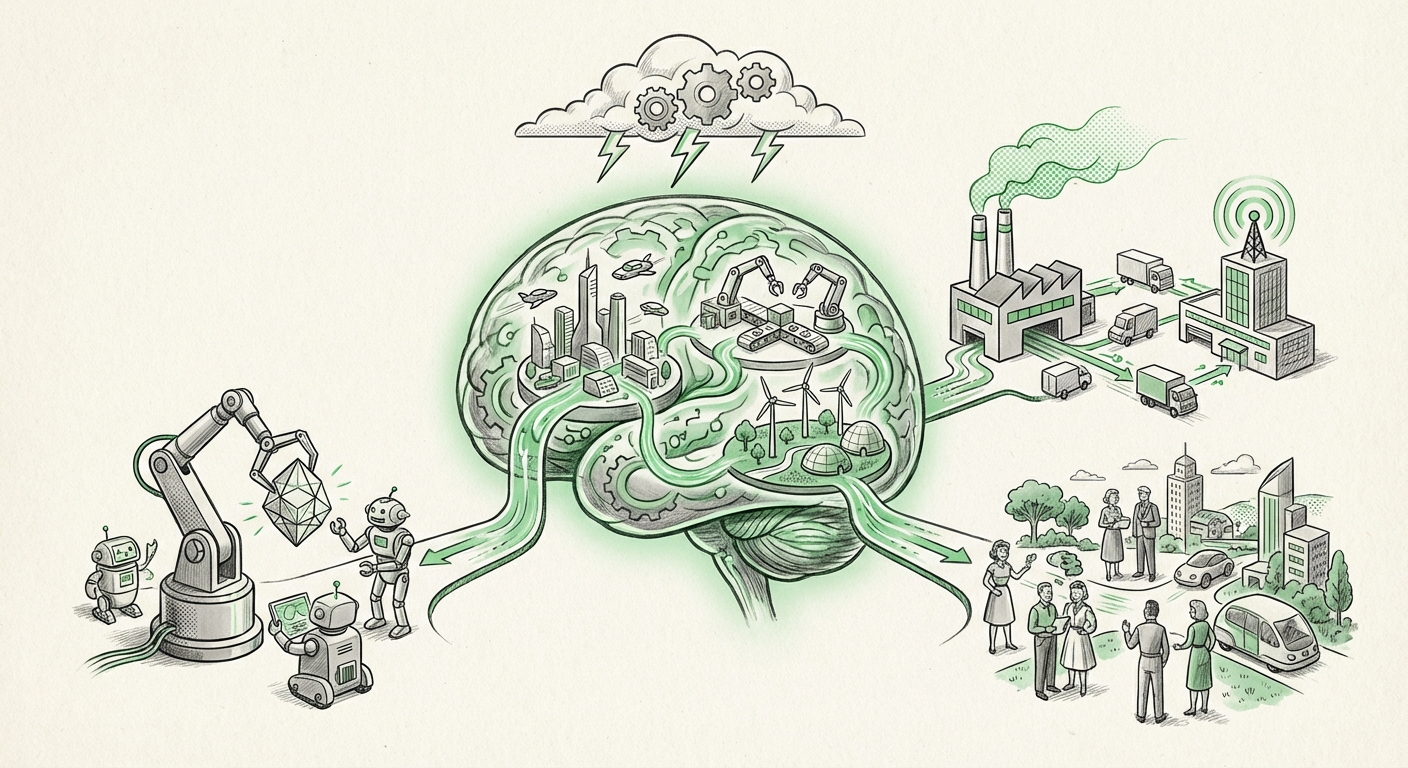
That is the real story here. For the last few years, AI was a feature you added to impress people. Now it is becoming infrastructure, invisible, always on, and increasingly hard to separate from the way software gets made.
Three consequences follow.
Small teams can compete on operations, not just ideas
A five-person studio with good AI tooling can now run the kind of testing, localization, and support operation that used to require a much bigger company. That lowers the barrier to entry. It also raises the floor on quality. If everyone can ship a polished app, polishing is no longer a differentiator, knowing what to build becomes the differentiator.
Reliability becomes the scarce skill
AI can produce a working screen in seconds. It cannot tell you whether that screen will survive a million users on the busiest day of the year. The teams that win the holidays are the ones that treat AI output as a draft to be hardened, not a finish line. The phrase to keep in mind is "ship with proof."
Governance stops being paperwork
When AI touches store listings, ad copy, pricing, and customer messages, every one of those outputs becomes a compliance risk. Platforms have rules about accuracy, data use, and disclosure. A rushed AI-generated claim can trigger a takedown during a freeze window, when you cannot fix it. Policy is now part of engineering.
What This Means for the Future of AI
If holiday prep is the preview, here is what the full movie looks like.
AI agents will own more of the release pipeline. The next step beyond assistants is agents that open tickets, run tests, file fixes, and report back. The holiday window will be the proving ground, because it is where mistakes are most expensive. Expect teams to grant AI more autonomy in low-risk steps like test generation and documentation, while keeping humans firmly in control of anything that touches money, user data, or public claims.
Evaluation will become a core job. The hard question about any AI system is not how well it works on a good day, but how you know it worked. Companies will build internal scorecards, did the AI-written listing match the actual app, did the AI support reply solve the problem, did the AI test run actually cover the riskiest path? Without measurement, AI is just faster guessing.
Models will move closer to the work. As more of this runs on devices and inside build systems, the cost of running AI on every change drops. That makes continuous AI checking normal instead of a special project.
Trust will be the bottleneck, not capability. The technology is already good enough for most of these jobs. What holds teams back is the fear of an automated mistake at the wrong moment. The winners will be the organizations that build guardrails fast enough to let them move quickly and safely.
Practical Steps for Teams Facing a Deadline
Whether you are shipping a game, a utility app, or a large platform, the holiday lesson applies all year:
- Freeze with evidence. Before you lock the code, run your most realistic AI and human tests against the riskiest users, not the easy ones.
- Keep a human editor on every AI output that goes public. Listings, ads, support macros, and push notifications all reach real people who can complain.
- Log what the AI did. If something breaks after launch, you need to know which automated change caused it.
- Test the boring things. Purchases, sign-ins, and refunds are where holiday revenue lives and dies. They deserve the most automated coverage.
- Give support a way out. Always leave a fast path from AI to a real person. Bad support in peak season turns into permanent reviews.
- Prepare for the calm after. The weeks right after the rush are the best time to fix whatever the AI tools could not handle, and to turn those failures into better tests next year.
The Takeaway
A seasonal reminder to get apps and games ready sounds modest. But it describes something real: software teams now run a yearly pressure test that pushes every part of their process to its limit. AI is spreading through that process not because it is exciting, but because deadlines are unforgiving.
That is usually how lasting technology arrives. It does not show up as a headline feature. It shows up as the thing that quietly makes the deadline survivable. The teams that learn to trust AI where it is safe, check it where it is risky, and keep people in charge where it counts will be the ones still standing when the busy season ends.