NVIDIA NIM Meets Hugging Face: What Faster LLM Deployment Means for the Future of AI
The biggest problem in artificial intelligence is no longer finding a powerful model. It is getting that model to run well in the real world. The arrival of NVIDIA NIM on Hugging Face goes after that problem directly. Hugging Face is where a huge share of the world’s open large language models live. NVIDIA NIM is a way to package and serve models with optimized inference. Put them together, and the distance between “I found a model” and “my app can use it” gets much shorter.
That may sound like a small plumbing upgrade. It is not. It changes who can build with AI, how fast they can ship, and where the value in the AI stack will sit. The move is a clear signal that the AI industry is moving from a model-building race to a deployment race. The winners will not just be the teams with the smartest model. They will be the teams that can run many models reliably, cheaply, and safely.
What Just Happened, in Plain English
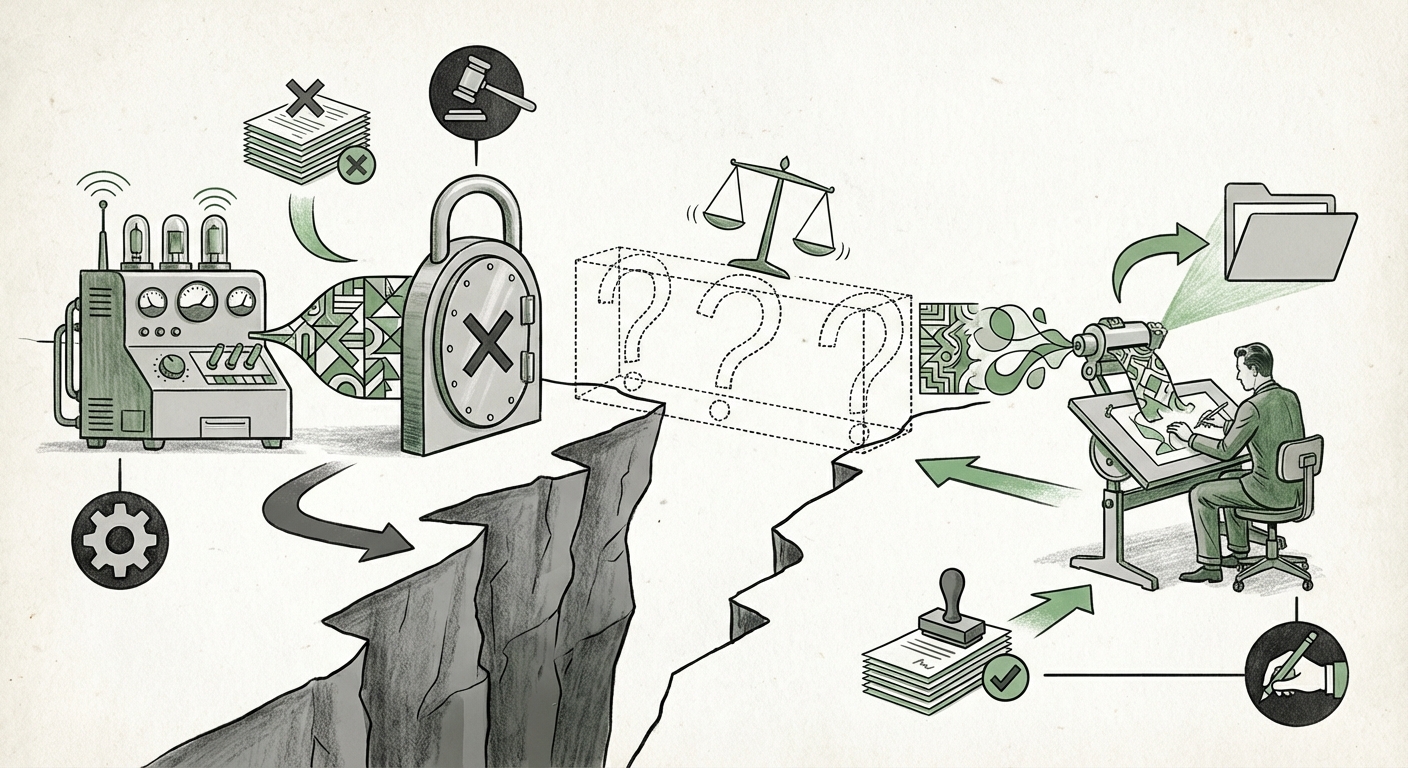
Hugging Face is often called the “GitHub of machine learning.” It is a hub where developers share, download, and compare models. If you want to test a new open language model, Hugging Face is one of the first places you look. But finding a model is not the same as running it in production. A model must be loaded onto hardware, optimized so it answers quickly, secured, scaled to handle traffic, and monitored over time. That work is hard. It is also where many AI projects slow down or stall.
NVIDIA NIM is designed to handle much of that serving work through inference microservices. Inference is the act of using a trained model to answer a prompt or make a prediction. A microservice is a small, self-contained piece of software that does one job and can be deployed and scaled on its own. In simple terms, NIM aims to turn a model file into a ready-to-use service. The Hugging Face integration means more LLMs available on the hub can be launched through NIM’s optimized path. The title says it well: this is about accelerating “a world of LLMs”, not just one model.
Deployment Is the New Bottleneck
For the past few years, the AI conversation has focused on model quality. How smart is the model? How large is its context window? How well does it score on tests? Those questions still matter. But they are no longer the only gate. Open models are now plentiful. Many are strong enough for real work. The hard part is turning a strong model into a dependable product.
Teams often hit the same wall. A prototype works on a laptop. Then it must handle hundreds or thousands of users. Latency rises. Costs climb. Security reviews begin. The model needs updates. A new version appears. The team must test it again. This is the unglamorous work of model operations. It is also where the next wave of AI value will be won or lost. An integration like NIM on Hugging Face does not remove all of that work. But it reduces the amount of custom infrastructure a team must build before it can learn whether an idea is good.
Why Businesses Should Care
The business case is simple: faster time to value. When deployment is easier, companies can move from idea to pilot to production with fewer handoffs. A small team can test several models, compare them on its own data, and put the best one behind a real application. That is a big shift. It lowers the skills barrier and gives smaller companies a way to compete with larger ones.
There is also more model choice. A business does not have to bet everything on one model. It can run a portfolio: a small, cheap model for simple tasks and a larger model for hard ones. It can swap models as open alternatives improve. That flexibility can reduce lock-in and improve cost control. But it also creates a new management challenge. More models mean more evaluation, more monitoring, and more governance. Easy deployment without strong evaluation is just faster chaos.
Leaders should also be clear about what this does not solve. It does not prove a model is accurate for your use case. It does not handle data privacy for you. It does not make a bad product strategy good. It does not remove the need for human review in high-stakes work. The integration lowers the technical barrier to serving models. It does not lower the bar for judgment.
What It Means for Developers
For developers, the appeal is less glue code. Instead of building and tuning a serving stack from scratch, a team can use a more standard path. That means more time for the parts that actually shape user experience: prompts, data pipelines, retrieval, guardrails, interface design, and feedback loops. The job moves up the stack. That is good news for builders who understand the problem domain but do not want to become infrastructure experts.
It also makes experimentation cheaper. A developer can try a model on Hugging Face, deploy it through NIM, and measure real behavior. That feedback loop matters more than public benchmark scores. A model that wins on a leaderboard may lose on your data, your latency budget, or your cost target. The integration makes it easier to run that test. In the future, the most successful AI teams will be the ones that test the most, not the ones that chase the loudest model launch.
What It Means for the Open Model Ecosystem
Hugging Face has always been a discovery layer for open models. With a stronger deployment path, it becomes more of a distribution layer too. That is a meaningful change. Open models can reach production faster when the gap between download and deployment shrinks. Creators of open models get a clearer route to real-world use. Enterprises get more ways to adopt them without rebuilding their stack each time.
The “world of LLMs” in the title is not an exaggeration. There are many models, many sizes, and many specializations. The next challenge is not having more models. It is choosing the right one and running it well. A world of LLMs needs a map, a menu, and a reliable delivery system. Hugging Face provides the menu. NIM aims to provide part of the delivery system. The combination could make open models a more practical default for companies that want control over their AI stack.
Risks and Open Questions
No infrastructure shift comes without trade-offs. The first is hardware dependence. NIM is part of NVIDIA’s world, and that can create a strong pull toward its accelerated computing stack. That may be fine for many teams. But companies should keep a portability plan. They should ask how hard it would be to move a model to another serving path if costs, strategy, or regulations change. Easy deployment should not become a one-way door.
The second is cost transparency. Optimized inference can lower the cost of serving a model. But “can” is not “will.” Real costs depend on traffic, model size, latency targets, and utilization. Teams should measure total cost in their own environment, not assume that faster equals cheaper. The third is security and compliance. A microservice still needs access control, logging, network protection, and data handling rules. The fact that it is packaged does not make it safe by default.
The fourth is model sprawl. When deployment gets easier, teams deploy more models. That can be healthy, but it can also create a mess of unmanaged endpoints, unclear ownership, and inconsistent safety rules. Companies need a model registry, an approval process, and a clear owner for each production model. The fifth is quality drift. Models change. Data changes. User behavior changes. A deployment is not finished on day one. It needs monitoring and periodic re-evaluation.
The Bigger Picture: The Inference Economy
The most important implication is where value moves. In the early LLM boom, value clustered around training giant models. In the next phase, value will cluster around inference, serving many models to many users at a good price and low latency. That is the “inference economy.” It rewards reliable operations, smart routing, caching, evaluation, and cost control. It also rewards choice. Companies will not want one model to rule every task. They will want a portfolio.
This is also a building block for agentic AI. Agents need to call models many times, often in sequence. They need fast responses and predictable costs. If every new model requires a custom deployment project, agents stay in the lab. If deployment becomes more standard, agents can move into real workflows. The same logic applies to multimodal systems, customer support, coding assistants, and internal knowledge tools. The easier it is to serve a model, the more places it can be used.
Think of what web servers did for the internet. Before standard servers, every website was a custom engineering project. After standard servers, builders could focus on the website itself. AI is moving in that direction. A standard serving layer will not make every AI app good. But it will make good AI apps easier to build. That is how a technology moves from demo to daily utility.
Actionable Checklist for Teams
- Start with one high-value use case. Do not deploy a model just because you can. Pick a task with clear success metrics.
- Benchmark on your own data. Compare two or three models for accuracy, latency, and cost. Ignore leaderboard hype.
- Run a security and privacy review early. Decide what data can leave your environment and what cannot.
- Keep a portability plan. Know how you would move a model to another serving path if needed.
- Measure total cost. Include compute, engineering time, monitoring, and support, not just the hourly rate.
- Set up monitoring. Track quality, latency, errors, and cost after launch. Re-test when models or data change.
- Create a model inventory. Know which models are in production, who owns them, and what they are allowed to do.
Conclusion
The NVIDIA NIM integration with Hugging Face is not just a technical convenience. It is a marker of a larger shift. AI is growing up from a model hunt into an operations discipline. The companies that win will be the ones that can turn a world of LLMs into a reliable portfolio of services. They will test often, measure honestly, and govern carefully. They will treat deployment as a core skill, not an afterthought.
For builders, the message is encouraging: the path from idea to production is getting shorter. For leaders, the message is cautionary: easier deployment raises the stakes on evaluation, security, and cost control. For the wider world, the promise is a more useful AI layer, one that is less about a single giant model and more about many good models doing real work. The world of LLMs is getting faster. The winners will be the ones who learn to steer it.