vLLM's Native-Speed Transformers Backend: Why One Small Change Could Unlock Thousands of AI Models
If you have ever tried to run a new AI model in production, you know the frustration. The model works beautifully in a research notebook, then you move it to a high-speed serving engine and suddenly you are debugging custom code, waiting on a rewrite, or stuck with a slower path. The model is ready. The infrastructure is not.
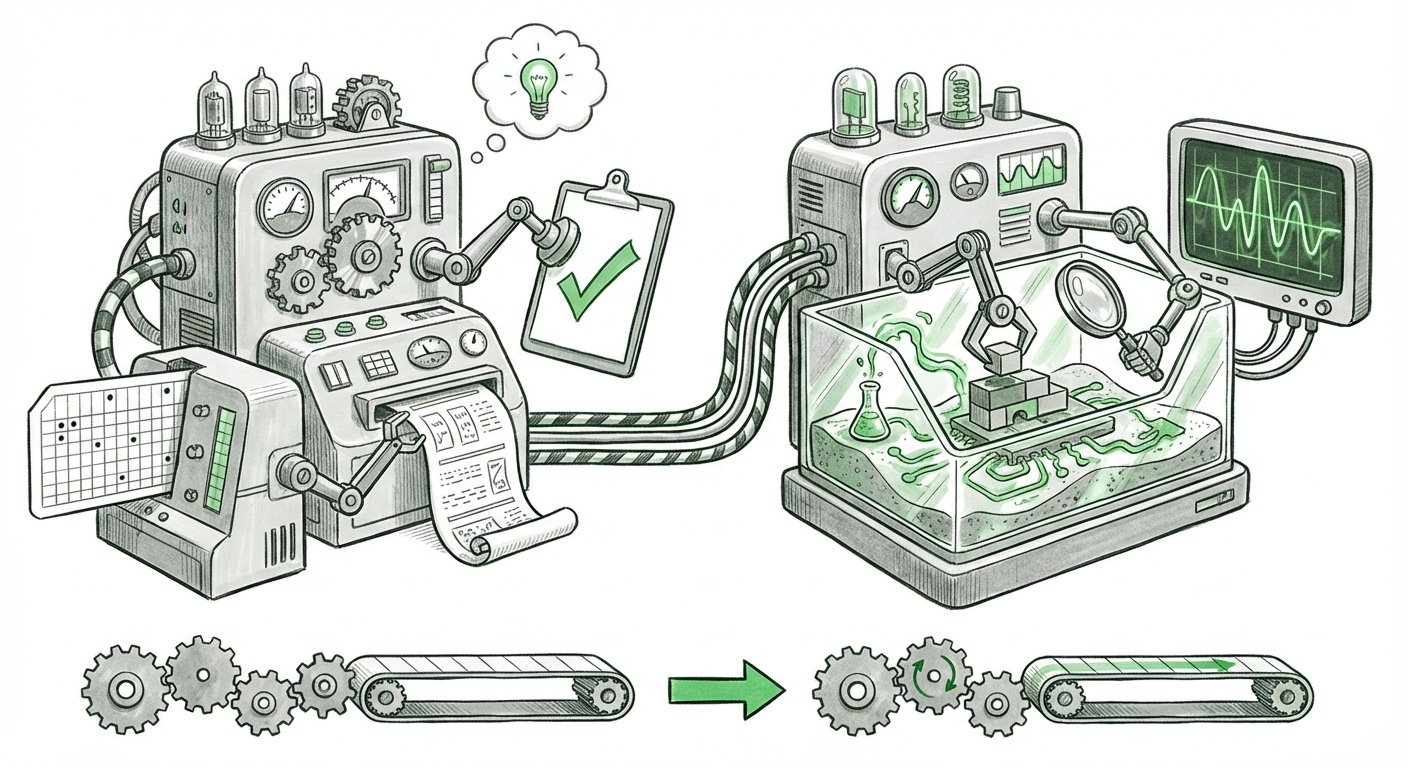
A new update in the world of AI infrastructure takes direct aim at that gap. The team behind vLLM, one of the most widely used open-source engines for serving large language models, has shipped a native-speed Transformers modeling backend. In plain language: models written in the popular Transformers modeling format can now run inside vLLM at full speed, instead of being a slow fallback option.
That sounds like an engineering footnote. It is not. It quietly removes one of the biggest bottlenecks in the AI ecosystem, and it changes the math for anyone building with open models.
First, the Setup: Two Worlds That Rarely Talk
To understand why this matters, you need to know that the AI world runs on two different kinds of software, and they have very different goals.
The modeling world is built around Transformers, the open-source library that most researchers and developers use to define and load models. It is flexible, readable, and community-driven. Thousands of models live in this format. If a research lab invents a new attention trick or a new layer design, it usually shows up here first.
The serving world is built around engines like vLLM. These engines are obsessed with one thing: throughput. They batch many requests together, manage memory carefully, and squeeze every bit of speed out of the hardware. This is the software that stands between a model and millions of real users.
The problem? These two worlds have historically spoken different languages. A model that exists in the Transformers format often needed to be rewritten, or "ported", into the serving engine's own internal format before it could run fast. That rewrite takes engineering time. It creates a lag between a model being released and a model being usable at scale. And for smaller teams, it can be an outright wall.
What "Native Speed" Actually Changes
The phrase native-speed Transformers modeling backend is doing a lot of work in a few words. Here is the breakdown.
1. It turns a fallback into a first-class path
Many serving engines already had a way to run Transformers models, but as a backstop. It worked, but it did not get the full benefit of the engine's performance machinery. A "native-speed" backend means those models are no longer second-class citizens. They get the fast lane.
2. It shrinks the gap between release and deployment
When a new open model lands, teams no longer have to wait for someone to hand-optimize it for their serving stack. If the model speaks the Transformers format, the engine can pick it up and run it well. That flips the timeline from weeks of porting to hours of testing.
3. It keeps the flexibility of the modeling library
This is the part that gets overlooked. The usual trade-off in AI infrastructure is speed versus flexibility. Pick the fast engine and you are locked into its supported model list. Pick the flexible library and you accept slower serving. A native-speed backend argues that you should not have to choose.
4. It opens the long tail of models
The AI ecosystem is not just a handful of giant flagship models. It is tens of thousands of specialized models, fine-tunes for legal text, code, medicine, translation, customer support in a specific language, or a niche domain nobody has built a fast path for. The long tail is where most real business value hides. Making that tail fast is a much bigger deal than making the head slightly faster.
The Bigger Trend: Infrastructure Is Catching Up to the Model Boom
Step back, and you can see this release as part of a larger pattern. For the last few years, model capability has raced ahead of the tooling that delivers it. Research teams published faster than operations teams could deploy. The result was a strange imbalance: extraordinary models sitting idle because the plumbing around them was too slow or too fiddly.
What we are watching now is the infrastructure correction. The competitive frontier is shifting from "whose model is smartest" to "who can actually run it, cheaply and reliably, for real users." That shift has three visible consequences.
First, serving engines are becoming the true platform layer. The engine you choose shapes your costs, your latency, and your model options. It is no longer a background detail, it is a strategic decision.
Second, compatibility is becoming a feature. The vendors and projects that win will be the ones that let you bring your own model with minimal friction. Lock-in is getting expensive, and buyers know it.
Third, the cost of experimentation is collapsing. When any Transformers-format model can run fast, testing ten models costs roughly the same engineering effort as testing one. That changes how teams make decisions, from careful bets on a single model to broad, continuous evaluation.
What This Means for the Future of AI
Smaller teams get real leverage
The most important effect may be organizational, not technical. Historically, running a model at scale required a dedicated performance engineering team, people who could read GPU kernels and rewrite model code. Most companies do not have that team. A backend like this hands a large share of that capability to anyone who can install a package. That is a meaningful democratization of the deployment layer.
Specialization becomes practical
If every model can be served efficiently, then using a small, specialized model for a narrow task stops being a compromise. Instead of one giant general-purpose model answering every question, companies can route work to a fleet of right-sized models. That is usually cheaper, faster, and easier to control.
The "model churn" era accelerates
When swapping models is cheap, teams will swap more often. Expect model selection to become a continuous process rather than a one-time architecture choice. The winners in that world will be the organizations with strong evaluation pipelines, not necessarily the ones with the biggest model.
Open models get more competitive with closed ones
Closed, hosted models sell convenience. Open models sell control. The main thing holding open models back, in many companies, was the operational lift. Every time that lift shrinks, the open ecosystem becomes a more credible default for production workloads.
Practical Implications for Businesses
Here is what this means if you are running or buying AI systems.
- Your serving engine choice now matters more than your model choice. A flexible, high-throughput engine protects you from being stuck on one vendor's roadmap. Evaluate the engine as carefully as you evaluate the model.
- Revisit models you rejected for performance reasons. Some of the models you ruled out were ruled out because they were slow to serve, not because they were inaccurate. That reason may no longer hold.
- Budget for evaluation, not just inference. Cheap trials mean more trials. The bottleneck moves from "can we run it" to "can we tell whether it is good."
- Expect lower unit costs, and reprice accordingly. More efficient serving usually translates into lower cost per request over time. Do not sign long contracts that assume today's efficiency levels.
- Keep portability in your architecture. Use standard model formats and keep your application layer decoupled from any single serving stack. This release is a good reminder that the layer underneath you can change quickly.
Actionable Insights: A Short Playbook
For engineering leaders
Run a two-week spike. Take three models your team would genuinely like to use, including at least one niche or fine-tuned model that previously felt too awkward to serve, and get them running in production-like conditions. Measure latency, throughput, and memory. The point is not to find the fastest number. The point is to find out how much friction your current stack is adding, because that friction is now optional.
For product teams
Ask a different question in your next planning cycle. Instead of "which model do we standardize on," ask "how many tasks could be handled by a smaller, dedicated model if serving were free?" That framing usually surfaces cost savings and latency wins you had written off.
For finance and procurement
Treat inference cost as a moving target, not a fixed line item. Serving efficiency in the open-source ecosystem is improving quickly, and the organizations that re-bid and re-benchmark regularly capture savings that their slower-moving peers leave on the table.
The Honest Caveats
No single backend change solves everything. Real-world deployment still involves testing, tuning batch sizes, checking output quality, and managing failures. A compatibility layer that runs a model quickly does not guarantee that the model is good at your task, that is a separate evaluation problem, and it remains the harder one. There is also a maintenance question: supporting a huge variety of model architectures is a long-term commitment, and teams should watch how consistently new models are covered.
Still, the direction is unmistakable. The gap between "a model exists" and "a model is deployable" is closing, and it is closing on the side that matters most for adoption.
Conclusion
The most important AI news is increasingly not about a new model at all. It is about the unglamorous plumbing that decides whether models ever reach real users. A native-speed Transformers backend inside vLLM is exactly that kind of news: quiet, technical, and disproportionately influential. It says that flexibility and performance no longer need to be enemies, that the long tail of specialized models is now fair game for production, and that the barrier to running serious AI is falling.
For builders, the takeaway is simple and urgent: audit your serving stack now. The constraint you designed around last year may already be gone, and the teams that notice first will ship faster, spend less, and adapt sooner when the next wave of models arrives.