AI for Food Allergies: How Smart Tech Is Changing the Way We Eat Safely
For the millions of people living with food allergies, every meal is a small act of risk management. Reading a label in a dimly lit grocery aisle. Asking a server to double-check the kitchen. Deciding whether "may contain traces of" is a warning or just legal cover. It is exhausting, unglamorous work, and it is exactly the kind of high-stakes, high-repetition problem that artificial intelligence is built to take on.
AI for food allergies is no longer a niche research curiosity. It sits at the meeting point of several powerful trends: better computer vision, cheaper natural language processing, richer health data, and a public that is increasingly comfortable letting software make judgement calls on its behalf. The result is a field that is quietly reshaping how food is labeled, sold, prepared, and eaten.
This is not a story about a single product. It is a story about what happens when AI moves from answering questions to preventing harm, and what that shift means for the next decade of AI adoption.
Why Food Allergies Are Such a Hard Problem for Software
Most AI success stories involve clean data. Photos with clear labels. Text with clear grammar. Food allergies are the opposite. They are messy from end to end.
Start with ingredients. A single packaged product can list dozens of components, each with its own supply chain and its own sub-ingredients. Terms change by country. Labels use legal names that shoppers do not recognize. "Natural flavoring" can hide almost anything. Then add the manufacturing reality: shared equipment, shared factories, and advisory warnings that are voluntary in many places and inconsistent everywhere.
Now add the human side. Allergy severity varies enormously from person to person. The same food can be fine for one person and life-threatening for another. Reactions depend on dose, preparation, exercise, illness, and a dozen other factors that no label could ever capture.
That combination, messy text, missing context, and individualized risk, is precisely why simple rule-based apps have struggled for years. It is also why modern AI has a real shot. Machine learning is at its best when the rules are too complicated to write down by hand.
The Four Places AI Is Already Making a Difference
1. Reading Labels Better Than Humans Can
The most immediate use is also the most practical. Large language models are excellent at taking a dense ingredient panel and translating it into plain language. They can flag hidden allergen terms, cross-reference synonyms, and explain why a particular ingredient matters for a specific person's profile.
This sounds simple, and it is not. A useful label assistant must be conservative by design. A false alarm is annoying. A missed allergen can be fatal. That means the best systems combine AI interpretation with hard-coded allergen databases and clear "we are not sure" signals, a pattern that will define safety-critical AI more broadly.
2. Seeing Food, Not Just Reading About It
Computer vision has advanced fast enough to make menu scanning genuinely useful. Point a phone at a restaurant menu and AI can highlight likely problem dishes, ask better questions, and even draft the exact wording a diner should use with staff.
Vision also reaches into the kitchen. Camera-based systems can support quality checks on production lines, helping spot mislabeled packaging or cross-contact risks before products ship. At home, image recognition can help people identify dishes and ingredients they may not recognize.
3. Predicting Risk Instead of Just Reporting It
The bigger shift is from information to prediction. With enough data, models can start to estimate how likely a given product, recipe, or restaurant is to present a risk for a specific person. That is a fundamentally different value proposition. It moves AI from "here is what the label says" to "here is what you should probably do next."
Prediction is powerful and dangerous in equal measure. The moment software implies a safety guarantee, it inherits legal and ethical responsibility. Expect the strongest products in this space to stay firmly in the lane of decision support, surfacing evidence, showing reasoning, and keeping the human in charge.
4. Accelerating Allergy Research
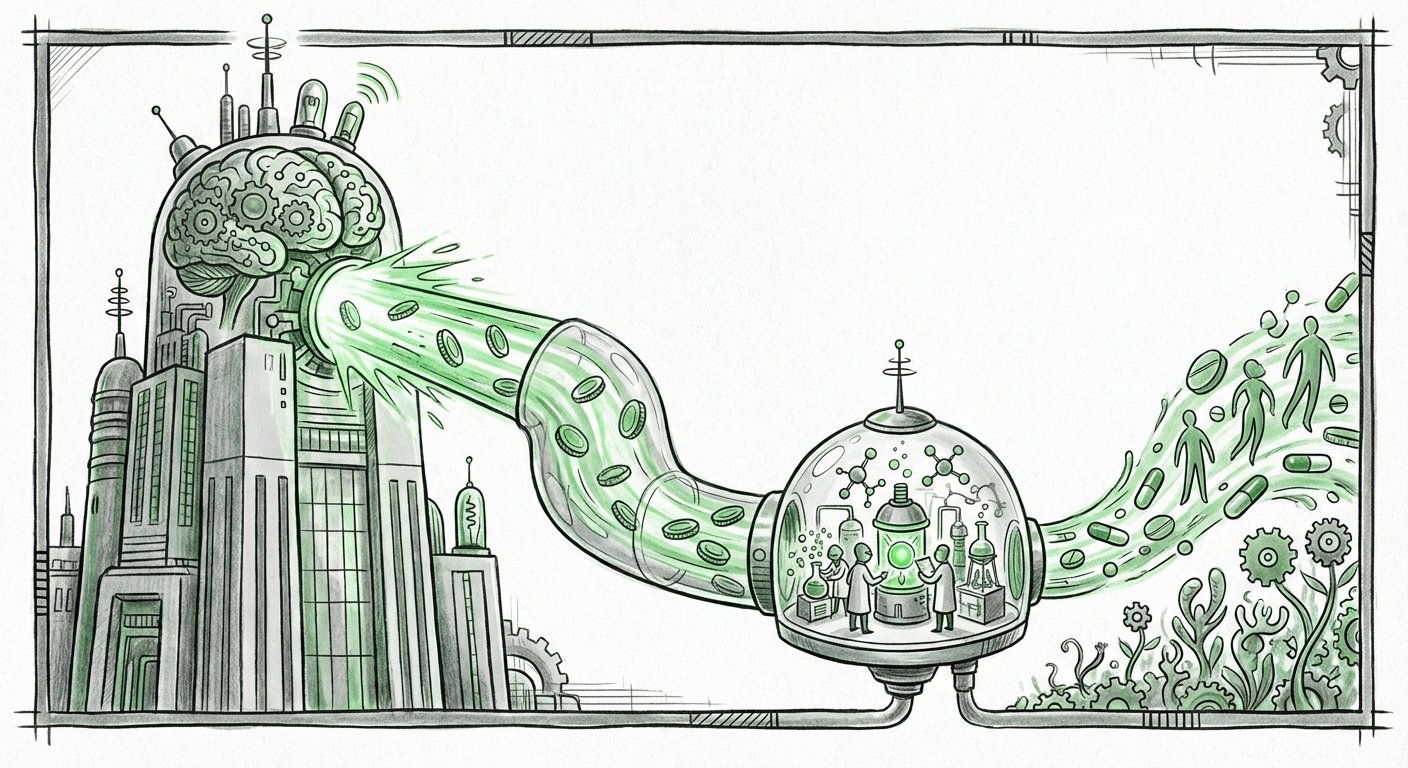
Behind the consumer apps, AI is changing the science itself. Machine learning helps researchers analyze proteins, identify structures that trigger immune responses, and sort through enormous datasets of patient outcomes. It speeds up literature review, suggests candidate targets, and helps design studies.
This is where the long-term payoff may be largest. Better understanding of how allergens interact with the immune system is the foundation for better diagnostics, better treatments, and eventually prevention. AI does not cure allergies, but it compresses the research cycle that leads to cures.
From Reactive to Proactive: The Real Shift
The deepest change here is not technical. It is behavioral. For decades, food allergy management has been reactive: read the label, ask the question, carry the medication, respond to the reaction. AI pushes the whole system earlier in time.
When a phone can flag a risk before a purchase, a kitchen system can catch a mistake before a plate leaves the pass, and a research model can spot a pattern before a trial begins, the burden shifts from managing emergencies to preventing them. That is the same arc we have seen in other safety-critical fields, and it is usually the moment an industry changes shape.
For AI as a whole, food allergies are a useful test case. They combine everything the next generation of AI systems must handle well: unreliable inputs, real-world consequences, personal data, regulatory scrutiny, and a user base that will not tolerate confident mistakes.
What This Means for Businesses
Food manufacturers face the clearest pressure. Ingredient data quality is becoming a competitive asset. Companies that can produce clean, machine-readable allergen information will find it far easier to plug into the retail and dining platforms that consumers increasingly rely on.
Restaurants and food service get a practical upgrade path. AI-assisted menu analysis and staff training tools can reduce the risk of serious incidents without requiring every server to become an allergen expert. The operators who move early will likely see fewer incidents and stronger customer trust.
Retailers and delivery platforms have an opportunity to build allergen awareness directly into search and checkout. A shopper who can filter safely by their own profile is a shopper who buys with confidence.
Healthcare and insurers should watch closely. Better allergen data and better prediction could eventually support more personalized advice and earlier intervention, though any use of health data raises privacy questions that will need clear answers.
Builders of AI products get a blueprint. Safety-critical consumer AI needs three things working together: strong models, authoritative reference data, and honest uncertainty. Skip any one and trust collapses fast.
Actionable Steps for Teams Exploring This Space
- Start with data hygiene. Audit your ingredient and allergen records before you build anything. Models cannot fix bad inputs.
- Design for the false negative. Assume your system will miss something. Build in escalation, human review, and plain-language warnings.
- Show your work. Users need to see why the AI flagged something. Explainable output is not a nice-to-have when allergens are involved.
- Keep a human in the loop. Position AI as a helper that sharpens judgement, not a replacement for it.
- Plan for regulation. Labeling rules and liability frameworks differ by region and are still evolving. Build flexibility in early.
- Measure real outcomes. Track near misses and user-reported incidents, not just engagement. The metric that matters is harm avoided.
The Limits Worth Remembering
AI is not a shield. It cannot test a dish, inspect a factory floor, or guarantee that a supplier told the truth. It cannot know that a person's sensitivity changed, or that tonight's reaction will be worse than last time.
There are also equity concerns. Tools that live on premium phones and rely on well-digitized restaurant menus will serve affluent, urban users first. The people who need help most, those with limited access to specialists and safe food options, may be the last to get it. Closing that gap is a design choice, not an automatic outcome.
And there is the trust problem. A single high-profile failure can set a whole category back. The companies that win here will likely be the cautious ones: the teams that say "I don't know" out loud and hand the decision back to the user.
The Road Ahead
AI for food allergies is a small slice of the AI market, but a revealing one. It shows what happens when machine learning is pointed at problems where being usually right is not good enough. The lessons it teaches, about data quality, uncertainty, explainability, and human oversight, will carry directly into medicine, transport, finance, and every other domain where AI is being asked to hold something precious.
For anyone building in this space, the opportunity is real and the responsibility is larger. The goal is not a clever app. The goal is a world where a parent can hand a child a snack without a flash of fear, and where the technology behind that moment is boring, reliable, and quietly everywhere.