App Price Updates for In-App Purchases and Subscriptions: Why a Routine Notice Is a Big Deal for the Future of AI
On January 29, 2026, developers and sellers got the kind of notice that quietly lands in inboxes and gets skimmed in ten seconds: price updates for apps, in-app purchases, and subscriptions. No fireworks. No keynote. Just a business-as-usual administrative update about what things cost inside the world's app marketplaces.
But look closer. That single line touches the entire money engine of the software economy, and the software economy is now the AI economy. How apps are priced is how AI gets paid for. How subscriptions are structured is how AI companies survive. How in-app purchases are handled is how the next wave of intelligent products reaches hundreds of millions of people.
This article breaks down what price updates for apps, in-app purchases, and subscriptions really mean, why they matter more in the AI era than they ever did before, and what smart businesses should do about it right now.
The Basics: What "Price Updates" Actually Covers
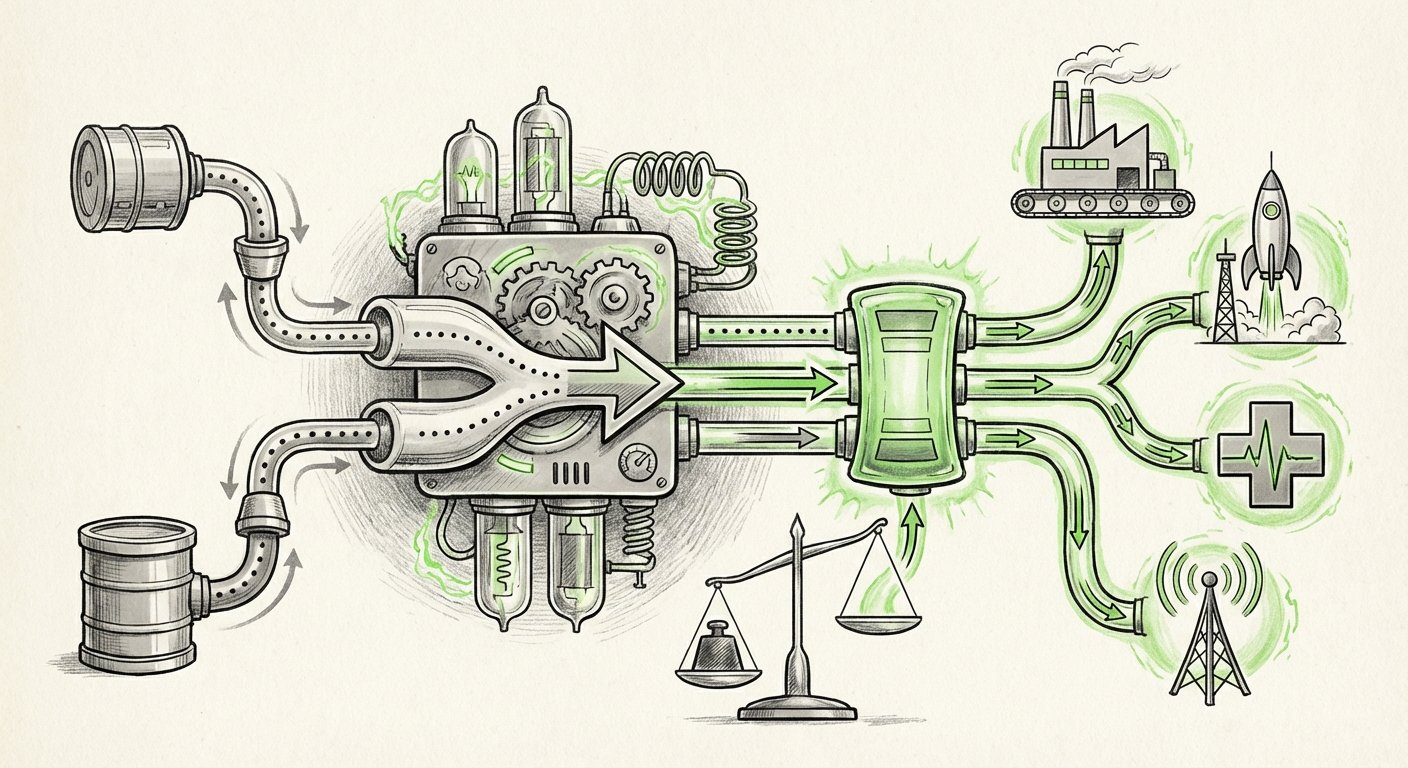
When a marketplace announces price updates for apps, in-app purchases, and subscriptions, it is usually describing the plumbing behind three very different ways of charging people:
- The app itself, the upfront price to download or unlock software. This is the oldest model, and the one most people understand best.
- In-app purchases, one-time buys inside an app. Credits, levels, features, add-ons, unlockable tools. You pay once, you get a thing.
- Subscriptions, recurring charges that keep the lights on month after month. This is now the default for anything that runs on a server, and AI almost always runs on a server.
The reason these three categories get bundled into a single update is that they share the same underlying machinery: tax handling, currency conversion across regions, store fees, renewal rules, and the developer tools that let sellers set and change what they charge. When any one piece of that machinery shifts, all three models feel it.
For most of the last decade, these notices were boring infrastructure news. That is no longer true.
Why This Is Suddenly an AI Story
Here is the core tension of the AI business in one sentence: AI products cost money every single time someone uses them, but customers are used to paying once.
Traditional software is mostly a build-it-once business. You write the code, you ship the app, and the thousandth user costs roughly the same as the first. AI breaks that math. Every prompt, every image generated, every document summarized, every agent action burns compute. The marginal cost of a happy user is real, and it never goes to zero.
That changes everything about pricing, and price update notices sit right at the center of it.
1. Subscriptions become the default, and the pressure point
Because AI has ongoing costs, subscriptions are the natural fit. A recurring fee matches a recurring cost. But subscriptions also create a new problem: subscription fatigue. Consumers and businesses are already juggling a long list of monthly charges, and every new AI tool wants a slot. When prices shift inside app stores, it is a reminder that the entry price of AI is not really free, it is just deferred into a renewal date.
2. In-app purchases become the packaging layer for AI
AI capability is naturally consumable. A certain number of credits, a certain number of generations, a certain number of agent runs. That maps beautifully onto in-app purchases, but it also means the "price list" of AI is no longer a single number. It is a menu. Any update to how in-app purchases are priced or handled ripples straight through to how AI companies package and sell their intelligence.
3. Free tiers get harder to sustain
Many AI products lean on a generous free tier to build habit. That works when free users are cheap to serve. It gets harder when free users are expensive. Price updates are the moment when companies quietly re-examine the balance: what stays gratis, what moves behind a paywall, and what gets metered.
What This Means for Developers and Product Teams
For anyone shipping an AI-powered app, a price update notice is a prompt to audit, not to panic. Here is the practical checklist.
- Model your true cost per user. Know your compute cost per session, per generation, per agent task. If you cannot state that number, you cannot price intelligently, you are guessing.
- Stop relying on one pricing lever. A healthy AI product usually blends a base subscription with metered usage or credits. That way heavy users pay for what they consume and light users stay comfortable.
- Design the upgrade path before you need it. The best time to build a paid tier is when the free tier still feels generous, not when you are forced to squeeze it.
- Treat pricing as a product feature. It deserves a roadmap, testing, and an owner, not a spreadsheet updated by a founder at midnight.
- Watch the regional picture. Price updates often involve currency and tax adjustments across markets. A price that works in one country may be a barrier in another.
The margin trap to avoid
There is a tempting shortcut in the AI world: keep raising the subscription price and hope usage stays flat. That rarely holds. Heavy users gravitate to whatever gives them the most capacity for the least money, and a flat fee with unlimited use attracts exactly the people who cost you the most. The companies that survive this cycle are the ones that pair a predictable base price with transparent metering.
What It Means for Businesses Buying AI
If you are on the buying side, price updates are a signal to get organized rather than a reason to switch vendors.
Build a real AI budget line. AI spending is now spread across individual team subscriptions, department tools, and API invoices. When prices move, that sprawl becomes expensive to manage. Consolidation is not just about saving money, it is about knowing what you actually pay for.
Push for usage clarity. Ask vendors to explain what counts against your plan. Seats? Tokens? Runs? Messages? The vendors that answer clearly are the ones worth keeping.
Reward predictable pricing. Vendors who cap costs, offer spend controls, or let you set hard limits are giving you something valuable: the ability to say yes to AI without losing sleep over the invoice.
Re-check contracts at renewal. Many subscription shifts take effect quietly at renewal. Put price-change review dates on your calendar so you are never surprised.
What It Means for Society and Everyday Users
Step back from the boardroom and the same story plays out in millions of households. AI is becoming the thing people subscribe to the way they once subscribed to streaming video, and the same fatigue is setting in.
Three social effects are worth watching:
- Access becomes tiered. The most capable AI tends to sit behind the highest price. If the gap widens, we risk a world where quality of assistance depends on ability to pay.
- Transparency becomes a competitive advantage. Clear, honest pricing will increasingly differentiate brands. Hidden renewal jumps erode trust fast, and trust is hard to win back.
- Free tiers define the public baseline. For students, small businesses, and casual users, the free tier is the front door to AI. How long it stays generous is a genuine public-interest question, not just a business one.
There is also a quieter upside. Metered and tiered pricing can make AI cheaper for the majority of light users, who then no longer subsidize a small group of power users. Done well, flexible pricing can widen access rather than narrow it.
The Bigger Trend: Pricing Is Becoming the Real AI Battleground
For the last few years, the AI race was about capability. Who has the smartest model, the fastest response, the longest context. That race is not over, but it is being joined by a second one that may matter more to long-term survival: who can deliver intelligence at a price people will keep paying.
The price update notice is a small artifact of that shift. It exists because app stores, developers, and buyers all need a shared, orderly way to change what things cost. In an AI world, that orderliness matters more than ever, because the cost structure underneath the software is dynamic in a way it never used to be.
Expect three things to accelerate:
- More hybrid pricing. Base subscriptions plus usage credits will become the norm rather than the exception.
- More experimentation. AI companies will test tiers, caps, and bundled credits far more aggressively than traditional app developers ever did.
- More scrutiny. Regulators, buyers, and consumers will all pay closer attention to how recurring AI charges work, especially auto-renewals and price changes.
Actionable Takeaways
For builders: Price for your cost curve, not your feature list. Know your per-use economics, blend subscription with metering, and give power users a clear way to pay more.
For businesses: Audit your AI subscriptions now, consolidate overlapping tools, and insist on usage transparency before you renew.
For buyers: Read the renewal terms. Set a calendar reminder. A five-minute review is cheaper than a year of charges you forgot about.
For everyone: The real question is not whether AI prices will change, they will, repeatedly. The question is whether the pricing models around them are honest, predictable, and fair enough to keep people coming back.
Conclusion
A notice about price updates for apps, in-app purchases, and subscriptions looks like plumbing. It is actually a map of where the AI economy is heading. The shift from one-time purchases to recurring and metered charges is not a small adjustment to how software is sold, it is the shape of an industry learning to charge for something that costs money every time it runs.
The companies that win the next phase of AI will not simply be the ones with the smartest models. They will be the ones who pair great intelligence with pricing that feels clear, fair, and worth renewing. In a market where every renewal is a fresh vote, that is the whole game.