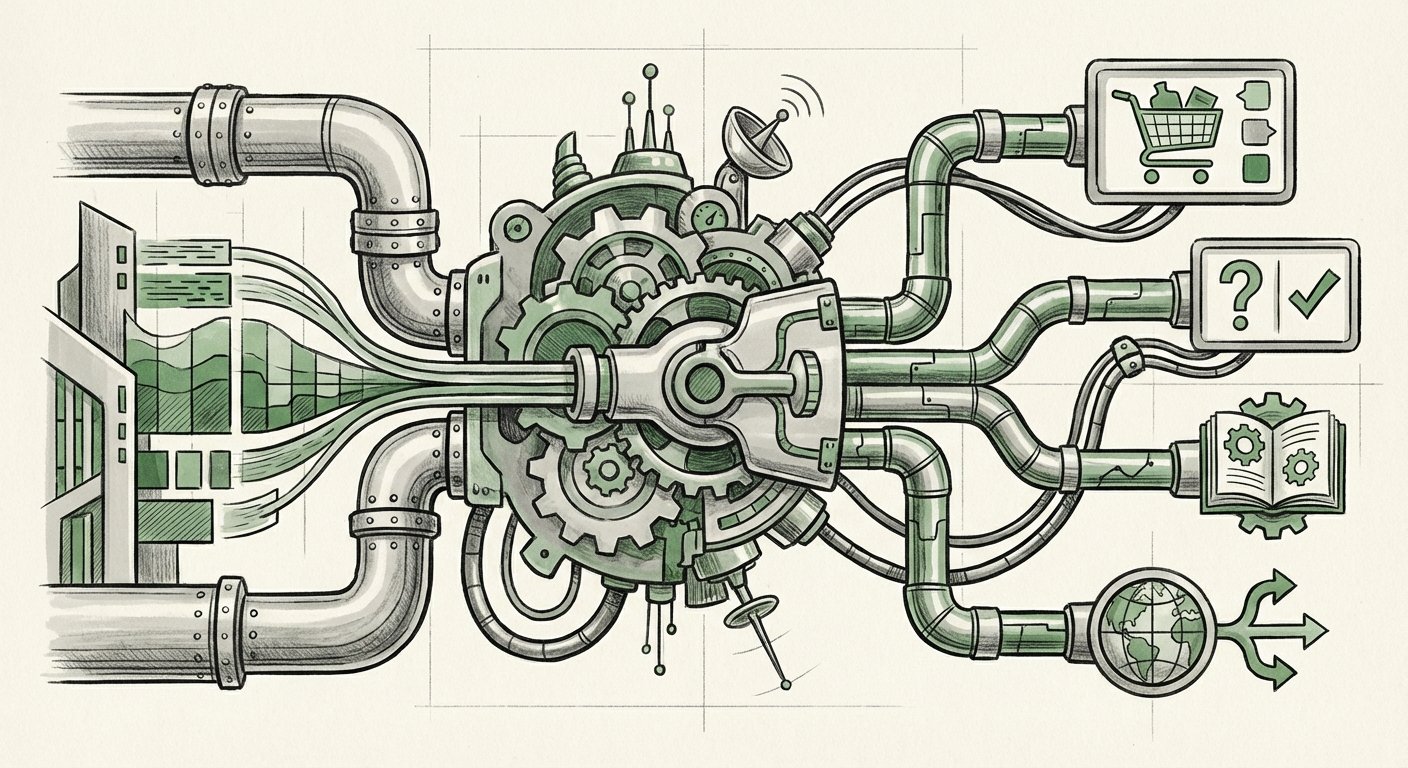
AWS Emulator: A Free Tool That Simulates 200+ Cloud Services, Written Entirely by AI Agents
Most product launches are judged by what the product does. This one will be judged by a single sentence attached to it. AWS has released the AWS Emulator, a free tool that lets developers simulate more than 200 cloud services on their own machines, no cloud account, no network calls, no surprise bill at the end of the month. That alone would be a useful, if unremarkable, developer convenience.
The remarkable part is the claim wrapped around it: the company says AI agents wrote the tool, and the team behind it has not written or reviewed any of its code. Not "assisted with." Not "generated boilerplate and a human checked it." Written, with no human code review in the loop.
If that claim holds up, it is one of the clearest signals yet that AI has crossed from being a helpful typing assistant into being a producer of shipping software. And it forces every engineering leader to answer a question they have been quietly avoiding: if nobody read the code, why do we trust it?
What the AWS Emulator Actually Does
A cloud emulator is a local stand-in for the real thing. Instead of pointing your application at live cloud infrastructure, you point it at software running on your laptop that behaves like that infrastructure. The services respond. The calls succeed or fail the way you'd expect. Your tests run.
At 200+ simulated services, the scale is the story. Many emulators cover a handful of popular services, storage, queues, databases. Covering hundreds means a developer could, in principle, build and test a fairly complex application end to end without ever touching a live environment.
The practical benefits are the ones developers have wanted for a decade:
- Speed. Local calls return in milliseconds. Remote calls do not.
- Cost. Test suites that hammer real infrastructure cost real money. Emulated ones don't.
- Offline work. Airplanes, coffee shops, and locked-down corporate networks stop being obstacles.
- Safety. You cannot accidentally delete a production resource that doesn't exist.
- Free. No license, no seat count, no tier to upgrade past.
That is a genuinely useful tool. But it is not why this release matters.
The Real Headline: Code Nobody on the Team Read
Read the claim again, slowly. A team shipped a tool. The team did not write the code. The team did not review the code.
Those are two very different admissions. "AI wrote it" is now familiar, most developers use some form of code generation daily. "No human reviewed it" is the part that breaks the model most engineering organizations are built on.
Human code review exists for a reason. It is not primarily about catching typos. It is about catching intent, the difference between what a developer meant to build and what they actually built. Reviewers spot the missing permission check, the log line that leaks a secret, the loop that never terminates. Review is where accountability is assigned: a named person said this is acceptable, and their reputation is attached to it.
Remove the reviewer and you remove the named person. What replaces them?
From Autocomplete to Autonomy
The important shift here is not about code volume. It is about the shape of the work.
Early AI coding tools suggested the next line. Then the next function. Then, more recently, they began taking a task, "make this test pass," "add this endpoint," "fix this bug", and working through the steps themselves: reading files, writing code, running tests, hitting an error, trying again.
That loop is the difference between a tool and a worker. A tool does what you do with it. A worker pursues an outcome. Once an agent can run tests and react to failures, it has a feedback signal. And with a feedback signal, quality stops depending entirely on a human reading every line, it starts depending on whether the thing passes.
This is why a project like the AWS Emulator is plausible rather than fantastical. An emulator is unusually well suited to agentic development. It has clear behavioral targets. It has tests. Success is measurable, does the simulated service respond the way the real one does? A team can point agents at that goal, build automated checks, and iterate. The verification is built into the problem.
The Trust Problem Nobody Has Solved Yet
Here is the uncomfortable gap. "The team hasn't reviewed the code" does not mean "nobody checked anything." It means the checking, whatever form it took, was not human line-by-line reading.
So what did it look like? There are only a few honest possibilities, and each carries a different risk profile:
- Tests as the gate. If behavior is heavily tested, an unread codebase can still be a correct one, for the behaviors that were tested.
- Agent review. Other AI agents audit the code for bugs and security issues. Faster than humans at some things, blind to others.
- Runtime evidence. The tool works in practice, observed over time. This is trust earned retroactively, not designed in.
Every one of these approaches has a known weakness: they verify what you thought to check. A test suite confirms the code does what the tests say. It says nothing about what the code does when nobody is looking, the edge case, the unusual input, the quiet data leak. Human reviewers are inconsistent and slow, but they are good at noticing the thing that shouldn't be there. That instinct is hard to automate because it depends on context, experience, and suspicion.
None of this makes the AWS Emulator unsafe. It makes the question urgent. Every organization adopting agent-written code needs an answer to it that is better than "the tests passed."
What This Means for Developers
The near-term reality is a shift in what the job rewards.
When agents can produce working implementations, the scarce skills move up a layer. Specifying the problem precisely. Designing the verification. Deciding what "correct" means before any code exists. Judging architectural trade-offs that no test can score.
For junior developers, this is a real disruption. The traditional path to seniority ran through writing a lot of code and having it reviewed, that's how judgment gets built. If agents absorb the entry-level work, the apprenticeship pipeline needs rebuilding deliberately, not discovered by accident.
For senior engineers, the leverage is real. A single person can now direct a fleet of agents and spend their own time on the parts that require taste. But leverage cuts both ways: a person who cannot evaluate what the agents produced is not leveraged, they are exposed.
What This Means for Businesses
The business case writes itself, which is exactly why caution is warranted.
On the upside: software gets cheaper to build, faster to ship, and easier to maintain in the sense that more can be attempted. Small teams can take on projects that previously needed departments. Free tools like the AWS Emulator lower the on-ramp for the whole ecosystem, which is good for the cloud platform too, more people building against its services, earlier.
On the risk side: liability does not shrink because the code was machine-written. If a customer's data leaks through an unreviewed code path, no regulator will accept "the agents wrote it" as a defense. Boards should expect the same governance over agent-written code that they expect over anything else touching money, health, or personal data: provenance records, mandatory test coverage thresholds, independent security scanning, and named human owners who sign off, even if they never read a line.
There is also a supply-chain angle. A tool this widely adopted becomes infrastructure. If a free emulator becomes the default local testing environment for a large share of developers, its behavior, and its bugs, propagate quietly across thousands of codebases. Openness helps here. A free, inspectable tool can be audited by anyone, which is a meaningful counterweight to an unread codebase.
The Bigger Picture: Accountability Is the Bottleneck Now
The interesting question is no longer "can AI write software?" The answer is visibly yes, at least for well-scoped problems with clear success criteria.
The question is: what happens to accountability when the author and the reviewer are both machines?
Every mature industry has solved a version of this. Construction has inspections. Pharmaceuticals have trials. Aviation has checklists and certification. None of them rely on the builder's word alone, and none of them require the regulator to personally re-lay every brick. They rely on processes that produce evidence.
Software is heading toward the same model. The teams that do well will be the ones that treat verification, tests, simulations, audits, monitoring, as the primary engineering artifact, and treat the code itself as a byproduct. It is a strange inversion of how most of us learned the craft. It is also the only coherent answer to a world where code arrives faster than humans can read it.
Actionable Steps for Teams Starting Now
- Define "done" before you delegate. Agents optimize toward what you measure. Write the acceptance criteria and tests first.
- Track provenance. Know which code was agent-generated, by which agent, under which prompt, and keep it in version control alongside the code.
- Require a named human owner. No merges without a person accountable, even if that person's review is of the tests and the diff summary rather than every line.
- Make security scanning non-optional. Automated review is cheaper to run than human review and catches different classes of problem. Run both where it matters.
- Watch the apprenticeship gap. Give junior engineers deliberate practice on problems that build judgment, not just throughput.
- Adopt local emulation for cost and speed, but verify that emulated behavior matches production before you trust it as a release gate.
- Pilot in low-stakes systems first. Learn where agent-written code fails before it's handling anything you can't afford to lose.
Conclusion
The AWS Emulator is a good tool with a small, strange footnote that happens to be the most important thing about it. A team shipped software and admitted, plainly, that they didn't write or review any of it. That admission is either the beginning of a new and much faster era of software production, or a warning label we are choosing not to read.
Probably both. The honest position is that we are watching the profession renegotiate its core assumption, that a human being understood the code before it shipped. That assumption is now optional. What replaces it must be built deliberately, by people who understand that trust is a process, not a promise. The organizations that build that process well will get the speed without the sleepless nights. The ones that don't will find out exactly which behaviors they forgot to test.