Google's Gemini Decisions API: Why AI That Makes Decisions Is the Next Big Shift
For the last few years, AI has mostly been asked to answer things. Write this email. Summarize this report. Explain this code. Useful work, but limited work. Now the question is changing. Can AI decide?
That is the shift behind Google's move into the decision model market with its new Gemini Decisions API. The company is pushing past chat and into the messier, more valuable layer of business life: choosing what to do next. Not just describing the options, but picking one, explaining why, and doing it inside the tools companies already run on.
This is a bigger deal than another model update. It marks the moment large AI companies start competing over judgment itself, the thing businesses have always paid people to supply.
What Is a "Decision Model" Anyway?
Most AI today is a prediction machine. Show it a picture, it says "cat." Show it a sentence, it guesses the next word. Show it a customer, it estimates the odds they will cancel.
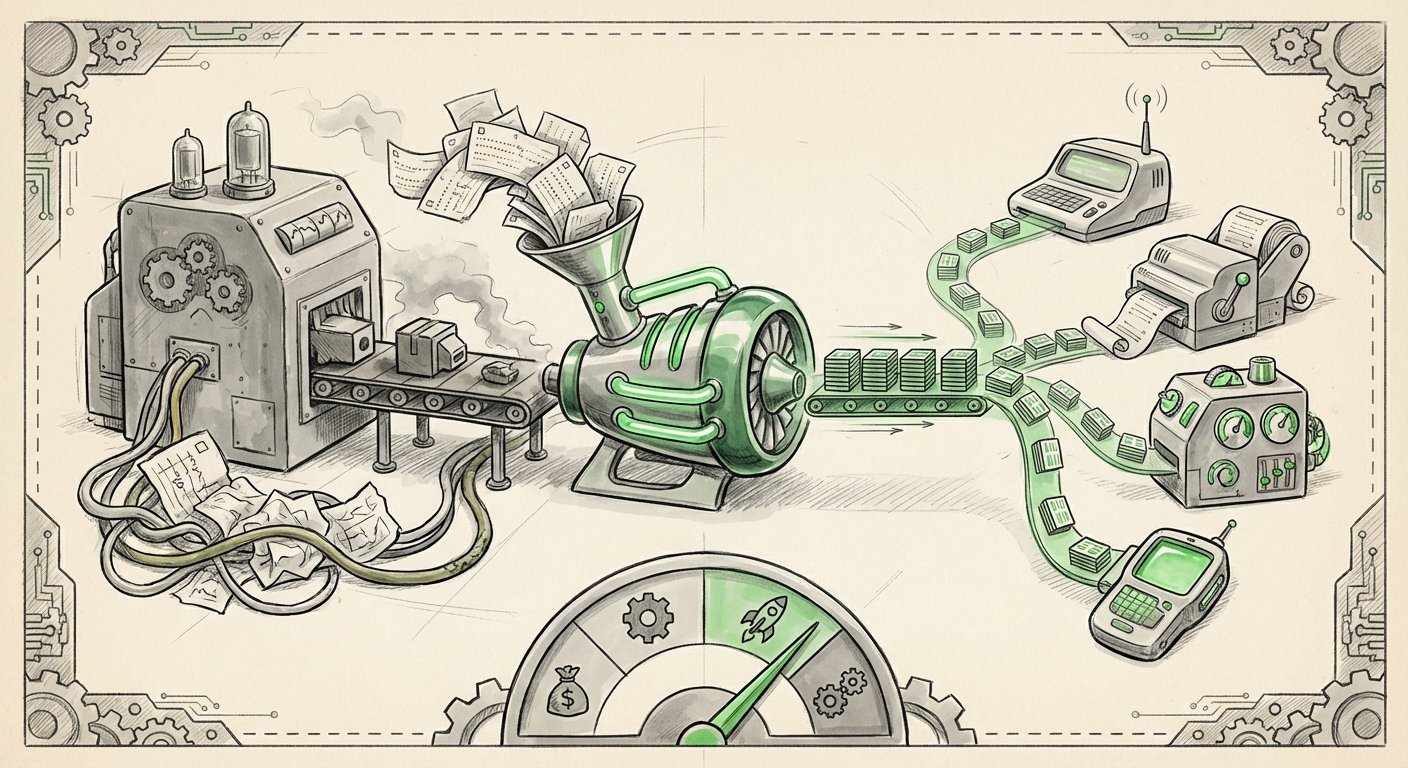
A decision model does something different. It takes a messy situation, looks at possible paths, weighs trade-offs, and recommends an action. Then it explains the reasoning in plain language.
Think of the difference between a weather app and a pilot. The app tells you the conditions. The pilot uses them to land the plane.
An API, short for application programming interface, is a way for software to talk to other software. So a Decisions API means developers can plug that decision-making ability straight into their own systems. A pricing tool. A claims system. A staffing dashboard. The AI does not just sit in a chat window. It sits inside the workflow, where the actual money gets made or lost.
Why This Market Matters More Than Chatbots
Chat assistants are becoming ordinary. Several companies offer them. They are easy to copy. Their prices keep falling. The real value is moving to the layer where choices carry consequences.
Consider where businesses actually lose money. Not in writing emails. In setting the wrong price, shipping the wrong amount of stock, approving the wrong loan, or staffing a store on the wrong day. Each of those is a decision with a cost attached.
Whoever supplies the engine that makes those calls, reliably, at scale, with an explanation attached, sits at the center of enterprise software. That is a much stickier position than being the chatbot in the corner.
It also fits Google's strengths. Decision models need three things: huge amounts of data, heavy computing power, and tight links into cloud infrastructure. Google has all three. The Gemini Decisions API is the company turning those advantages into a product other businesses can rent.
Three Ways This Reshapes the Future of AI
1. AI moves from content to consequences
When AI just writes text, a bad output is annoying. You fix it and move on. When AI approves a refund or reprices a product, a bad output costs real money. That changes everything about how these systems get built.
The industry will have to shift from "make the answer sound good" to "make the answer be right, and prove it." Expect accuracy, audit trails, and confidence scores to matter more than clever phrasing.
2. Explanations become a product feature, not a nice extra
No manager will sign off on a system that says "trust me" when a customer's loan is on the line. A decision the business cannot explain is a decision it cannot defend to a regulator, a board, or a customer.
So the winners in this market will be the systems that show their work. Not a full essay, just the factors that mattered, the data behind them, and how sure the model is. That is the difference between a tool people use and a tool people fear.
3. Agents need a decision layer to be useful
AI agents, software that takes multi-step actions on its own, have a well-known problem. They can act, but they are not always good at deciding whether to act.
Give an agent a decision layer and it changes. Should this ticket be escalated? Is this refund above the normal pattern? Does this deal need a human? Those are judgment calls. A Decisions API gives agents something closer to judgment, with rules around it.
In other words, decision models are likely to become the quiet backbone that makes agentic AI safe enough to actually deploy.
What This Could Look Like Inside a Real Business
The uses are not exotic. They are the boring, high-volume calls that companies make thousands of times a day.
- Pricing and discounts: deciding what to charge, and when a discount is worth it.
- Inventory and supply: choosing reorder points when demand is jumpy and shipping is slow.
- Claims and refunds: flagging the straightforward ones and routing the rest to people.
- Credit and risk: weighing who gets approved, with the reasoning on record.
- Staffing: matching schedules to predicted demand rather than last year's calendar.
- Marketing spend: moving budget between channels as results come in.
- Customer support: deciding what to resolve automatically and what needs a human.
Notice the pattern. These are not creative tasks. They are repetitive judgment calls with clear costs and clear feedback. That is exactly where decision models can prove themselves fastest.
The Risks Nobody Should Skip Past
Decision models bring a new kind of risk, and it does not look like the old ones.
A content model that gets things wrong produces a bad paragraph. A decision model that gets things wrong produces a pattern, thousands of small, consistent mistakes that look like policy. A pricing engine that leans slightly too aggressive, a claims filter that shaves too fine, an approval model that quietly favors one group over another. These problems do not announce themselves. They hide in the average.
Three guardrails matter most:
- Reversibility. Let the model handle the calls you can undo. Keep humans on the ones you cannot.
- Record keeping. Every decision should leave a trail: what the model saw, what it chose, how confident it was.
- Regular checks. Models drift as the world changes. What was right last quarter may be wrong this one, and nobody will notice unless you look.
There is also a human side. When a system makes the call, who owns the outcome? Companies need a clear answer before they deploy, not after. "The model decided" is not a defense anyone wants to give.
Actionable Steps for Business Leaders
Whether or not you touch the Gemini Decisions API directly, the direction of travel is clear. Here is how to get ready.
- List your decisions. Write down the ten highest-volume or highest-cost calls your teams make each week. That list is your roadmap.
- Sort by stakes. Split them into reversible and irreversible. Start with reversible. Prove value there before touching anything that cannot be undone.
- Find the feedback loop. A decision you cannot measure is a decision you cannot improve. If you cannot tell whether the call was good, fix that first.
- Build a test set of real cases. Pull a hundred past decisions with known outcomes. Use them to check any tool before it goes live, and to catch drift later.
- Set the rules in advance. Define limits, price floors, approval ceilings, escalation triggers, and build them in as hard stops rather than suggestions.
- Keep a human in the loop where it counts. Design the handoff now, while volumes are small and the stakes are low.
The Bigger Picture
Every major wave of business software has followed the same path. First it records what happened. Then it reports on what happened. Then it recommends what to do next. The last step has always been the valuable one, and it has always needed a person.
Decision models are the first serious attempt to automate that last step at scale. Google entering this market with the Gemini Decisions API is a signal that the biggest players see the same opening. The competition will not be about who has the smartest chatbot. It will be about who can be trusted with the choices that actually matter.
For businesses, the practical message is simple. Start mapping your decisions now. The companies that understand their own judgment calls, where they happen, what they cost, and how to check them, will be the ones able to plug in these systems safely and move faster than everyone else. The ones that do not will spend the next few years watching, and then catching up.
The AI race has moved on from who can talk best to who can choose best. That is a harder contest, and a far more important one.