Google Cloud Now Has a "Professional Agentic Architect" Certification, Here's Why That Matters for the Future of AI
Something quietly important happened in November 2026. Google Cloud opened the door for people to get certified as a Professional Agentic Architect. It is a job title that barely existed two years ago. Now it has a formal exam, a formal name, and a formal place in the cloud industry's career ladder.
That might sound like a small piece of housekeeping. It isn't. When a major cloud provider builds a certification around a technology, it means that technology has stopped being an experiment and started being something you hire for, budget for, and get audited on. Certifications are how an industry says: this is real now, and we need people who can do it properly.
Let's break down what this means, why it's happening now, and what businesses and workers should actually do about it.
From Chatbots to Coworkers: How We Got Here
For the last few years, most companies used AI in a simple way. You typed something into a box. The AI typed something back. It was helpful, but it was passive. It didn't do anything on its own.
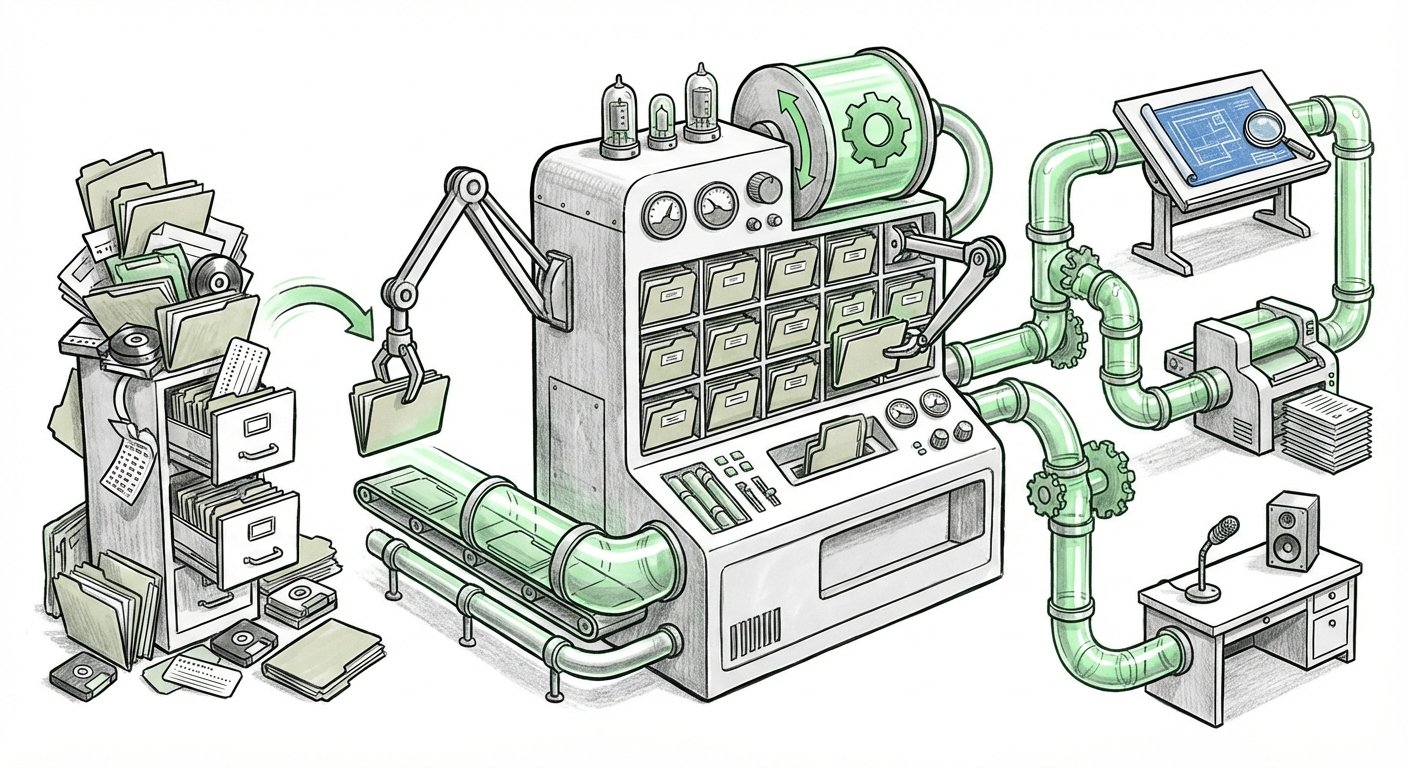
That is changing fast. The newest wave of AI systems doesn't just answer questions, it takes actions. It can look things up, call other software, fill in forms, move data between systems, send messages, check its own work, and try again if something fails. These are called AI agents, and a system built from several of them working together is an agentic system.
This is a huge step up in usefulness. It is also a huge step up in risk. A chatbot that gives a wrong answer is annoying. An agent that gives a wrong answer and then acts on it, booking the wrong shipment, paying the wrong invoice, deleting the wrong record, is a business problem.
That gap between "cool demo" and "safe system running in production" is exactly the gap that a job title like agentic architect is designed to fill.
Why a Certification Is a Signal, Not Just a Badge
Cloud certifications have always done three jobs at once. They give individuals a way to prove skills. They give employers a way to filter candidates. And they give the whole market a shared vocabulary so that a "senior architect" in one company means roughly the same thing as a "senior architect" in another.
When the title being certified is agentic architect, all three of those functions are doing something new. The industry is admitting, publicly, that designing AI agents is a distinct discipline, not just a side task you hand to whichever engineer happens to be interested in AI this quarter.
Think about how other roles matured. Cloud architecture became a real profession once providers codified what "good" looked like. Security engineering did the same. Data engineering did it too. Each time, the certification wasn't the beginning of the trend, it was the moment the trend got institutionalized. Agentic architecture just crossed that line.
What an "Agentic Architect" Actually Has to Think About
The word "architect" is doing heavy lifting here. An agentic architect isn't the person writing clever prompts. They're the person deciding how a whole system of agents is structured, secured, measured, and kept under control. Here's what that world looks like.
Orchestration: who does what, and in what order
Real agentic systems are rarely one giant AI. They're usually a team: a planner that breaks a goal into steps, workers that carry out each step, a checker that reviews the result, and a supervisor that decides when the job is done. Designing that flow, including what happens when a step fails, is architecture, not prompting. It's closer to designing a factory floor than writing a script.
Identity: who is the agent allowed to be?
This is the part most teams underestimate. If an agent is going to act on real systems, it needs an identity. It needs permissions. It needs limits on what it can touch. Should an agent inherit a user's access rights? Have its own narrow service account? Be barred from certain systems entirely? Getting this wrong is how you end up with an AI that can read the entire customer database because nobody thought to say no.
Evaluation and guardrails: how do you know it works?
Traditional software either works or it doesn't. AI agents exist on a spectrum of usually right. So architecture has to include measurement: test sets, success rates, escalation rules, and clear human-in-the-loop checkpoints for high-stakes actions. You can't improve what you can't measure, and you can't ship what you can't trust.
Cost and latency: the invisible budget killers
Multi-agent systems can make many model calls to complete a single task. That multiplies cost and adds delay. An agentic architect has to design for efficiency, caching, routing simple tasks to cheaper models, limiting how many times an agent can loop before giving up. In a demo, none of this matters. In production, it's the difference between a useful tool and an expensive toy.
Grounding: making sure the agent knows the truth
Agents that act need facts they can rely on. That means connecting them to real, current, permissioned data, and designing what happens when the data is missing or stale. An agent that confidently acts on outdated information is worse than no agent at all.
The Bigger Trend: Job Titles Are Catching Up to the Technology
The most interesting thing about this certification isn't the exam. It's the timing.
Historically, new technology arrives first, then tooling, then job titles, then formal education. The agentic wave has compressed that timeline dramatically. Within a very short window we've gone from "agents are a research curiosity" to "there is a professional certification for architecting them." That speed tells you two things.
First, demand is outrunning supply. Companies want to build agentic systems. Far fewer people know how to build them safely. When a skills gap gets that wide, certification programs appear to help the market sort itself out.
Second, the failure stories have already started. Industries rarely standardize a practice until enough people have gotten it wrong. The push toward formal agent architecture is, in part, a response to real deployments that went sideways because nobody designed the guardrails up front.
What This Means for Businesses
A new due-diligence checklist
If you're buying agentic tools or hiring consultants, the existence of this role gives you better questions to ask. Who owns the agent's permissions? How are actions logged? What's the rollback plan when an agent does something wrong? How is success measured? Vendors who can't answer these questions cleanly are selling you a demo, not a system.
The build-versus-buy conversation gets sharper
Many companies will buy agentic features baked into software they already use. That's fine for low-stakes tasks. But the moment an agent touches money, customer data, or regulated processes, you need someone in-house who understands the architecture. Certification doesn't create that person overnight, but it gives you a benchmark for hiring or training one.
Talent strategy should shift
If your team's AI skills are all prompt-writing and no systems thinking, you have a gap. The valuable skill set is shifting toward people who can reason about permissions, failure modes, evaluation, and cost, the unglamorous plumbing that makes agents trustworthy. Look for engineers who think like architects, not just tinkerers.
What It Means for Society and Workers
Certifications like this are also a form of economic signaling. They tell workers which skills the market will pay for. That's genuinely useful in a field that changes monthly, it gives people a target to aim at instead of vague advice to "learn AI."
There's a cautionary side too. When a specific vendor's certification becomes a hiring filter, it can narrow the talent pool toward people who already work near that vendor's ecosystem. That's a real concern for diversity and for smaller organizations that can't afford to send staff through expensive training paths.
The healthier interpretation is that the concepts, orchestration, identity, evaluation, grounding, are portable. Learn them on one platform and they transfer. The certificate is a starting point, not a finishing line.
Risks and Open Questions
A certificate is not competence
Passing an exam proves you can pass an exam. It doesn't prove you've debugged a runaway agent loop at 2 a.m. Employers should treat certification as one signal among many, not a substitute for real project experience.
The moving-target problem
Agentic tooling is evolving quickly. Any curriculum risks being a snapshot of last year's best practice. The most durable skills will be the fundamentals: how to reason about autonomy, risk, and control. Those hold up even as the products change.
The accountability gap
When an agent makes a costly mistake, who is responsible? The person who designed the permissions? The team that deployed it? The executive who approved it? Architecture alone doesn't answer that, but good architecture makes the answer traceable. Expect this to become a board-level conversation, not just an engineering one.
Actionable Insights
- Start with low-stakes agents. Prove your orchestration, logging, and evaluation approach on internal, reversible tasks before touching anything customer-facing or financial.
- Design permissions before prompts. Decide what an agent can reach and do before you decide what it should say.
- Build an evaluation set early. Collect real examples of good and bad outcomes so you can measure changes instead of guessing.
- Budget for tokens, not just seats. Multi-agent systems can multiply model calls. Model the cost per completed task, not per user.
- Write down the escalation path. For every high-impact action an agent can take, define the human checkpoint and the rollback.
- Hire for systems thinking. The best agentic architects are people who ask "what happens when this fails?" before "what can this do?"
- Treat credentials as a filter, not a verdict. Pair any certification with a practical scenario interview.
The Bottom Line
The arrival of a Professional Agentic Architect certification is a milestone, but not because of the badge itself. It's a milestone because it marks the moment the industry stopped treating AI agents as a novelty and started treating them as infrastructure that needs responsible design.
The companies that win the agentic era probably won't be the ones with the most agents. They'll be the ones whose agents are well-scoped, well-monitored, and well-bounded, and who have people on staff who know the difference. That's the real message hiding inside a job title.