Menlo IRIS Extension: Why AI Control Without a New Browser Changes Enterprise Security
Artificial intelligence is now part of everyday work. Employees use AI tools to draft emails, summarize documents, write code, and answer questions. That convenience creates a new security challenge. Companies want to protect sensitive data, but they also want workers to benefit from AI. The Menlo IRIS extension directly addresses that tension. It gives security teams control over AI use without forcing people to switch to a new browser.
That may sound like a small product detail. It is not. It signals a bigger shift in how organizations will govern AI. Instead of blocking AI or asking employees to change their habits, security teams can meet users where they already work. The browser becomes the control point for AI use. This approach could shape how AI is adopted across businesses, schools, and government agencies in the years ahead.
The Real Problem: AI Is Spreading Faster Than Policy
Most companies did not plan for AI to arrive so quickly. Employees found useful tools and started using them. This is often called “shadow AI.” It means AI use happens outside the view of IT and security teams. Workers may paste customer data into a chatbot. They may upload a contract to an AI summarizer. They may use an AI writing tool that stores their prompts.
Security teams face a hard choice. If they block all AI tools, workers get frustrated. Productivity drops. People find workarounds. If they allow everything, sensitive data may leak. Rules may be broken. The company may not even know which AI tools are in use.
A common answer has been to deploy a secure enterprise browser. That can work, but it is a heavy lift. Employees must learn a new browser. Some websites may break. IT teams must manage another piece of software. Adoption can be slow. The Menlo IRIS extension takes a different path. It adds control through an extension, so workers can keep the browser they already use.
What the Menlo IRIS Extension Represents
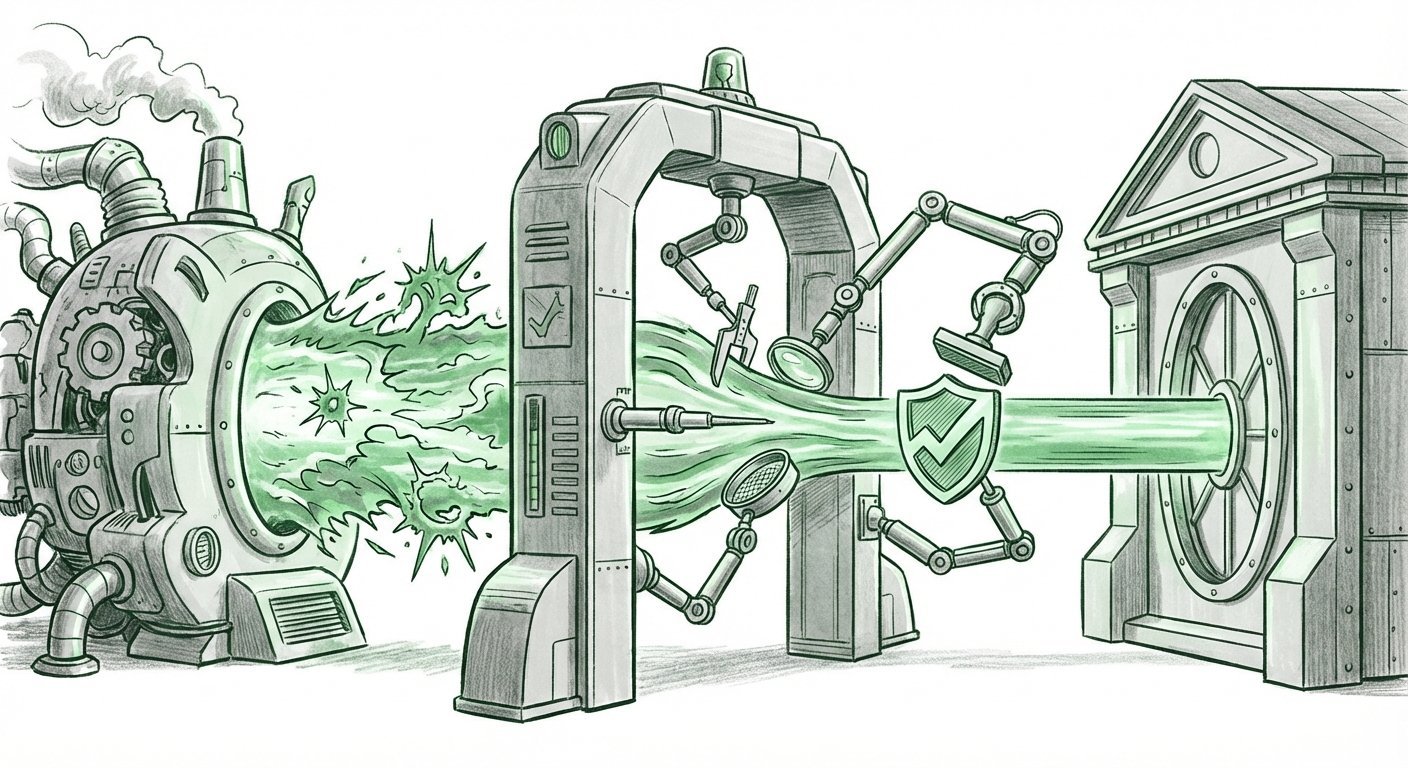
The core promise of the Menlo IRIS extension is simple: security teams get a control point for AI use inside the browser employees already use. No new browser means less friction. Less friction means better adoption. Better adoption means security teams can actually see and shape AI use instead of guessing.
This is a mature way to think about AI governance. It moves the conversation from “Should we allow AI?” to “How do we allow AI safely?” That is the question most organizations are now facing. AI is too useful to ban completely. It is too risky to leave unmanaged. The answer is controlled use.
The extension model also reflects a practical reality. The browser is where most AI use happens. Chatbots, AI writing assistants, and AI features inside web apps all run in the browser. If security teams can apply policy at that layer, they can reach many AI tools without building separate integrations for each one. This is a scalable idea. It treats the browser as a security control plane for AI.
Why “No New Browser” Matters So Much
Security products often fail because they ask too much of users. A new browser is a big ask. It changes daily habits. It can affect performance. It may not work with every internal app. Workers may resist. In some cases, they may use personal devices or personal accounts to get around the change.
An extension is different. It fits into the existing workflow. That makes it easier for security teams to roll out controls quickly. It also makes it easier to adjust policy as AI use changes. The “no new browser” detail is not just a technical convenience. It is a sign that AI security is growing up. The focus is shifting from dramatic blocks to practical governance.
There are still challenges. Extensions need strong management. They can require broad permissions. They must be kept up to date. Companies need to test performance and compatibility. But the direction is clear. Security teams want AI control that employees barely notice and that does not require a major change in how work gets done.
The Future of AI at Work: From Shadow AI to Managed AI
The Menlo IRIS extension points to a future where AI use is managed like other business software. Companies will not simply hope employees use AI well. They will set rules, monitor use, and protect data. This is similar to how organizations learned to manage cloud apps, email, and web browsing. AI is following the same path.
In this future, security teams will need a clear view of which AI tools are used and what kind of data goes into them. They will need policies that match risk. A public chatbot used for brainstorming may be fine. The same chatbot used with confidential customer records may not be. A coding assistant may be allowed for developers but limited for finance teams. These are policy decisions, not just technology decisions.
The browser extension approach makes granular policy possible. Security teams can apply rules based on the user, the app, the data, or the action. They can allow some AI use while blocking risky behavior. They can educate users in the moment. They can collect evidence for audits. This is how AI moves from a wild experiment to a trusted business tool.
This also changes the role of security teams. They become enablers, not just gatekeepers. They help the business use AI safely. That is a more strategic role. It requires close work with legal, compliance, HR, and business leaders. It also requires clear communication with employees. People need to know what is allowed and why.
Practical Implications for Businesses
For business leaders, the Menlo IRIS extension is a prompt to review how AI is actually used today. Many companies have an AI policy, but few have strong visibility. A policy without enforcement is just a document. A control without user adoption is just a block. The winning approach combines clear rules, light-touch controls, and employee training.
Here are practical steps organizations can take now:
- Inventory AI use. Find out which AI tools employees already use. Talk to teams. Review network and browser data where appropriate. You cannot govern what you cannot see.
- Classify risk. Not all AI use is equal. Separate low-risk tasks from high-risk ones. Focus controls on sensitive data, regulated information, and customer records.
- Set clear rules. Write policies in plain language. Explain what data can go into AI tools and what cannot. Give examples. Make the rules easy to follow.
- Use controls that fit the workflow. Prefer security that works inside existing tools. A browser extension can reduce friction and improve adoption compared with a forced browser change.
- Train and communicate. Workers need to understand the risks. They also need to know the benefits. Frame AI governance as a way to use AI faster and more safely, not as a punishment.
- Monitor and adjust. AI use will change quickly. Review policies often. Watch for new tools. Update controls as risks change.
- Protect privacy. If you monitor AI use, be transparent. Collect only what you need. Follow company policy and local law.
These steps are not just about security. They are about business value. Companies that govern AI well can adopt it faster. They can avoid embarrassing data leaks. They can build customer trust. They can respond to regulators with confidence. The Menlo IRIS extension is one signal that the market is moving toward this more mature approach.
What This Means for Society
The browser is a powerful place to control AI. That power should be used carefully. AI governance can protect people from fraud, data misuse, and bad decisions. It can also become surveillance if it is not handled well. Employees should know when their AI use is monitored. Policies should be fair and understandable. Controls should match the actual risk.
There is also a digital skills gap. If some workers have access to AI and others do not, productivity gaps may grow. Companies should think about fair access. Schools and public agencies should think about AI literacy. The tools are becoming normal. The ability to use them well is becoming a basic skill.
At the same time, the extension approach shows that AI can be governed without making it scary or hard to use. That is important for public trust. People are more likely to accept AI if they see clear rules and responsible behavior. They are less likely to accept AI if it feels like a secret or a risk that no one is managing.
What to Watch Next
The Menlo IRIS extension is part of a larger trend. Expect more security vendors to add AI controls to the browser. Expect browser makers to build more AI policy features. Expect companies to ask for AI visibility across all their tools, not just one chatbot. The winning products will be those that give security teams control without slowing down employees.
Also watch how organizations measure success. The best sign will not be how many AI tools are blocked. It will be how many are used safely. That means fewer data incidents, faster approval of useful tools, and better employee confidence. AI governance should make good use easier, not just make bad use harder.
The Menlo IRIS extension is a small product with a big message. The future of AI at work will not be built on bans. It will be built on practical control. The browser is the front door for most AI use. Putting security there, without a new browser, is a smart move. It respects how people work. It gives security teams the visibility and control they need. And it helps companies move from fear of AI to confident use of AI.
Conclusion: Control Is the Next Step for AI Adoption
AI will keep spreading. The question is whether it spreads in a managed way or a chaotic way. The Menlo IRIS extension argues for management without disruption. It gives security teams a way to control AI use inside the browser employees already have. That is a practical answer to a urgent problem.
For businesses, the lesson is clear. Do not wait for AI use to become a crisis. Get visibility. Set sensible rules. Choose controls that fit the workflow. Train your people. Review and adjust. For society, the lesson is also clear. AI governance should be transparent, fair, and focused on real risk. When done well, it can build trust and unlock the benefits of AI for more people.
The future of AI will not be decided only by better models. It will be decided by better use. The organizations that learn to govern AI well will be the ones that use it best. The Menlo IRIS extension is a sign that this future is already taking shape.