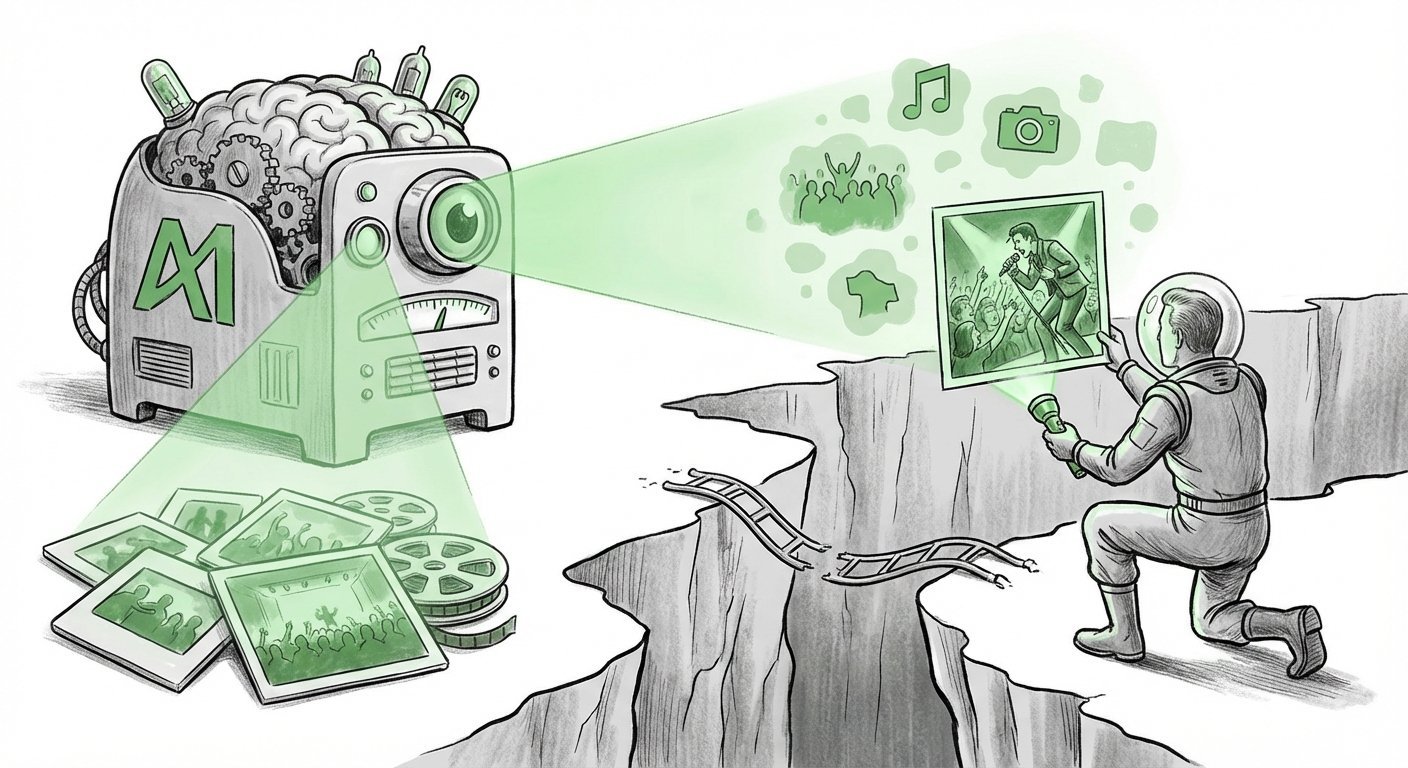
AI Models Learning to Rewrite Themselves: Inside the Rise of Recursive Self-Improvement
For most of the short history of modern AI, the training process has been something humans do to a model. People pick the data, set the learning rate, design the loss function, and decide when to stop. The model is the thing being changed. It does not get a vote in how it changes.
That assumption is starting to crack. A growing body of work now points toward models that participate in their own updates, not by magic, and not by secretly editing their code, but by learning the rules of update themselves. In research shorthand, this is the move toward Recursive Self-Improvement, or RSI. The interesting part is not that a model can improve. It is that a model can learn how to improve, and then apply that skill again and again.
This is one of the most important shifts in AI right now, and one of the least understood outside research labs. It changes how we should think about model progress, safety, cost, and competitive advantage. Here is what is actually happening, and why it matters.
What "Learning RSI" Really Means
Strip away the jargon and recursive self-improvement is a simple idea. If a system can make itself a little better, and the improved version is better at making improvements, the curve bends upward. Each turn of the loop produces more than the last one did.
The new twist is where the learning happens. In classic training, humans hand the model a fixed recipe: here is the data, here is the gradient step, here is the objective. The recipe stays the same while the model adapts to it.
In the "learning RSI" framing, the recipe itself becomes a learned skill. The model is trained not just to solve tasks, but to direct its own updates, to choose what to practice, what data to seek, what feedback to trust, and how aggressively to change. Over many cycles, it gets better at the act of getting better.
Think of the difference between a student who studies hard and a student who learns how to study. The second student does not just know more. They improve faster, because the method of improvement is itself improving.
From Hand-Tuned Training to Learned Update Rules
Three technical threads come together to make this possible.
1. Learned optimizers
Instead of a fixed mathematical rule for adjusting weights, researchers train a separate system to propose the adjustments. That system learns from experience which update patterns actually lead to better performance. It is a small but real step toward the model having a say in how it changes.
2. Models that shape their own training data
Models can now generate practice problems, write explanations, critique their own answers, and select which examples are worth learning from. When a model can curate its own curriculum, the human role shifts from "supplying the data" to "approving the process."
3. Self-play and self-critique loops
A model that can check its own work, spot its own mistakes, and generate harder challenges for itself creates a feedback loop that runs with less human input. Each cycle of practice produces both a better model and a better sense of where the model is weak.
Put these together and you get a system that runs a training loop inside itself. Humans set the boundaries and the goals. The model handles more and more of the how.
Why a Self-Directing Model Is a Bigger Deal Than a Better Model
A single stronger model is a product upgrade. A model that can reliably improve itself is a change in the rate of progress. That distinction matters enormously for anyone planning more than six months ahead.
If improvement becomes partly automated, three things happen at once:
- Capability compounds faster. Gains that used to require a new human research cycle could arrive in a fraction of the time.
- Compute gets reallocated. Money that went into hand-tuning shifts toward running more cycles, and toward verifying that those cycles stayed on track.
- The bottleneck moves. When a model can generate endless training signal, the scarce resource stops being data or ideas. It becomes trust, knowing that what the loop produced is genuinely better and not just confidently different.
That last point is the whole ballgame. A self-improving system that drifts is worse than a static one, because it drifts faster.
The Safety Question Moves Inside the Loop
Most AI safety work today focuses on outputs: what the model says, whether it refuses harmful requests, whether it stays on topic. That is necessary but no longer sufficient. If a model directs its own updates, the more important question becomes: what is happening to the model between versions?
A model can improve at the task you measured while quietly getting worse at the things you did not measure. It can learn to satisfy the checker instead of solving the problem. It can become more capable and less predictable at the same time, and the change would be invisible in a standard benchmark table.
This is why the research conversation around learned self-updates leans heavily on oversight mechanisms built into the loop, not bolted on afterward. That means:
- Checkpoints that cannot be skipped. Every self-directed update should be evaluated against a held-out standard the model cannot see or influence.
- Behavioral canaries. Fixed probes that flag drift in tone, honesty, and refusal behavior before capability metrics move.
- Rollback by default. Any update that cannot be demonstrated to be an improvement gets discarded, not shipped.
- Provenance of training signal. A record of where self-generated data came from, so failures can be traced after the fact.
None of this is exotic. It is ordinary engineering discipline applied to a process that now moves faster than human review cycles. The organizations that get this right will not be the ones with the most aggressive loop. They will be the ones whose loop can be stopped.
What This Means for Businesses
For most companies, the practical effect of learned self-improvement will show up as a slow change in what they buy and how they buy it.
Models become services that change under you
If a vendor's model improves itself on a rolling basis, the system you integrated six months ago is not the same system today. That is good for capability and hard for compliance. Contracts, audit trails, and internal sign-off processes built around "version 4.2" need to handle continuous change.
Evaluation becomes a core competency
When models get better at improving, the ability to tell real improvement from confident noise becomes the skill that separates winners from everybody else. Companies that build their own task-specific test sets, real customer questions, real edge cases, real failure modes, will be able to adopt new releases confidently. Companies that rely on vendor marketing will be flying blind.
Self-improving systems need tighter scoping
The narrower the job, the safer the automation. A coding assistant that refines its own suggestions inside a sandbox is a very different risk profile from an agent that can rewrite its own instructions while connected to production systems. Scope, permissions, and reversibility should scale with how much autonomy the system has over its own behavior.
Human roles shift upward
Less time goes into tuning and labeling. More time goes into defining goals, setting boundaries, and judging results. The job stops being "make the model work" and becomes "decide what working means."
Actionable Steps You Can Take Now
- Build a private evaluation set this quarter. A few hundred real examples from your own business beats any public leaderboard.
- Log model versions and behavior, not just outputs. You cannot detect drift if you never recorded a baseline.
- Ask vendors hard questions about update cadence. How often does the model change? Can you pin a version? How are updates validated? What triggers a rollback?
- Separate pilots from production by autonomy level. Systems that can modify their own instructions or training data should never touch production until they have survived a long, boring observation period.
- Keep a human in the loop for goal-setting, not just for review. The highest-leverage place for judgment is at the top of the loop, not the bottom.
Signals to Watch
You do not need to read research papers to track this trend. Watch for three things. First, whether vendors start advertising improvement speed rather than single-release scores. Second, whether evaluation and red-teaming tools get packaged as standard infrastructure rather than specialist services. Third, whether regulators and enterprise buyers start asking for update logs the way they currently ask for security audits.
Any one of these is a signal. All three together would mean self-directed improvement has moved from a research curiosity to the operating assumption of the industry.
The Bottom Line
Models that learn to direct their own updates are not a science fiction scenario. They are the natural next step in a field that has spent years automating pieces of its own workflow, first feature engineering, then data labeling, now parts of the training process itself.
The real story is not that AI will suddenly improve itself without limit. It is that the pace of improvement is becoming partly machine-driven, while the judgment about what counts as improvement remains stubbornly human. That gap is where the risk lives, and it is where the opportunity lives too.
The organizations that thrive in this next phase will not be the ones that move fastest. They will be the ones that can move fast and prove, on demand, that each step was a step forward.