Google Genie 4 With Sound: Why Playable AI Worlds Are the Next Big Platform Shift
Google has launched Genie 4, the newest version of its generative world model, and this time it comes with sound. That single addition is easy to scroll past in a crowded news feed. It shouldn't be. Sound is the difference between watching a world and standing inside one. It is the difference between a clever demo and a tool people can actually build with.
This article breaks down what the launch signals, why audio matters more than it first appears, and what businesses, creators, and everyday users should do about it now. No hype, no jargon, just a clear read on where this is heading.
What Actually Launched
Genie is Google's family of generative world models, systems that build interactive environments rather than static pictures or clips. The promise of this class of model is simple to state and hard to pull off: you describe a place, or hand over an image, and the model produces a world you can move around in, where things respond to what you do.
Genie 4 pushes that idea further by adding an audio layer. Instead of a silent simulation, the generated world can now carry sound, the kind of ambient and reactive noise that makes an environment feel real. The visual and the audible parts of the experience now arrive from the same generative source.
That is the headline. The rest of this piece is about why it matters.
Why Sound Is the Real Story Here
Most people underestimate audio because it works on us quietly. Close your eyes in a room and you can still tell whether you are in a kitchen, a forest, a subway tunnel, or a stadium. Sound tells you where you are, what is happening, and how close it is. It also tells you whether something is wrong.
For generative worlds, that matters in three concrete ways.
1. Presence
Silent 3D space feels like a diorama behind glass. Add footsteps that change with the surface underfoot, wind that shifts as you turn, or the hum of a machine you walked past, and the brain stops treating the scene as a picture. Presence is what turns a demo into a place people want to spend time in, and time spent is the raw material of every entertainment and training product.
2. Feedback
Sound is one of the fastest ways a system can tell a user that their action landed. A footstep, a click, a creak, a distant echo, these are low-cost, high-speed signals. In a world model, audio gives the model another channel to confirm cause and effect: I did this, so that happened. That loop is central to making interactive AI feel responsive rather than random.
3. Accessibility and emotion
Audio makes generated worlds usable by people who cannot rely on visuals alone, and it does the emotional heavy lifting that visuals often cannot. A hallway is scarier with the right sound. A marketplace feels alive with the right chatter. For anyone building experiences rather than screenshots, this is not a nice-to-have.
The Bigger Trend: AI Is Moving From Answers to Environments
For the last few years, the story of AI has been about output, text, images, code, video clips. You ask, it answers. Genie 4 sits on a different curve: AI that produces spaces, systems that hold state, respond in real time, and stay coherent as you move through them.
This is often called the world model direction. The appeal inside the labs is obvious. A model that can simulate an environment is not just a content generator; it is a place to test things. You can drop an agent into a generated world and see what it does. You can change one rule and re-run. You can build a scenario that would be expensive, slow, or dangerous to build in reality.
Adding sound to that toolkit is not cosmetic. Audio is one of the richest signals in any environment, and a world model that can produce it is a world model with one more sense to learn from and one more channel to be judged on.
What This Means for the Future of AI
Training grounds get cheaper
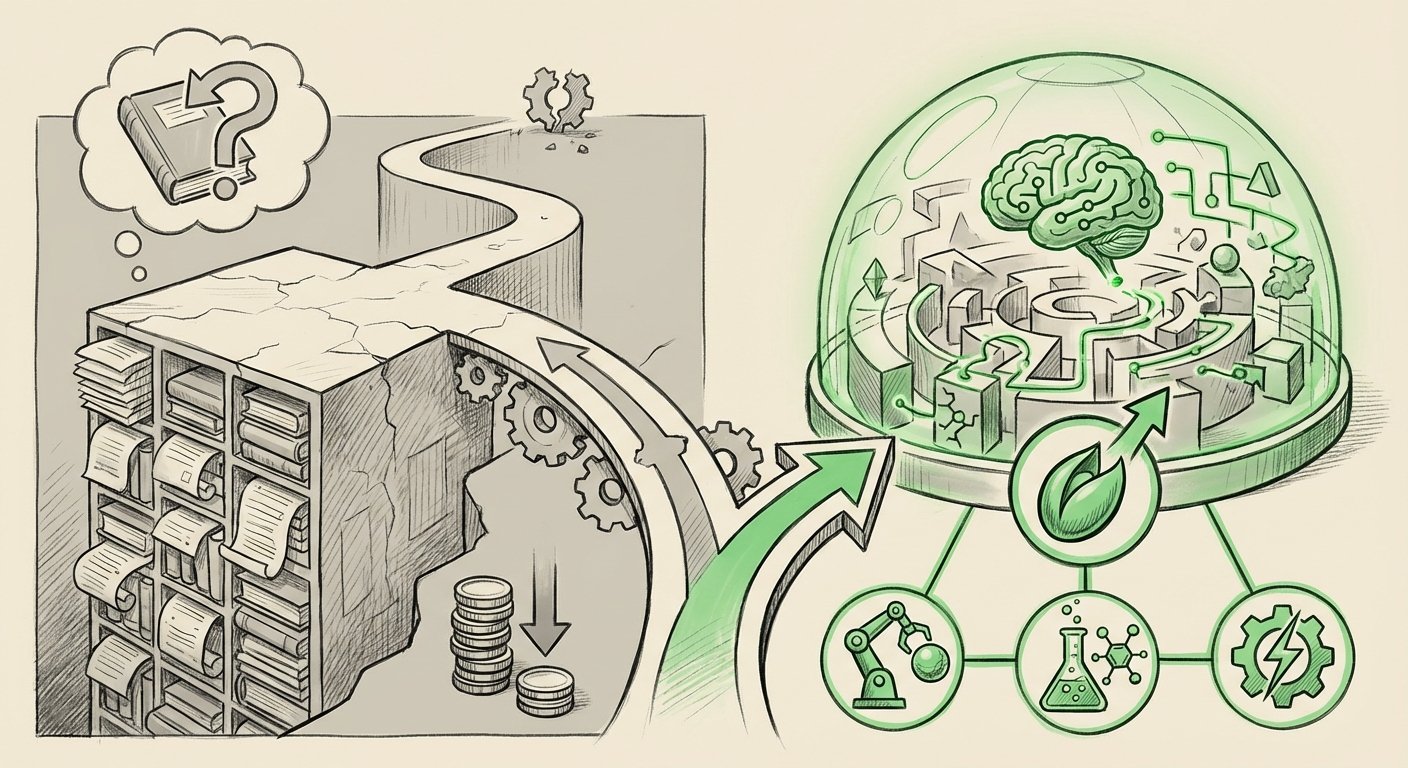
If you can generate a believable, responsive, sound-rich environment on demand, you reduce your dependence on recording or hand-building them. That lowers the cost of creating simulation data for robots, autonomous systems, and software agents. Cheaper simulation means more experiments, and more experiments usually means faster progress.
Agents get a place to practice
AI agents that act on the world need practice in worlds that push back. A generated environment with audio feedback gives an agent richer cause-and-effect signals than a static dataset ever could. Expect more research and product work aimed at letting models learn by doing inside synthetic spaces.
The line between game and model blurs
Games have always been the most demanding interactive medium: they need consistent rules, responsive feedback, and atmosphere. A model that can generate all three on demand starts to look less like a tool that helps make games and more like a new kind of engine, one where the content is created as you play rather than shipped in advance.
Multimodal becomes the default expectation
Once people experience a generated world that looks and sounds right, silent output starts to feel broken. Every creative AI product will be measured against that bar. The practical takeaway: plan for audio from day one, not as a later upgrade.
Practical Implications for Business
You do not need to be a game studio to care about this. Here is where the value shows up first.
- Prototyping and pre-visualisation. Teams that once spent weeks building a rough 3D scene to explain an idea can now describe it and walk through it. Films, retail layouts, factory floors, and event spaces all benefit from faster, cheaper concept iteration.
- Training and simulation. Safety drills, equipment walkthroughs, and customer-service scenarios can be generated instead of filmed. Sound adds realism that improves recall and reduces the "this is just a video" feeling.
- Marketing and product demos. Interactive, explorable scenes outperform flat video for engagement. Expect brands to test generated walkthroughs long before they commit to expensive production.
- Education. History, science, and literature become places to visit rather than pages to read. Audio is a large part of why that sticks.
- Accessibility and localisation. Generated environments can be re-voiced, re-scored, and re-labelled far more cheaply than re-shot footage.
The pattern across all five: the expensive, slow, specialist step gets cheaper, and the bottleneck moves to taste and design, knowing what is worth building in the first place.
The Hard Problems Nobody Should Skip
A launch like this invites a rush of enthusiasm. It also deserves a clear-eyed look at what is still unsolved.
Computational cost
Generating a coherent world in real time, with video and audio in sync, is heavy work. Cost per minute of generated experience will decide who can afford to build with this and who cannot. Watch pricing and access tiers closely, they shape adoption more than any demo.
Consistency over time
World models drift. A room changes shape, a soundscape resets, a rule quietly breaks. Keeping a long session coherent is a much harder problem than producing a beautiful thirty-second clip, and it is the difference between a toy and a platform.
Rights and provenance
Generated worlds borrow from a vast body of human-made art, music, and sound design. Getting licensing, attribution, and provenance right is not a legal afterthought, it is a product requirement. Expect the audio layer to attract more scrutiny than the visuals, because music and voice rights are heavily defended.
Safety and misuse
Convincing generated environments with convincing sound can be used to mislead. Watermarking, clear disclosure, and sensible limits on what can be generated will matter. So will the mundane but essential work of making sure generated spaces do not reproduce harmful stereotypes or unsafe scenarios.
Quality control at scale
When anyone can generate a world, the flood of mediocre worlds is real. Curation, review, and clear signals of quality become the scarce resource. The winners will not be the teams that generate the most, they will be the teams that generate the right things.
Actionable Insights: What to Do Now
For product leaders: Add "interactive generated scene" to your next planning cycle as an experiment, not a commitment. Pick one customer journey where a walkthrough would beat a video, and test it.
For engineers and technical teams: Build your evaluation harness before your first build. Decide now how you will measure coherence, latency, audio-visual sync, and cost per session. Teams that can measure drift will ship faster than teams that cannot.
For creative and marketing teams: Start collecting references in sound, not just images. Mood boards with audio will become as normal as mood boards with colour palettes.
For legal and compliance: Review your content licensing for audio specifically. Music and voice carry different risk than static art, and generated output needs a clear paper trail.
For learners and career planners: The scarce skills are shifting. Prompting is easy; world design, systems thinking, audio direction, and quality judgment are not. These are the durable skills in a world of infinite generated content.
The Bigger Picture
The interesting thing about Genie 4 is not that a model can make a world with sound. It is what that implies about where AI is going. We are moving from systems that answer questions to systems that hold a space open and let you move around inside it. That shift changes what software feels like, what content costs, and what "interactive" even means.
Every platform shift follows the same arc: an impressive demo, a messy middle where quality and cost decide who survives, and finally a quiet normal where the capability is everywhere and nobody calls it AI anymore. Generative worlds with sound are somewhere near the start of that arc. The businesses that win will not be the ones that shout loudest about the demo. They will be the ones that start experimenting early, measure honestly, and build things people actually want to spend time inside.
Sound, it turns out, is not the garnish. It is the invitation.