The Data Center You Dread Might Never Be Built: What AI's Infrastructure Boom Really Means
A planned data center can feel like a done deal. A company buys land. Local officials hear a pitch. A headline says a huge computing campus is coming. Residents worry about power lines, water use, noise, traffic, and whether their town will change forever.
But there is a gap between a project being announced and a project being built. That gap is the real story behind the idea that the data center you dread might never even be built. And that gap matters a lot for the future of AI.
The AI boom has created enormous demand for computing power. That demand has led to a wave of proposed data centers. But a proposal is not a promise. It is more like an option, a right to build later if everything lines up. And often, everything does not line up.
The Gap Between a Press Release and a Foundation
Data centers are big, expensive, and slow to build. They need land, electricity, cooling, fiber connections, permits, and customers. A company can announce a project years before it is ready. In the meantime, the plan can change.
This is not unusual. Large infrastructure projects often start as ideas. Some move forward. Some shrink. Some move to another state or country. Some are quietly dropped. The announcement may be real, but the building may never happen.
For AI, this is a critical point. Many people assume that every announced data center will soon be online, ready to train the next big model or serve millions of AI users. But the actual supply of computing power depends on projects that survive a long and difficult process.
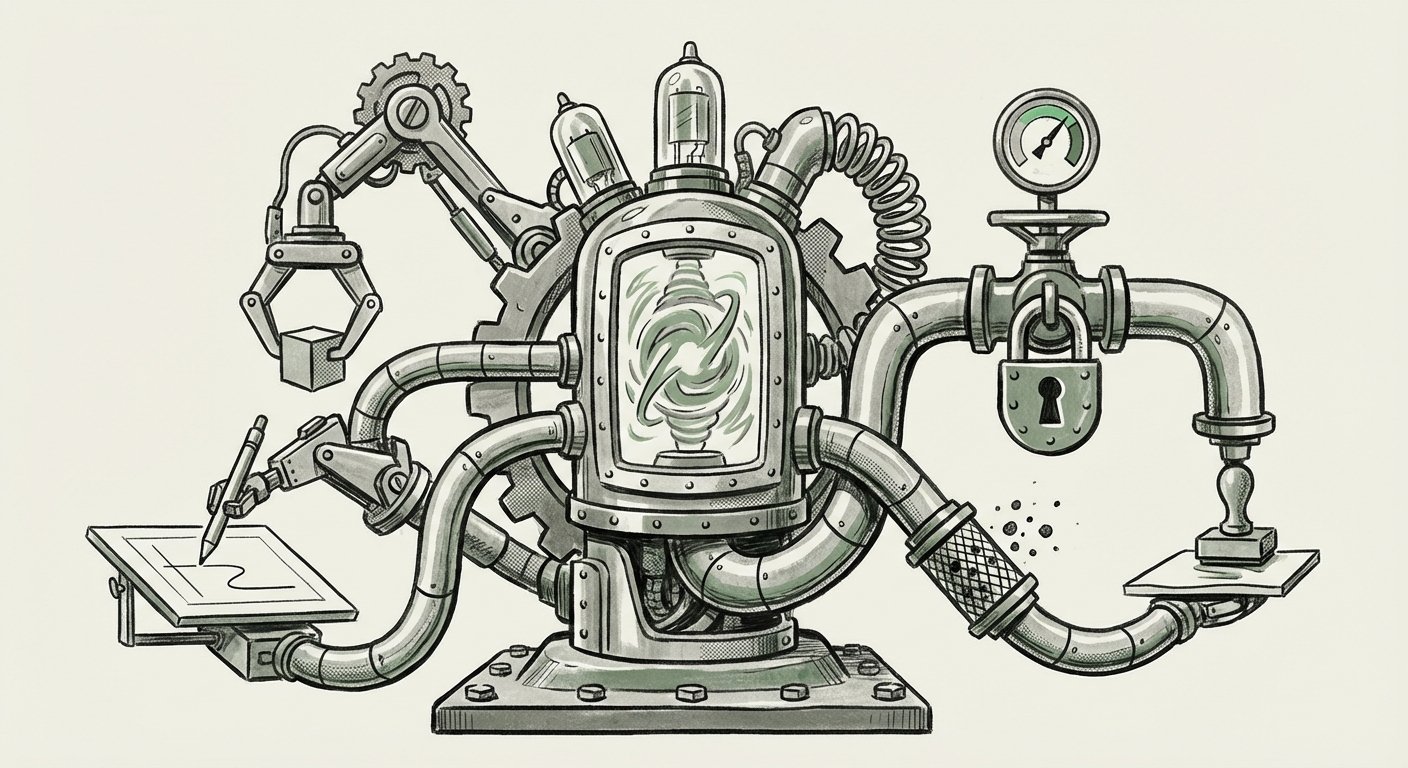
That process has four main gates. A project must pass all of them. If it fails one, the data center may never be built.
Why AI Has Made Data Centers a Local Flashpoint
AI workloads are different from older kinds of computing. Training large models and running AI services can require dense, powerful clusters of servers. Those servers use a lot of electricity and produce a lot of heat. They also need reliable connections and large buildings.
That is why AI has pushed data centers into the center of local debates. A project that once might have been a quiet industrial building can now look like a major utility customer. It can affect the grid, land use, and local budgets.
At the same time, AI demand is hard to predict. A company may plan for rapid growth and then find that demand is slower, or that new chips are more efficient, or that workloads move to other regions. A data center is a long-term bet. AI is a fast-moving target.
So the “dreaded” data center may be a real proposal, and still never get built. It may be delayed, scaled back, or replaced by a smaller project. It may be a bargaining chip in a negotiation. It may be a placeholder while the company waits for power, permits, or customers.
The Four Gates Every Project Must Pass
Gate 1: The Site and the Community
The first gate is local. A data center needs a suitable site. It needs access roads and fiber. It needs room for equipment and possibly for future growth. It also needs local support, or at least local acceptance.
Community concerns are real. People worry about noise from cooling systems, visual changes, traffic during construction, and land use. They worry about whether the project will bring good jobs or just a large building with few permanent workers. They worry about who pays for new infrastructure.
If opposition is strong enough, a project can be delayed or denied. Even when a company has a legal right to build, local pressure can change the timeline and the terms. A project that cannot win local trust may never break ground.
Gate 2: Power, Water, and Grid Connections
The second gate is resources. Data centers are power-hungry. They need a reliable electricity supply, often at a large scale. In many places, the grid is already tight. New connections can take years.
This is one of the biggest hidden risks in the AI buildout. A company can announce a data center before it has secured the power it needs. The project may wait in a queue for a grid connection. It may need new transmission lines. It may need to pay for upgrades.
Water matters too, depending on the cooling design. Some data centers use water for cooling. Others use air or liquid cooling systems that reduce water use but may use more electricity. Either way, the design affects the local resource picture.
If power or water cannot be secured at a reasonable cost, the project may never be built as planned. It may shrink, move, or wait.
Gate 3: Permits and Politics
The third gate is government approval. Data centers need permits for construction, land use, utilities, and environmental rules. Those permits take time. They can be challenged. They can be changed by new local or regional policies.
Politics adds uncertainty. A project may be welcome under one local government and unwelcome under the next. Tax incentives can be debated. Utility rules can shift. Neighboring towns can object. A change in policy can turn a good project into a bad one.
For AI companies, this means that a planned data center is exposed to risks far beyond technology. The project must survive a public process. That process can be slow, unpredictable, and expensive.
Gate 4: Money and Customers
The fourth gate is financial. Data centers cost a lot to build. They also need customers who will pay for the computing power. A company may build for its own AI workloads, or it may build to rent capacity to others.
If demand does not grow as expected, the project may be delayed or scaled back. If the cost of capital rises, the math can change. If new chips are more efficient, fewer data centers may be needed for the same workload. If a major customer walks away, the plan can fall apart.
This is why announcements should be read carefully. A proposal may be a signal of intent, not a guarantee of capacity. The real question is whether the project has passed the financial gate, and whether the customers are truly committed.
What This Means for the Future of AI
If many announced data centers are never built, the future of AI may look different from the most breathless predictions. Computing power may be less abundant than the headlines suggest. That would have several effects.
First, scarcity favors scale. The largest AI companies can afford to wait, negotiate, and build their own infrastructure. Smaller companies may struggle to secure capacity. That could make the AI market more concentrated.
Second, AI services may be priced to reflect real infrastructure costs. If power, land, and cooling are hard to secure, the cost of running AI will stay high. That affects who can use AI and what they can do with it.
Third, efficiency becomes more important. If data centers are hard to build, companies will invest more in chips, cooling, software, and model design that do more with less. The race for efficiency may matter as much as the race for raw scale.
Fourth, AI growth may be uneven. Some regions will welcome data centers and have the power to support them. Others will not. That could create new digital divides between places with abundant computing infrastructure and places without it.
Fifth, the “announcement economy” may fade. As communities and investors get better at asking hard questions, companies may announce fewer speculative projects. The projects that do move forward may be more serious, better funded, and better planned.
What It Means for Communities
For local leaders and residents, the lesson is not to assume that every announced data center will happen. It is also not to assume that every project is a threat or a gift. The right response is careful scrutiny.
Communities should ask for clear information about power use, water use, tax terms, job numbers, and construction timelines. They should ask who pays for grid upgrades. They should ask what happens if the project is delayed or canceled. They should negotiate benefits that are real and enforceable, not just promises.
They should also plan for the possibility that the project never happens. Land use plans and utility plans should not depend on a single speculative project. A staged approval process can protect the community if the project changes.
And they should be honest about the trade-offs. A data center can bring tax revenue and construction jobs. It can also bring demands on infrastructure. The best deals are transparent and balanced.
What It Means for Businesses: A Practical Playbook
For business leaders, the message is simple: do not plan your AI strategy around announced data centers. Plan around capacity you can actually use.
- Ask about milestones. When a provider announces new capacity, ask when it will be live and what has to happen first. Look for signed power contracts, permits, and customer commitments.
- Diversify your compute. Do not depend on one region, one provider, or one data center. Use multiple clouds or colocation sites where possible.
- Contract for flexibility. Build contracts that allow you to shift workloads, scale up or down, and avoid paying for capacity that is delayed.
- Track energy and location risk. Know where your AI workloads run and what risks those sites face. Power constraints, water rules, and local politics can affect your service.
- Invest in efficiency. If compute is scarce, the companies that use it well will have an advantage. Optimize models, use the right chip for the job, and avoid waste.
- Plan for slower growth. Build scenarios where AI capacity grows more slowly than expected. Make sure your business can still operate and compete.
These steps are not just defensive. They can also be a source of advantage. Companies that understand the real infrastructure picture can make better bets and avoid being caught short.
The Bigger Shift: From Hype to Hard Choices
The data center boom is often described as a sure thing. But infrastructure is never a sure thing. It is a chain of choices, each with a gate. The AI industry is now learning that lesson in public.
This does not mean AI will stop growing. It means the growth will be shaped by real-world limits. Power, water, land, permits, money, and local trust will all play a role. The companies and communities that plan for those limits will be better off.
The data center you dread might never be built. But the debate around it is still useful. It forces everyone to ask better questions: What do we actually need? Who pays? Who benefits? And what happens if the plan changes?
Those are the questions that will shape the next phase of AI. Not just how fast we can build, but how well we can decide what to build, and where.
Conclusion
The AI infrastructure story is not a simple tale of endless construction. It is a story of proposals, gates, and choices. A data center can be announced with great confidence and still never move past the drawing board. That gap between announcement and reality is where the future of AI will be decided.
For communities, it means staying informed and negotiating carefully. For businesses, it means planning for capacity you can trust, not capacity you merely hear about. For the AI industry, it means moving from hype to hard choices.
The next wave of AI will not be built on press releases. It will be built on power, permits, money, and trust, one project at a time.