Anthropic's Claude for Manufacturing Plugs AI Directly Into Factory Software, Here's Why That Changes Everything
For the past few years, most businesses have used artificial intelligence the same way. You open a chat window. You type a question. The AI types back. Then you copy what it said and paste it into the software that actually runs your business.
That gap, the space between the AI and the real system, is where most of the value got lost.
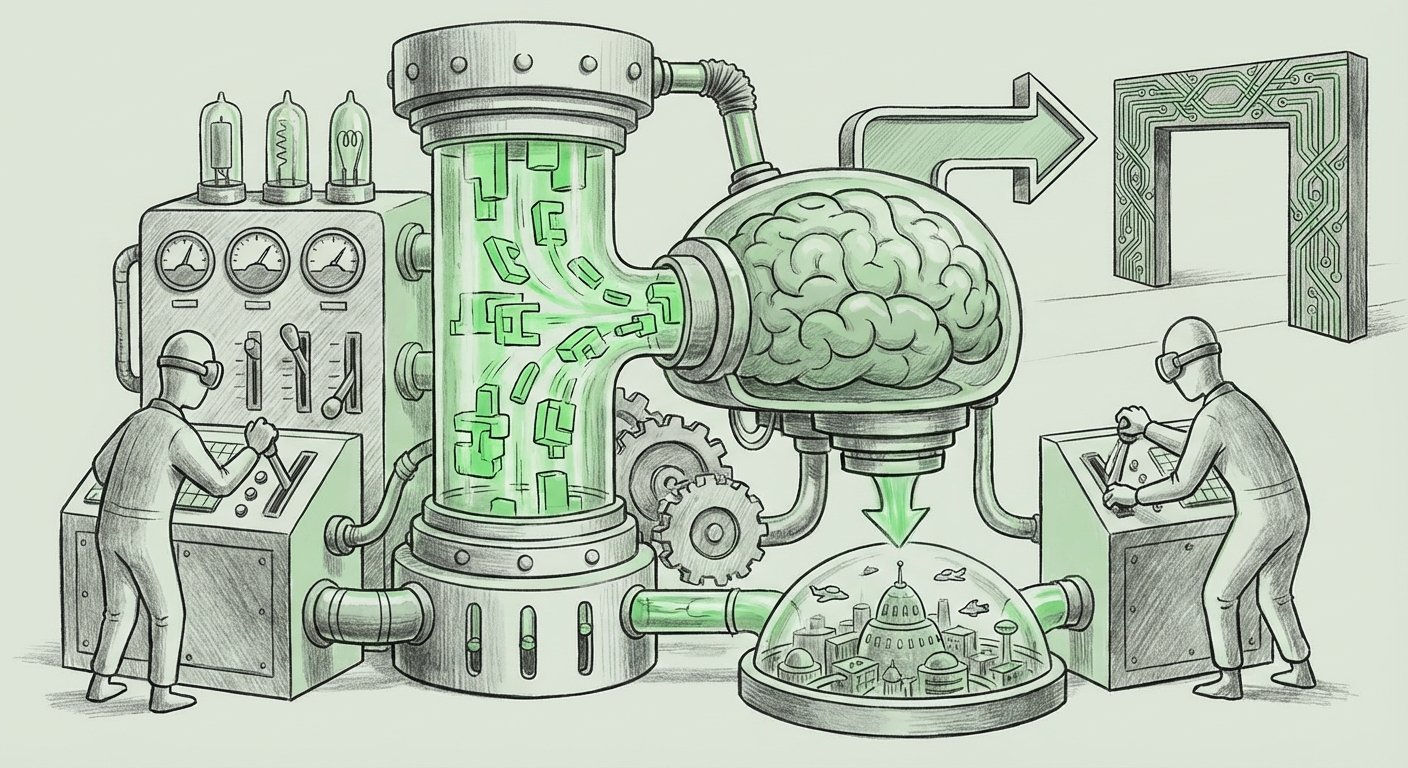
On November 13, 2026, Anthropic took a direct swing at closing that gap. The company announced Claude for Manufacturing, a product that connects its Claude AI models straight into factory software to automate industrial workflows. Not a chatbot that sits beside the plant floor. An AI that reaches into the systems running the plant floor.
It is a small sentence with a very large implication. The era of AI as a helpful assistant is giving way to the era of AI as an operating layer.
What Anthropic Actually Announced
The core of the announcement is integration. Claude for Manufacturing is built to plug into the software that factories already use to plan production, track inventory, schedule maintenance, and move work through a plant. Instead of a human pulling data out of those systems and hand-feeding it to an AI, the AI works inside them.
That means industrial workflows, the everyday sequences of checking, deciding, and acting that keep a factory running, become something AI can execute rather than merely comment on.
The framing matters. Anthropic did not position this as a general-purpose chatbot with a manufacturing flavor. It positioned it as infrastructure: a layer that sits between the model and the machines, translating factory reality into something the AI can reason about, and translating the AI's reasoning back into actions the software can carry out.
This is the same architectural move we have seen ripple across other industries, now landing on one of the hardest and least forgiving environments in the economy. A factory is not a document. A wrong answer on a spreadsheet costs nothing. A wrong answer on a production line costs money, time, and sometimes safety.
Why "Plugging In" Is the Real Story
To understand why this announcement matters, it helps to see how most enterprise AI has worked so far.
Companies bought access to powerful models. They built pilots. Employees loved the demos. And then progress stalled, because the model could not see the company's actual data, and the company's actual data lived in a dozen systems that were never designed to talk to an AI.
The result was a lot of enthusiasm and very little automation. Humans became the glue, copying numbers out of one system, asking the AI to interpret them, then typing the answer into another system. That works for one task at a time. It does not scale to a factory running thousands of decisions a day.
Claude for Manufacturing attacks the glue problem directly. If the AI can read from and write to the systems of record, the human stops being the messenger and goes back to being the decision-maker. That is the difference between a tool that saves a few minutes per task and a system that changes how the work is organized.
For AI to become genuinely useful in industry, three things have to be true. The model has to be capable enough to reason about complex, messy situations. It has to be connected to real systems. And it has to be trustworthy enough that people let it act. Anthropic's move is a bet that all three are now close enough to build a product on.
From Chatbot to Colleague: The Agentic Shift
There is a word for what happens when an AI can take actions inside software: agency. The model stops being a text generator and starts being an actor.
In a manufacturing context, that shift is dramatic. Consider the ordinary work of keeping a plant running:
- Checking which machines are behind schedule and why.
- Noticing that a parts shortage will stall a line next week.
- Reordering materials before the shortage bites.
- Flagging a maintenance pattern that predicts a breakdown.
- Rewriting a production schedule when a rush order arrives.
Each of these is a small loop of read, reason, act. Today, each loop costs a person minutes or hours. Multiply that across a plant, a company, a supply chain, and the cost becomes enormous. An AI wired into the software can run those loops continuously, at a scale no team can match.
This is the shift that Claude for Manufacturing signals. Not AI that answers questions about manufacturing, AI that does manufacturing work.
What This Means for the Future of AI
1. The battleground moves from models to integrations
For the last few years, the headline question was "whose model is smartest?" That question is getting harder to answer and less useful to ask. As top models converge on capability, the advantage shifts to whoever can connect them most deeply to real systems, the messy, unglamorous work of understanding how a specific industry actually operates.
Expect every major AI company to follow this pattern. Vertical, integrated products for manufacturing, healthcare, logistics, finance, and legal work will become the standard way AI reaches businesses. The model is the engine. The integration is the car.
2. AI begins to accumulate institutional knowledge
A chat session starts from zero every time. A connected system does not. When AI sits inside a factory's software, it can learn the plant's quirks, its schedules, its history of what went wrong and why. That turns AI from a smart stranger into something closer to an experienced colleague.
Over time, that accumulated context becomes a competitive asset, one that is very hard for a competitor to copy.
3. The human role gets redefined, not deleted
The instinctive worry is job loss, and it is a fair worry. But the near-term reality in manufacturing is more nuanced. Factories have struggled for years to fill skilled roles. Much of the daily work is not the skilled part, it is the chasing, the checking, the re-keying of numbers between systems.
The likely pattern is that AI absorbs the coordination overhead and leaves people with more judgment-heavy work: handling exceptions, approving decisions, managing relationships, improving processes. That is a better job. It is also a job that requires different training.
4. Trust becomes the limiting factor
Technical capability is no longer the bottleneck. Permission is. Factories will only let AI act if they can see what it did, why it did it, and how to stop it. Expect the next wave of competition to center on audit trails, guardrails, approval steps, and clear boundaries between what the AI may do alone and what needs a human signature.
Practical Implications for Businesses
For manufacturers: The gap between plants that run on connected AI and plants that run on spreadsheets and phone calls will widen fast. Early adopters get faster scheduling, less downtime, and leaner inventory. Late adopters get outcompeted on cost and responsiveness.
For software vendors: Every industrial software product now needs an answer to the question "can an AI agent work inside you?" Systems that are closed and hard to integrate become liabilities. Systems that open up become platforms.
For the workforce: The skill that matters most is shifting from operating software to supervising it. People who can define a good process, spot a bad AI decision, and know when to override will be the most valuable people on the floor.
For the wider economy: Manufacturing is a leading indicator. What works on a factory floor, connected AI, measurable outcomes, tight guardrails, will be copied everywhere. The lessons learned here about safety, oversight, and return on investment will shape how AI enters hospitals, warehouses, and offices.
Risks Worth Watching
None of this is automatic. Three risks deserve attention.
Over-automation. It is tempting to hand too much to the AI too quickly. The factories that succeed will be the ones that expand its authority gradually, task by task, with a human able to catch mistakes.
Bad data. AI wired into bad records produces bad decisions faster. A plant with inconsistent data will get an AI that confidently optimizes the wrong things. Cleaning up data is the unglamorous prerequisite.
Skill atrophy. If people stop understanding how the plant works because the AI handles it, the organization loses the ability to catch the AI's errors. Keeping human expertise sharp is not nostalgia, it is risk management.
Actionable Insights: How to Prepare
- Audit your systems. Identify which software holds your real operational data and how easily it can be connected to an AI. That map is your readiness score.
- Start with a narrow, boring workflow. Pick one recurring task with clear inputs and measurable outputs. Prove value there before expanding.
- Design the guardrails first. Decide in advance what the AI can do alone, what needs approval, and how actions get logged. Do this before deployment, not after an incident.
- Fix your data. Treat data quality as a capital project with a budget and an owner.
- Retrain, don't just redeploy. Teach people to supervise AI, write clear process instructions, and question outputs. The human skill set is changing, and it can be taught.
- Measure in business terms. Track downtime, cycle time, inventory levels, and error rates, not the number of AI queries. The only metric that matters is whether the factory runs better.
The Bigger Picture
The most important thing about Claude for Manufacturing is not manufacturing. It is the template.
Every industry has its version of the factory floor, a set of systems where the real work happens, surrounded by a layer of human glue holding those systems together. What Anthropic is doing here is proving that the glue can be replaced. If it works in the least forgiving environment in the economy, it will be applied everywhere else.
The companies that win the next few years will not be the ones with the smartest AI. They will be the ones that figured out how to wire AI into the work, and how to trust it enough to let it act.
That transition started quietly, in a chat window. It is now moving to the production line.