Did the Unabomber See the Singularity Coming? Ted Kaczynski and the Dark Side of Progress
Every few years, someone in the technology world quotes Ted Kaczynski, the man history remembers as the Unabomber, and the room goes quiet. Not because people agree with him. Nobody sane defends the mail bombs, the injuries, or the fear he spread for years. But because the questions he raised about technology have a way of refusing to go away.
That is the uncomfortable pairing at the heart of the story: a man who answered progress with violence, and a set of warnings that now sound less like the rantings of an outsider and more like the agenda of an AI safety conference.
Did he see the singularity coming? That is the question worth sitting with. Not because he predicted it correctly, but because the shape of his fear is the same shape as the fear now showing up in boardrooms, government hearings, and machine learning labs.
The Uncomfortable Question at the Center of the Story
Kaczynski's story is usually told as a crime story. It should be told that way first. People were hurt. Families were changed forever. Any honest discussion has to start there and stay there.
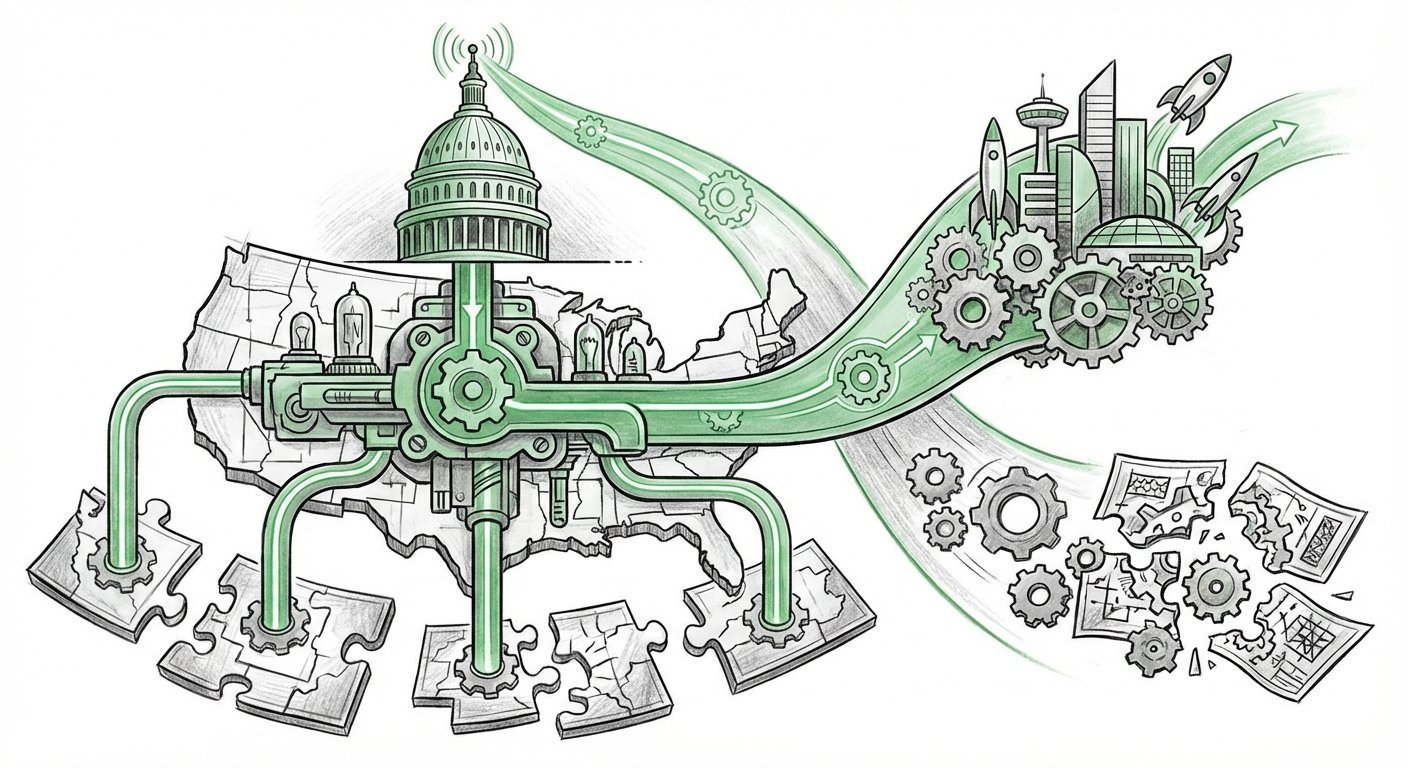
But stories like this one survive because they carry a second layer. Kaczynski's written arguments were not a random list of complaints. They described a world where technology stops being a tool and becomes a system with its own momentum, one that reshapes people to fit it, rather than the other way around.
Today, that sentence could sit on a slide at almost any AI conference. The words would be different. The diagnosis would be the same.
What Kaczynski Actually Argued, The Ideas, Not the Violence
Strip away the crimes and what is left is a set of claims about how technological societies behave. Four of them matter most for anyone watching AI.
1. Technology as a system that runs on its own
His central claim was that modern technology is not a collection of neutral tools. It is a system. Each new capability creates dependencies, and those dependencies make the next capability almost mandatory. Roads lead to suburbs. Suburbs lead to cars. Cars lead to supply chains. Nobody voted for the whole package, yet here we are inside it.
Anyone who has watched a company adopt AI because a competitor did, and then adopt the next AI tool because the first one created new work that needed managing, has felt this exact pressure. It is not conspiracy. It is momentum.
2. The shrinking room for human choice
His second claim was about autonomy. As systems get more complex, the number of decisions a normal person can meaningfully make shrinks. You do not choose how your data is used. You do not choose which algorithm decides your loan, your shift schedule, or what you see first. You adapt.
In an AI era this concern gets sharper, not softer. When a model recommends, ranks, filters, and drafts, the human in the loop is often a human approving something they could not have produced and cannot fully check.
3. The promise always arrives before the cost
His third claim was about timing. The benefits of a new technology show up immediately, in concrete form, faster, cheaper, easier. The costs arrive later, in diffuse form, attention, dependency, concentration of power, lost skills. By the time the cost is visible, the benefit is already woven into daily life.
Social media is the cleanest modern example. Generative AI is running the same playbook right now, at higher speed.
4. A single point of no return
The fourth claim is the one that connects most directly to the singularity debate. If technology keeps compounding, there may come a moment when the system's direction is no longer something people can meaningfully steer. Not because anyone seized control, but because the complexity outran the human capacity to oversee it.
That is, more or less, the plain-English definition of a singularity risk used in AI safety circles today.
How Those Warnings Map Onto Today's AI Boom
Here is where the story gets genuinely useful for anyone building or buying technology.
The race dynamic is the real engine
Most AI risk is second-order. It is not that a lab wakes up wanting to remove humans from the loop. It is that competition pushes every lab in the same direction at the same time. Slow down, and someone else ships first. Add safety review, and your release slips a quarter. The pressure is structural, not personal.
Businesses feel a smaller version of this in every procurement cycle. The question "should we use AI here?" has quietly become "can we afford not to?" That shift is the Kaczynski thesis wearing a business suit.
Power concentrates faster than oversight
Frontier AI requires capital, chips, data, and talent that only a handful of organizations can assemble. That concentration is not automatically bad, but it means the rules are written by the same players the rules are meant to govern. History has a pattern here, and it is not a comforting one.
We are bad at measuring the costs
The benefits of AI show up on a dashboard. The costs show up in things that don't have dashboards: degraded judgment, thin expertise, eroded trust, workers quietly displaced, decisions no one can explain. What gets measured gets managed, and right now, most organizations measure only the upside.
The control question is no longer science fiction
The singularity conversation used to be a hobby for futurists. It is now a budget line. Teams work on interpretability, evaluation, red-teaming, and containment because the industry has accepted, at least privately, that capability and control are two separate problems, and that control is the harder one.
Why the Comparison Cuts Both Ways
It would be dishonest to leave it there. The analogy breaks in important places, and those breaks are worth naming.
First, the diagnosis is not a license for destruction. Kaczynski's conclusions were monstrous, and the violence discredited the very questions he raised. That is the real tragedy of the story: a man with a genuine insight about technological momentum chose a path that guaranteed nobody would take him seriously.
Second, the choice is not "all technology or none." He offered a false binary, collapse it all or lose your freedom. Real policy lives in the messy middle: disclosure rules, audits, liability, procurement standards, and the boring work of governance.
Third, prediction is not the same as prescience. Warning that a road might lead somewhere dark is not the same as knowing the destination. Many people saw the risks. What separated Kaczynski was not insight, it was what he did with it.
That distinction matters, because the AI debate is full of people who confuse being early with being right, and being loud with being useful.
What This Means for the Future of AI
Expect regulation to arrive by reaction, not by design
Rarely does a society legislate a technology before it is embedded. Usually the sequence is: ship, scale, incident, outrage, rulebook. AI is on that track. The businesses that prepare for the "rulebook" phase now will spend less on emergency compliance later.
Expect capability and control to split into separate budgets
Within a few years, "how good is our AI" and "how well do we control our AI" will be separate line items, owned by different people. That is the single most predictable structural change in enterprise AI.
Expect trust to become a product feature
As AI-generated content floods every channel, verifiability becomes scarce and therefore valuable. Companies that can prove where their data came from, how their models were trained, and who approved an automated decision will win deals that opaque competitors lose.
Expect the "autonomy" question to hit HR, not just engineering
The deepest version of the Kaczynski critique is not about robots. It is about people losing the sense that their choices matter. In an AI workplace, that shows up as workers who operate systems they don't understand and can't challenge. That is a management problem long before it becomes an existential one.
Practical Implications for Businesses
- Map your dependency chains. For each AI system in production, write down what breaks if it disappears, who can override it, and who is accountable when it is wrong. If the answer to any of those is "nobody," you have found your risk.
- Keep a human with real authority, not a human with a rubber stamp. A reviewer who cannot realistically reject the output is not oversight. Give reviewers the data and the time to say no.
- Instrument the downside. Track error rates, escalation volume, customer complaints, and staff confidence, not just speed and cost savings. If you only measure the upside, you will only ever see the upside.
- Write down what you will not automate. A short, published list of decisions that stay human is cheap to make and enormously valuable when a regulator, a customer, or a journalist asks.
- Assume disclosure. Design every AI deployment as though its inputs, outputs, and limits will eventually be public. In most jurisdictions, they eventually will be.
Practical Implications for Society
The bigger lesson is about pacing. Technological systems tend to outrun the institutions meant to oversee them, and AI is compressing that gap from decades to months. The response cannot be to stop building, that option does not exist in a competitive world, and it never has.
The realistic response is to build counterweights: independent evaluation, public literacy, liability that follows the harm, and a culture that treats "we don't fully understand this yet" as a legitimate engineering status rather than a PR failure.
The most important counterweight is boring and human. People who understand enough about these systems to question them. That is not a policy lever. It is an education project, and it is years behind.
The Takeaway Worth Keeping
Ted Kaczynski did not see the singularity coming in any useful sense. He saw the pressure that produces it, the way technology accumulates, the way choice narrows, the way benefits front-load and costs tail-load. Those observations were not new when he made them, and they are not new now. What was new was the response, and the response was a catastrophe that set the conversation back.
That is the real lesson for the AI era. The questions are legitimate. The answers matter enormously. And the people asking them have a responsibility to stay inside the argument, because the moment you step outside it, the questions die with your credibility.
The singularity may or may not arrive. But the dark side of progress is not a future event. It is a series of small, ordinary decisions made by people who are in a hurry. Those decisions are being made right now, in product meetings and procurement reviews and model releases, by people who could slow down for a week and choose differently.
That is the part of the story that is still unwritten.