OpenAI Finds a Bug in Its Boardroom: What It Means for AI Governance and the Future of AI
OpenAI has found a bug in its boardroom. That single sentence should make every AI leader stop and think. In software, a bug is a flaw in code. In a boardroom, a bug is a flaw in how decisions are made. It can be a missing voice, a broken feedback loop, a slow warning system, or a rule that looks fine on paper but fails when pressure hits.
The discovery matters far beyond one company. AI is moving from labs into hospitals, banks, schools, factories, and government offices. The systems making these choices are powerful. The people overseeing them are not always set up to catch problems early. A small boardroom bug can become a large public risk. That is why this moment is about more than OpenAI. It is about the operating system of AI power itself.
What a “Bug in the Boardroom” Really Means
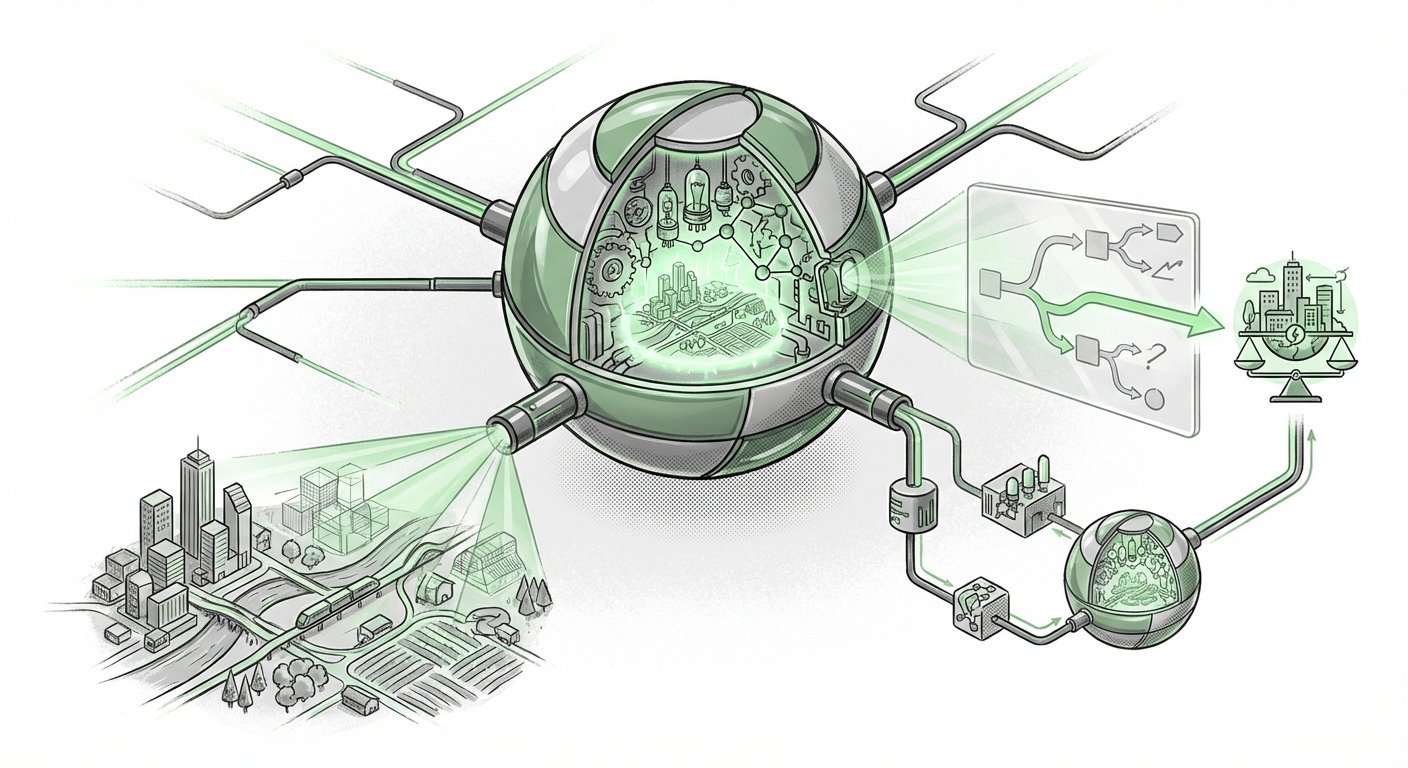
A boardroom is a decision system. It takes in information, applies rules, weighs risks, and produces choices. Like any system, it can fail. The failure may be technical, such as poor data or bad tools. It may be procedural, such as unclear roles or weak agendas. It may be cultural, such as people fearing bad news or leaders rewarding speed over safety. All of these are boardroom bugs.
AI boards face a special challenge. The technology changes faster than most oversight cycles. The risks are hard to see and hard to measure. A model may work well in testing and behave differently in the real world. A safety team may spot a warning sign, but that signal may not reach the board in time. A board may approve a major release without fully understanding the trade-offs. None of this requires bad intent. It only requires a process that was built for a slower, simpler world.
The details of OpenAI’s boardroom bug matter, but the lesson does not depend on them. Every AI company now runs on the same basic question: Can the people in charge see a problem before it becomes a crisis? If the answer is unclear, the company has a governance bug. And in AI, governance bugs do not stay in the boardroom. They ship.
Governance Is Now a Product Feature
For years, many tech companies treated governance as paperwork. It was a legal checklist, a set of policies, a slide in an investor deck. AI is changing that. When a model can write, plan, code, and act, governance becomes part of the product. It shapes what gets released, how fast, and with what safeguards. It decides whether a customer can trust the system with sensitive work.
This is why a boardroom bug is a business bug. Enterprise buyers now ask harder questions. They want to know how AI risks are reviewed. They want audit trails. They want clear owners for safety decisions. They want to know what happens when a model fails. A company that cannot answer these questions will lose deals to one that can.
The same logic applies to public trust. People are watching AI companies closely. A governance failure can become a headline. A headline can become a regulator’s case. A case can become a rule that shapes the whole market. Companies that fix their boardroom bugs early will have more room to innovate. Companies that wait will spend more time defending themselves.
The Trust Gap: Society Is Watching
AI systems are not neutral tools. They make judgments that affect people’s lives. They can decide who gets a loan, who gets a job interview, or who gets flagged by a security system. When those systems fail, trust falls. When the oversight behind them also fails, trust can collapse.
Boardroom bugs are especially dangerous because they are quiet. A model error can be logged and fixed. A governance error can go unnoticed for months. It can hide in meeting minutes, unclear responsibilities, or a culture that avoids bad news. By the time it surfaces, the damage may already be done.
Regulators are starting to focus less on individual model features and more on accountability. They want to know who is responsible when an AI system causes harm. They want evidence that risks were reviewed before deployment. They want companies to show their work. A boardroom that cannot explain its own decisions will struggle to explain its AI.
What This Means for Businesses Using AI
Most businesses will not build their own foundation models. They will buy AI tools, embed them in workflows, and rely on vendors. That makes vendor governance a core risk. If a provider has a boardroom bug, customers may inherit it. The bug can show up as a delayed safety fix, a unclear incident report, or a release that was rushed without proper review.
Businesses should not outsource accountability. They need their own AI governance, even if they use outside models. That means knowing where AI is used, what risks it creates, and who owns each decision. It means setting rules for human review when stakes are high. It means keeping records that can answer a simple question: Why did the system do that?
This is not about slowing down. It is about making adoption safe enough to scale. A bank that cannot explain its AI credit decisions will face regulatory pushback. A hospital that cannot trace an AI triage error will face patient trust issues. A company that cannot show its board reviewed AI risks will struggle to win large contracts. Governance is becoming a market advantage, not a cost center.
Actionable Insights for Leaders
Leaders do not need to become AI engineers. They do need to build systems that catch problems early. Here are practical steps that apply to AI companies and to any organization deploying AI.
- Treat AI governance as operational risk. Put it on the board agenda with the same seriousness as financial risk, cyber risk, and legal risk. Give it clear owners, metrics, and reporting lines.
- Add real technical expertise to oversight. Boards need people who understand model behavior, data quality, and safety testing. They do not need to write code, but they need to ask better questions.
- Create a single source of truth for incidents. Log near misses, model failures, and customer complaints. Review them on a fixed schedule. Look for patterns, not just one-off fixes.
- Run boardroom red teams. Test the decision process, not just the model. Ask: What would make it hard for bad news to reach the board? What would make a safety team’s warning easy to ignore?
- Set clear escalation triggers. Define the events that must go to the board immediately. Examples include safety test failures, regulatory inquiries, or repeated model errors in high-stakes use.
- Publish safety commitments. Clear public promises create internal discipline. They also give customers and regulators a way to measure progress.
- Tie incentives to safety outcomes. If leaders are rewarded only for speed and growth, governance will lose. Balance scorecards with safety, reliability, and incident response.
These steps are not glamorous. They are the boring plumbing of trustworthy AI. But boring plumbing is what keeps a building standing. The same is true for AI governance.
The Future of AI Depends on Boring Governance
The next wave of AI will be more powerful and more personal. AI agents will take actions, not just answer questions. Models will work across text, images, audio, and video. They will sit inside customer service, software development, research, and operations. The more AI does, the more the boardroom matters.
A boardroom bug in a chat app is a problem. A boardroom bug in an AI agent that can move money or change code is a crisis. That is the direction the industry is moving. Governance has to move at the same speed.
The good news is that governance can improve quickly. Boardroom bugs are not mysterious. They are process flaws, and process flaws can be fixed. Companies can add expertise, clarify roles, improve reporting, and test their own decision systems. They can learn from near misses before they become disasters. They can build trust by showing their work.
The future of AI will not be decided only by who has the biggest model. It will be decided by who can deploy that model safely, reliably, and with public confidence. That is a boardroom job. OpenAI’s boardroom bug is a warning. The companies that listen will be stronger. The ones that ignore it will keep shipping the same bug in new forms.
Conclusion: Fix the Boardroom to Fix AI
OpenAI finding a bug in its boardroom is not just a company story. It is a mirror for the entire AI industry. The technology is advancing faster than the oversight around it. That gap is the real risk. A model can be tested, updated, and patched. A boardroom must be designed to learn, question, and act before harm occurs.
For businesses, the lesson is clear: ask harder questions about AI governance, both in vendors and in your own organization. For society, the lesson is equally clear: trust in AI will depend on accountability that people can see. For AI leaders, the message is simple. The smartest company in the room is not the one that moves fastest. It is the one that builds a boardroom strong enough to catch its own bugs.