Public Workers vs. AI: How Government Employees Are Winning Protections, and What It Means for the Future of AI
For the past few years, the story about artificial intelligence and jobs has mostly been told from one side of the table. Companies announce new AI tools. Workers worry. Layoffs follow. The workers rarely get a say.
That story is now changing, and the change is coming from an unlikely place. Public sector workers across the United States are organizing to protect their jobs from AI, and some of them are actually winning. Teachers, clerks, social workers, transit staff, and agency employees are pushing AI rules into union contracts and workplace agreements. They are not trying to ban the technology. They are trying to set the terms for how it gets used.
That shift matters far beyond government offices. It is a preview of the fight that is heading for nearly every workplace in the country. And it shows what a real, working AI policy looks like when it is written by the people who have to live with it.
The Shift: From Fear to Bargaining Table
The early reaction to AI in the public sector was a lot like the early reaction everywhere else: quiet anxiety. Workers saw new software appear, chatbots answering citizen questions, tools that draft documents, systems that sort applications and flag fraud. Nobody asked them what they thought.
What has changed is that anxiety is turning into structure. Instead of asking nicely for a seat at the table, public workers are using the tools they already have: collective bargaining, contract language, and the leverage that comes from being hard to replace.
Public services cannot simply shut down. A city cannot pause its water billing for a quarter while it tests a new model. A school district cannot stop teaching while it figures out an AI grading system. That reality gives public employees a kind of stability, and a kind of power, that many private sector workers do not have. When they negotiate, they are negotiating over services that the public depends on, and that gives their demands weight.
And some of them are winning. Not everything they ask for, and not everywhere. But enough to prove the model works.
What "Winning" Actually Looks Like
The victories are not dramatic bans or big headlines. They are contract clauses, careful, technical, and surprisingly powerful. Across the public sector, the protections that workers are securing tend to fall into a handful of categories.
1. Notice and Consultation Before Deployment
The most common win is the simplest: workers want to know before AI shows up in their workplace. Contract language now being negotiated requires employers to notify employees and their representatives before new automated systems are introduced, and to discuss how those systems will affect job duties. It sounds basic. It is also the foundation for everything else, you cannot bargain over a tool you did not know existed.
2. No Unilateral Replacement
Workers are pushing for clear language that AI will not be used as a quiet path to eliminating positions. Some agreements require that any job cuts tied to automation be negotiated, not simply announced. Others tie new technology to a commitment to retrain and redeploy affected staff rather than release them.
3. A Human in the Loop
Public employees handle decisions with real consequences: benefits claims, child welfare cases, permit approvals, disciplinary actions. Workers are winning requirements that a human being review and sign off on decisions that affect the public, especially where AI is used to flag, score, or rank people. This protects citizens as much as it protects workers.
4. Training and Transition Rights
Instead of resisting new tools, many public sector agreements now demand training. If the employer wants the productivity gains of AI, the argument goes, the employer should pay for the skills that make those gains possible. Workers who learn the new systems keep their jobs. Workers who are left out get pushed aside.
5. Data and Privacy Guardrails
Public agencies hold some of the most sensitive information there is. Contracts increasingly address what data can be fed into AI tools, where it goes, and who owns it. That is a fight the private sector is only beginning to have.
Why the Public Sector Went First
It is worth asking why this movement took root in government before it took hold in corporate America. There are a few reasons.
Public employers answer to the public. A city agency cannot easily explain away a decision to replace experienced staff with a chatbot that gives wrong answers to residents. Political pressure and public scrutiny are real constraints in a way that a quarterly earnings call is not.
Public budgets are visible. When an agency buys an AI system, the contract, the cost, and the vendor often become public record. Workers and their representatives can see what is being purchased and ask hard questions about it.
Union density is higher. Collective bargaining gives workers a formal, legal channel for their concerns. In many private workplaces, that channel simply does not exist yet.
Public work is often relational. A lot of government work involves judgment, empathy, and trust, the things AI is worst at. Workers can make a credible case that automation will degrade service, and the public tends to believe them.
What This Means for the Future of AI
These contract fights are not a side story. They are shaping how AI will actually be built and sold.
Adoption Will Be Negotiated, Not Imposed
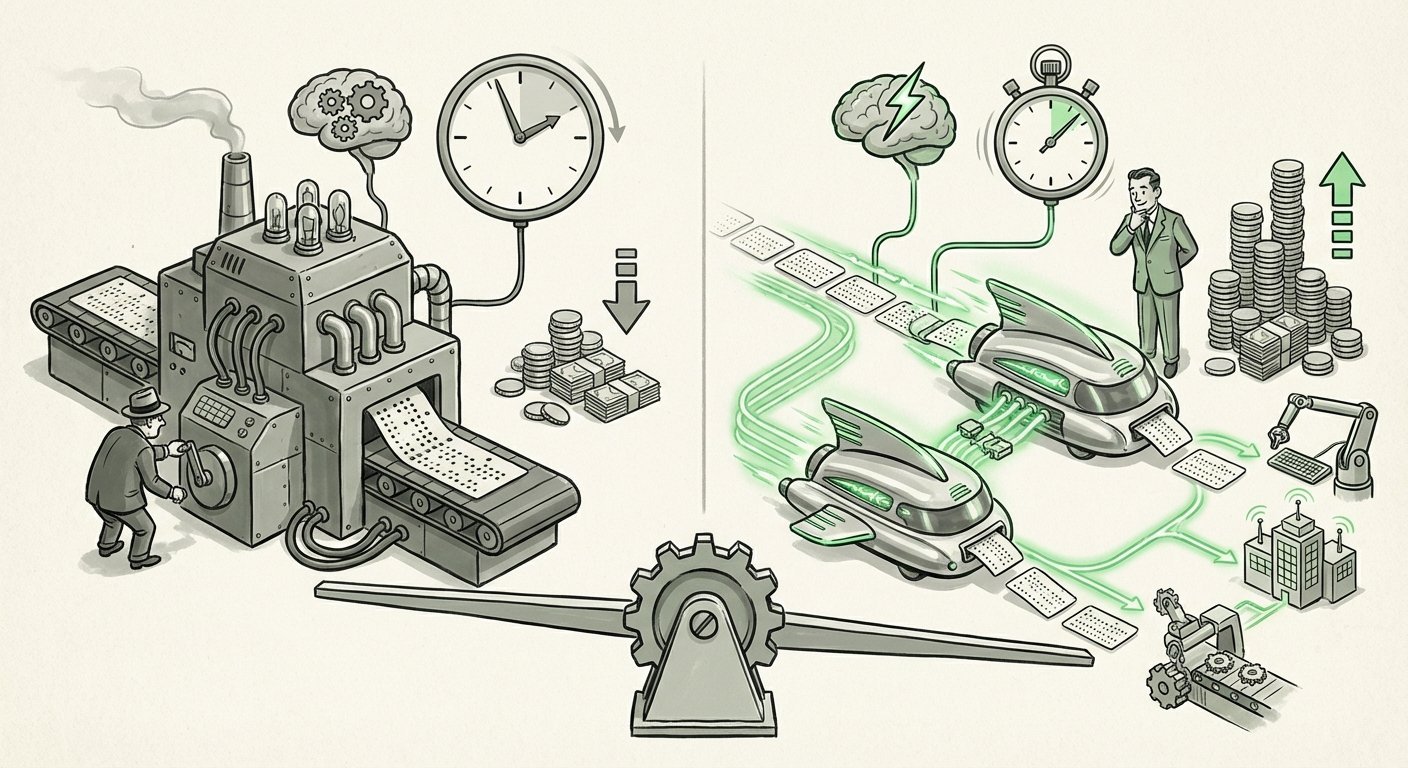
For years, the standard enterprise playbook has been top-down: buy the tool, roll it out, deal with the fallout. That playbook is running into a wall. When workers have a formal say, AI adoption becomes a negotiation, with timelines, pilots, review periods, and conditions. Vendors and employers who plan for this will move faster. Those who ignore it will find themselves stuck in disputes, grievances, and stalled rollouts.
"Human in the Loop" Becomes a Product Requirement
Once human review is written into contracts, it stops being a nice-to-have feature and becomes a procurement requirement. Expect AI systems built for government and regulated industries to ship with audit logs, override tools, explainability features, and approval workflows baked in, because buyers will demand them.
The Public Sector Becomes a Testing Ground
Government is where the rules of AI adoption are being written in real time. The clauses that survive bargaining, the grievances that hold up, the pilots that succeed, all of it becomes a template. Private sector unions and worker groups are watching closely and will borrow what works.
Speed vs. Trust
There is a real cost here. Negotiated deployment is slower than unilateral deployment. Some officials will find that frustrating. But slow, trusted adoption may stick better than fast, resented adoption. An AI tool that workers help design and understand is a tool that actually gets used well, instead of one that gets quietly worked around.
Practical Implications for Businesses
The private sector should read this as an early warning, not a distant story. The same demands are coming. Here is what smart organizations are already doing.
- Get ahead of the conversation. Announce AI plans early, explain what changes and what does not, and open a real channel for questions. Silence breeds rumors, and rumors breed resistance.
- Write your own guardrails. If you do not define how AI will be used to evaluate, monitor, or replace people, someone else will, through a union, a lawsuit, a regulator, or a leak.
- Invest in training before you need to. Retraining is cheaper than turnover, and it turns your most experienced people into your best AI operators.
- Treat "human in the loop" as a design principle. Build override and review into workflows from day one. Retrofitting it later is expensive and slow.
- Be honest about job impacts. Vague reassurance destroys trust faster than bad news. Workers can handle a clear plan. They cannot handle being managed around.
Actionable Insights for Each Group
For Agency and HR Leaders
Create a written AI policy before the next procurement. Include notice periods, pilot programs, evaluation criteria, and a clear process for staff input. Document what the tool does, what data it touches, and who is accountable when it is wrong.
For Workers and Representatives
Ask for the specifics: which systems, which tasks, which data, which jobs. Push for notice, training, human review, and a no-surprise clause on staffing. The strongest position is not "no AI", it is "AI on agreed terms."
For AI Vendors
Build for a world where the buyer's workforce has a vote. That means transparency about model behavior, clear data handling, accessible documentation, and features that support human oversight. The vendors who make workers less afraid will win the contracts.
For Policymakers
The contract table is doing work that legislation has not yet done. Lawmakers can support it by requiring AI impact assessments for public agencies, mandating disclosure when automated systems are used in decisions affecting the public, and funding worker retraining.
The Bigger Picture
The most important thing happening here is not any single clause. It is the idea that the people affected by AI should have a say in how it is used, and that this idea can be enforced, not just discussed.
For a long time, the AI conversation was split between two camps: those who promised transformation and those who feared disruption. Both treated workers as objects of the change. Public sector workers are doing something different. They are showing up as participants.
That does not guarantee good outcomes. Negotiated agreements can be weak. Some agencies will bargain in good faith and some will not. Some workers have leverage and some do not. But the direction is clear, and it is likely to spread. The public sector is where the first real rules of workplace AI are being written, and the rest of the economy will be reading them closely.
The future of AI will not be decided only in labs and boardrooms. It will be decided at bargaining tables, in procurement offices, and in the everyday negotiations between the people who build the tools and the people who have to use them. That is a healthier future than the one we were heading toward.