“We Now Have All the Ingredients for AGI”: Dr. Jad Tarifi’s Bold Claim and What It Means for the Future of AI
In a recent statement that has sparked conversation across the AI community, Dr. Jad Tarifi, a key figure at Integral AI, declared, “We now have all the ingredients for AGI.” AGI stands for Artificial General Intelligence, a type of AI that can understand, learn, and apply knowledge across many tasks, much like a human being. Unlike today’s narrow AI, which excels at specific jobs like playing chess or recommending movies, AGI would be flexible and general-purpose.
Tarifi’s claim is bold. It suggests that the fundamental building blocks for AGI are already in place, and the challenge now is putting them together. For anyone interested in technology, business, or society, this statement is a signal that the AI revolution is entering a new phase. Whether you are a developer, a CEO, or a curious citizen, understanding what this means, and how to prepare, is essential.
What Are the “Ingredients” for AGI?
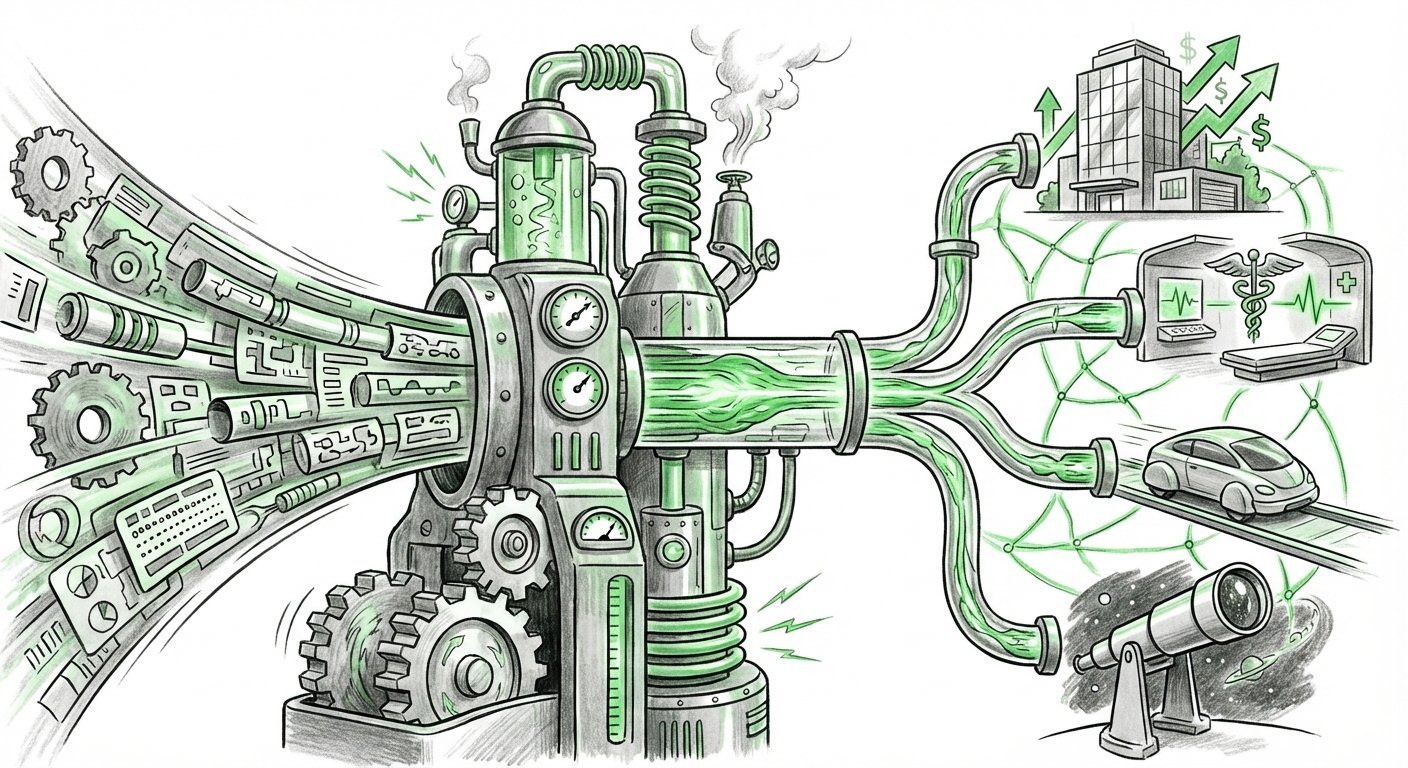
While Tarifi did not list specific ingredients, the phrase implies that the core components are now sufficiently advanced. In the AI world, these ingredients generally fall into four categories:
- Massive computing power: Advanced chips and cloud infrastructure allow us to train enormous models that were impossible just a few years ago.
- Vast amounts of data: The internet, sensors, and digital records provide the raw material for AI to learn from.
- Better algorithms: Deep learning and transformer models have proven incredibly effective at finding patterns in data.
- Human expertise: Researchers now understand how to scale these models and fine-tune them for complex tasks.
Each of these areas has seen rapid progress. Computing power continues to grow, data is more abundant than ever, and algorithms are becoming more efficient. The claim that we have “all the ingredients” suggests we have reached a tipping point. The pieces are on the table; now the race is to assemble them into a working AGI.
The AGI Debate: Optimism vs. Skepticism
Not everyone shares Tarifi’s optimism. The AI community is divided on how close we are to AGI. Some experts argue that we are still missing critical breakthroughs, such as true reasoning, common sense, and the ability to learn from very few examples. They point out that today’s AI, despite its impressive feats, can still make foolish mistakes and lacks a deep understanding of the world.
Others, like Tarifi, believe that scaling current methods, more data, more compute, better algorithms, will eventually lead to AGI. They see the ingredients as sufficient, and the remaining work as engineering rather than fundamental discovery. This debate is healthy because it pushes researchers to think critically about the path forward. But Tarifi’s statement adds weight to the optimistic side. It signals confidence that we have the tools we need, and that the focus should shift to integration and safety.
What AGI Would Mean for Businesses
If AGI becomes a reality, its impact on businesses will be profound. Unlike narrow AI, which automates specific tasks, AGI could handle complex, multi-step projects with minimal human oversight. Imagine an AI that can research a market, draft a business plan, design a product, and create a marketing campaign, all without being told each step. This level of capability could reshape entire industries.
Businesses should start preparing now. Here are a few practical steps:
- Assess your processes: Identify which tasks are repetitive and could be automated by increasingly capable AI.
- Invest in data infrastructure: AGI will need clean, well-organized data to learn from. Make sure your data is ready.
- Develop AI talent: Hire or train people who understand how to work with AI systems and interpret their outputs.
- Create ethical guidelines: Decide how your company will use AGI responsibly, before it arrives.
Early adopters could gain a significant competitive advantage. Those who wait may find themselves struggling to catch up.
What AGI Would Mean for Society
The societal implications are just as dramatic. AGI could help solve grand challenges like climate change, disease, and poverty by accelerating scientific discovery and optimizing resource use. It could also lead to job displacement on a scale we have never seen, as both blue-collar and white-collar roles become automatable. The gap between those who control AGI and those who don’t could widen, creating new inequalities.
There is also the question of safety and control. An AGI that is smarter than humans in every domain could be difficult to manage. Researchers are already working on alignment, the challenge of making sure AI systems act in ways that are beneficial and aligned with human values. Tarifi’s claim makes these conversations more urgent. Society needs to discuss how AGI will be governed, who will have access, and how we will protect against misuse.
Actionable Insights: How to Prepare for an AGI Future
Whether AGI arrives in five years or fifty, the ingredients are clearly coming together. Here is what different groups can do to get ready:
For Business Leaders
- Experiment with today’s AI tools to understand their strengths and limitations.
- Build a culture of continuous learning so employees can adapt to new AI capabilities.
- Collaborate with AI researchers and ethicists to develop responsible use policies.
For Individuals
- Focus on skills that complement AI, such as creativity, critical thinking, and emotional intelligence.
- Stay informed about AI developments, not just the hype, but the real capabilities and risks.
- Be open to learning new tools; those who can work alongside AI will be in high demand.
For Policymakers
- Create flexible regulations that encourage innovation while protecting citizens from harm.
- Invest in education and retraining programs to help workers transition.
- Foster international cooperation on AGI safety standards.
Conclusion: A Call to Action
Dr. Jad Tarifi’s statement is more than a headline; it is a call to action. By saying we have all the ingredients for AGI, he is telling us that the future is not far away, and that we must start preparing now. The ingredients are indeed powerful: massive compute, huge datasets, advanced algorithms, and skilled people. The remaining work is to mix them together safely and wisely.
For businesses, that means investing in AI capabilities and ethical frameworks. For society, it means having hard conversations about governance and equity. For all of us, it means staying curious and adaptable. The age of AGI may be closer than many think, and those who understand the recipe will be best positioned to thrive.