How to Build an AI Voice Assistant That Actually Sounds Like Your Brand
Most companies can get a voice assistant to talk. Far fewer can get one to sound like them. That gap is where the real work lives, and it is quickly becoming one of the most important design problems in enterprise AI. A voice agent that answers questions but greets customers in the wrong tone, at the wrong pace, with the wrong words, does not just fail to help, it actively damages the relationship the brand has spent years building.
The emerging discipline around this problem is called brand-aligned voice AI: the practice of engineering a spoken AI experience so that tone, vocabulary, pacing, and personality all match what the brand already is. It sits at the intersection of product design, language model engineering, and audio engineering. Get it right and a voice assistant feels like your best employee on their best day. Get it wrong and it feels like a stranger wearing your logo.
Why Voice Is Becoming the Front Door
Text interfaces reward patience. People read, re-read, and edit before they send. Voice does not offer that luxury. A spoken conversation happens in real time, in a few hundred milliseconds of back-and-forth, and every pause, filler word, and flat intonation carries meaning. That makes voice simultaneously the most natural interface and the least forgiving one to get wrong.
It also explains why so many companies are moving voice AI out of the experimental pilot and into customer-facing operations. Voice is how people reach out when something has gone wrong, a delayed order, a billing issue, a booking that needs to change. Those are high-stakes, emotionally loaded moments. A robotic, off-brand response in a moment of frustration reads as indifference, no matter how accurate the answer is.
The strategic shift here is bigger than customer service. As more software becomes conversational, voice becomes a brand surface in its own right. The same way a website's design, speed, and copy signal quality, a voice agent's diction, warmth, and honesty signal quality. Brands that treat voice as a checkbox will produce assistants that sound like everyone else. Brands that treat voice as identity will produce something customers remember.
What "Brand-Aligned" Actually Means
Brand alignment in voice is not a single setting. It breaks into several layers, each of which needs its own decisions:
1. Persona
Who is this assistant? Is it a calm expert, a friendly guide, a brisk professional, a warm concierge? The persona should map onto the brand's existing character, not onto a generic ideal of "helpful assistant." Crucially, it needs to be describable in a few sentences that any writer or engineer on the team would produce independently. If nobody can agree on the persona in plain language, the model will not be able to express it consistently either.
2. Voice and sound
The literal sound of the assistant, timbre, pace, breath, and intonation, is the most visceral brand signal. The goal is not the most human-sounding voice available; it is the voice most consistent with how the brand would speak if it were a person. That may mean a voice that is slightly slower and warmer, or one that is crisp and efficient. It also means deciding how the assistant handles hesitation, agreement, and back-channel cues like "got it" or "mm-hmm," which make conversation feel alive.
3. Language
Vocabulary is where brands accidentally drift. Words like "certainly," "awesome," "unfortunately," and "I understand your frustration" each carry a distinct flavor. A brand-aligned assistant uses the same word choices a senior member of the team would use, and, just as importantly, avoids the ones the brand would never say. This is where a carefully written style guide pays off more than any prompt tweak.
4. Behavior
Personality is mostly revealed under pressure. How does the assistant respond when it does not understand? When the customer is angry? When it has to deliver bad news, like a fee or a delay? Those moments need scripted principles, not improvised wording. Brand alignment lives and dies in the awkward moments, because that is when customers are most attentive to tone.
The Technical Architecture of a Voice Agent
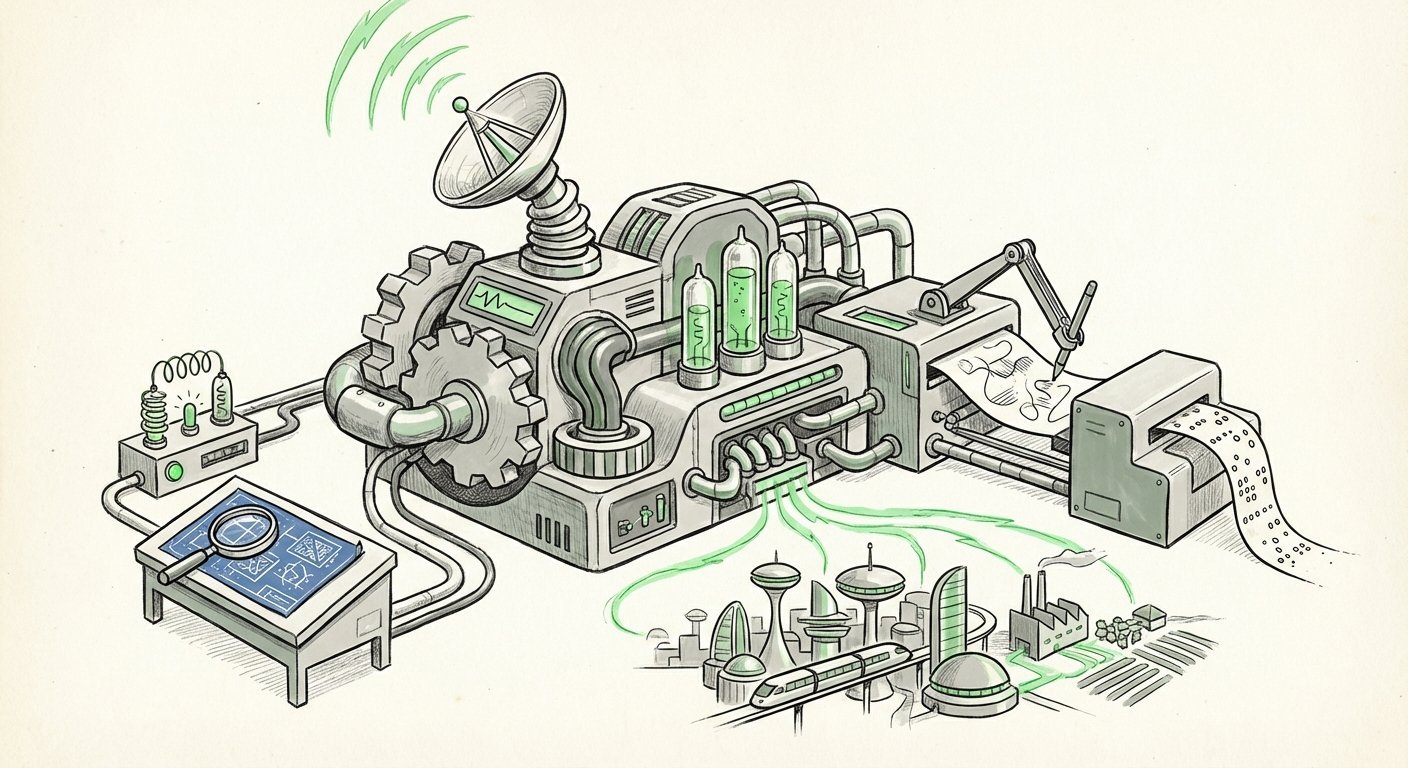
Underneath the design decisions is a pipeline, and understanding it helps teams know where brand alignment can be lost. A typical AI voice assistant strings together several components:
- Speech recognition turns the caller's audio into text. Errors here cascade into wrong answers and, worse, wrong tone.
- A conversation engine or language model interprets intent, decides what to do, and drafts the response.
- Speech synthesis turns that response back into audio, and this is where pacing, emphasis, and personality either survive or evaporate.
- Orchestration logic manages turn-taking, interruptions, and handoffs to other systems or to a human.
Each handoff introduces a risk. Text that sounded elegant in a prompt can arrive through synthesis with flat emphasis. A warm scripted greeting can be undercut by an awkward pause while the system waits on a database. This is why latency is a brand issue, not just an engineering one. Long silences make an assistant feel hesitant or confused, which customers read as incompetence, regardless of what the words say.
Designing within a latency budget
Conversational speech requires tight response times, and the practical implication is that not every response can afford a full round of heavy reasoning. Teams typically split the work: fast, cacheable responses for common greetings and confirmations, and slower, higher-quality reasoning for complex requests. Doing this well means scripting the moments that do not need intelligence, greetings, acknowledgments, confirmations, and closings, so the assistant stays snappy and on-brand even when the backend is working hard.
Guardrails: Where Brand Alignment Meets Safety
An AI voice assistant that can say anything will eventually say something the brand cannot defend. Guardrails are therefore not a compliance afterthought; they are part of the brand's voice. The essentials:
- Hard limits on topics. The assistant should have a clear sense of what it will not discuss, promise, or guess at.
- No invented specifics. Prices, timelines, policies, and eligibility rules should come from authoritative systems, not from the model's memory.
- Honest uncertainty. A brand-aligned answer to "I don't know" is a confident, warm, on-brand acknowledgment, not a deflection or a fabricated detail.
- Graceful escalation. When stakes are high or frustration is rising, handing off to a person should feel like an upgrade, not an abandonment. How that handoff is worded matters as much as when it happens.
- Disclosure. Customers should know they are talking to an AI. Being clear about it, in a confident tone, can actually build trust rather than erode it.
Testing for Brand Fit, Not Just Accuracy
Traditional QA asks whether the assistant gave the right answer. Brand-aligned QA asks whether it gave the right answer the way the brand would. Both matter, and both need tests.
Practical approaches include building a library of representative conversations, angry customers, confused callers, ambiguous requests, moments of bad news, and reviewing them by ear, not just on paper. Reading a transcript hides the thing you are trying to measure. Teams should also run consistency checks: ask the same question in five different ways and see whether the answers still sound like the same person. And they should run adversarial testing, deliberately provoking the assistant to see whether it stays within its boundaries and its tone.
The most valuable review habit is simple: have someone with brand judgment listen to real recordings every week. Metrics will tell you whether the assistant resolved the issue. Only a human ear will tell you whether it sounded like you.
Build, Buy, or Blend?
Nearly every team faces the same question. The pragmatic answer for most organizations is a blend. The underlying speech and language components are increasingly commoditized, and building them from scratch rarely creates competitive advantage. What does create advantage is the layer on top: the persona definition, the style guide, the conversation scripts, the evaluation process, and the integration with the systems of record that let the assistant actually do something useful.
That means the most defensible investment is not the model. It is the brand layer, a living document and test suite that encodes how the organization speaks. Companies that build this asset can swap underlying technology as it improves without losing their voice. Companies that bury their personality inside a single prompt lose it the moment anything changes.
What This Means for the Future of AI
The voice assistant story is a preview of a much larger shift. For the past few years, the competitive question in AI has been capability: can the model do the task? That question is being answered, quickly and broadly. The next question is differentiation: when everyone has access to capable models, what makes one company's AI experience better than another's?
The answer, increasingly, is taste and trust. Voice makes this obvious because audio is so intimate. Two assistants can have identical accuracy and completely different effects on a customer. One feels like a helpful extension of the brand; the other feels like a phone tree with a personality disorder. As AI spreads into sales, support, healthcare intake, hospitality, and internal operations, more and more of the perceived quality of a company will come from these designed, curated, deeply human-feeling details.
It also changes who is in the room when AI is built. Voice alignment requires writers, brand strategists, service managers, and customer researchers sitting alongside engineers. That is a meaningful organizational shift. AI systems are no longer purely technical artifacts; they are authored experiences, and authoring requires authors.
There is a broader social implication too. As synthetic voices become indistinguishable from human ones, the bar for honesty rises. Brands that are transparent about AI, that give customers clear ways to reach a human, and that resist the temptation to fake warmth will earn something increasingly rare: credibility. The companies that use voice AI to sound more like themselves, consistent, clear, and considerate, will find that the technology strengthens relationships rather than automating them away.
Actionable Steps to Get Started
- Write the persona brief first. Three to five sentences describing who the assistant is, how it speaks, and what it would never say. Get sign-off from brand and service leaders.
- Build a banned-words and preferred-words list. Treat it as a living style guide, not a one-time prompt.
- Script the unglamorous moments. Greetings, misunderstandings, hold requests, bad news, and handoffs. These define the experience more than the happy path.
- Measure latency as a quality metric. Track response times by scenario and fix the slow paths that make the assistant feel unsure.
- Build a scenario test library and review it by ear on a regular cadence, not just at launch.
- Design the human handoff deliberately, who gets it, what they see, and exactly how the transfer is announced.
- Keep the brand layer separate from the vendor layer so technology can change without the voice changing.
Conclusion
Building an AI voice assistant is no longer primarily a machine learning problem. The hard part is deciding what your brand sounds like when it speaks, and then defending that sound through every layer of a fast-moving technical pipeline. The teams that succeed will be the ones that treat voice as a design discipline with real authorship behind it, not as an automation project with a chatbot attached. In a world where every company will soon have a voice, the ones customers remember will be the ones that sound like themselves.