Meta's Open-and-Closed AI Shake-Up: What It Means for the Future of AI
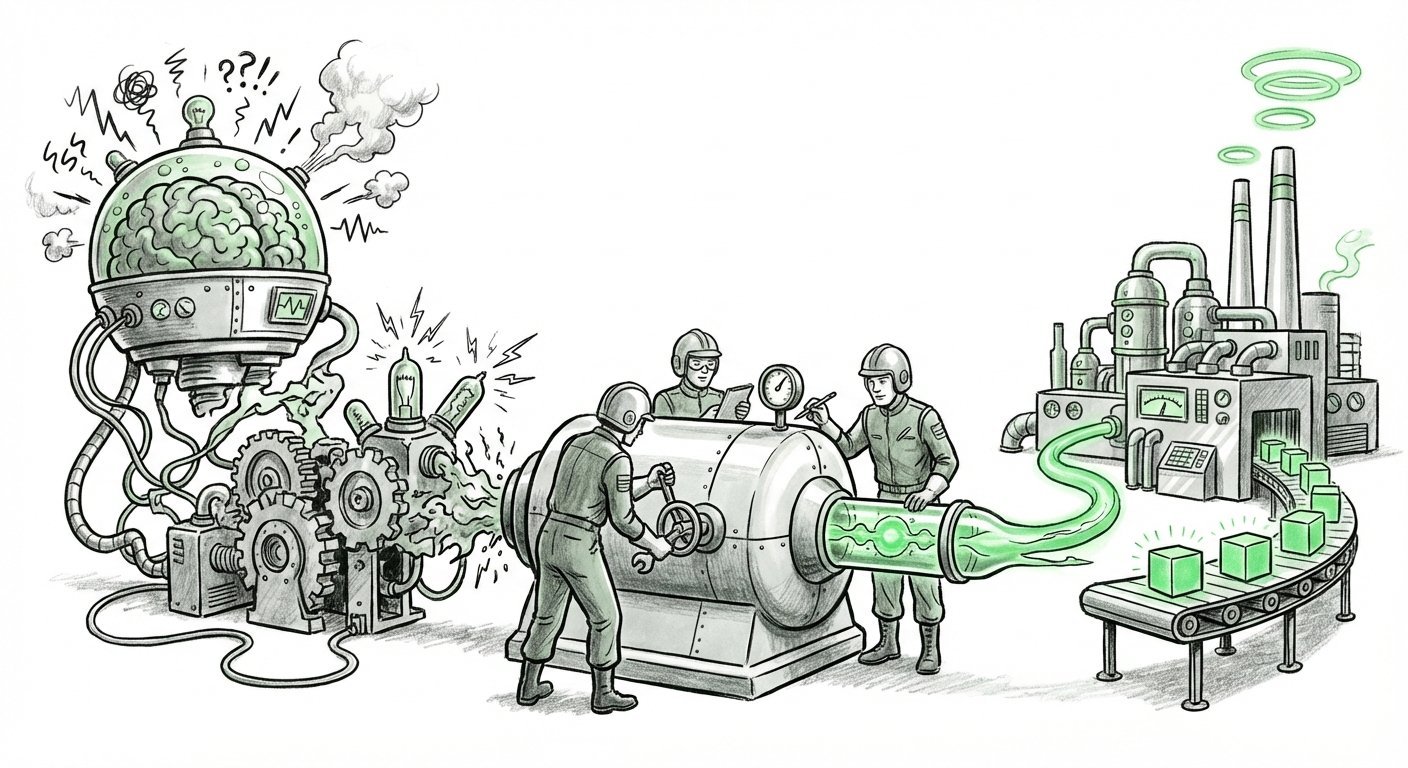
Something important is shifting inside one of the world's biggest AI companies. In mid-October 2026, Meta shook up its frontier AI work, the teams pushing at the outer edge of what machine intelligence can do, and it did so across both of its tracks at once: the open one and the closed one.
That pairing is the story. When a company reorganizes its most advanced research, it usually means one of two things: a strategy is being doubled down on, or a strategy is being questioned. Doing it across the open and closed frontiers at the same time suggests both. It signals that the line between "we give the models away" and "we keep the models behind a wall" is being redrawn, not just at Meta, but across the entire industry.
This article breaks down what that shake-up means, why it matters beyond Meta, and what businesses, developers, and everyday users should do about it.
Two Tracks, One Company: How Meta Got Here
For years, Meta has been the loudest voice in the room on open AI, the practice of releasing model weights so anyone can download, run, tweak, and build on them. That stance made Meta something unusual: a giant corporation acting, in part, like a community project. Developers loved it. Startups built entire businesses on top of it. Universities without massive budgets got access to frontier-grade tools.
But the same company also operates closed systems, models and products where the weights stay private, access is controlled, and the company keeps a tighter grip on how the technology is used. That is where safety guardrails, product integration, and commercial control live.
Running both tracks is not a contradiction. It is a hedge. And a shake-up that touches both frontiers at once tells us Meta is recalculating its hedge ��� where to be generous, where to be cautious, and where the money and the influence actually come from.
Why "Open" and "Closed" Are No Longer Opposites
The old debate was simple. Open was freedom. Closed was control. Pick a side.
That framing has collapsed. In practice, almost every major AI player now runs some version of a mixed portfolio:
- Open releases build developer loyalty, spread a company's format and tooling, and generate goodwill and free research help.
- Closed releases protect revenue, support enterprise contracts, and let companies apply safety controls they cannot enforce on a downloaded file.
- Hybrid models, open weights with closed add-ons, or open small models paired with a paid hosted service, let a company get both effects at once.
A reorganization spanning both frontiers is essentially an admission that the two are now one business. You cannot run an open strategy without a commercial engine behind it. You cannot run a closed strategy without an open ecosystem feeding you talent, tools, and mindshare.
The shake-up reframes the question. It's no longer "should frontier AI be open or closed?" It's "which parts of the stack go open, which stay closed, and on what timeline?"
What a Frontier Reorganization Actually Signals
Frontier teams are expensive, fast-moving, and hard to manage. When a company restructures them, a few things are usually true at once.
1. The cost curve is biting
Training the most advanced models is one of the most capital-intensive activities in tech. Every reshuffle is partly about efficiency, doing more with the same people, or the same work with clearer ownership. Expect tighter focus, fewer side experiments, and more pressure to show returns.
2. The safety conversation has matured
Open and closed models carry very different risk profiles. A closed model can be filtered, rate-limited, monitored, and switched off. An open one cannot. As capability rises, so does the scrutiny, from regulators, from enterprise buyers, and from the public. A shake-up that touches the closed frontier is often about building a system you can point to when someone asks, "Who is responsible for this?"
3. Product teams are gaining ground on research teams
This is the pattern across the whole industry. In the early boom, research labs led. Now the money is in deployment, getting AI into apps, ads, assistants, and enterprise tools that people actually use. Reorganizations tend to pull research closer to shipping.
4. Talent competition is brutal
Frontier AI talent is scarce and mobile. Structural changes are also retention and recruitment tools, new charters, clearer missions, and the promise of working on the most interesting problems.
What It Means for Businesses
Most companies are not training frontier models. They are choosing which ones to build on. That choice just got more complicated, and more important.
Build vs. buy vs. blend
Open-weight models give you control: you can run them on your own hardware, fine-tune them on private data, avoid sending sensitive information to a third party, and keep costs predictable. Closed models give you capability and convenience: you get the newest features, managed infrastructure, and someone else handling the hard engineering.
The practical answer for most organizations is a blend. Use open models where data sensitivity, cost, and customization matter. Use closed models where you need the bleeding edge or you don't want to run infrastructure at all.
Vendor concentration is a real risk
If your entire AI stack depends on one provider's closed API, you inherit that provider's pricing, outage risk, policy changes, and roadmap. A major player rebalancing its open and closed strategy is a reminder that roadmaps change. Design for portability. Keep an escape hatch.
Compliance and procurement will tighten
As the open/closed split sharpens, expect enterprise buyers to ask harder questions: Where does this model run? Who can see our data? Can we audit it? Can it be shut down? Vendors will answer those questions very differently depending on which track their model sits on.
What It Means for Developers and Researchers
For builders, the open track remains the on-ramp. It is how students, indie developers, and small teams get access to serious capability without a corporate budget. Any move that rebalances open work, in either direction, changes who gets to build.
For researchers, the concern is reproducibility. Closed models can't be studied from the inside. If the most capable systems drift behind walls, independent safety research gets harder. That's a structural problem, not a Meta-specific one, but a frontier reshuffle is exactly the moment when it gets decided.
The Societal Stakes: Access, Safety, and Who Gets a Seat
Open AI has been one of the great equalizers in modern software. A single laptop can run a capable model. A hospital in a low-resource region can deploy AI without a subscription. A student can learn by pulling apart something real.
Closed AI has been one of the great stabilizers. It is easier to prevent misuse when you control the door. It is easier to patch a flaw when you control the code.
Both are true. The future of AI depends less on which one "wins" and more on how the balance is set. Too closed, and you get a handful of gatekeepers deciding what humanity can build. Too open with no guardrails, and dangerous capability spreads faster than the ability to manage it.
A shake-up at a company that has publicly championed the open side is a signal worth watching. It tells us where the industry thinks the balance is heading before the balance actually moves.
Actionable Insights: What to Do Now
- Audit your model dependencies. List every AI system you rely on. Mark which are open-weight, which are closed APIs, and which are hybrid. You can't manage a risk you haven't mapped.
- Build an abstraction layer. Keep your prompts, data pipelines, and evaluation harness model-agnostic so you can switch providers without rewriting your product.
- Test open models on your own data. Run a side-by-side pilot against your current closed provider. You may find a smaller open model is enough for most tasks at a fraction of the cost.
- Keep a closed model in reserve for the hardest, highest-stakes tasks where capability beats cost.
- Ask vendors the hard questions now: data retention, model versioning, deprecation timelines, and exit terms.
- Watch the licensing. Open weights do not always mean open use. Read the terms before you build a business on them.
- Don't over-index on one announcement. Reorganizations are signals, not verdicts. Watch what ships over the next few quarters.
The Bigger Picture
The most important thing about this shake-up is not the org chart. It's the admission buried inside it: frontier AI is now a portfolio problem, not a purity test.
The companies that win the next phase won't be the ones that picked open or closed and stayed there. They'll be the ones that can move capability between the two, releasing openly to build ecosystems, holding back to build trust, and switching tracks as the stakes change.
For everyone else, businesses, developers, policymakers, users, the lesson is the same. Don't build your future on one company's strategy staying still. Build for change, keep your options open, and pay attention when the biggest players start redrawing their own lines.
The open-versus-closed debate is not ending. It is becoming a permanent negotiation, and Meta just showed us how seriously it's taking its side of the table.