The Sequence Learning Loop: Why AI Infrastructure Is Moving From One-Time Training Runs to Continuous Learning Cycles
For most of the short history of modern AI, the mental model was simple. You collected data, you trained a model, you shipped it, and then you moved on to the next model. Training was a big, expensive event, like building a factory, and inference was the everyday work that happened afterward. The two phases lived in separate worlds, run by separate teams, on separate budgets.
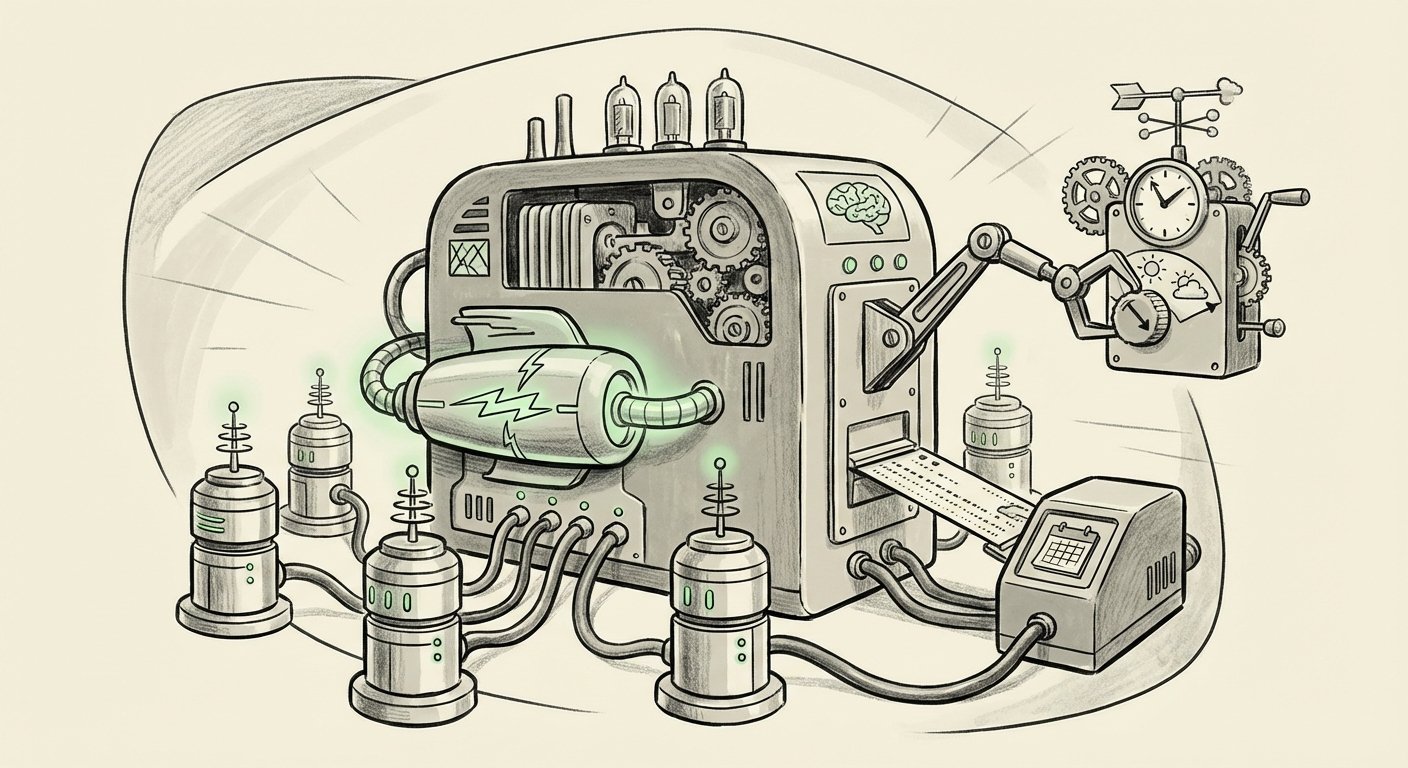
That separation is collapsing. The defining theme in AI infrastructure right now is the rise of what is best described as the sequence learning loop: a repeating cycle in which a model's outputs, the feedback they generate, and the traces of how the model reasoned through a problem all flow back into the system that trains the next version. The model stops being a finished product. It becomes a participant in its own improvement.
This shift sounds like a small technical detail. It is not. It changes how data centers are built, how software teams are organized, how AI budgets are set, and how companies should think about buying AI at all. Here is what the sequence learning loop actually means, and how to prepare for it.
What the Sequence Learning Loop Actually Is
Start with the word "sequence." Modern AI systems do not just answer a question; they produce a sequence of steps. They read context, plan, call tools, check results, revise, and try again. That whole sequence, not just the final answer, contains useful information. It shows where the model hesitated, where it wasted effort, where it got lucky, and where it failed.
In the older model of AI development, that sequence was thrown away the moment the answer was delivered. It cost money to store, it was messy, and nobody had a clean way to use it. In the sequence learning loop, that trace becomes the raw material for the next round of training.
So the loop looks like this:
- Generate: the model runs a task and produces a full sequence of reasoning and actions.
- Capture: the infrastructure records the sequence, the context, the tools used, and the outcome.
- Score: automated checks and human judgment mark which sequences were good, bad, or merely inefficient.
- Filter: the pipeline keeps the useful material and discards noise, duplicates, and failures that teach nothing.
- Train: the curated sequences feed back into the next training cycle.
- Evaluate and deploy: the new version is tested and released, and the loop begins again.
Each of those steps existed before. What is new is that they are being wired together into a single, always-on system, and that system, not any individual model, is becoming the real asset.
Why Infrastructure Is Suddenly the Bottleneck
There is a pattern in every major computing shift: the interesting work moves to whichever layer is hardest to copy. For a while, that was the model. Now that strong models are widely available, the harder problem is the machinery that turns everyday usage into reliable improvement.
That machinery is genuinely difficult. Consider what has to happen for the loop to work at all:
Storage that can hold sequences, not just answers
A single long reasoning trace can be many times larger than the answer it produces. Multiply that by millions of daily interactions and you have a storage problem that looks nothing like traditional application logging. Infrastructure teams are now designing systems that keep rich traces for a short window, compress them aggressively, and retain only the most valuable examples for training.
Evaluation that runs constantly
The loop only improves if someone can tell good sequences from bad ones, quickly and cheaply. That has pushed automated evaluation from a nice-to-have into core infrastructure. Teams are building scoring systems that combine rule-based checks, model-based graders, and targeted human review, all running continuously rather than once before launch.
Scheduling that mixes training and inference
Here is the uncomfortable consequence. If training now depends on data generated by inference, then training can no longer wait politely until the inference cluster is idle. Both workloads must share the same physical footprint. The result is a scheduling puzzle: how do you run long training jobs alongside latency-sensitive serving, on the same hardware, without either one ruining the other? This is one of the most active areas of AI infrastructure engineering today.
From Training Runs to Feedback Cycles
The deeper change is organizational. In the training-run era, the calendar was defined by releases. A team would spend months preparing a dataset, run a training job, evaluate the result, and ship. Between releases, the system was frozen.
In the loop era, there is no frozen state. The system is always ingesting, always scoring, always preparing the next cycle. That has three consequences worth understanding.
First, the data pipeline becomes the product roadmap. If your pipeline captures the wrong traces, or scores them badly, no amount of compute fixes the result. The quality of the loop, not the size of the model, becomes the differentiator.
Second, evaluation becomes a full-time discipline. A loop that cannot detect its own regressions will quietly get worse while everyone celebrates the activity. Continuous evaluation, with clear baselines and guardrails, is the brake pedal that makes it safe to keep the accelerator down.
Third, releases get smaller and more frequent. Instead of one big model refresh, teams push smaller updates more often, each validated against the same evaluation suite. This is a familiar rhythm from modern software engineering, now applied to model weights.
The Risks Nobody Should Skip
Loops are powerful, and that is exactly why they are dangerous. Three risks deserve attention before any organization builds one.
Feedback contamination
If the model learns from its own outputs without enough grounding in real outcomes, errors can compound. The loop starts reinforcing its own habits, including its own mistakes. The defense is discipline about what counts as a signal: prefer verified outcomes, external checks, and human judgment over raw self-assessment.
Silent drift
When a system updates continuously, it can drift away from the behavior users and auditors expect. A model that passed its checks in one month may behave differently two months later, with no single dramatic change to point at. Versioning, change logs, and always-on regression testing are not bureaucracy here; they are the only way to answer the question "what changed and why?"
Cost creep
An always-on loop consumes compute around the clock. Storage grows, evaluation runs constantly, and training never fully stops. Without hard budgets and clear value tracking, the loop can become a very expensive habit. The fix is to treat the loop like any other production system: measure what it produces, and prune what it doesn't.
What This Means for Businesses
For buyers of AI rather than builders, the sequence learning loop matters for a simple reason: it changes what you should be asking vendors and building internally.
- Ask how improvement happens, not just how good the model is. A vendor with a well-instrumented loop will get better every month. A vendor with a frozen model will not.
- Treat your own usage data as an asset. Every interaction is potential training material, if it is captured with care and governed properly. Companies that throw that away are discarding the raw material of their own advantage.
- Invest in the boring middle. Logging, scoring, versioning, and review workflows are unglamorous and decisive. Most failed AI programs fail here, not in the model.
- Design for humans in the loop. The highest-value sequences are often the ones a human corrected. Build workflows where corrections are easy to give and easy to capture.
What It Means for Society
Continuous learning raises questions that one-time training did not. If a system updates constantly, when does a safety review happen? Who signs off on a change that emerged gradually rather than in a single release? Regulators used to certify products; now they will increasingly have to certify processes.
There is also a transparency question. A loop that continuously learns from user behavior is, in effect, continuously shaped by the people who use it. That can be good, systems that reflect real needs, or bad, if the loudest behavior steers the model in directions nobody intended. The organizations that get this right will be the ones that treat feedback as a governed input rather than a free resource.
How to Prepare: A Practical Checklist
Whether you are building models or buying them, a few concrete steps go a long way.
- Map your loop, even if it is small. Write down where sequences are generated, where they are stored, who scores them, and how they reach training. Gaps will be obvious immediately.
- Define "good" before you capture anything. Scoring criteria are the steering wheel of the whole system.
- Set retention rules. Keep what matters, compress what might, discard what won't.
- Build a permanent evaluation suite with frozen baselines, and run it on every change.
- Budget the loop as a standing cost, not a project. Then track its return the same way you track any other production system.
- Put a human checkpoint at the point of highest risk. Automation should carry the volume; people should carry the judgment.
The Bottom Line
The most important thing happening in AI infrastructure right now is not a bigger model or a faster chip. It is the quiet rewiring of the system so that using AI and improving AI become the same activity. Training and inference are merging into one continuous cycle, and the organizations that build that cycle well, with disciplined data capture, constant evaluation, and honest governance, will pull ahead in a way that is very hard for competitors to copy.
The loop is not a feature you buy. It is a capability you build, one unglamorous step at a time.