Tiny Magnetic Vortices and Brain-Like Computers: What This Means for the Future of AI
Artificial intelligence has a hardware problem hiding behind its software success. The most capable AI systems today depend on massive data centers, huge amounts of electricity, and chips that constantly shuttle information between memory and processing. That works, but it is not how the human brain operates. The brain is compact, low-power, and able to learn and adapt in real time.
A promising new direction is emerging: tiny magnetic vortices could help computers work more like your brain. The idea is still in the research stage, but it points to a bigger shift in AI hardware. Instead of simply making existing chips faster, scientists are exploring materials and designs that process information in a more brain-like way. If this approach matures, it could change how AI is built, where it runs, and who can afford to use it.
The Big Idea: Computing More Like a Brain
Most computers today follow a design that separates memory from processing. Data is stored in one place, moved to another place for calculations, and then sent back. For simple tasks, this works well. For AI, it creates a bottleneck. Modern AI models move enormous amounts of data, and that movement costs time and energy.
Brain-like computing, often called neuromorphic computing, takes a different approach. It tries to mimic key features of the brain: many simple processing units, dense connections, event-driven operation, and memory that sits close to computation. In a brain, learning and memory are not separate steps in a pipeline. They are part of the same living system.
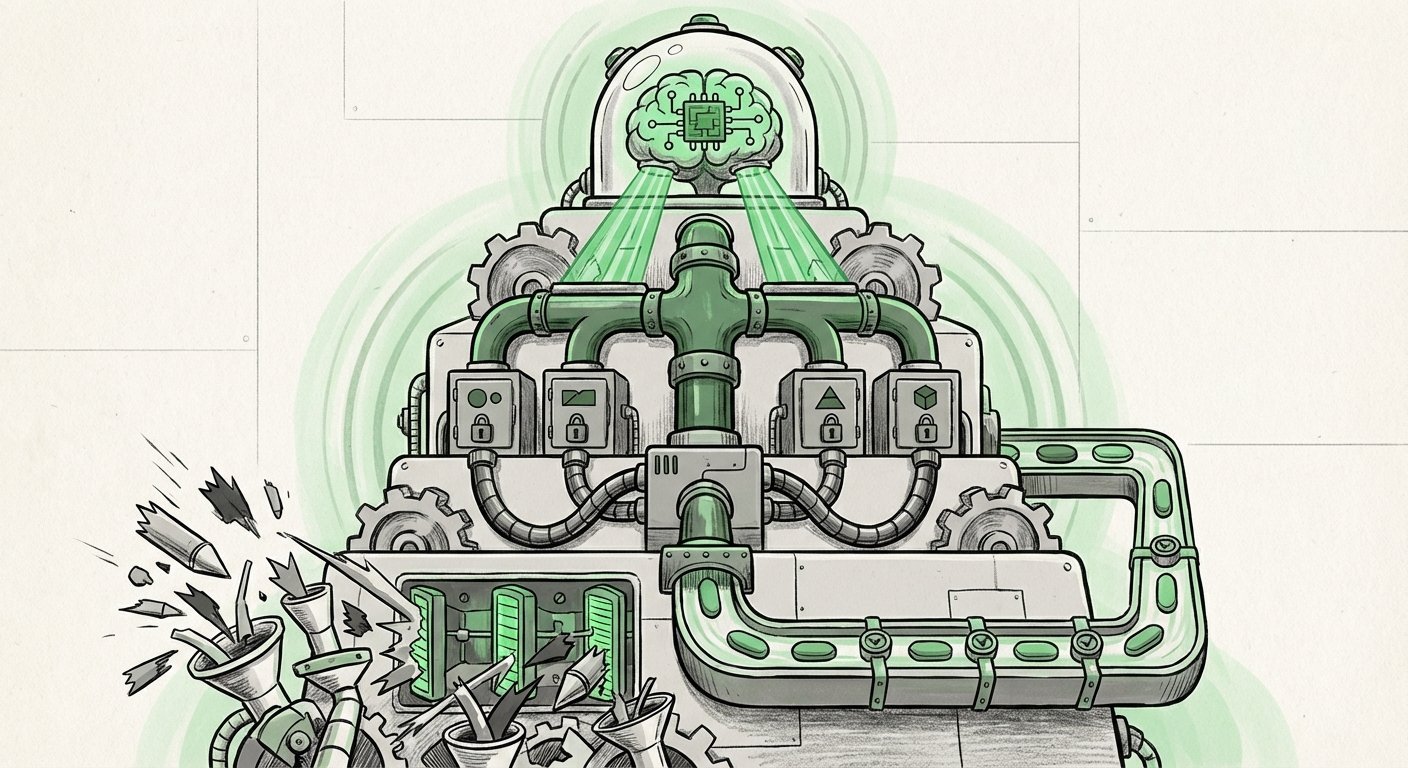
That is where magnetic vortices enter the picture. A magnetic vortex is a tiny swirling pattern in a magnetic material. These patterns can hold information and respond to inputs in ways that may be useful for computing. The hope is that networks of these tiny structures could act as brain-like building blocks, storing and processing signals in the same physical space.
Why Magnetic Vortices Matter
The appeal of magnetic vortices is not just that they are small. It is that they may allow memory and computation to be combined. In a conventional chip, storing a value and using that value are separate actions. In a brain-like system, the state of a material can both represent information and influence how future signals flow.
Magnetic vortices are also interesting because they can be controlled with magnetic fields, electrical currents, or other stimuli. That opens the door to devices that switch, remember, and interact at very small scales. In principle, this could lead to hardware that is more energy-efficient for certain AI tasks, especially those that involve patterns, sequences, and real-time sensing.
None of this means magnetic vortices will replace today’s AI chips anytime soon. The research is early, and many engineering challenges remain. But the direction matters. It shows that the next wave of AI progress may come not only from bigger models and more data, but also from rethinking the physical foundation of computing.
The Energy Problem Driving the Search
AI’s energy use has become a boardroom issue and a public policy issue. Training large models and running them at scale require enormous computing power. Data centers consume land, water, and electricity. On the device side, smartphones, cars, robots, and sensors often lack the power budget for heavy AI processing.
This is why low-power, brain-like hardware is so attractive. The human brain runs on roughly the power of a dim light bulb, yet it can recognize faces, understand speech, and learn new skills. It does this with noisy, slow, and imperfect components. That is a very different design target from conventional computing, which prizes exactness and speed above all else.
Magnetic vortices fit into this search because they may offer a way to build dense, low-energy systems that learn from patterns rather than following long lists of instructions. For AI, that could mean models that adapt on the device, respond instantly, and keep working when the network is unavailable.
What This Means for the Future of AI
1. A New Hardware Path Beyond Scaling
For years, AI progress has been tightly linked to scaling: more data, more parameters, more computing power. That approach has delivered impressive results, but it is running into cost and energy limits. Brain-like hardware offers a different path. It may not win on every task, but it could be far better for specific jobs.
The likely future is hybrid. Large data centers will continue to use powerful conventional chips for training and heavy reasoning. At the same time, brain-like chips could handle always-on sensing, pattern recognition, robotics, and edge AI. Magnetic vortices could become one of several technologies in that mix, alongside other neuromorphic designs.
2. AI That Runs at the Edge
Edge AI means processing data close to where it is created, in a camera, a car, a factory machine, or a medical wearable. Sending everything to the cloud is expensive, slow, and sometimes impossible. Brain-like hardware could make edge devices smarter without draining batteries or requiring constant connectivity.
If magnetic vortex devices can deliver low-power learning and pattern detection, they could enable a new class of products. Imagine sensors that spot anomalies on their own, robots that adapt to changing environments, or wearable devices that learn a user’s habits without sending personal data away. These are long-term possibilities, not near-term guarantees, but they explain why the research matters.
3. New Software and New Skills
Brain-like hardware will not run today’s AI software unchanged. It will need new programming models, new tools, and new ways of thinking about computation. Spiking neural networks, event-driven algorithms, and in-memory computing are all part of this world. That means AI teams may need to learn hardware-aware design and work more closely with chip engineers.
This is a skills shift as much as a technology shift. The companies that thrive will be those that can connect data science, software engineering, and hardware architecture. They will not wait for a finished brain-like chip. They will start experimenting with simulators, prototypes, and hybrid systems now.
4. Realistic Expectations
It is important to separate excitement from hype. Magnetic vortices are a research direction, not a product category. Many materials and device challenges must be solved before they appear in commercial AI systems. Even then, they are unlikely to replace all existing hardware. The more realistic outcome is a new tool in the toolbox, one that is especially useful for low-power, real-time, and adaptive AI.
The biggest mistake businesses can make is to ignore the trend until it is mature. The second biggest mistake is to bet everything on it too early. The right posture is informed curiosity: track the research, test the use cases, and build the skills that will matter whether or not this particular technology wins.
Practical Implications for Businesses
Start with the workload, not the technology. Brain-like computing is not a universal upgrade. It is best suited to tasks that involve patterns, sensors, sequences, and real-time responses. Audit your AI portfolio for workloads where latency, energy, or privacy are major constraints. Those are the places to watch.
Plan for hybrid AI. The future is unlikely to be all cloud or all edge. It will be a mix of large models, small models, specialized chips, and brain-like components. Build an architecture that can route work to the right place. That means investing in data pipelines, model management, and security that work across environments.
Invest in energy efficiency as a competitive advantage. Whether or not magnetic vortices reach the market, the pressure to reduce AI’s energy footprint is real. Companies that measure and optimize AI energy use will be better prepared for costs, regulations, and customer expectations.
Build hardware-aware AI talent. AI teams that understand the constraints of chips, memory, and sensors will be more effective. Encourage collaboration between data scientists, embedded engineers, and hardware architects. Support experimentation with neuromorphic simulators and low-power AI techniques.
Watch the supply chain and standards. New computing approaches bring new suppliers, new tools, and new standards. Keep an eye on which platforms gain traction. Avoid locking yourself into a single stack too early. Design for portability where it matters.
Do not compromise on security and privacy. Edge AI can improve privacy by keeping data local, but it also creates new attack surfaces. Brain-like devices may behave in less predictable ways than traditional software. Security testing, model monitoring, and fail-safe design must be part of every pilot.
What It Means for Society
If brain-like computing becomes practical, it could make AI more accessible. Low-power chips could bring advanced AI to places with unreliable electricity or limited connectivity. That could support education, health care, agriculture, and disaster response. It could also reduce the environmental cost of AI, which is becoming a major concern.
But cheaper, more distributed AI also raises familiar risks. More devices means more data collection. More autonomy means more decisions made without human review. And if the benefits are concentrated among a few companies or countries, the digital divide could widen. Policy makers, researchers, and business leaders will need to think carefully about access, accountability, and transparency.
There is also a deeper point. Brain-like computing challenges the idea that AI must always be big and centralized. It suggests a future with many kinds of intelligence, running in many kinds of devices. That could make AI more resilient, more private, and more useful in the physical world. It could also make the technology harder to govern. The direction is promising, but it is not automatically good.
Actionable Insights
- Track the research signal, not the hype cycle. Follow progress in magnetic vortices and neuromorphic computing, but wait for clear benchmarks before making big bets.
- Identify three edge or low-power AI use cases where brain-like hardware could eventually help. Prototype with simulators or existing neuromorphic tools.
- Make energy efficiency a key performance indicator for AI projects. Measure power use alongside accuracy and speed.
- Design for hybrid deployment so models can run in the cloud, at the edge, or on specialized hardware without a full rewrite.
- Upskill teams in hardware-aware AI, including event-driven algorithms, model compression, and embedded machine learning.
- Engage with standards bodies and suppliers early, but keep architecture flexible enough to switch as the market matures.
- Build governance for distributed AI, including privacy, security, and human oversight for autonomous edge devices.
Conclusion
Tiny magnetic vortices are not about making a faster chip for today’s AI. They are about changing the shape of computing itself. By borrowing a few principles from the brain, they point toward AI hardware that is smaller, lower-power, and more tightly connected to the physical world. The research is early, and the engineering road is long, but the direction is important.
For businesses, the message is clear: the next wave of AI advantage may come from hardware and system design, not just bigger models. Start preparing now. Understand your workloads, build hybrid architectures, invest in energy efficiency, and develop talent that can work across software and hardware. The organizations that do this will be ready when brain-like computing moves from the lab to the real world.