11 Gadgets Under $10: The Cheap Hardware Boom Quietly Building the Future of AI
A list of eleven everyday gadgets that each cost less than a ten-dollar bill sounds like a shopping tip. It is actually something far more interesting. It is a signal about where technology is heading, and specifically, about the conditions that make artificial intelligence cheap enough to live in every corner of daily life.
When a device solves a real, small, annoying problem and still costs less than a sandwich, three things have usually happened: the components got commoditized, the manufacturing got optimized, and the intelligence inside got good enough to matter. That third one is the AI story. And it is the one most people are still underestimating.
The $10 Ceiling Is a Technology Milestone
Economists and engineers both love a price floor, because it tells you when a technology has stopped being a luxury and started being infrastructure. A product that sells for under $10 at retail has to be built for pennies. Every part has been stripped to its cheapest functional form. There is no room for waste, no margin for a fancy design flourish, and no tolerance for a component that cannot be sourced at massive scale.
That kind of pressure produces something incredibly valuable: standardized, boring, abundant hardware. And standardized, boring, abundant hardware is exactly what AI systems need to sense and act in the physical world.
The gadgets worth under $10 that solve everyday problems are a masterclass in this. They are small. They are single-purpose. They do one thing well and they do it without asking much of the user. That is a design philosophy that AI developers have been chasing for years under a much fancier name: narrow, task-specific intelligence.
Why Cheap Hardware Is Really an AI Story
Most conversation about artificial intelligence focuses on the software layer, large models, chatbots, image generators, coding assistants. But AI only becomes transformative when it escapes the screen. A model that can recognize a sound, detect a temperature change, or notice that a door is open is far more useful when it is embedded in a physical object that a person already owns and does not have to think about.
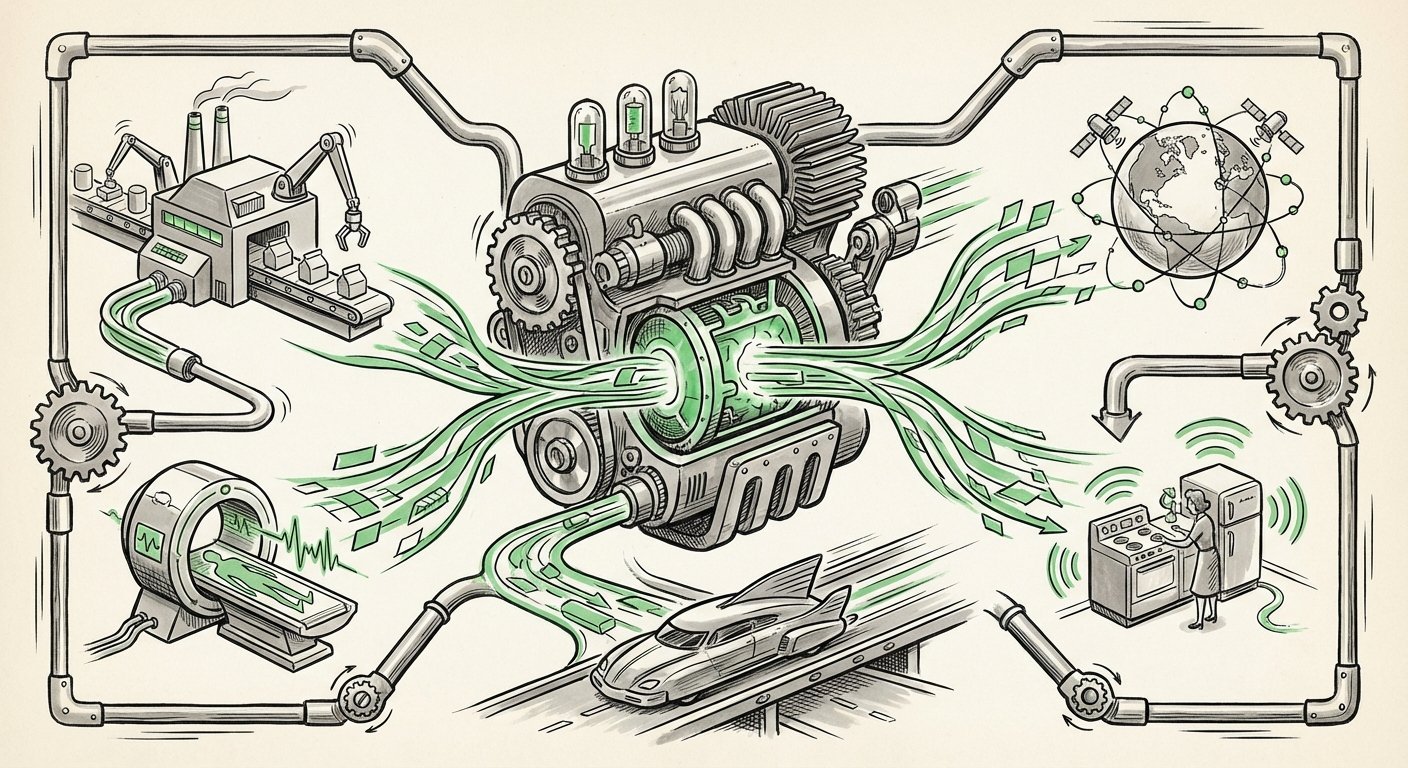
Here is where the under-$10 category becomes strategically important. Three forces are colliding at the same time:
1. Sensors Have Become Disposable
Motion sensors, microphones, light sensors, temperature probes, and simple radios are now so inexpensive that they can be included in products where they would have been unthinkable a decade ago. The price of adding "awareness" to a device has fallen toward zero. When awareness is nearly free, the bottleneck shifts from hardware to interpretation, and interpretation is precisely what AI is good at.
2. Compute Has Moved to the Edge
Tiny, low-power chips can now run small AI models on the device itself. No internet connection. No cloud bill. No privacy nightmare of shipping raw data to a server farm. This matters enormously for cheap gadgets, because a $10 product cannot afford a subscription, but it can afford a microcontroller that runs a lightweight model.
3. The Data Layer Is Exploding
Every one of these small devices is a potential data point. Aggregated across millions of units, cheap gadgets become a distributed sensor network for the physical world, homes, cars, workshops, storefronts, warehouses. That data is the raw material that trains and refines the next wave of models. The cheaper the hardware, the denser the data, and the smarter the systems built on top of it.
The Quiet Commoditization of Intelligence
There is a pattern in technology history that repeats with almost mechanical reliability. First, a capability is expensive and exclusive. Then it becomes affordable and mainstream. Then it becomes so cheap that it disappears into the background and nobody calls it a feature anymore.
Electric motors went through this. So did radios, calculators, cameras, and Bluetooth. Artificial intelligence is somewhere in the middle of that journey right now. Large frontier models remain expensive and centralized. But the small, distilled, task-specific versions of those models are racing down the cost curve.
The $10 gadget is where that curve becomes visible. When a product sells for less than ten dollars and still has to be profitable, the intelligence inside it must be nearly free to run. That means optimized models, low-power chips, and clever engineering that squeezes usefulness out of almost nothing. This is not a downgrade. It is maturity.
The most important AI of the next several years will not be the model that writes a novel. It will be the tiny model that notices the pipe is leaking, the plant needs water, the package arrived, or the machine is about to fail, and then tells no one, because it already handled it.
What This Means for the Future of AI
Intelligence Will Be Invisible and Ambient
Ask most people where AI lives and they will point at an app. The more accurate answer, five years out, is: everywhere, and nowhere in particular. The mark of a truly mature technology is that it stops being a destination. Cheap, reliable hardware is how AI makes that transition, from something you open to something that simply is.
Privacy Will Be Redesigned, Not Just Promised
Edge processing changes the privacy conversation fundamentally. If a device can interpret a sound or a motion locally, it never has to transmit raw recordings or images anywhere. Cheap hardware plus small on-device models equals a credible path to useful AI that does not require handing over your life to a data center. Expect regulators and consumers to push harder in this direction.
The Digital Divide Will Narrow, Slightly
A ten-dollar device is accessible to people who will never buy a high-end smartphone or a laptop. AI that runs on dramatically cheaper hardware reaches dramatically more people. That has enormous implications for education, agriculture, healthcare, and small business in places that have historically been last in line for new technology.
Business Models Will Flip
If the intelligence is nearly free and lives on the device, the value shifts. Companies that built their business on subscriptions and cloud dependency will face pressure from products that simply work without them. The winners in the cheap-hardware-plus-AI wave will be the ones who can deliver useful outcomes at a price point nobody else can defend.
Practical Implications for Businesses
If you run a company, this is not an abstract thought experiment. It changes several concrete decisions.
- Stop treating AI as a software project. The highest-return AI opportunities in many industries will involve a physical sensor and a small model, not a chatbot. Look at your operations for places where cheap awareness would create an outsized benefit.
- Design for the floor, not the ceiling. If your AI feature only works on premium devices, you are competing for a small slice of the market. If it works at the low end, you are competing for everyone.
- Treat hardware cost as a strategic variable. Falling component prices are a tailwind you can plan around. Products that were economically impossible two years ago are routine now.
- Build for offline. Connectivity is not guaranteed, and users increasingly resent dependence on it. Local intelligence is more reliable, more private, and increasingly cheaper to run.
- Watch the accessory aisle, not just the keynote stage. The cheapest products are often the earliest to adopt new components at scale, because they have the tightest margins and the strongest incentive to innovate on cost.
For Society, the Stakes Are Bigger
Ambient, inexpensive intelligence can be enormously beneficial, better monitoring of infrastructure, early warning for equipment failures, assistive tools for people with disabilities, resource savings in homes and farms. It can also be intrusive if it is poorly designed or deployed without consent.
The determining factor will not be whether the technology exists. It will be whether the people building it treat the low price point as a reason to cut corners on privacy and safety, or as a reason to design more carefully. Cheap hardware raises the stakes on that question, because it multiplies the number of devices by orders of magnitude.
Actionable Insights: What to Do Now
For product leaders: Audit your roadmap for features that require a powerful device or a cloud connection. Ask what a stripped-down, on-device version would look like. That version is probably closer to the market than you think.
For engineers: Invest in model compression, quantization, and edge deployment skills. The ability to make a model run well on tiny hardware is becoming one of the most valuable capabilities in the field.
For investors: Pay attention to the underlying components, sensors, low-power chips, and small-form-factor modules, that make the inexpensive tier possible. The cheapest products often reveal where the demand for AI compute is actually heading.
For policymakers: Update frameworks so that privacy and safety protections scale with device count, not device price. A ten-dollar product can create the same privacy exposure as a thousand-dollar one if it ships with a microphone and no safeguards.
For everyone else: The next time you see a genuinely useful gadget selling for pocket change, ask what is inside it that makes that price possible. The answer is usually a story about where technology is going next.
The Bottom Line
A collection of everyday gadgets priced under $10 is not just a shopping list. It is a snapshot of a moment when sensors, chips, and small AI models have become cheap enough to disappear into ordinary objects. That is the exact condition required for artificial intelligence to stop being a destination and start being a background utility.
The frontier of AI will keep getting bigger, louder, and more expensive, that part is easy to see. But the more consequential shift may be happening quietly at the other end of the market, in products so cheap they barely count as technology. That is where intelligence is becoming ordinary. And once intelligence is ordinary, everything built on top of it gets rebuilt.