Apple Design Award Finalists 2026: The AI Revolution in App Design
On May 18, 2026, Apple revealed the finalists for its annual Apple Design Awards. While the full list of apps hasn't been detailed here, the announcement itself is a major signal. It tells us where app development is heading, and one trend stands out above all: artificial intelligence is no longer a feature; it's the foundation of great design.
For anyone building digital products, the 2026 finalists offer a preview of what users will expect. AI is moving from the background to the center of the user experience. But it's not about flashy chatbots or robots. It's about apps that feel smarter, more personal, and more helpful, without making a big deal about the technology behind them.
Why the Apple Design Awards Matter for AI Trends
The Apple Design Awards have always celebrated the best in app design, innovation, and user experience. Winning an award can put an app on the map and set a standard for others to follow. Because of that, the finalists each year act as a weather vane for the entire industry.
In 2026, that weather vane points firmly toward AI. The apps that catch the judges' eyes are likely those that use AI to solve real problems in elegant ways. They don't just bolt on a smart feature and call it a day. Instead, they weave AI into the fabric of the app, making it feel like a natural extension of the user's intent.
This mirrors a broader shift in how we think about software. For years, AI was a specialist tool, something used behind the scenes for recommendations or fraud detection. Now, it's becoming the primary interface. The best apps don't ask users to "use AI"; they simply deliver a better experience because AI is doing the heavy lifting.
The 2026 finalists, though not detailed here, almost certainly reflect this. They represent the cutting edge of what's possible when design and machine learning come together. And for businesses, they offer a roadmap: if you want to compete, you need to think about AI from day one, not as an afterthought.
The Shift Toward Invisible AI
One of the strongest themes in modern app design is the idea of invisible AI. That means the intelligence is there, working in the background, but you never have to think about it. Think of how your phone's keyboard predicts your next word, or how your photo app groups pictures of the same person. You don't toggle a "smart mode" switch; it just works.
In 2026, the best apps take this further. They anticipate what you need before you ask. They surface the right information at the right time. They adapt to your habits and preferences. And they do it all without a chatbot or a voice assistant standing by.
This trend is likely reflected in the Apple Design Award finalists. The judges look for apps that feel intuitive and effortless. AI, when done well, makes an app feel that way. It removes friction. It hides complexity. It lets users focus on what they want to do, not on how the app works.
For developers, this means a shift in mindset. Instead of building AI features and then designing a UI around them, you start with the user experience and figure out where AI can quietly make it better. The goal is not to show off the technology but to make it disappear.
On-Device AI and the Privacy Advantage
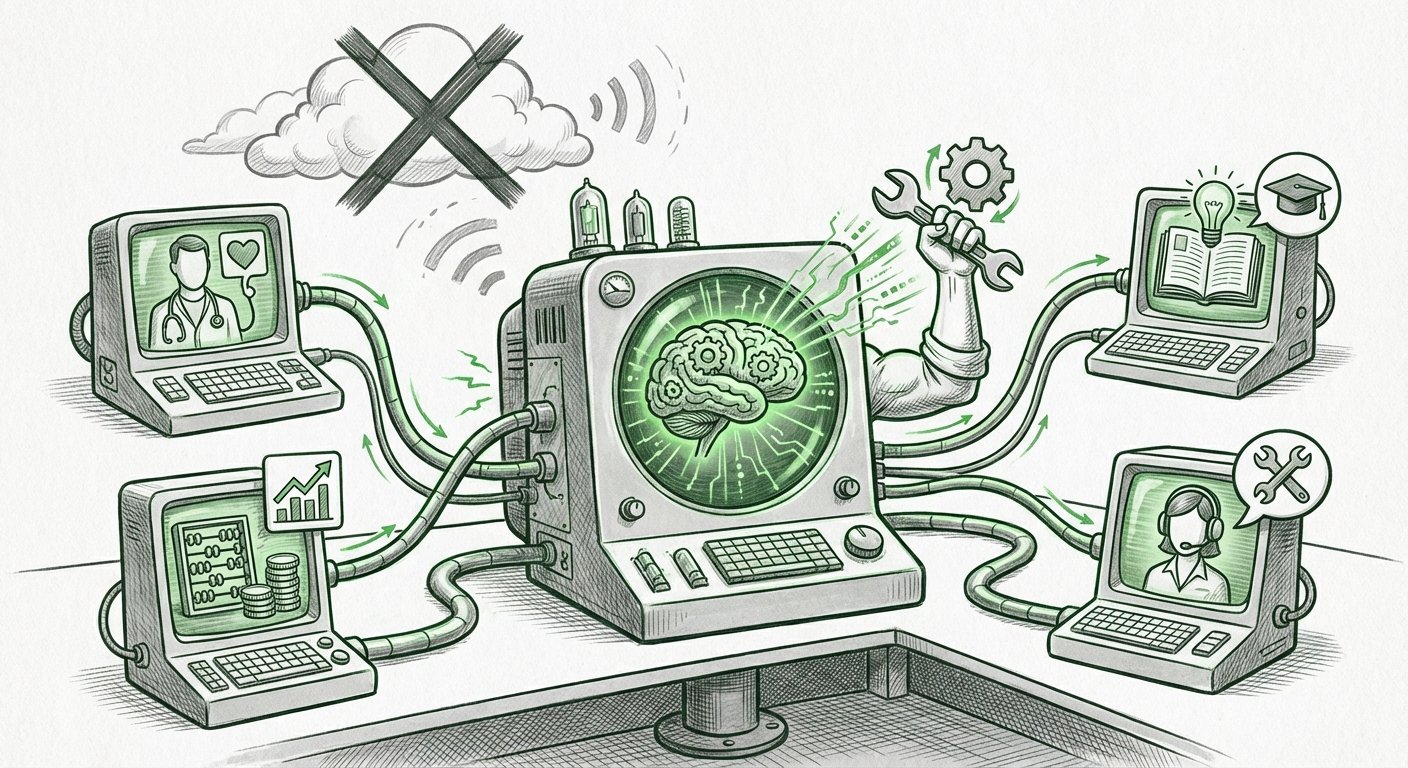
Apple has always been a strong advocate for user privacy. That philosophy has a big impact on how AI gets built for its platforms. The company has invested heavily in on-device machine learning, which runs models directly on the iPhone, iPad, or Mac instead of sending data to the cloud.
The 2026 finalists are likely to showcase this approach. Apps that keep user data private while still delivering smart features have a clear edge. Users are becoming more aware of how their data is used, and they reward companies they trust. An app that can offer personalized help without ever sending personal data off the device is a powerful proposition.
This has practical implications for every business building a mobile app. First, you need to consider whether your AI can run locally. Apple's tools, like Core ML, make this easier than ever. Second, you should design with transparency in mind. Users should understand what data is being used and why. Third, privacy can be a competitive advantage, not just a legal requirement.
The finalists demonstrate that you don't have to choose between smart features and strong privacy. You can have both, and the best apps already do.
Accessibility and Inclusion Through AI
Another area where AI shines is accessibility. AI can help people with disabilities use apps more easily than ever before. It can describe images for blind users, transcribe speech in real time, translate languages on the fly, and adapt interfaces to different needs.
Design awards often highlight apps that are inclusive and accessible. In 2026, AI makes that easier to achieve. For example, a simple image-recognition API can add alt-text to millions of photos. A speech-to-text model can make video content searchable and navigable for deaf users. These features used to be expensive and time-consuming to build. Now they're within reach for smaller teams.
This is a win for society and a smart business move. More accessible apps reach more people. They also tend to be better designed overall, because designing for edge cases often improves the experience for everyone.
The finalists almost certainly include apps that use AI to break down barriers. And they set an example for others: if you're not thinking about accessibility, you're leaving users behind.
Practical Implications for Businesses
So what should companies take away from the 2026 Apple Design Award finalists? Here are a few actionable insights:
- Start with the user problem, not the AI. The best apps use AI to solve a real need. Don't add a chatbot just because you can. Ask what your users struggle with, then see if AI can help.
- Design for invisible intelligence. Aim for AI that feels natural and seamless. If users have to think about how to use it, it's not done yet.
- Prioritize privacy. Use on-device processing whenever possible. Be transparent about data use. Build trust.
- Invest in accessibility. AI-powered accessibility features are easier to add than ever. They expand your audience and improve your product.
- Iterate with real users. AI models can be unpredictable. Test them in the real world and be ready to adjust.
These lessons aren't just for app developers. Any business that touches digital products, retail, healthcare, finance, education, can learn from the design choices celebrated by the awards. AI is becoming a part of every industry, and the user experience will make or break adoption.
The Future: AI as a Creative Partner
Looking beyond 2026, the trend is clear: AI will become even more integrated into the creative process. We're already seeing tools that help people write, draw, compose music, and edit videos. The next wave will go further, offering real-time collaboration between humans and machines.
The Apple Design Award finalists in the coming years may include apps where AI isn't just a tool but a genuine partner. Imagine an app that helps you brainstorm ideas, then helps you refine them, then helps you share them, all through natural conversation. Or a design tool that learns your style and suggests options you might never have considered.
Apple's platforms are well-positioned for this future. With powerful chips and a focus on privacy, they can run sophisticated AI models locally. That means creative tools can be fast, responsive, and secure.
For now, the 2026 finalists give us a glimpse of what's coming. They show that AI is not a separate category, it's woven into every category. The winners will be those who understand that great design and great AI are inseparable.
Conclusion
The announcement of the 2026 Apple Design Award finalists is more than a celebration of beautiful apps. It's a statement about the future of software. AI has moved from the lab to the home screen, and the best apps use it quietly, responsibly, and effectively.
For businesses, the message is clear: if you're not thinking about AI as part of your design, you're already behind. But you don't need to build a rocket ship. Start small, focus on the user, and let the technology do the rest. The finalists show what's possible. Now it's your turn.