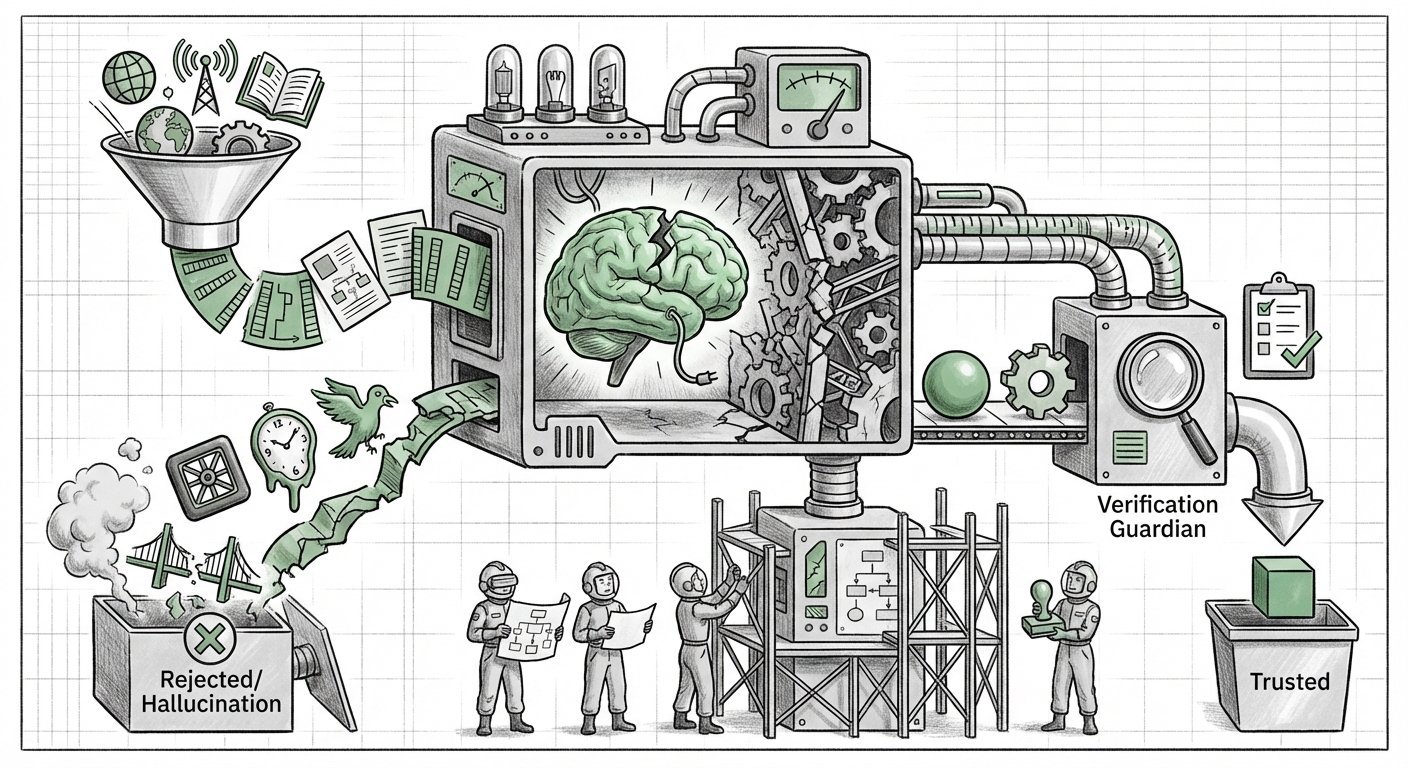
Open AI Models and Cyber Risk: Why the Safety Debate Is Being Rethought
For the last few years, a simple idea shaped a lot of AI policy talk: if you release a powerful model's weights to the public, you lose control of it forever. Anyone can download it, strip out the safety guardrails, and use it for anything, including cyberattacks. That idea felt obvious. It was repeated so often that it became the default position for many people working on AI safety.
But a growing number of researchers, security professionals, and policy analysts are now asking a harder question: was that assumption actually right? The answer, it turns out, is far less clear than the early warnings suggested. And that shift matters a lot, because it will shape how governments write AI rules, how companies choose their AI vendors, and how the next generation of AI tools gets built and shared.
The Original Case Against Open Weights
The first argument was about control. When a company releases a model's weights, the billions of numbers that make the model work, the file leaves the building. There is no kill switch. There is no way to patch a bad behavior after the fact. Once it is out, it is out.
From that starting point, the worry went like this:
- A capable model can explain how to write malware, find weak spots in a network, or build a phishing campaign.
- Safety training can be removed by anyone with modest technical skill.
- So releasing weights hands a permanent, unrecallable cyber toolkit to anyone on Earth.
- Closed models, by contrast, can be watched, gated, and shut off.
Each step sounds reasonable on its own. The problem is that every step was largely a thought experiment. Very little of it was tested against what actually happens in the real world.
What Changed: The Evidence Started Coming In
That gap is the heart of the rethink. When you stop asking "what could someone theoretically do with this model?" and start asking "what do real attackers actually do with it?", the picture looks different.
1. The Baseline Is Already High
Cybercrime did not wait for open AI models. Attackers already have search engines, tutorials, leaked toolkits, dark-web forums, and years of hard-won experience. A model that can write a passable phishing email is not a leap forward when phishing kits already exist in abundance. The real question is marginal uplift, how much better does a bad actor get than they already were? For most cyber tasks, the honest answer appears smaller than early warnings implied.
2. Closed Models Are Not Actually Safe by Design
The strongest counterpoint is simple. Nearly every major closed model has been manipulated into producing harmful content. Jailbreaks are a constant cat-and-mouse game, and they get published publicly. A closed model limits volume and gives the operator visibility, but it does not guarantee safety. If both open and closed models can be pushed into misuse, then "closed" is not a safety feature, it is a control feature. Those are different things, with different trade-offs.
3. The Risk Lives Upstream of the Model
Perhaps the most important realization: a raw model is not a weapon. To cause real damage, someone has to build a system around it, the automations, the infrastructure, the targets, the follow-through. Most of the engineering effort in a real attack happens outside the model. That means the model itself is often the least distinctive part of the problem.
Why Defenders Need the Same Tools
Here is the part the original argument missed. Cyber defense is not a spectator sport. Security teams need to understand what AI-enabled attacks look like so they can detect and stop them. They need models they can inspect, test, fine-tune, and run on their own hardware.
When a model lives behind an API, a security team cannot fully audit it. When the weights are open, they can. They can run red-team exercises internally. They can build detectors for AI-generated phishing. They can test their defenses against the same capabilities the attackers have. Small organizations, researchers, and defenders in regions without big cloud budgets can do this too.
In other words, open weights may create more benefit for defenders than for attackers, because defenders have to cover every gap while attackers only need one. Closing the models does not close the attack surface. It just limits who is allowed to study it.
The Case for Keeping Some Doors Shut
None of this means the original worry was foolish. There are real reasons to be careful, and a serious analysis has to hold both ideas at once.
- Capability is not static. A model that is unhelpful for cyber tasks today may not stay that way. The rethink is about today's evidence, not a permanent guarantee.
- Volume matters. Even weak uplift, scaled to millions of users, can produce real harm. Availability is its own kind of risk.
- Ecosystem effects are hard to measure. Fine-tunes, merges, and tooling built on top of a base model can change what it can do. The base model is not the whole story.
- Thresholds are genuinely hard to set. The industry has no agreed-upon way to measure when a model becomes "dangerous enough" to withhold.
So the smart position is not "release everything." It is that the old binary, open equals dangerous, closed equals safe, was too simple to survive contact with reality.
What This Means for the Future of AI
The rethink has consequences far beyond the safety debate itself. Three shifts stand out.
Policy Will Move From Labels to Evidence
Rules built on the assumption that open weights are inherently risky will be harder to defend as the evidence base grows. We should expect more pressure for rules tied to measured behavior rather than release format. That is healthier, but it also means the burden of proof shifts to safety teams to show real-world harm, not hypothetical harm.
Competition Shifts Toward Transparency
If open models are not the singular risk they were made out to be, then the argument for open release becomes stronger: auditability, cost, local control, no vendor lock-in, and the ability to customize. That puts pressure on closed providers to justify their premium with something beyond safety, reliability, tooling, support, and accountability.
Safety Work Moves Down the Stack
If the model weights are not the main control point, then effort redirects to where it actually matters: abuse detection at the platform level, monitoring for harmful use patterns, strong identity and access controls, and better tooling for defenders. That is a harder, less glamorous kind of safety work, and probably a more effective one.
Practical Advice for Businesses
Most organizations do not need to pick a side in this debate. They need a decision framework. Here is one that holds up regardless of how the argument resolves.
Assume the Capability Is Available
Plan your defenses as if attackers already have access to capable AI. Whether that comes from an open model, a closed one, or a jailbreak, the defensive posture is the same. Do not build security on the hope that a capability is hard to get.
Test With Both Kinds of Models
Run your own red-team exercises using open models you host yourself, and compare results with closed models you access through APIs. You will learn more about your real exposure in a week than in a year of reading policy debates.
Watch Your Own Logs, Not the Headlines
Look for AI-shaped activity in your environment: faster, more fluent, more varied phishing; automated reconnaissance; support-desk impersonation. These signals tell you what is actually happening to you, which beats speculation every time.
Treat Model Choice as a Governance Decision
Open models give you control, auditability, and lower cost. Closed models give you managed safety, easier compliance, and a vendor to hold accountable. Pick based on your risk tolerance, data sensitivity, and team skills, and write down why you chose what you chose.
Build Detection, Not Just Blocking
You cannot block every AI-generated message. You can get much better at spotting the patterns, verifying identities out of band, and slowing down high-risk actions with human checks. Those controls work no matter which model the attacker used.
The Bigger Lesson
What is striking about this moment is not that one side was right. It is that the entire debate ran for years on intuition rather than measurement. A small number of plausible-sounding claims turned into conventional wisdom, and that wisdom shaped policy, procurement, and public perception, all before anyone had checked whether it was true.
That is the real story here. AI is moving faster than our ability to test our assumptions about it. The open-versus-closed question is just the first place where that gap became visible. There will be others: agentic systems, synthetic media, automated research, and more. In each case, the healthy instinct is the same, demand evidence, measure the actual uplift, and be willing to change your mind when the data says so.
Being wrong is not the failure. Staying wrong because the argument was convenient is.