World's First Superconducting Quantum Heat Engine: Why It Could Unlock Massive Quantum Computers and Supercharge AI
The world's first superconducting quantum heat engine has been built, and it could help unlock massive quantum computers. That may sound like a narrow lab story. It is not. The way we move, control, and remove heat at the smallest scales is becoming one of the biggest barriers to faster AI, larger data centers, and the next wave of computing. This breakthrough sits right at that intersection.
For business leaders, the headline is simple: the road to powerful quantum computers just got a new piece of infrastructure. For AI, the impact is indirect but important. Quantum computers are not about to replace the chips inside your laptop. But if they become easier to scale, they could change how we solve some of the hardest problems in AI, drug discovery, materials science, logistics, and energy.
What Is a Superconducting Quantum Heat Engine?
A heat engine is a machine that turns heat into useful work. The steam engine is the classic example. It uses a temperature difference to push a piston or spin a turbine. A quantum heat engine does something similar, but it uses tiny quantum systems as its working parts. Instead of steam, it relies on the rules of quantum physics.
A superconducting version adds another layer. Superconducting materials carry electricity with no resistance when they are cooled to very low temperatures. That makes them extremely efficient for certain tasks. They are also the backbone of many leading quantum computing designs. So a superconducting quantum heat engine is a device that combines heat-engine physics with the same kind of hardware used in quantum computers.
The "world's first" label matters because it brings two worlds together. One world is quantum thermodynamics, the study of heat, work, and energy in quantum systems. The other is superconducting quantum technology, which is one of the most promising paths to practical quantum computers. Until now, these two worlds have mostly lived apart. This device connects them.
It is not a product. It will not power your phone. It is a research milestone. But milestones like this often mark the start of a new engineering direction.
Why Heat Is the Hidden Enemy of Quantum Computing
Quantum computers are fragile. Their basic unit, the qubit, can lose its quantum state when it interacts with the outside world. Heat is one of the biggest causes of that interference. That is why many quantum computers must be kept at temperatures colder than deep space.
Scaling from a small lab machine to a "massive" quantum computer is not just about adding more qubits. It is about keeping millions of parts cold, stable, and connected. Every wire, every control signal, and every layer of electronics can leak heat. The more qubits you add, the harder it becomes to manage that heat without disturbing the quantum state.
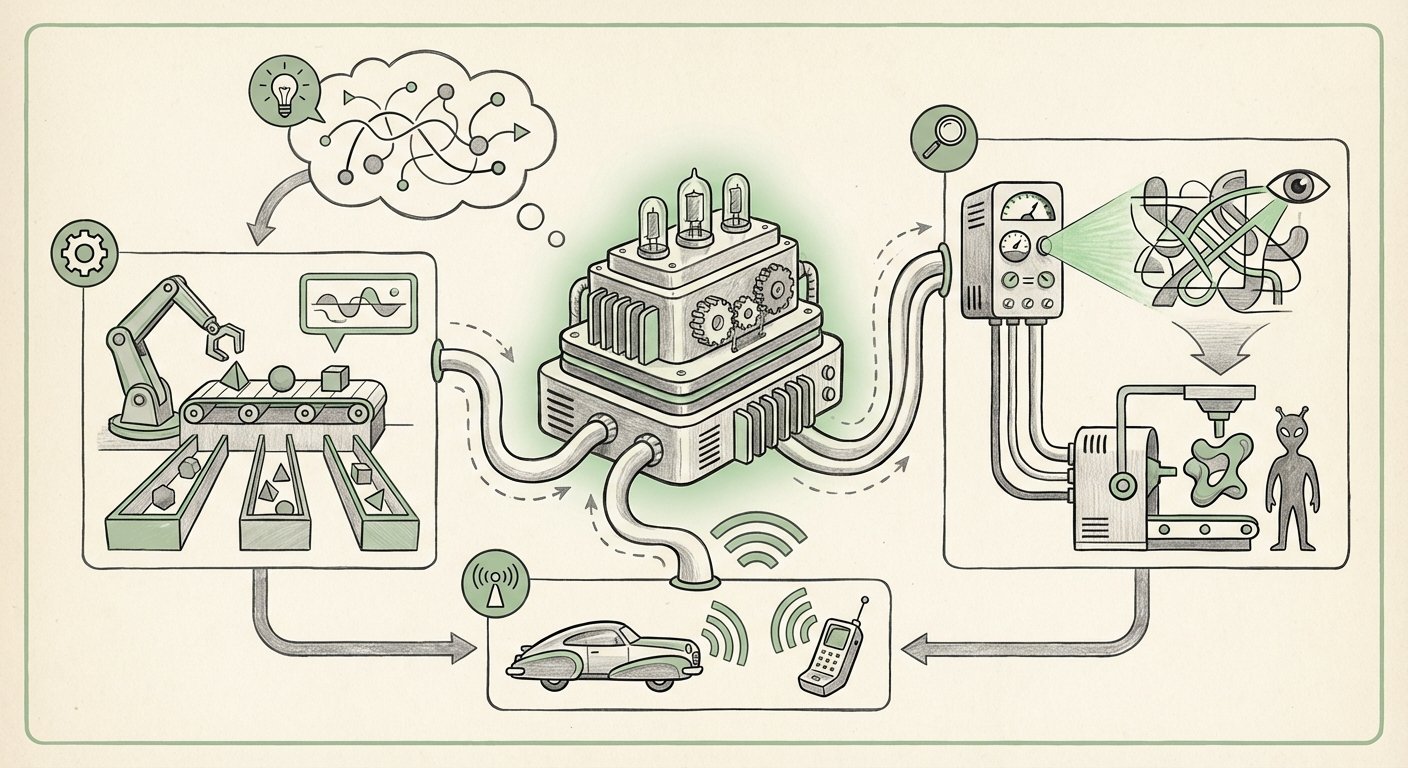
This is where a superconducting quantum heat engine could matter. A heat engine is fundamentally a device for managing energy. If scientists can build one inside the same superconducting platform used for quantum computing, they may learn new ways to move heat around, harvest tiny amounts of energy, or design better cooling systems at the quantum level.
Think of it like plumbing for a skyscraper. You can design the most beautiful building in the world, but if the pipes cannot handle the water pressure, the building will not work. Quantum computers face a similar problem with heat. The superconducting quantum heat engine is a new kind of pipe.
From Lab Curiosity to AI Infrastructure
AI is hungry. Training large models takes huge amounts of electricity. Running them at scale takes even more. Data centers are already under pressure to cut energy use and improve cooling. The AI boom has made power and heat management board-level issues.
Quantum computers are not a direct fix for AI's energy problem today. Most quantum machines are still experimental. They are good at very specific tasks, not general-purpose computing. But the long-term promise is real. Quantum computers could one day speed up certain kinds of optimization, simulation, and linear algebra. Those are exactly the areas where AI needs help.
A more scalable quantum computer could lead to better AI models, faster drug discovery, smarter supply chains, and more efficient batteries. It could also help design new materials for data centers, including better coolants, insulators, and superconducting components. That is why a breakthrough in quantum heat management matters beyond the lab.
The connection runs both ways. AI can help design quantum hardware. Quantum hardware can help train and run AI. And both need better energy management. The superconducting quantum heat engine sits in the middle of that loop.
What This Means for Businesses
Most companies should not rush out and buy a quantum heat engine. They do not exist commercially. But business leaders should pay attention to the direction of travel. The companies that win the next decade will be the ones that prepare for new computing models before they are obvious.
Here is what to watch. First, look for repeatable results. A single research milestone is exciting, but it needs to be reproduced and improved. Second, watch for integration. The real signal is when quantum heat engines are built into full quantum computing systems, not just isolated experiments. Third, track the metrics that matter: energy efficiency, heat flow, reliability, and scalability.
For now, the practical move is to build quantum readiness. That does not mean replacing your current computers. It means identifying a small number of high-value problems where quantum could someday help. Examples include route optimization, portfolio risk, molecular simulation, and complex scheduling. Run small pilots with classical-quantum hybrid approaches. Learn the tools. Build internal knowledge.
Also, put energy on the agenda. If your business relies on AI, your future costs will depend on how well you manage heat and power. The same physics that limits quantum computers also limits data centers. Advances in cryogenic cooling and superconducting electronics could eventually spill over into broader computing infrastructure.
The Road Ahead: Hype vs. Reality
It is easy to overhype quantum news. The field has seen big promises before. A working heat engine in a superconducting circuit does not mean useful quantum computers are around the corner. It means scientists have found a new tool for studying and controlling energy in quantum systems.
The hard work is still ahead. The device must become more efficient, more reliable, and easier to manufacture. It must work alongside error correction, control electronics, and the other messy parts of a real quantum computer. And it must do so at a cost that makes sense.
There is also a talent gap. Quantum thermodynamics sits at the border of physics, engineering, and computer science. Few teams have deep experience in all three. Companies that invest in cross-disciplinary training will be better positioned to take advantage of future breakthroughs.
The safest prediction is this: the next five years will bring more firsts like this one. Some will fade. Some will become foundational. The superconducting quantum heat engine is a strong signal that the industry is moving from "Can we build a qubit?" to "Can we build a system?" That shift is where the real work begins.
Actionable Insights for Leaders
- Track the quantum supply chain. Superconducting components, cryogenic systems, and thermal management are becoming strategic technologies. Know who is building them and where the bottlenecks are.
- Start small quantum pilots now. Pick one or two business problems with clear metrics. Use hybrid classical-quantum methods. Do not wait for a perfect machine.
- Put energy efficiency at the center of AI strategy. Heat is not a side issue. It affects cost, performance, and sustainability. The same is true for quantum.
- Build cross-functional teams. The future of computing needs physicists, engineers, data scientists, and business strategists in the same room.
- Separate signal from noise. Celebrate research milestones, but ask hard questions about reproducibility, scale, and cost before making big bets.
The Bigger Picture: Energy, Society, and the Next Computing Era
The superconducting quantum heat engine is a reminder that the digital world still runs on physics. Software can only go as far as the hardware allows. As AI grows, the limits of hardware will become more visible: how fast we can move data, how much heat we can remove, and how much energy we can afford to use.
Quantum computing offers a way around some of those limits, but only if we can control the quantum world at scale. Heat engines are one of the oldest tools in engineering. Bringing them into the quantum age is a powerful idea. It suggests that the path to massive quantum computers may not come from bigger machines alone. It may come from smarter control of energy at the smallest scales.
For society, the stakes are high. Better quantum computers could lead to new medicines, cleaner materials, and more efficient energy systems. They could also challenge current encryption and create new security risks. The direction of the technology will depend on the choices we make now: who funds it, who has access to it, and what rules guide it.
The world's first superconducting quantum heat engine is not the finish line. It is a signpost. It tells us that the next era of computing will be built by people who understand both information and energy. For AI, that means a future where smarter algorithms meet smarter hardware. For business, it means the time to learn, experiment, and prepare is now.
Conclusion
The first superconducting quantum heat engine is a small device with a big signal. It could help unlock massive quantum computers by tackling one of their hardest problems: heat. That, in turn, could reshape the future of AI, energy, and computing. The timeline is uncertain. The hype is real. But the direction is clear. Leaders who understand the connection between quantum physics and practical infrastructure will be ready when the next wave arrives.