Data-Driven Re-Discovery of 2D Materials: What It Means for the Future of AI
The phrase “data-driven re-discovery of 2D materials” sounds narrow. It sounds like a lab story, a niche science update, or a technical note for materials researchers. But it points to something much bigger. It shows how artificial intelligence is changing the way humans find, test, and use knowledge. The future of AI will not be only about chatbots, images, or code. It will be about turning huge piles of messy scientific data into useful real-world discoveries.
That is why this development matters. Re-discovery is not just looking again. It is using data to see what earlier researchers may have missed. It is connecting old results, failed tests, hidden patterns, and scattered facts. When that happens with 2D materials, it signals a new model for science and business. AI becomes a research partner, not just a product feature.
Why 2D Materials Are a Big Deal
2D materials are ultra-thin materials. They are measured at the atomic scale, and their thinness gives them special properties. Those properties can matter for electronics, sensors, coatings, energy systems, and many other areas. The exact use depends on the material and how it is made. But the broad point is simple: small changes in structure can create big changes in performance.
Because these materials are so sensitive to structure, they are hard to study. A tiny change in how a sample is made can change what it does. That makes the field a natural fit for data-driven work. Humans can only test so many combinations. Software can compare thousands of past results and point to overlooked links.
The re-discovery angle is important. Many scientific fields do not suffer from a total lack of data. They suffer from too much data in too many formats. Old papers, lab notebooks, images, charts, and failed experiments sit in different places. A data-driven approach can bring those pieces together. It can help researchers ask better questions before they spend time and money in the lab.
What “Data-Driven Re-Discovery” Really Means
Data-driven re-discovery means using data tools to look again at what is already known. It is not only about finding brand-new things. It is about finding value in existing knowledge. That value can come from patterns across studies, from results that were once considered unimportant, or from combinations that no single researcher could easily see.
In practice, this kind of work often follows a simple loop:
- Collect: Gather data from experiments, simulations, papers, and records.
- Clean: Fix errors, standardize formats, and label what the data actually means.
- Connect: Link materials, methods, conditions, and outcomes across sources.
- Rank: Use models to suggest which overlooked materials or patterns deserve a closer look.
- Test: Validate the best candidates with real experiments and expert review.
That loop is where AI becomes useful. AI can read and sort large amounts of technical information. It can spot relationships that are hard to see by hand. It can also help design the next round of tests. But the loop only works if humans stay in charge of judgment and validation. Data can point the way. It cannot confirm a real material without real-world checks.
The AI Shift: From Lab Bench to Data Pipeline
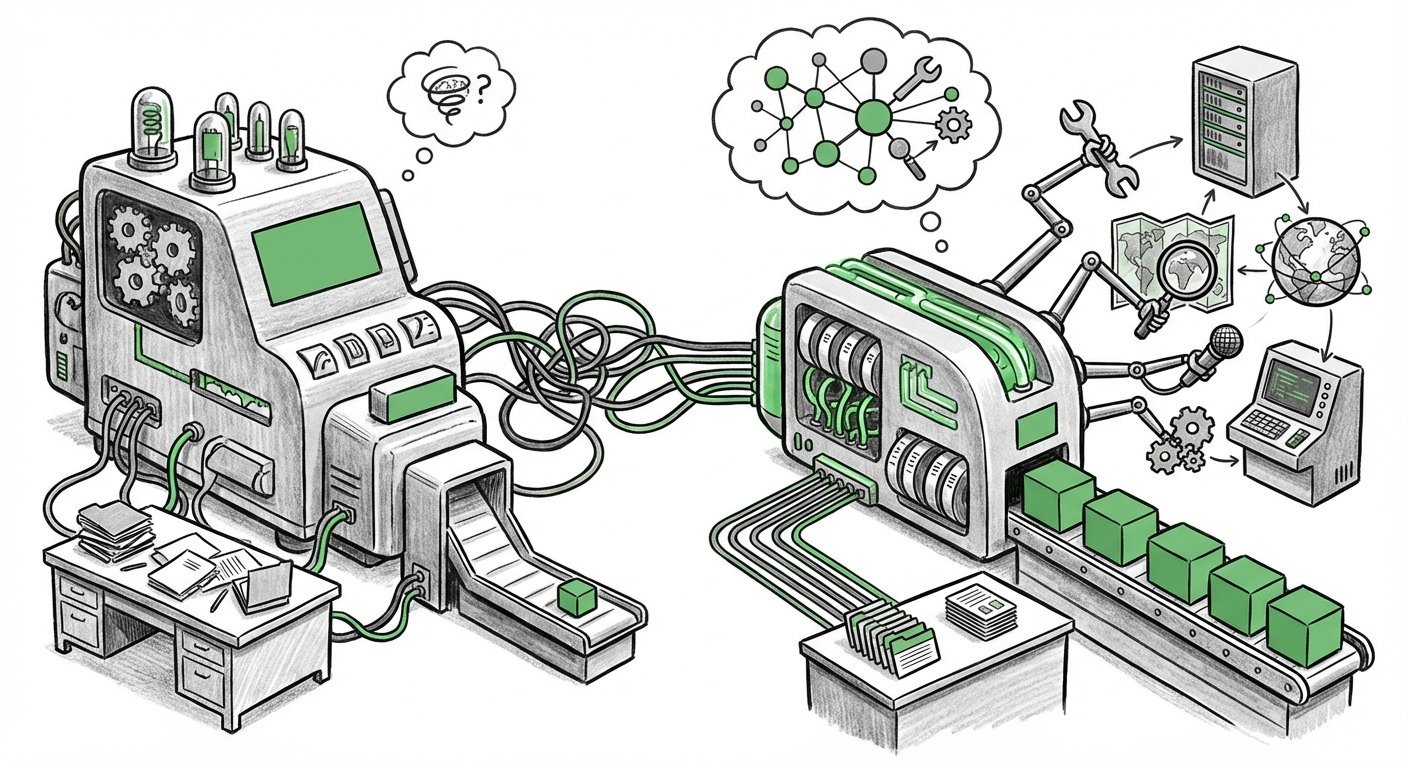
The most important AI story here is not a single model or a single tool. It is a shift in how discovery works. The old model was mostly lab-first: make a sample, test it, publish, repeat. The new model is data-first and lab-second: gather data, find candidates, test the best ones, and feed the results back into the system.
This shift changes what counts as an AI skill. In the past, AI success was often measured by benchmark scores. In science, success is measured by whether a suggested material can actually be made and whether it performs as expected. That is a much harder test. It means AI systems must handle messy data, unclear labels, and real-world limits. It also means AI systems must work with experts who can catch wrong assumptions.
For the future of AI, this is a healthy direction. It pushes AI away from empty demos and toward practical value. It also shows that the strongest AI systems will not be standalone brains. They will be part of a workflow that includes data engineers, domain scientists, lab technicians, and business leaders. The winning systems will make the whole team faster, not replace the team.
Why Re-Discovery May Be More Powerful Than Pure Discovery
Pure discovery gets the headlines. A completely new material or a completely new effect sounds exciting. But re-discovery can be more practical. It can lower the cost of research because it starts with work that has already been done. It can reduce wasted effort because it finds dead ends that were never clearly recorded. It can also speed up progress because it connects fields that rarely talk to each other.
There is a business lesson here. Many companies sit on years of old data. They have customer records, test results, maintenance logs, and failed product ideas. Most of that data is unused. The same data-driven habits used to re-discover 2D materials can be used to re-discover value inside a company. The question is not always “What new AI model can we buy?” The better question is often “What old data are we ignoring?”
This is especially true in research-heavy industries. A company that can search its own history will make better decisions. It will avoid repeating old mistakes. It will find hidden links between projects. It will also be able to train AI systems on its own domain knowledge, which is often more valuable than generic public data.
Practical Implications for Businesses
For business leaders, the 2D materials story is a signal about where AI value is moving. The first wave of AI was about text, images, and customer service. The next wave is about scientific and technical work. That wave will touch manufacturing, energy, healthcare, agriculture, and software. It will reward companies that treat data as an asset, not a byproduct.
Here are the most direct business implications:
- R&D speed: AI can help teams review past work, rank ideas, and design better experiments. This can cut wasted lab time.
- Data advantage: The best AI systems need good data. Companies with clean, well-labeled technical data will have an edge over those with only generic tools.
- New services: Demand will grow for data cleaning, simulation, lab automation, and expert review. These are practical AI jobs, not just software jobs.
- IP and governance: Re-discovering old knowledge raises questions about ownership, reproducibility, and safety. Companies need clear rules before they scale.
- Workforce change: The most valuable people will be those who can connect domain knowledge with data skills. Materials scientists who can work with data will be more valuable than ever.
There is also a risk. Data-driven re-discovery can create hype if leaders expect instant breakthroughs. Real materials work still takes time. AI can narrow the search, but it cannot skip testing. Companies that promise magic will lose trust. Companies that show steady progress will win.
What Society Should Watch
The broader social impact is easy to see. Better materials can lead to better devices, cleaner energy, and new medical tools. But the path is not automatic. Society should pay attention to three issues.
First, access to data matters. If only a few large players can build deep technical datasets, the benefits may be concentrated. Open standards and shared data can help spread the gains. Second, validation matters. A data-driven suggestion is not a proven product. Public trust depends on honest testing and clear reporting. Third, environmental and safety review must keep pace. New materials can bring real benefits, but they also need responsible testing.
There is also a positive social story. Data-driven re-discovery can make science less wasteful. It can help researchers in smaller labs find useful leads without huge budgets. It can turn old knowledge into new opportunity. That is a hopeful vision for AI: not a machine that replaces scientists, but a tool that helps more people do better science.
Actionable Insights
For teams that want to act on this trend, start small and stay practical.
- Audit your data: Find the old datasets, reports, and test results your team already has. You may be sitting on more value than you think.
- Standardize before you model: Clean formats and clear labels matter more than a fancy model. Bad data will produce bad suggestions.
- Keep humans in the loop: Use AI to rank and suggest, not to make final scientific claims. Experts should validate every important result.
- Record negative results: Failed experiments are valuable. They stop teams from repeating mistakes and help AI learn what does not work.
- Run a pilot: Pick one narrow problem, connect data, and test whether AI can surface useful candidates. Measure time saved and quality gained.
- Plan for validation: Budget for real-world testing from the start. A data insight is only useful if it can be checked.
- Train your team: Help domain experts learn basic data skills. Help data teams learn the language of the lab.
- Set governance early: Decide who owns data, how quality is checked, and how results are reviewed before scaling up.
Conclusion
The data-driven re-discovery of 2D materials is a small phrase with a large message. It shows that AI is moving into the core of scientific work. The future of AI will not be judged only by how well it talks or writes. It will be judged by how well it helps humans find, test, and use knowledge.
Re-discovery is the key. The world already holds a huge amount of scientific and technical information. Much of it is ignored, scattered, or locked in old formats. AI can help us look again. It can connect the dots, rank the best leads, and speed up the path from data to real-world use. But it cannot replace expert judgment, careful testing, or responsible governance.
For businesses, the lesson is clear: treat data as a scientific instrument. For society, the lesson is to demand real validation and broad access. For AI, the lesson is that the most important work may not be creating something from nothing. It may be helping us see what we already have.