Airbnb's CASTLE Shows How Synthetic Data Will Train the Next Wave of AI Search
Search is changing. For years, people had to think like a search engine. They typed short keywords, guessed the right phrasing, and hoped the results matched what they meant. Natural language search flips that. It lets people ask for what they want in plain words, the way they would talk to a helpful expert.
But there is a catch. Training an AI system to understand real human language and return useful results takes a huge amount of data. Real search data is messy, private, expensive to label, and often missing the exact examples a model needs. Airbnb has introduced CASTLE, a system for training natural language search models with synthetic data. That is a small sentence with a big signal: the companies that win at AI search may not be the ones with the most real data. They may be the ones that can create and control the right training data.
What Airbnb's CASTLE Actually Signals
At a high level, CASTLE is about using synthetic data to train natural language search models. Synthetic data is data that is created by software rather than collected directly from real users. It can be generated to fill gaps, test ideas, and create many training examples without exposing private user information.
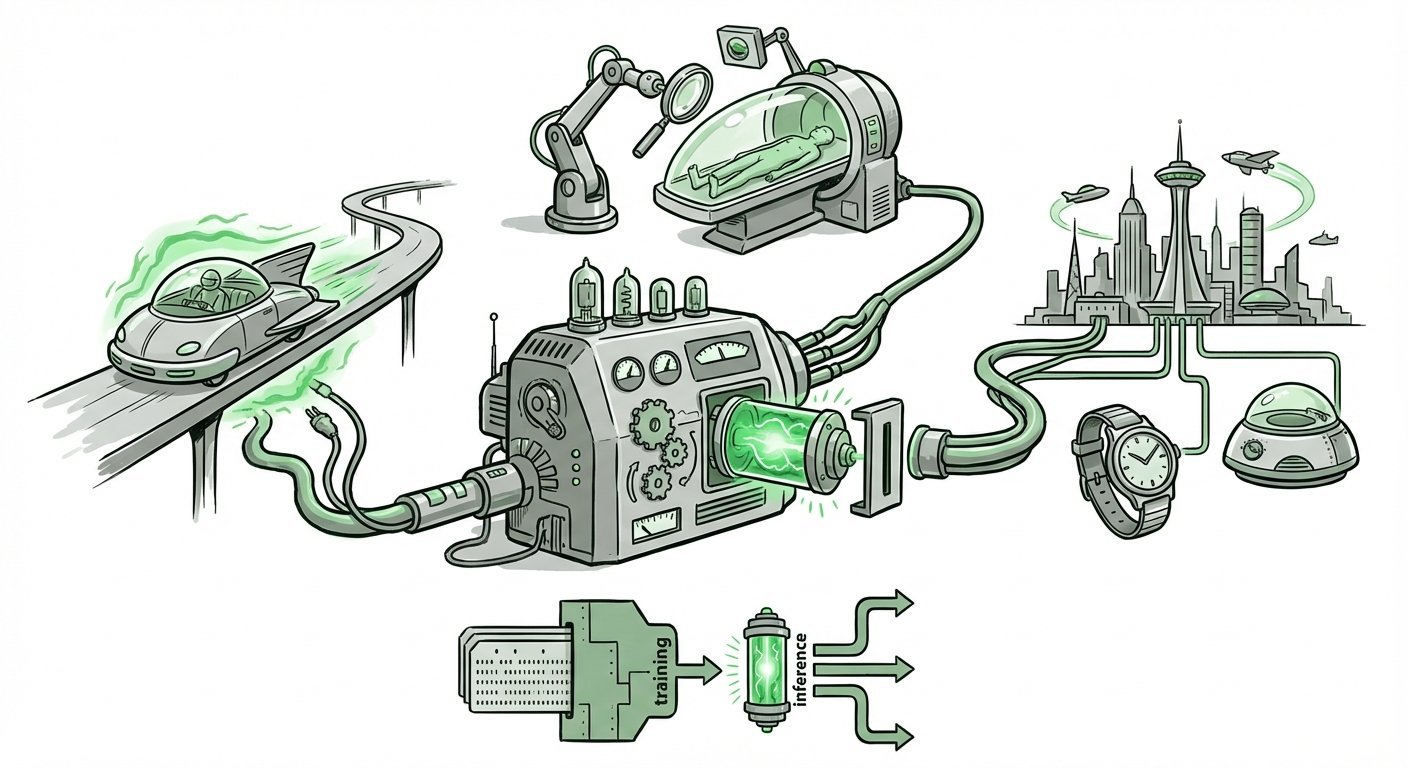
The important move is not just the model. It is the training pipeline. Airbnb is showing that search AI is becoming a data engineering problem as much as a modeling problem. You do not simply collect logs and feed them to a model. You design a system that can produce examples, test the model, find weak spots, and repeat. That is what CASTLE points toward: a factory for training data, not just a single search feature.
This matters because natural language search is hard to train. A keyword search can match words. A natural language search has to understand intent. "A quiet place near the beach with a kitchen for a family of four" is not a list of keywords. It is a set of needs, preferences, and trade-offs. The model has to learn what matters and what does not.
Why Natural Language Search Is So Hard to Train
Human language is full of ambiguity. The same request can mean different things to different people. A user may care more about price than location, or more about location than style. Real search logs capture some of this, but they also contain noise, typos, private details, and behavior that is hard to label at scale.
There is also the long tail problem. Most searches are common. But the value often sits in rare, specific requests. A system trained only on popular queries may fail when a user asks for something unusual. Real data may have only a handful of examples for those cases, if it has any at all.
Then there is evaluation. How do you know a search result is good? Relevance is not always a simple yes or no. A result can be useful but not perfect. It can be correct but too broad. It can be personalized but unfair. Training data has to reflect those shades of gray, and real-world labels are expensive to collect.
Synthetic data offers a way around some of these limits. It can create examples for rare cases. It can generate many variations of a query. It can test how a model handles language it has not seen. And it can do this without putting real user data at risk.
Why Synthetic Data Changes the Economics of AI
Data has become one of the biggest costs in AI. Collecting it, cleaning it, labeling it, and storing it takes time and money. Synthetic data can lower that cost. Instead of waiting for real users to produce the right examples, teams can generate them on demand.
That speed matters. A company can test a new search idea in days instead of months. It can create training sets for edge cases that are too rare in real logs. It can protect privacy by reducing reliance on sensitive user data. It can also create controlled examples that are balanced and fairer than messy real-world data.
For business leaders, this is the practical lesson. AI search is not only about buying a bigger model. It is about building a repeatable way to produce high-quality training examples. The companies that treat data as a product, not a byproduct, will move faster.
The Hidden Risks of Training on Made-Up Data
Synthetic data is not a free lunch. If the generated examples are unrealistic, the model learns unrealistic patterns. If the data is too narrow, the model becomes brittle. If the same mistakes appear again and again, the model can reinforce them. In the worst case, training too much on generated data can cause errors to compound. That is sometimes called model collapse.
There is also the evaluation gap. A model can look strong on synthetic tests and still fail on real users. Synthetic data is only useful if it reflects the real world closely enough. That means teams need real data as a check. They need human review. They need clear rules for what counts as a good result.
The lesson is not "replace real data with synthetic data." The lesson is "blend them carefully." Synthetic data can fill gaps and stretch coverage. Real data keeps the system honest. The best systems will use both, with strong testing at every step.
What This Means for the Future of AI
CASTLE points to a broader shift in AI. For years, the focus was on bigger models and more compute. That still matters. But the next wave of progress will depend heavily on data quality and data control. Can you create the right examples? Can you test them? Can you keep them fresh? Can you do it without harming privacy?
Search is a perfect test bed for this shift. It is easy to measure. Users know quickly whether a result is useful. That feedback can train better models. Natural language search also changes how people use products. Instead of navigating filters and menus, users can describe what they want. That makes search feel more like a conversation and less like a form.
For AI overall, synthetic data could become a standard part of the training stack. It will not replace real-world data, but it will help teams cover rare cases, protect privacy, and move faster. The companies that build strong data engines will have an advantage that is hard to copy.
A Practical Playbook for Businesses
Not every company needs to build its own CASTLE. But every company using AI search can learn from the same ideas.
- Start with a clear task. Do not train a model on "search" in general. Pick a specific user need, such as finding a product with three attributes or answering a natural language question.
- Build a real evaluation set first. Before you generate data, collect a small set of real examples with known good answers. This is your reality check.
- Use synthetic data to fill gaps. Generate examples for rare cases, messy language, and edge conditions. Keep the examples realistic and tied to your domain.
- Mix real and synthetic data. Do not let generated data drift too far from real user behavior. Keep a steady feed of real feedback in the loop.
- Put humans in the loop. Review a sample of results. Look for bias, nonsense, and unsafe answers. Synthetic data can scale mistakes just as fast as it scales learning.
- Monitor after launch. Search quality changes as user behavior changes. Track failures, retrain, and refresh the data pipeline.
What to Watch Next
The real test for CASTLE is whether synthetic data actually improves natural language search in the hands of real users. Watch for signs that generated examples help with rare queries, reduce privacy risk, and speed up model development. Also watch for the guardrails. The most mature teams will talk as much about evaluation and human review as they do about model size.
For the wider AI market, the message is clear. Data is no longer just fuel. It is a design choice. The companies that can create, test, and govern training data will shape what AI search can do. Airbnb's CASTLE is one sign of that future. It shows that the next AI advantage may come from the data factory behind the model, not just the model itself.
Conclusion
Natural language search promises a simpler, more human way to find things. But it needs training data that is broad, fair, and safe. Airbnb's CASTLE puts synthetic data at the center of that challenge. The approach could lower costs, protect privacy, and help models handle rare requests. It also brings real risks that require real testing.
The bigger lesson is about how AI will be built. The future belongs to teams that can turn data into a repeatable system. That means blending real and synthetic examples, measuring quality, and keeping humans in the loop. Search is just the beginning. The same playbook will shape how AI is used across business and society.