Falcon-H1 and the Hybrid-Head Shift: Why Efficient AI Models Are the Next Big Thing
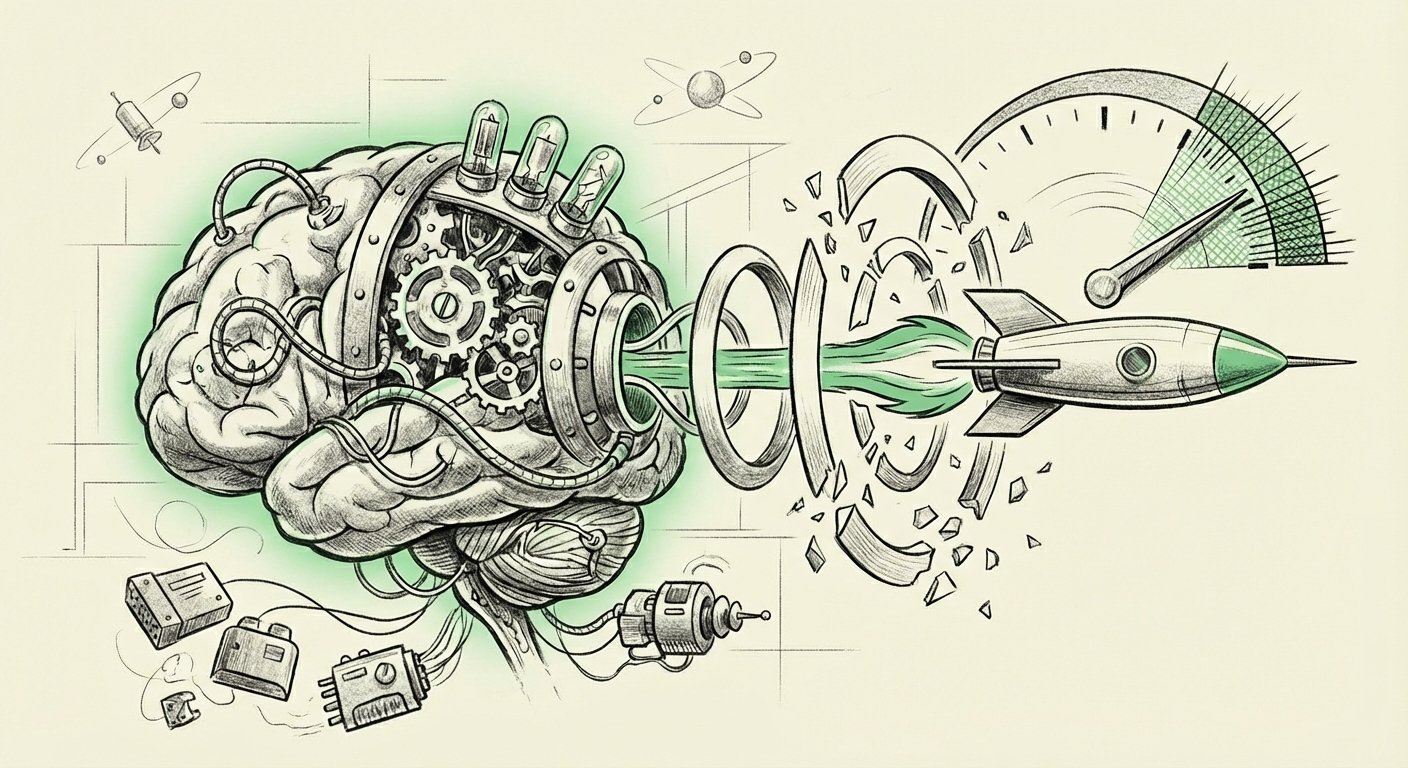
On May 21, 2025, a new family of language models called Falcon-H1 was announced, described as a family of hybrid-head language models built to redefine both efficiency and performance. That single phrase, "redefining efficiency and performance", is more than marketing. It is a signpost. It tells us where the most important race in artificial intelligence is now being run.
For the past few years, the story of AI has been a story of size. Bigger models, bigger training runs, bigger data centers. But size has a cost. It costs money, electricity, time, and access. Falcon-H1 points toward a different idea: that the next wave of progress will come not from adding more, but from designing better. This article breaks down what the Falcon-H1 family signals, what "hybrid-head" architecture likely means in plain terms, and what it all means for businesses, developers, and everyday people.
The Big Shift: From "Bigger" to "Smarter"
Think of early language models like a giant warehouse. Everything you might ever need is in there somewhere, but finding it takes effort, and keeping the lights on is expensive. The industry got very good at building bigger warehouses. What it got less good at was making them efficient.
Falcon-H1's stated focus on efficiency alongside performance is a signal that the priorities are rebalancing. When a model family is positioned around both speed and capability, it usually means the designers are trying to answer a practical question: how do you get strong results without needing a data center the size of a city block?
That question matters because AI is moving from the lab into everyday products. A chatbot that costs too much per query, or answers too slowly, is hard to build a business on. Efficiency stops being an engineering nicety and becomes a commercial necessity.
Why "Head" Is the Interesting Word
In modern AI language models, a "head" is a part of the network that focuses on certain patterns, often different kinds of relationships within text or sequences of information. A "hybrid" design means combining more than one approach under the same roof rather than committing fully to a single method.
The naming strongly suggests a deliberate mix: using different mechanisms for different jobs, and blending their strengths. That is a meaningful direction because different architectural approaches have different trade-offs. Some are very good at capturing long-range relationships but get expensive as inputs grow longer. Others are leaner and scale more gracefully but may struggle with certain kinds of detail. A hybrid approach is essentially a bet that you can get the best of both, and pay less for it.
This is the core idea worth taking away: the frontier of AI design is no longer just about how much a model knows, but how gracefully it handles that knowledge as tasks get longer, faster, and cheaper to serve.
Efficiency Is the New Performance Metric
When a model family is framed around efficiency and performance together, it invites a new way of keeping score. Instead of asking only "how smart is it?", buyers and builders start asking:
- How much does each answer cost? Can we afford to run this at scale?
- How fast does it respond? Is it quick enough for real-time use?
- How much hardware does it need? Can it run on smaller, cheaper machines?
- How well does it hold up on long inputs? Can it handle big documents without falling apart or getting pricey?
These are the questions that decide whether an AI product ships or stalls. A model that scores slightly lower on a leaderboard but costs a fraction as much to operate often wins in the real world. That is the opening Falcon-H1 appears to be aiming at.
The Economics of AI Are Changing Shape
Every efficiency gain in AI has a ripple effect. When models get cheaper to run, three things tend to happen:
- Prices fall for users. Cheaper inference means more generous free tiers, lower subscription costs, and more experimentation.
- New use cases become viable. Features that were too expensive yesterday, summarizing every document, tagging every support ticket, translating every page, suddenly pencil out.
- Competition widens. When strong models can run on modest hardware, more companies can build and host them. That pushes power away from a handful of mega-scale players and toward a broader ecosystem.
This is why a family of hybrid-head models, positioned around efficiency, is a bigger deal than a single product launch. It is a bet on a market where capability is abundant and cost is the differentiator.
What This Means for Businesses: A Practical Playbook
For business leaders, the lesson is not "switch models tomorrow." It is that the cost of intelligence is falling, and strategy should reflect that. Here is how to act on it.
1. Stop Treating Model Choice as Permanent
Model families are now arriving quickly and improving on cost and speed, not just raw capability. Build your systems so the model is a swappable part, not the foundation. If your AI features are tightly welded to one provider, every new efficiency gain becomes a migration project instead of an upgrade.
2. Design for the Cheapest Model That Works
Most business tasks do not need the most powerful model available. Sorting emails, drafting routine replies, and tagging records are "good enough" problems. Reserve the heaviest models for the hardest tasks, and route everything else to efficient options. This single practice often cuts AI operating costs dramatically.
3. Revisit Ideas You Shelved
Make a list of AI projects you killed because they were too expensive. Efficiency-focused model families are a good reason to reopen that list. Document processing at scale, always-on assistants, and per-customer personalization all become more realistic as per-query costs fall.
4. Watch Speed, Not Just Score
For customer-facing tools, latency is part of quality. A slightly less capable model that responds instantly often feels smarter than a stronger one that makes users wait. When you evaluate models, time the real workflows, not just the benchmarks.
5. Plan for On-Premise and Edge Options
Efficient model families open the door to running AI closer to where data lives, inside a company's own infrastructure, or on smaller devices. For regulated industries and privacy-sensitive work, that can be the difference between a project being allowed and being blocked.
What This Means for Society
The broader impact of efficient model design is about access. When strong AI can run on less hardware, more of the world can use it. Schools with modest budgets, clinics in regions with unreliable cloud connectivity, small businesses in competitive markets, all benefit when the price of a useful AI capability drops.
There is an energy story here too. Every efficiency improvement reduces the electricity needed per answer. As AI use grows explosively, efficiency gains are one of the few forces pushing back against the environmental cost of that growth. It does not solve the problem on its own, but it changes the trajectory.
And there is a competitive story. A market where many capable, efficient model families compete tends to produce better prices, more choice, and faster improvement than one dominated by a handful of very large systems. Hybrid-head designs, by lowering the hardware bar, make that competitive market more likely.
Questions Still Open
Enthusiasm should be tempered with realism. A model family built around efficiency raises questions that only real-world use will answer:
- Does efficiency hold up on hard tasks? Lean models can shine on routine work and still struggle on complex reasoning.
- How well does the hybrid design scale? Blending approaches adds complexity, and complexity can bring its own costs.
- What does tooling look like? Strong models need strong surrounding tools, deployment options, fine-tuning paths, and clear documentation, to be useful in practice.
- How transparent is the evaluation? Claims about efficiency and performance should be tested on your own tasks, not just accepted.
Actionable Takeaways
Whether you are an engineer, a product manager, or a business owner, the Falcon-H1 announcement points to a set of moves worth making now:
- Benchmark on your own data. Build a small test set of real tasks from your business and run candidates against it. Cost and speed included.
- Add cost-per-task to every AI decision. Treat it as a first-class metric alongside accuracy.
- Build a routing layer. Send simple tasks to efficient models and complex ones to heavier models. This is the highest-return engineering investment in most AI stacks today.
- Keep an eye on architecture trends. Hybrid designs are a leading indicator of where the field is heading: specialized components working together instead of one giant generalist.
- Prepare for cheaper AI. Assume the cost of a good answer keeps falling. Build products that get better, not obsolete, when that happens.
The Bigger Picture
Falcon-H1's arrival is a reminder that AI progress is not a single straight line toward enormous models. It is a branching search for better trade-offs. The hybrid-head idea, combining different mechanisms to get more from less, is exactly the kind of engineering maturity that turns a research curiosity into infrastructure.
The companies that win the next phase of AI will not simply be the ones with the largest models. They will be the ones that understand where intelligence is cheap enough to deploy everywhere, and design their products around that assumption. Efficiency is no longer the boring part of the story. It is the plot.