Half of the Women in Trump's Cabinet Have Left the White House, And It's a Bigger AI Story Than It Looks
When half of the women serving in a president's Cabinet walk out the door, the headlines usually focus on politics: who resigned, who was pushed, who stayed, and what it means for the next election. But there is a second story hiding underneath the first one, and it matters just as much for anyone who builds, buys, or regulates artificial intelligence.
As of mid-November 2026, half of the women in President Trump's Cabinet have left the White House. The remaining members are still in place, holding the seats that were not vacated. That single fact, a leadership bench that has been cut in half, says something important about how governments handle fast-moving technology. Cabinets are not just political teams. They are the people who sign off on AI procurement, set the rules for how agencies use automated systems, and decide whether the United States leads, follows, or fumbles the next wave of AI deployment.
This article breaks down what the departures mean, why AI policy is unusually exposed to this kind of churn, and what business leaders should take away from it.
The Facts on the Table
The core development is straightforward. Half of the women serving in Trump's Cabinet have departed the White House. The remaining women in the Cabinet continue to serve. That is the shape of the story: a significant reduction in the number of senior women shaping federal decisions, at a moment when those same departments are deep in the middle of adopting AI tools.
It is worth being precise about what this is and is not. This is not a story about a single resignation or a single scandal. It is a story about volume, a pattern of exits large enough to reshape the makeup of the Cabinet itself. When departures pile up like that, the effects compound. Each empty seat is a decision-maker who is no longer there. Each new arrival is a person who needs months to learn the job.
Why Cabinet Turnover Is an AI Story
Most people do not connect Cabinet appointments to artificial intelligence. They should. Here is the chain of logic in plain terms.
1. Cabinet secretaries control the AI budget
Federal agencies are some of the largest buyers of technology on Earth. When a department decides to roll out an AI tool for fraud detection, benefits processing, or document review, the secretary and their top deputies set the priorities, approve the spending, and take the political risk. A secretary who leaves mid-stream takes that momentum with them.
2. They set the rules of the road
AI governance inside government is not written by one person in one office. It is stitched together across departments through internal policies, review boards, and procurement standards. Those standards live in the hands of political appointees. Replace the appointees, and the standards can quietly change, sometimes for the better, often just slower.
3. They are the human face of accountability
When an automated system gets something wrong, denies a benefit, flags the wrong person, misreads a document, someone has to answer for it. Cabinet-level officials are that answer. High turnover makes it harder for the public, Congress, and courts to know who is responsible for what.
The Institutional Memory Problem
The biggest cost of leadership churn is invisible on an org chart. It is institutional memory, the accumulated knowledge of how things actually get done.
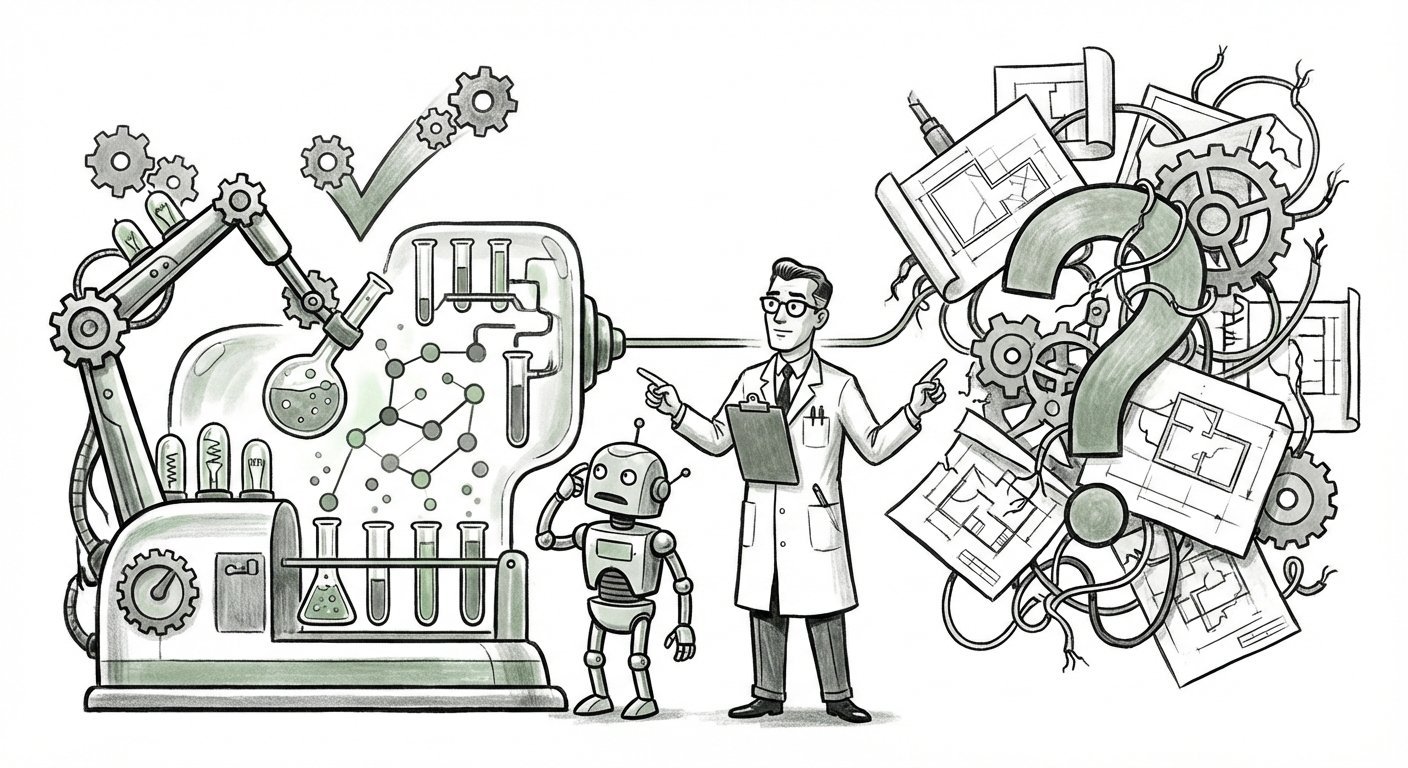
Consider a department halfway through a multi-year plan to modernize its case-management system with machine learning. The plan has dependencies: a contract vehicle that took eighteen months to set up, a data-sharing agreement with another agency, a pilot program that just started producing results. A new secretary arrives. They have their own priorities, their own trusted staff, and a natural desire to put their stamp on things. The eighteen-month contract work does not disappear, but it loses its champion.
This is not a partisan point. It happens in every administration, in every country, in every large company. The difference with AI is timing. AI systems take years to build and validate. Political leadership cycles are much shorter. When turnover is high, the technology timeline and the leadership timeline stop lining up, and projects stall in the gap.
What the Remaining Officials Inherit
The women who remain in the Cabinet are now carrying a heavier load. Fewer senior voices means each remaining official covers more ground, sits on more committees, and gets pulled into more decisions. In practical terms, that usually produces three effects:
- Slower decision cycles. Fewer people reviewing the same volume of work means longer queues. AI policy questions that used to get answered in a week may now take a month.
- Narrower agendas. When a leader is stretched thin, the ambitious items get deprioritized first. Long-range AI strategy tends to lose to urgent operational fires.
- Dependence on career staff. With fewer political appointees, permanent civil servants carry more weight. That can be stabilizing, career staff provide continuity, but it also means policy direction is set by people who were not chosen to set it.
None of this is necessarily bad. Continuity from career staff is a feature, not a bug, in most governments. But it does mean the public should expect AI policy to move in a more incremental, less directive way while the Cabinet is being rebuilt.
The Private Sector Mirror
If you run a company, you may be thinking this is a Washington problem. It is not. The same dynamics show up in every organization adopting AI, and seeing them clearly in government is a useful mirror.
Your AI program is attached to people, not to plans
Every AI initiative has a sponsor. When that sponsor leaves, the initiative usually loses a third of its momentum overnight. Smart organizations build institutional ownership instead, written charters, named successors, and steering committees that survive any single departure.
Document the "why," not just the "what"
Most AI projects are well documented on the technical side and badly documented on the decision side. Teams record what model they built. They rarely record why they rejected the alternatives, which regulator they consulted, or which risk trade-off they accepted. When the people who made those calls leave, the reasoning leaves with them. Then the next team re-litigates everything from scratch.
Turnover is a leading indicator of AI risk
If a government department or a business unit has heavy leadership churn, assume its AI systems are under-governed. Not because the people are careless, but because governance requires stable attention. Audit those areas first.
What to Watch Next
Three things are worth tracking as this story develops.
First, who fills the empty seats. The background of each new appointee will tell you a lot. A technologist or a procurement veteran signals that AI modernization is still a priority. A pure political operator signals that the department is in maintenance mode.
Second, whether AI-related rules get paused. Watch for delayed effective dates, withdrawn draft policies, or quiet extensions of comment periods. Those are the early fingerprints of a department that has lost its leadership and is waiting for direction.
Third, how the remaining officials prioritize. With fewer peers in the room, the survivors have outsized influence. Their public statements and budget requests will reveal whether AI stays near the top of the agenda or slides down.
Actionable Takeaways
- Map your AI program to roles, not names. For every AI initiative, identify the role that owns it. If the role and the person are the same thing, you have a single point of failure.
- Write decision records. Every time your team chooses a model, a vendor, or a risk posture, write down the reasoning in two paragraphs. Future you will thank present you.
- Build a continuity plan for AI governance. Assume your top AI sponsor will leave within twelve months. What survives? If the answer is "not much," fix that now.
- Watch public-sector AI timelines closely. Government is a major customer and a major rule-setter. Leadership gaps in Washington create both risk and opportunity for vendors and compliance teams.
- Treat leadership stability as a risk factor. Add it to your AI risk register alongside data quality, model drift, and vendor concentration.
The Bigger Picture
The departure of half the women in Trump's Cabinet is, on its surface, a story about personnel. Underneath, it is a story about how institutions hold onto knowledge when the people who hold it keep changing. That is the defining challenge of the AI era, in government and in business alike.
AI systems reward patience. They need years of careful building, testing, and oversight. Political and corporate leadership rewards speed and fresh starts. The organizations that win the next decade will be the ones that figure out how to keep their AI programs steady while the people at the top keep moving. The Cabinet shake-up is a live test of exactly that skill, and everyone building with AI should be watching how it plays out.