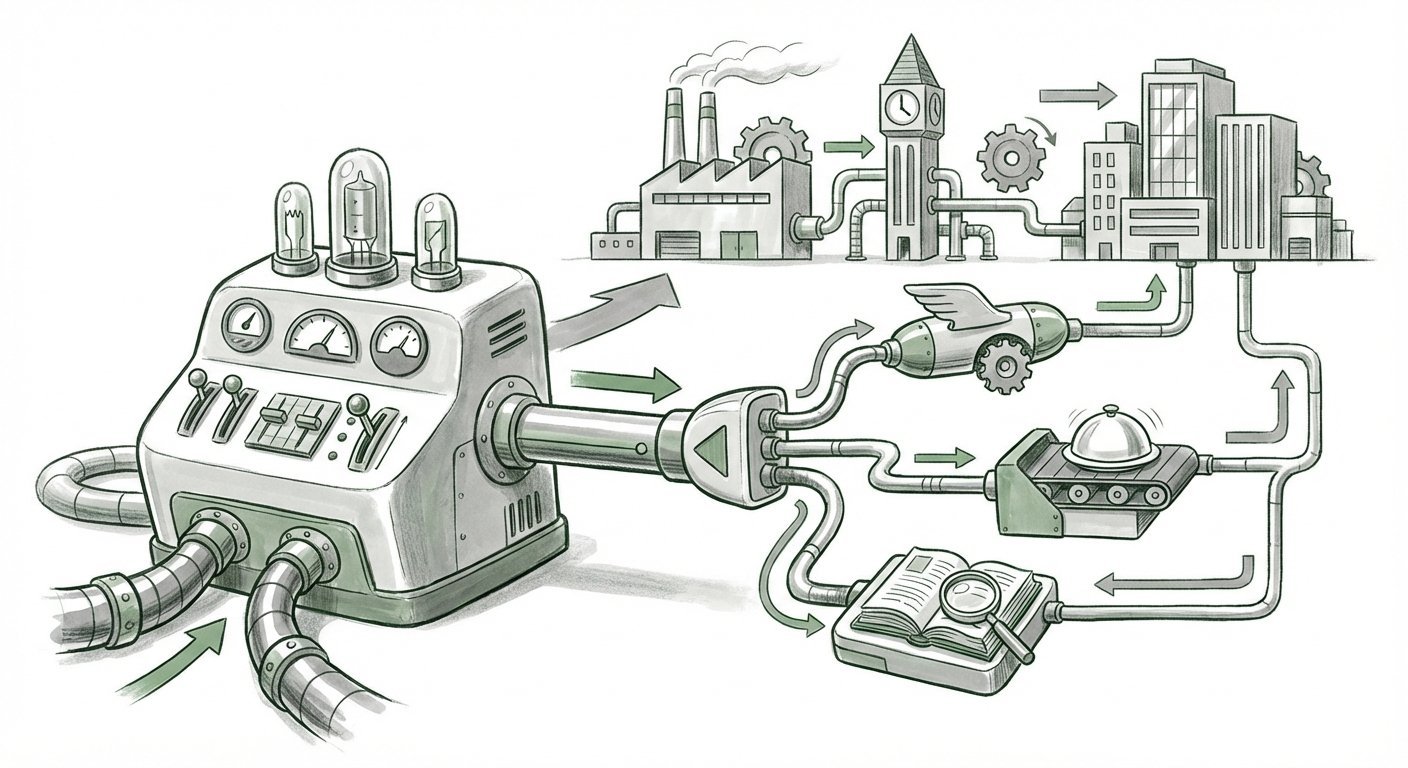
Real-Time AI Sound Generation on Arm: Why On-Device Audio AI Is the Next Big Shift
For the last few years, most people have experienced artificial intelligence as something that happens far away. You type a prompt, your request travels to a data center, and a few seconds later a picture, a paragraph, or a song comes back. It works, but it feels like sending a letter and waiting for a reply.
A new project focused on real-time AI sound generation on Arm points to a very different future. The idea is simple and powerful: instead of asking a distant server to make a sound, your own device makes it on the spot, as fast as you can move your hands. The work is framed as a personal tool built for creative freedom, not a big product launch, not a corporate platform, but one person building something useful for themselves.
That detail matters more than it might seem. When a single creator can build real-time AI audio on ordinary Arm-based hardware, it tells us something important about where AI is heading: out of the cloud and into your pocket, your laptop, and your studio.
What "Real-Time AI Sound Generation on Arm" Actually Means
Let's break the idea into three parts.
1. Sound generation
AI models can now create audio from scratch. That includes musical loops, textures, sound effects, and ambient noise. Instead of searching a library for the right sound, a creator describes what they want and the model produces it.
2. Real time
This is the hard part. "Real time" means the sound appears almost instantly, fast enough that a musician can play along with it, or a game can respond to a player's action without a delay. Any lag breaks the spell. If you press a key and the sound arrives a second later, the tool stops feeling like an instrument and starts feeling like a spreadsheet.
3. Arm
Arm is a chip design used in a huge share of the world's phones, tablets, laptops, and small embedded devices. These chips are known for doing a lot of work while using very little power. Running AI sound generation on Arm means the model can live on a device you carry, rather than on a server farm.
Put those three together and you get something new: a musical instrument made of AI that fits in your bag and works without an internet connection.
Why "A Personal Tool" Is the Real Story
The framing here, a personal tool for creative freedom, is a signal about how AI development is changing.
In the first wave of generative AI, the winners were large labs with huge budgets. Training a model meant renting thousands of expensive chips. But the second wave looks different. Once a model exists, making it smaller, faster, and more personal is largely an engineering and design problem. That work can be done by small teams or even one determined person.
Personal tools also tend to be better designed for the people who use them. When you build something for yourself, you know exactly which controls matter, which delays are annoying, and which features are bloat. That kind of narrow, focused design often beats a general-purpose platform at a specific creative task.
This is the pattern we should expect to repeat across many areas of AI: not just giant models, but sharp little tools built by people who care about one problem deeply.
The Latency Breakthrough: Why Speed Changes Creativity
Speed is not just a convenience feature. It changes what people can create.
Think about a painter. Oil paint dries slowly, so painters work in layers and plan ahead. Digital drawing responds instantly, so artists can experiment freely and undo mistakes. The medium shapes the art. The same thing happens with sound.
Cloud-based AI audio is like oil paint. You describe what you want, wait, listen, and try again. It is great for planning and generating finished pieces. Real-time on-device audio is like a pencil. It is fast, forgiving, and made for exploring.
When sound generation is instant, creators can:
- Improvise. Play an idea and hear AI-generated accompaniment react to it live.
- Iterate wildly. Try fifty variations in a minute instead of five in an hour.
- Work in flow. Stay inside the creative moment instead of breaking it to wait for a download.
- Tailor sound live. Adjust a texture, tone, or effect while the music is playing.
That last point is where things get interesting for non-musicians, too. Real-time generation opens the door to games that build their soundscapes as you play, to public spaces that adapt their ambience to the crowd, and to accessibility tools that respond instantly to a user's needs.
Why Arm Is the Right Home for This
Running AI audio on Arm devices is not just about convenience. It solves several real problems at once.
Privacy
When a model runs on your device, your voice, your sessions, and your creative work never leave your hands. Nothing is uploaded. For musicians, podcasters, and anyone working with unreleased material, that is a serious advantage.
Cost
Cloud AI has a meter running. Every second of generated audio costs money to serve. A device that runs the model locally has no per-use bill. For hobbyists and independent creators, that changes the economics of experimentation entirely. You stop self-censoring because every idea has a price tag.
Reliability
Local tools work on a plane, in a basement studio, backstage, or anywhere with weak signal. Creative tools that stop working when the Wi-Fi drops do not get used.
Efficiency
The whole point of Arm-based designs is performance per watt. That means AI audio could live in devices that are small, quiet, and run for a long time without a fan or a wall plug. This is what makes the jump from "desktop demo" to "instrument in your backpack" possible.
What This Means for the Future of AI
This project fits into a larger trend that will define the next several years of artificial intelligence.
The shift from cloud-first to device-first
For a while, the assumption was that big models would always live in data centers and thin clients would just send requests. That assumption is breaking down. Models are getting more efficient at the same time that everyday chips are getting more capable. The result is a growing class of AI that runs where you are.
We should expect this pattern to repeat beyond audio, in image editing, text tools, translation, and personal assistants. The cloud will not disappear. It will handle the heavy, rare jobs. The device will handle the fast, constant ones.
Real-time AI as a new interface
Most AI today is turn-based: you ask, it answers, you ask again. Real-time generation replaces that with something closer to a conversation between a person and an instrument. AI stops being a tool you consult and becomes a collaborator you perform with.
That is a fundamental design shift. It means AI products will be judged on responsiveness, feel, and control, not just on output quality.
Small tools, big impact
Personal projects like this one often preview what mainstream products will look like years later. They show what becomes possible when the technology is placed directly in a creator's hands, without a subscription or a server in the middle.
Practical Implications for Businesses
If on-device, real-time AI audio becomes normal, several industries should pay attention.
- Games and interactive media. Sound that builds itself to fit the action, rather than pre-recorded loops on repeat. Smaller download sizes, more variety, less repetition.
- Media and entertainment. Faster prototyping for composers and sound designers. Audio that adapts to the user instead of the other way round.
- Hardware makers. On-device AI becomes a reason to buy better hardware. Features that run locally are easier to market, easier to trust, and cheaper to operate.
- Accessibility and health. Instant, offline audio feedback opens doors for people who rely on sound to navigate the world or communicate.
- Customer experience. Brands that use adaptive sound in physical spaces, retail, museums, hospitality, can change the mood of a room in real time.
There is a strategic lesson here too. Companies that assume AI must always be centralized may find themselves outmaneuvered by smaller players who ship fast, local, focused tools that customers actually enjoy using.
The Honest Challenges
None of this is free of problems, and the personal-tool approach comes with real limits.
- Quality trade-offs. Small models that run on a device usually cannot match the raw fidelity of the largest cloud systems. The question is whether "good enough, instantly" beats "excellent, eventually" for a given task.
- Battery and heat. Continuous audio generation is demanding. Making it sustainable on a portable device requires careful engineering.
- Memory and storage. Audio models need room. Device constraints shape what can be built.
- Safety and misuse. Tools that make realistic sound instantly are powerful. Clear norms and protections will need to grow alongside them.
- Support and trust. A personal project is not a product. Turning a working tool into something reliable for thousands of users is a different kind of challenge.
These are not reasons to slow down. They are the roadmap for what gets built next.
Actionable Insights: How to Prepare
For creators: Start experimenting with locally run AI tools now. Learn what real-time generation feels like and build instincts for it. The people who understand the feel of these tools early will be the ones who use them best.
For developers: Focus on latency, memory footprint, and user control, not just output quality. The winning on-device experiences will feel like instruments, not commands.
For business leaders: Map which AI features in your products could run locally. Ask what changes if speed is free and privacy is guaranteed. Those two shifts alone can open new product categories.
For hardware teams: Treat on-device AI as a core feature, not a bonus. Design for sustained workloads, not just short bursts.
For everyone else: Expect AI to move closer to you. The most useful systems in the near future may not be the smartest ones in the cloud, but the fastest ones in your hand.
Conclusion: The Instrument Test
The real significance of real-time AI sound generation on Arm is not a single feature or a single tool. It is a proof of direction. It shows that advanced generative AI can be personal, instant, private, and cheap to run, and that one person with a clear goal can build it.
Every major technology eventually passes the "instrument test." It stops being something you request and becomes something you play. The moment AI audio passes that test, the way people create sound changes. And once one medium crosses that line, others will follow quickly.
The future of AI may not be a bigger data center. It may be a small, quiet device in your hands that answers instantly, keeps your work private, and lets you try one more idea before the moment passes.