Law Firms Are Building Their Own AI: What Ropes & Gray's Transactional Diligence Push Means for the Future of AI
Something important is happening inside the world's biggest law firms, and it is not about chatbots writing memos. Ropes & Gray is developing artificial intelligence built specifically for transactional diligence, the deep, document-heavy detective work that happens before a deal closes. That single sentence is a signal. It tells us that the next wave of AI adoption will not be generic tools bolted onto old workflows. It will be purpose-built systems trained on the narrow, high-stakes work that professionals actually do every day.
This is a shift worth paying attention to, because transactional diligence is one of the hardest possible tests for AI. It is also one of the most valuable. Understanding why law firms are choosing this problem, and choosing to build rather than buy, reveals a lot about how AI will be used over the next several years in finance, healthcare, insurance, consulting, and beyond.
Why Transactional Diligence Is the Perfect First Target
Diligence work has the characteristics that make AI projects succeed. It is text-heavy. It is repetitive. It follows patterns. And it has a clear standard for what "good" looks like, a thorough review that catches the risks a client cares about.
When a company is being bought or sold, the buyer needs to understand what it is actually getting. That means reading contracts, leases, employment agreements, loan documents, regulatory filings, and correspondence. For a large deal, that can mean tens of thousands of documents sitting in a virtual data room, all of which need to be reviewed, summarized, and flagged. Historically, this work has been done by teams of junior lawyers and paralegals working long hours under deadline pressure.
That model has real weaknesses. It is expensive. It is exhausting. And it is inconsistent, two reviewers can read the same contract and reach different conclusions about whether a clause is a problem. AI is uniquely good at applying the same rule to the thousandth document that it applied to the first. That consistency is the real prize, not just the speed.
There is also a built-in feedback loop. Every diligence matter produces a paper trail showing which flagged issues mattered and which did not. That is exactly the kind of data an AI system needs to improve. Firms that build for this workflow get a compounding advantage over time.
The Bigger Story: Build, Don't Buy
The most revealing part of this development is not that a law firm is using AI. Plenty are. The revealing part is that it is developing AI for its own use.
For the last few years, the default path for professional services firms has been to license a general-purpose legal AI product from an outside vendor. That path is faster and cheaper up front. But it comes with a hidden cost: every competitor can buy the same tool. The software becomes table stakes rather than an edge.
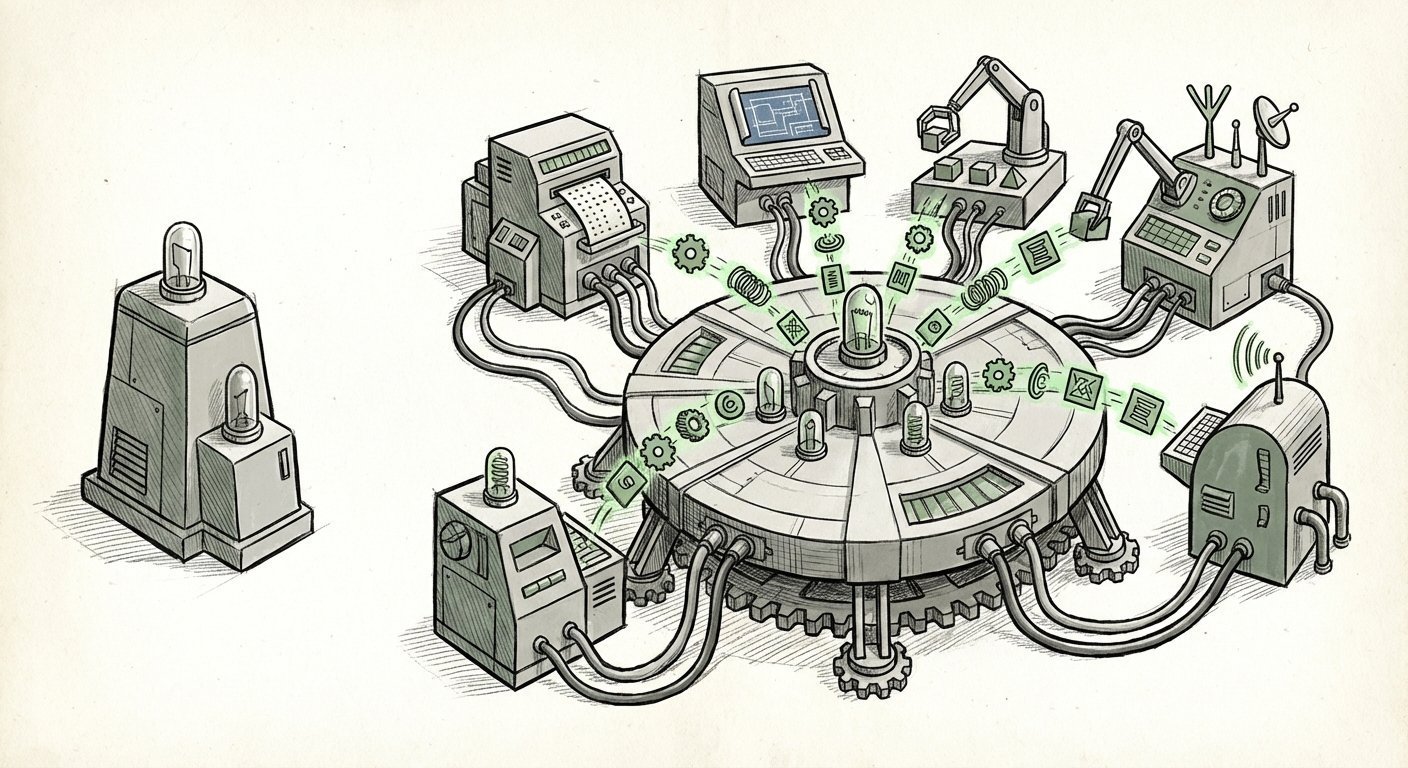
Building in-house flips that logic. A firm that trains systems on its own deal history, its own review standards, and its own client preferences ends up with something no rival can simply purchase. The institutional knowledge that used to live in the heads of senior partners, the instinct for which indemnity clause is dangerous, which consent requirement will delay closing, starts to become software.
This pattern is likely to repeat far beyond law. Accounting firms, investment banks, insurers, and consulting practices all have the same ingredients: large document sets, expert judgment, and a strong incentive to protect proprietary know-how. Expect to see in-house AI development spread across every industry where judgment is the product.
From Reading Documents to Supporting Decisions
It is tempting to describe this kind of AI as a document reader. That undersells it. The trajectory of these systems runs along a clear path:
- Extraction: Pull key terms out of a contract, dates, parties, obligations, termination rights.
- Comparison: Check each document against an expected standard and highlight anything that deviates.
- Summarization: Turn a stack of documents into a short brief a partner can read in minutes.
- Risk flagging: Surface the issues that have historically caused problems in similar deals.
- Recommendation: Suggest which risks to accept, negotiate, or walk away from.
Each step toward the bottom of that list increases the value, and the risk. Extraction errors are annoying. Recommendation errors can cost a client millions. That is why the human role will not disappear. It will move. Lawyers will spend less time hunting for clauses and more time judging whether the machine's summary is right and whether a flagged risk actually matters for this particular deal.
The professionals who thrive will be the ones who learn to direct the machine, audit its output, and apply judgment where judgment is genuinely needed.
What This Means for the Future of AI
Three broad lessons emerge from this direction of travel.
1. Narrow and deep beats broad and shallow
General-purpose AI assistants are impressive in demos but often unreliable in production. Systems tuned for one workflow, with domain rules baked in and humans checking the work, deliver far more real value. The future of enterprise AI looks less like a single super-assistant and more like a portfolio of specialized tools that each do one job well.
2. The competitive moat is data, not models
Foundation models are widely available. What is not widely available is a firm's own record of how it did its work and what it decided. As AI matures, the advantage shifts from who has the best model to who has the best proprietary data and the discipline to use it responsibly. Firms that treat their archives as an asset today will be the ones with strong systems tomorrow.
3. Trust becomes the real bottleneck
In law, being right matters more than being fast. That is true in finance, medicine, and engineering as well. The limiting factor for AI adoption in high-stakes fields is not capability but confidence, confidence that the system is accurate, that it protects confidential information, and that a human remains accountable for the final call. Expect serious investment in verification, audit trails, and clear lines of responsibility alongside the models themselves.
Practical Implications for Businesses
If you run a business that does not involve legal diligence, it is easy to file this away as someone else's story. That would be a mistake. The pattern here is transferable, and the practical steps are the same across industries.
- Find your diligence. Every organization has a high-volume, text-heavy, pattern-based process that consumes skilled people's time. Contract review. Claims handling. Compliance checks. Research synthesis. That is where to start.
- Measure the error cost, not just the time saved. The right question is not "how much faster?" but "how much faster can we go while keeping mistakes at or below the current rate?" Speed that adds risk is not progress.
- Decide build versus buy deliberately. Buy when the task is common and your process is ordinary. Build when your approach to the task is what makes you different.
- Keep a human in the loop, with a name attached. Systems should show their sources and their reasoning. Someone should always be answerable for the output.
- Protect confidentiality from day one. Client data, deal documents, and privileged material cannot flow freely into outside systems. Security and data-handling rules need to be settled before the pilot, not after.
The Risks Worth Watching
None of this is frictionless. AI systems can miss a clause that a careful reader would catch, and they can state a wrong conclusion with total confidence. Reviewers who trust the machine too much may stop looking closely. There is also a subtler risk: if junior lawyers no longer do the foundational document work, where do future experts learn their craft? Firms will need to redesign training so that the next generation still builds judgment, even as the grunt work is automated.
There are also commercial questions. Building AI is expensive, and the payoff is uncertain. When a firm's AI helps close deals faster, clients may ask for that savings in the form of lower fees. The firms that succeed will be the ones that can show the value clearly enough to justify both the investment and their pricing.
The Bigger Picture
What makes the Ropes & Gray effort notable is not the technology itself. It is the strategic choice behind it. A firm is saying, in effect: our knowledge about how to review a deal is an asset, and we are going to turn it into software we own.
That is the real theme of this era of AI. The first phase was experimentation, anyone could try a chatbot and be amazed. The next phase is engineering: purpose-built systems, tied to specific workflows, trained on proprietary knowledge, wrapped in human oversight. It is less flashy and far more consequential.
For businesses, the message is straightforward. Look at the work your most expensive people do that follows patterns, and ask whether that pattern is something you could teach a machine, while keeping a person responsible for the result. The organizations that answer that question well over the next few years will not just save time. They will turn their expertise into something that scales.