Superfluid and the Future of AI: Why Local AI Servers for Distributed LLM Inference Matter
For the past few years, the most powerful AI models have lived mostly in giant cloud data centers. Businesses send their data to a remote service, the model runs there, and the answer comes back over the internet. That model has worked well, but it has also created real concerns about cost, privacy, delay, and control. The arrival of Superfluid, described as a local AI server for distributed LLM inference, points to a different path. Instead of sending everything to the cloud, AI work can be spread across local machines and private infrastructure.
That shift may sound technical, but its effects are practical. It could change how companies buy AI computing, how they protect sensitive information, and how quickly AI features respond to users. It could also make advanced AI more available to organizations that cannot or will not depend fully on public cloud services. The big idea behind Superfluid is not just “run AI on your own computer.” It is about using a local server to coordinate large language model inference across a distributed setup. In plain terms: it is a way to split AI work across more than one machine while keeping the operation close to home.
What Distributed LLM Inference Actually Means
A large language model, or LLM, is the kind of AI system behind chat assistants, writing tools, coding helpers, and document analysis. Inference is the moment the model is used to produce an answer. Training is how the model learns; inference is how it works after training. When you type a question and get a response, that is inference.
Most inference today happens in the cloud. You send a prompt to a provider, the provider runs the model on powerful servers, and you get the result. This is simple for the user, but it has trade-offs. The provider controls the hardware, the software stack, the price, and the uptime. Your data leaves your network. Your response time depends on internet speed and how busy the provider is. And your costs can rise quickly as usage grows.
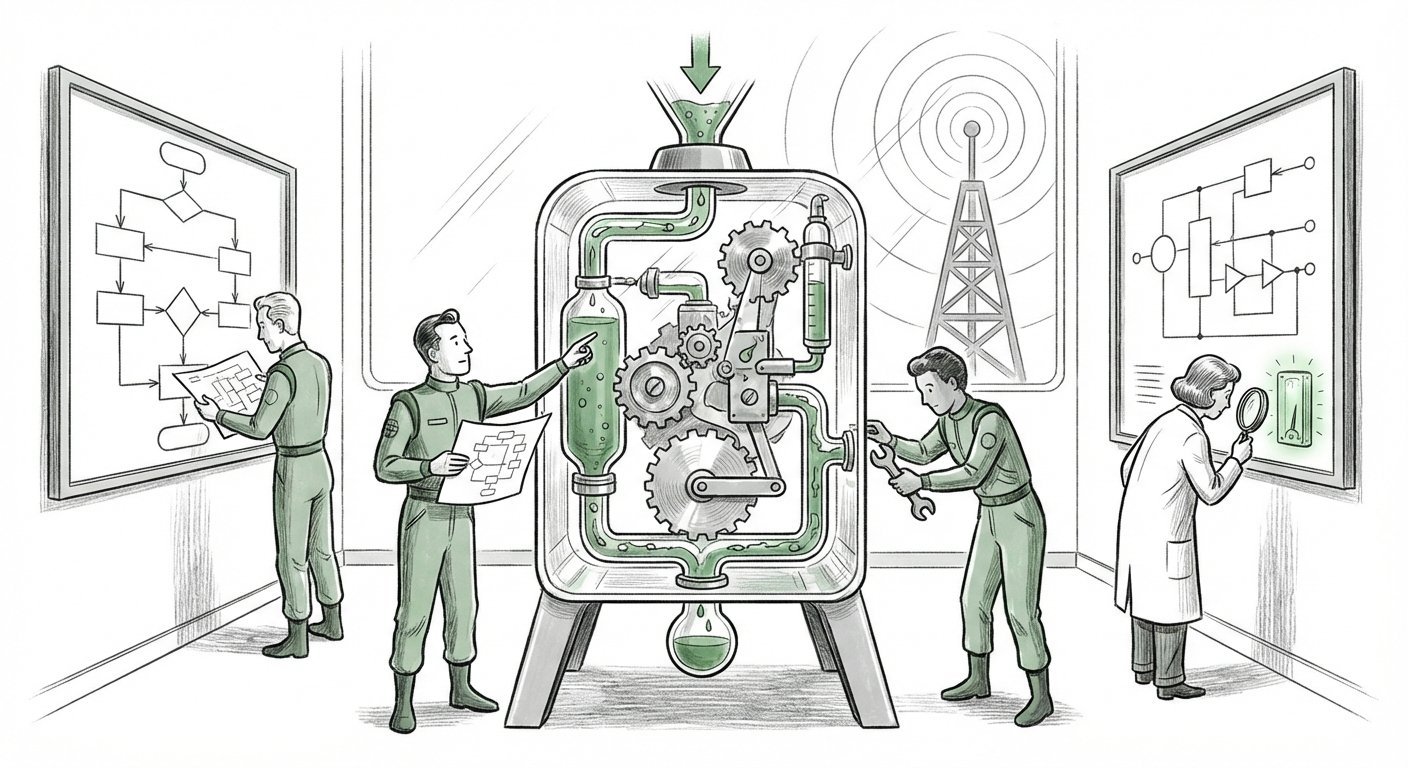
Distributed LLM inference changes that pattern. Instead of one large machine doing all the work, the job is divided across several machines that work together. A local AI server can act as the coordinator. It decides which machine handles which part of the request, moves data between them, and returns the final answer. Think of it like a team of cooks in a kitchen. One cook alone might be slow. A team can prep, cook, and plate at the same time. The local server is the head chef that keeps everyone in sync.
Superfluid’s role, based on its description, is to make that coordination possible on local infrastructure. That could mean using a private server in an office, a small data center, or a set of edge devices. The exact hardware and software details are less important than the pattern: AI inference becomes something an organization can host and control, rather than something it only rents from a distant provider.
Why Local AI Servers Are Having a Moment
The move toward local AI is not happening by accident. Several pressures are pushing organizations to look for alternatives to pure cloud inference.
Privacy and data control
Many organizations handle information that should not leave their walls: patient records, legal documents, financial data, employee files, and proprietary research. Sending that data to a third-party AI service can create legal and security questions. A local AI server keeps the data inside the organization’s network. That does not automatically make a system secure, but it reduces the number of hands involved. For regulated industries, that difference can be the green light a project needs.
Cost predictability
Cloud AI pricing is often based on usage. That is convenient at low volume, but it can become hard to predict as usage grows. A local server requires an upfront investment in hardware and staff, but it can turn variable cloud bills into a more fixed cost. Distributed inference can also make better use of hardware an organization already owns. Instead of buying one huge machine, a team can spread work across several smaller ones. That can be more affordable and easier to scale in steps.
Latency and reliability
When AI work happens locally, the round trip to a distant data center disappears. That can make responses faster, especially for real-time tools like coding assistants, customer support bots, or factory monitoring systems. Local systems can also keep working when the internet connection is poor or when a cloud provider has an outage. That reliability matters for operations that cannot pause.
Customization and independence
A local AI server gives an organization more room to choose its models, tune settings, and connect AI to internal systems. It also reduces dependence on a single vendor’s roadmap and pricing changes. That independence is valuable for companies that want AI to fit their workflows, not the other way around.
How a Local AI Server Could Change the Economics of AI
The economics of AI are often misunderstood. People focus on model training, which is expensive and concentrated among a few large players. But for most businesses, the bigger long-term cost is inference: the everyday work of answering questions, summarizing documents, drafting emails, and analyzing data. As AI features spread across products, inference volume grows. Small costs per request can become large costs per month.
A local AI server for distributed LLM inference changes the math in three ways.
- Better use of existing hardware: Many organizations already have servers, workstations, or edge devices that sit idle some of the time. Distributed inference can put that capacity to work instead of buying more cloud time.
- Lower data movement costs: Sending large documents and datasets to the cloud can add network and storage costs. Keeping inference local can reduce that overhead.
- More control over utilization: A local system can be sized for expected demand and shared across teams. That can smooth out peaks and avoid paying premium prices for short bursts of usage.
This does not mean cloud AI goes away. Cloud providers offer scale, cutting-edge models, and managed services that are hard to match. But a local option gives businesses a second lever. They can choose where each workload runs based on sensitivity, speed, cost, and scale. That is a healthier market than a one-size-fits-all cloud model.
The Technical Promise and the Hard Parts
Distributed LLM inference is easier to describe than to do well. A local AI server has to solve several hard problems at once.
Model splitting and orchestration
Large models may not fit on one machine. Distributed inference can split a model across several machines, with each one handling part of the computation. The server must coordinate this without adding too much delay. It must also handle failures. If one machine drops out, the system needs a plan.
Networking and latency
When work is spread across machines, communication becomes a bottleneck. The network between them must be fast and stable. A local server can help by keeping machines close together, but it still needs smart scheduling. Not every workload benefits from distribution. Small requests may be faster on a single machine. The system must know the difference.
Security and access control
Local does not mean safe by default. A private AI server still needs authentication, encryption, logging, and updates. It must protect models from theft and data from leaks. It also needs clear rules about who can use which models and what data they can access. These are governance issues as much as technical ones.
Management and updates
Cloud providers handle maintenance, patching, and hardware failures. A local server shifts that work to the organization. That can be a burden for teams without deep infrastructure skills. Successful local AI adoption will depend on tools that make deployment and updates simple. It will also depend on a support model that does not leave businesses stranded when something breaks.
What This Means for Businesses
Superfluid’s arrival is a signal that the AI market is maturing. The question is no longer just “Which model is best?” It is also “Where should the model run?” That question opens a set of practical steps for business leaders.
- Classify workloads by sensitivity: Start by sorting AI use cases into low, medium, and high sensitivity. High-sensitivity work, such as legal review or patient data analysis, is a natural fit for local inference. Low-sensitivity work may stay in the cloud.
- Pilot before you commit: A local AI server is an infrastructure decision. Test it with a focused use case, measure latency and cost, and compare results with cloud options. Do not assume local is always cheaper or faster.
- Plan for a hybrid future: Most organizations will likely run a mix of local and cloud AI. The winning strategy is not “all local” or “all cloud.” It is matching each workload to the right home.
- Build internal skills: Local AI requires people who understand networking, security, and model operations. Invest in training or partners before the pilot becomes a production system.
- Set governance early: Decide who can use the system, what data can go in, how outputs are reviewed, and how incidents are handled. Local control is only useful if it comes with clear rules.
For smaller businesses, the biggest barrier may be upfront cost. For larger businesses, the barrier may be complexity. The market will likely respond with managed local AI services, shared appliances, and simpler orchestration tools. Superfluid’s focus on a local server for distributed inference fits that demand. It gives organizations a way to start small and grow without rebuilding everything around a cloud provider.
What This Means for Society
The shift toward local AI has effects beyond the data center. It could widen access to AI for schools, clinics, local governments, and community organizations that want to keep data close. It could also create new jobs in AI operations and infrastructure. But it raises new questions too.
If AI inference becomes more local, oversight becomes more local as well. That can be good: communities can set their own rules. It can also be uneven. Well-resourced organizations may run strong local AI while others fall behind. The digital divide could shift from internet access to AI infrastructure access. Policy makers and industry groups will need to pay attention.
Energy use is another factor. Local servers can be more efficient if they use existing capacity and avoid unnecessary data movement. But many small local systems can also be less efficient than large shared data centers. The right answer depends on utilization. The greenest AI system is not automatically the most local or the most centralized. It is the one that matches demand to efficient hardware.
The Road Ahead
Superfluid represents a broader trend: AI is moving from a centralized cloud service to a layered system. Some work will stay in massive data centers. Some will move to private servers. Some will run on devices at the edge. The local AI server is the missing piece that connects those layers.
The next few years will likely bring more competition in this space. We should expect better orchestration tools, simpler deployment, and more options for smaller organizations. We should also expect cloud providers to respond with hybrid services that blend public and private inference. The result will be more choice, which is good for businesses and users alike.
For now, the lesson is clear. AI strategy is not just about picking a model. It is about deciding where intelligence lives. Superfluid’s local AI server for distributed LLM inference is a reminder that the future of AI will not be built in one place. It will be distributed, private, and closer to the work it supports. Organizations that plan for that future today will be better positioned to use AI safely, affordably, and at the speed their users expect.