Trump Names an AI Czar: What It Means for the Future of AI and How It Will Be Used
President Trump has named an AI czar, a single senior official whose job is to sit at the center of the government's artificial intelligence policy. On its own, that sounds like a staffing headline. It is not. When one person is handed the job of coordinating how a whole government thinks about a technology, it changes the speed of decisions, the shape of the rules, and the signals that companies send to their own boards.
This article breaks down what the appointment means, why the "czar" label matters, and what businesses, developers, and ordinary workers should actually do about it. No hype. Just the practical read.
What Is an AI Czar, Exactly?
The word "czar" is a nickname, not an official job title. In government, it usually means a senior appointee who is given a very broad mission and asked to pull many separate agencies in the same direction. The "drug czar" and the "cyber czar" are the classic versions of this role.
In practice, an AI czar tends to do four things:
- Coordinate. Make sure the many departments and agencies that touch AI are not writing rules that contradict each other.
- Set priorities. Decide which AI issues get attention first, safety testing, national security, procurement, workforce, or competition.
- Speak for the whole. Act as the single point of contact for CEOs, foreign governments, and lawmakers who want one conversation instead of ten.
- Move fast. Cut through the usual slow process when a decision needs to happen in weeks, not years.
The title alone does not create any of that. The mandate behind the title does. A czar with a clear mission and direct access to the president is powerful. A czar without staff or budget is mostly a press release. The next few months will tell us which one this is.
Why This Role Exists Now
AI policy has a coordination problem. It always did, but the problem has grown. Dozens of agencies touch the same technology from different angles: one cares about safety, one about privacy, one about defense, one about small business, one about schools and workers. Each writes its own guidance. Each moves at its own pace.
For a company trying to build or buy AI tools, that means confusion. Two agencies can issue guidance that seem to disagree. A startup can be compliant in one area and exposed in another. A large firm can spend months mapping rules that change before the map is finished.
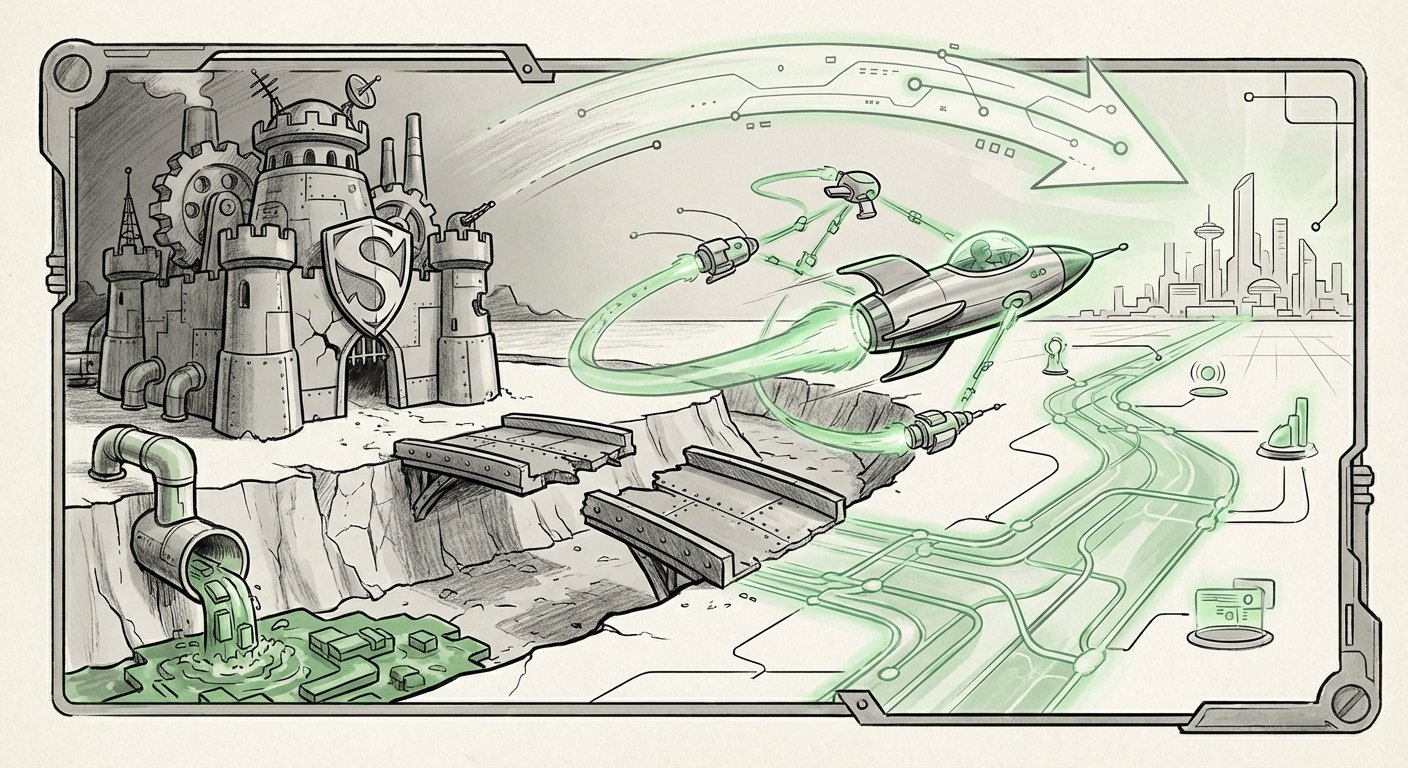
An AI czar is the government's answer to that mess. The logic is simple: one tech, one strategy, one voice. Whether it works is a different question, but the intent is clear.
The speed problem
Technology is moving faster than rulemaking. A model that leads the market in January can be outdated by summer. A law that takes two years to pass can arrive after the risk it was written for has already shifted. A central coordinator is designed to shorten that lag, to make the government react in months rather than years.
The competition problem
AI is now treated as a strategic asset, not just a consumer product. That framing pushes governments toward a single point of control. When a technology is seen as tied to national strength, the question stops being "should we regulate it?" and becomes "who is in charge of it?"
What This Means for the Future of AI
Here is where the appointment gets interesting. A czar does not just manage paperwork. The role quietly decides what kind of AI future gets built, because it shapes three things at once.
1. Standards become a lever
Whoever coordinates AI policy gets to influence which testing methods, documentation practices, and safety benchmarks become the default. That matters enormously. Standards are not neutral. A standard written around one approach to model evaluation can favor some companies and burden others. If a central office starts pointing to specific benchmarks, those benchmarks become the ones vendors build toward. Entire product roadmaps can shift on the back of a technical appendix.
2. Procurement becomes policy
Governments are enormous buyers. When a central AI office sets rules for how agencies purchase AI, it does two things at once: it creates a large, steady market for compliant vendors, and it quietly sets the de facto requirements for everyone else. Many companies will end up meeting government-grade documentation standards simply because their customers demand it. This is one of the most underrated ways policy shapes technology.
3. The framing of risk gets decided
Is AI mainly a national security issue? A consumer protection issue? A jobs issue? A scientific opportunity? The answer changes everything downstream. If the coordinator frames AI primarily as a security matter, expect tighter controls on model access and more scrutiny of who can build what. If the framing is economic growth, expect lighter touch and faster approvals. The czar's public language will be worth watching closely, not for spin, but because framing tends to become policy.
Practical Implications for Businesses
You do not need to wait for final rules to act. A central AI office changes the environment in predictable ways, and companies can get ahead of it.
Start a policy watch, even a small one
Assign one person, it does not need to be a full-time role, to track AI guidance from the agencies that touch your industry. Check monthly. The goal is not to predict every rule. It is to avoid being surprised by a big one.
Document your models like an auditor is coming
Expect more demand for written records: what a model does, what data it was trained on, how it is tested, who reviews its outputs, and what happens when it fails. Firms that already keep this documentation will glide through reviews. Firms that do not will scramble. This is the single highest-return preparation step right now.
Map your exposure across borders
AI rules are being written in many capitals at once. A tool that is fine in one market may need changes in another. Know where your AI features run and where your data sits. Cross-border complexity is rising, and a single national coordinator does not simplify the global picture.
Build a decision path for fast changes
If new guidance lands in a month, who decides what your company does? A named owner, a short approval chain, and a pre-agreed set of options will beat a committee every time. Speed of response is becoming a competitive advantage in its own right.
Do not treat this as a US-only story
Every major economy is wrestling with the same coordination question. A strong central AI office in one country tends to prompt similar moves elsewhere, both as competition and as imitation. Plan for a world of many AI coordinators, not one.
What Could Go Wrong
It is worth being honest about the failure modes, because they are common.
- Title without power. If the role lacks budget, staff, or clear authority over agencies, it becomes symbolic. Symbolic roles produce speeches, not standards.
- Coordination that turns into bottleneck. A central office can speed things up, or it can become one more approval layer. Watch how quickly decisions actually come out.
- Revolving doors. When the same small group of people moves between government and industry, policy can drift toward the interests of the best-connected players. Transparency about meetings and conflicts will matter.
- Framing by crisis. If the office is only activated when something goes wrong, policy becomes reactive and inconsistent. The stronger version is proactive, clear rules set before a scare forces rushed ones.
Signals to Watch in the Coming Months
You can judge how serious this appointment is by a few concrete markers:
- Staffing. Does the office get real technical hires, or a small political team?
- Authority. Can it overrule or align agencies, or only advise them?
- Output. Does it produce actual guidance, testing frameworks, or procurement rules within a few months?
- Access. Who gets meetings, only the largest firms, or a wider mix of startups, researchers, and civil society?
- Language. Is AI described mainly as a threat, mainly as an opportunity, or as both?
Each of these tells you more than the job title ever will.
The Bigger Picture
The deeper story is not about one appointment. It is about a shift in how governments treat AI. For the past few years, AI was mostly something regulators reacted to. Now it is something governments are organizing around, with a named owner, a strategy, and a budget line.
That shift has real consequences for how the technology gets built. Expect more emphasis on testing and documentation. Expect procurement to become a quiet but powerful force. Expect the gap between well-prepared companies and unprepared ones to widen, because compliance is becoming a capability, not a chore.
For workers and the public, the stakes are just as real. A central AI office will help decide how AI shows up in schools, hospitals, hiring, and public services. The decisions will be technical on the surface and deeply human underneath. That is exactly why the mandate behind the title deserves attention, and why it deserves questions, not just headlines.
The appointment is the easy part. What the office actually does next is the story. Watch the staffing, the authority, and the first real document it publishes. Those three things will tell you more about the future of AI policy than any announcement ever could.