Uber's Legal AI Agent Cuts Contract Review Time by 20%: Why Rules and RAG Are the Future of Enterprise AI
Legal work is often seen as one of the last places where AI will make a real dent. Contracts are dense. Language is nuanced. Mistakes are expensive. Yet Uber's legal AI agent has now shown a concrete result: it cuts contract review time by 20% by combining rules with retrieval-augmented generation, or RAG. That number is not a moonshot. It is not a claim that AI will replace lawyers tomorrow. It is something more useful: a believable, measurable gain in a high-stakes workflow.
That makes this development worth paying attention to. The story is not just about one company or one legal team. It is about a pattern that is likely to spread across finance, healthcare, insurance, procurement, and compliance. The most valuable AI systems in the near future may not be giant chatbots that answer anything. They may be focused agents that follow rules, pull from trusted documents, and help people finish specific tasks faster and more consistently.
A 20% Gain Is Small Enough to Be Real
In AI marketing, it is common to hear about huge leaps: ten times faster, ninety percent cheaper, fully automated. Real enterprise work rarely looks like that. A 20% cut in contract review time is the kind of improvement that operators trust because it is modest enough to be measured and large enough to matter.
Contract review is a good test case. It involves reading, comparing clauses, checking against playbooks, spotting risks, and routing issues to the right person. It is repetitive but not simple. A tool that saves one out of every five hours in that process can free legal teams to focus on negotiation, judgment, and higher-risk matters. Over a year, those hours add up. They can reduce backlogs, speed up deals, and make review capacity more predictable.
The important detail is how the gain was achieved. Uber's legal AI agent did not rely on a general-purpose model alone. It used rules and RAG. That combination is a signal of where enterprise AI is heading.
Rules + RAG: The Hybrid Engine Behind the Result
Rules are the old-school part of computing, and that is exactly why they matter. A rule can say: this clause must be present; this approval must be collected; this contract type must follow this path. Rules are predictable. They can be audited. They do not hallucinate. In legal work, that kind of guardrail is essential.
RAG is the newer part. Retrieval-augmented generation lets an AI system look up relevant documents before it answers or acts. Instead of relying only on what a model learned during training, the system retrieves approved clauses, past contracts, policies, or playbooks and uses them as context. This grounds the output in the company's own knowledge.
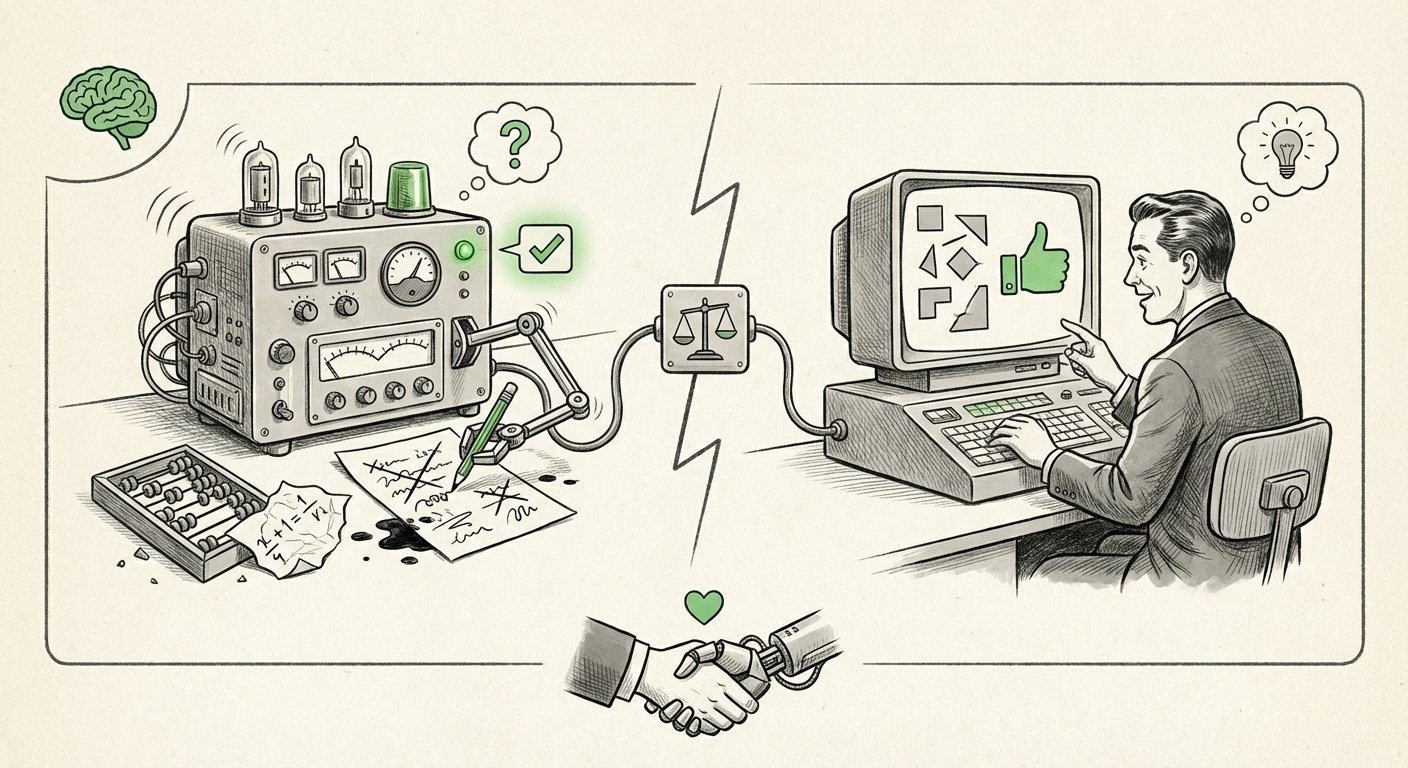
Put the two together and you get a practical design. Rules define the process and the boundaries. RAG brings in the right information at the right moment. The language model helps read, summarize, compare, and draft. Each part does what it is best at.
This matters because pure large language models are powerful but uneven. They can write well and still miss a required clause. They can sound confident and still be wrong. Rules and RAG reduce that risk. They turn a clever text generator into a workflow tool that is easier to trust, test, and improve.
From Chatbot to Co-Worker: The Rise of the Legal AI Agent
The phrase AI agent is often overused, but it fits here. A chatbot waits for a question and gives an answer. An agent can take a goal and work through steps: read a contract, find the relevant policy, check for missing terms, flag risks, and prepare a summary for a human reviewer. That is a different kind of interaction. It is less like search and more like delegation.
Uber's legal AI agent points to a broader shift. The next wave of enterprise AI will not be one giant assistant that does everything. It will be a set of focused agents trained on specific domains and connected to specific systems. A legal agent. A procurement agent. A compliance agent. A finance agent. Each one has a narrow job, clear rules, and access to the right knowledge base.
This is how AI becomes useful inside large organizations. It stops being a novelty and starts being part of the operating model. The agent does not need to be perfect at everything. It needs to be reliable at one workflow, measurable against a baseline, and safe enough for humans to trust with real work.
What This Means for the Future of AI
The Uber result is a small data point with large implications. It suggests that the most successful AI systems of the next few years will be hybrid systems. They will combine machine learning with rules, retrieval, databases, and human review. The pure model is only one ingredient.
It also suggests that evaluation will shift from benchmarks to business metrics. It is nice if a model scores well on a test. It is better if it cuts contract review time by 20% without increasing risk. Enterprises will care more about cycle time, error rates, compliance, and cost per task than about leaderboard rankings.
Another implication is that knowledge management becomes a core AI function. RAG is only as good as the documents it retrieves. Companies with clean, well-tagged, up-to-date policies and contract libraries will get more from AI than companies with messy archives. In that sense, AI is not just a software project. It is an information hygiene project.
Finally, the result points toward governance by design. Instead of adding safety checks after an AI system is built, teams can build rules into the workflow from the start. That makes it easier to explain why the system made a recommendation, which matters in legal, financial, and regulated work. It also makes it easier to update the system when policies change.
Practical Implications for Businesses
For business leaders, the lesson is not to rush out and buy a legal AI agent. The lesson is to look for workflows where rules and retrieval already exist. Contract review is one. Invoice matching, claims triage, customer onboarding, and regulatory reporting are others. These are processes with clear steps, known documents, and measurable outcomes.
Legal teams should think about where the 20% gain comes from. It likely comes from faster first-pass review, better consistency, and less time spent hunting for the right clause or policy. That does not remove the need for lawyers. It changes where their time goes. More time on judgment, negotiation, and edge cases. Less time on repetitive checking.
IT and operations teams should think about the plumbing. An agent needs access to the contract repository, the clause library, the approval system, and the matter management tool. It needs identity controls, logging, and a way to escalate. The AI model is not the hard part. The integration and data quality are.
Compliance and risk teams should think about auditability. A rules-based system can show which rule was checked. A RAG system can show which documents were retrieved. That is a strong foundation for review. But it still needs human sign-off for high-risk contracts. The goal is not to remove people from the loop. It is to put people where their judgment matters most.
Where the Approach Can Go Wrong
A 20% improvement is real, but it is not a reason to overstate what AI can do. Contract review still involves interpretation. A clause can be legal and still be a bad business decision. A contract can follow every rule and still miss the commercial intent. Human review remains essential.
RAG has limits too. If the retrieved documents are outdated, incomplete, or poorly organized, the agent will give weaker answers. If the rules are too rigid, the agent may miss valid exceptions. If the rules are too loose, it may not catch real risks. The system needs tuning, testing, and ongoing maintenance.
There is also a change management challenge. Lawyers and legal operations staff need to understand what the agent does and where it fails. They need a clear path to challenge its output. Without trust, a good tool can sit unused. With blind trust, a good tool can cause harm. The balanced path is human oversight with clear metrics.
An Actionable Playbook for Teams Exploring Legal AI
If you want to apply this pattern in your own organization, start small and stay specific. The following steps are a practical way to begin.
- Pick one high-volume, moderate-risk workflow. Do not start with the most complex contract in the company. Start with a common agreement type that has a known playbook and a measurable review time.
- Map the rules before you touch the model. Write down the required clauses, approval steps, fallback positions, and escalation paths. If your team cannot agree on the rules, an AI agent will not fix that.
- Clean the knowledge base. RAG is only as good as the documents it can retrieve. Remove outdated templates, tag versions, and make sure the approved clause library is easy to find.
- Measure the baseline. Record current cycle time, error rates, and review capacity. You cannot claim a 20% gain without a before-and-after number.
- Run a controlled pilot with human review. Let the agent prepare a first pass. Have lawyers check it. Track where it helps and where it misses. Use those findings to improve rules and retrieval.
- Build in audit logs and escalation. Every recommendation should be traceable to a rule or a retrieved document. High-risk issues should route to a person quickly.
- Scale only after the metrics hold. A successful pilot is not a victory. The real test is whether the gain holds across more contract types, more teams, and more volume.
The Bigger Picture: AI That Works Inside the Rules
Uber's legal AI agent is a useful sign of maturity. It shows that AI can deliver real value in a careful, bounded, measurable way. The future of enterprise AI is unlikely to be a single all-knowing model. It is more likely to be a collection of agents that combine language models with rules, retrieval, and human oversight.
That is a less flashy vision than the one often sold. It is also a more practical one. It means AI can be used in legal, finance, healthcare, and government without pretending that hallucination risk is solved. It means businesses can start with workflows where the boundaries are clear and the metrics are visible. It means the technology can earn trust step by step.
The 20% cut in contract review time is not the end of the story. It is a proof point. It shows that the hybrid approach works. As more companies build agents around rules and RAG, the question will shift from “Can AI do this?” to “Where should AI do this, and how do we keep it accountable?” That is the right question for the next phase of AI adoption.