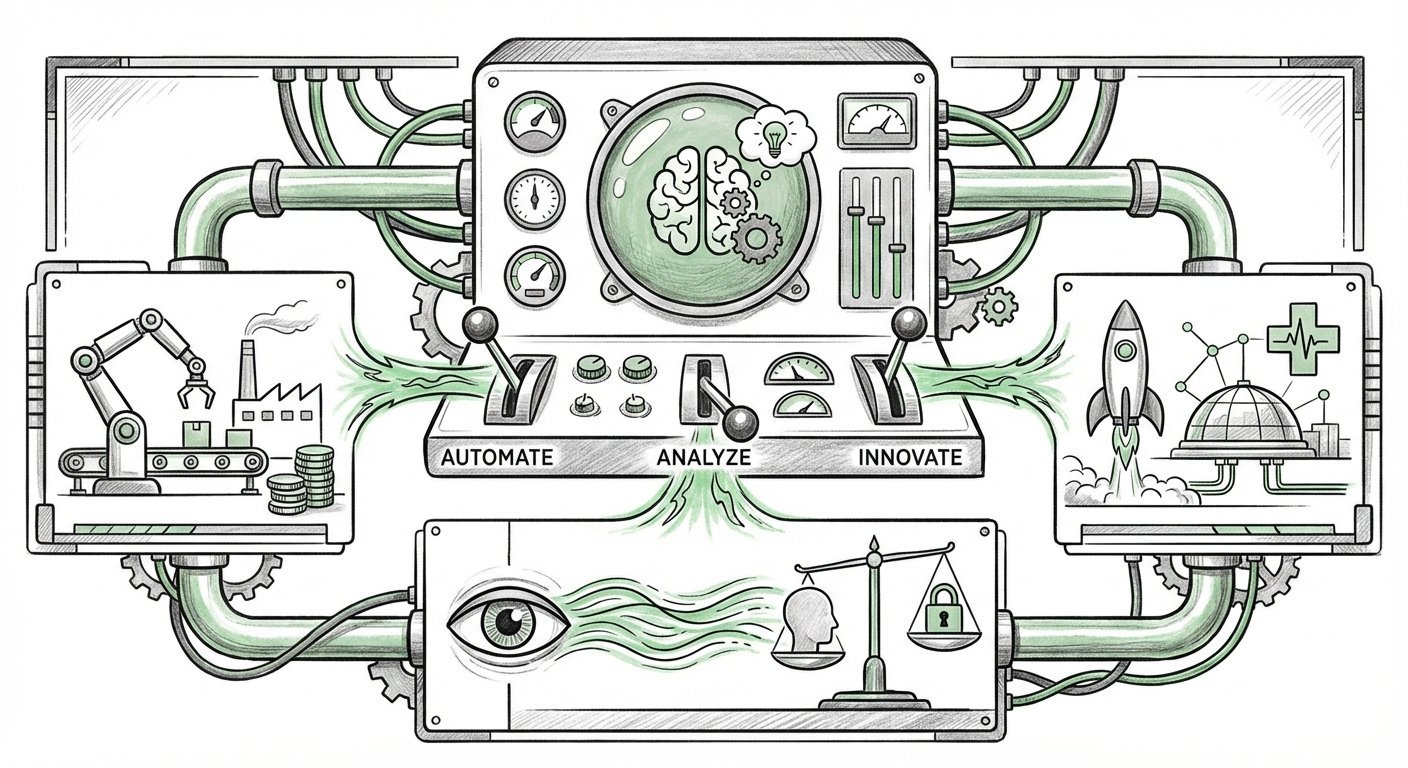
LifeVal and the Future of AI: What Happens When Machines Help Us Measure a Life Well Lived
Ask most people what artificial intelligence is good for, and you will hear the same answers: writing emails, sorting photos, answering questions, maybe driving a car. Those are all tasks. They are small, repeatable jobs with a clear right answer. But a new wave of AI thinking is aiming at something much bigger and much messier, the question of how a human life is going, and what might make it better.
The arrival of LifeVal points in exactly that direction. Even the name is a signal. It joins two words that rarely sit comfortably together in technology: life, which is complicated, personal, and hard to reduce to numbers, and value, which is exactly what software is good at producing, scores, rankings, estimates, and comparisons. When those two ideas meet inside an AI system, you get one of the most promising and most dangerous product categories of the next decade.
This article looks at what that combination means for the future of AI, what it means for businesses building or buying these tools, and what it means for the rest of us who will live inside the systems they create.
The Big Shift: AI Is Moving From Tasks to Judgment
For the past several years, the story of AI has been about capability. Can the model write code? Can it pass a test? Can it summarize a long document without making things up? Those questions are still important, but they are becoming old news. The harder question now is judgment. Can a system weigh competing values and help a person decide what actually matters?
That is a very different job. A task has a finish line. A judgment does not. Judgments involve trade-offs: time versus money, speed versus safety, honesty versus kindness, short-term gain versus long-term health. Software has historically avoided this territory because it is uncomfortable. Humans have avoided building it because the liability is scary.
AI changes the math. Large models can read enormous amounts of context, hold many factors in view at once, and explain their reasoning in plain language. Suddenly, "help me think through a hard personal decision" stops sounding like science fiction and starts sounding like a product. The category LifeVal belongs to is built on the idea that AI can be a mirror as well as a machine, something that reflects a person's situation back to them with more clarity than they could manage alone.
Why Measurement Is the Hidden Battleground
Here is the part people underestimate. The moment a system starts talking about a life, it has to decide what counts. What gets measured? What gets ignored? Who sets the weights?
This is where the real fight will happen, and it is not a technical fight. It is a values fight wearing technical clothing.
- What is included? Health, income, relationships, purpose, stress, time off, family proximity, community ties, every one of these is a choice, and every choice leaves something out.
- Who decides the weights? If a model quietly decides that career progress matters more than rest, that decision will shape the advice millions of people receive.
- Who can see the results? A score about a person's life is sensitive in a way that a credit score only hints at. It gets at identity, not just history.
The companies that get this right will win trust. The companies that get it wrong will find themselves in the same place social media landed, powerful, profitable, and widely distrusted for exactly the thing that made them powerful.
Three Trends Colliding in One Product Category
1. The Quantified Self Grows Up
For over a decade, people have tracked steps, sleep, heart rate, spending, and screen time. Most of that data sat in silos and did very little. Wearables collected it; dashboards displayed it; nobody acted on it. The missing piece was always interpretation.
AI is that missing piece. A model that can connect sleep to spending to mood to calendar density is doing something no single app could do. It is not just reporting numbers. It is drawing a line between them and saying, this pattern is the one that matters for you. That shift, from data collection to data interpretation, is what turns a fitness tracker into something closer to a life advisor.
2. Agents That Act, Not Just Advise
Advice is cheap. The next stage is action. AI agents can already book, cancel, schedule, negotiate, and follow up. When that capability is pointed at a person's wellbeing, the tool stops being a coach and starts being an operator. It might move a meeting, block off recovery time, or flag that a person has accepted too many commitments for the third week in a row.
This is where the stakes rise sharply. An advisor that is wrong wastes your time. An agent that is wrong wastes your money, your relationships, or your reputation. Trust has to be built in layers, with clear limits on what the system is allowed to touch without asking first.
3. Personal Context Becomes the Product
The most valuable data in the next era of AI will not be public web text. It will be private context: how you actually live. That makes privacy an engineering requirement rather than a legal checkbox. Systems that cannot keep personal data local, or that cannot explain what they know and forget what they should, will not survive serious scrutiny. The winning design will be the one that earns access to the most intimate data by needing the least of it.
The Risks Nobody Wants to Talk About
False Precision
A number feels true in a way a paragraph never does. Give someone a score of 72 out of 100 for their life, and they will believe it, and then start optimizing for it. That is the classic trap of measurement: the metric becomes the goal, and the real thing gets lost. Any AI that scores human wellbeing has to fight hard against its own authority.
Bias Wearing a Lab Coat
If a model learns from data about who tends to be happy, healthy, or successful, it inherits every imbalance in that data. It may quietly tell one group of people that their version of a good life is the wrong one. Bias in a hiring tool is bad. Bias in a tool that shapes how someone sees their own life is worse, because the user may never notice it.
The Responsibility Gap
When an AI suggests a major life change and a person follows it, who is accountable? The user, the builder, the trainer, the deployer? Regulators are still working this out. Until they do, the responsible move for builders is to design systems that inform and equip rather than direct and decide.
What This Means for Businesses
For companies, the lesson of this category is less about copying it and more about the pattern it reveals. The pattern is this: AI value is shifting from the general to the personal. Generic models are becoming a commodity. What is not a commodity is a system that understands one specific person, team, or customer deeply and helps them make better decisions.
That has practical consequences:
- Rethink your data strategy. Context about real behavior will matter more than scraped public text. Ask whether you are collecting the signals that actually explain outcomes.
- Design for trust first. Transparency, audit trails, and clear boundaries are not compliance chores. They are the product features that let customers say yes to deeper access.
- Keep humans in the loop on high-stakes calls. Health, finances, careers, and family decisions should route through a person, not around one.
- Measure the second-order effects. Track not just whether the tool was used, but whether users are better off. That is a harder metric and a much better one.
What It Means for Society
The deeper question is cultural. We already live in a world that rewards people for optimizing. More output, more progress, more visible achievement. A tool that measures life value could push that further, turning wellbeing into another scoreboard to climb.
Or it could do the opposite. Used well, this kind of AI could make invisible things visible: the cost of chronic overwork, the value of a slow afternoon, the way small choices compound over years. That would be genuinely new. Most technology has made life faster. Very little of it has made life clearer.
The deciding factor will not be the model. It will be the design choices made by the people building it, and the pressure applied by the people using it. If users demand explanation and push back on false precision, products will improve. If users accept a single number as the truth about their lives, they will get exactly the tool they deserve.
The Road Ahead
LifeVal sits at the front edge of a wave that is going to define the next phase of AI. The first phase was about what machines could do. The second is about what machines should help us decide. That is a harder problem, and a more meaningful one.
The winners in this space will not be the ones with the biggest models. They will be the ones who understand that a person's life is not a dataset to be optimized but a story to be supported, and who build systems humble enough to know the difference.
Watch this category closely. The tools that measure what matters tend to end up shaping what people chase. Getting that right is the most important design problem in AI today.