Muse Lands in Australia: What the World's First Personal AI Agent for Everyone Means for the Future of AI
On November 17, 2026, a product called Muse became available in Australia. It is being described as the world's first personal AI agent built for everyone. That sentence sounds like marketing, but it carries a lot of weight. It marks a shift from AI you talk to, to AI that acts for you.
For the past few years, most people have met artificial intelligence as a chat box. You type a question. It types back an answer. Then you go and do the actual work yourself. A personal AI agent breaks that pattern. Instead of answering, it takes on the task. It plans, it decides, and it follows through.
That difference sounds small. It is not. It changes who can use AI, what they use it for, and how much of daily work gets handed over to software. This article looks at what the Muse launch tells us about where AI is heading, and what businesses, workers, and everyday users should do about it.
What Actually Happened
The core facts are simple. Muse is now available in Australia. Its makers call it the world's first personal AI agent built for everyone. The phrase "for everyone" is doing a lot of work in that sentence, and it is worth unpacking.
Most serious AI tools today are built for people who already know what they are doing. They assume you can write a good prompt. They assume you understand tokens, context, and model limits. They assume you will check the output for errors. That is a narrow audience. It leaves out most of the world.
A product that claims to be "for everyone" is making a promise about a different kind of user. A small business owner with no technical staff. A student. A retiree managing paperwork. A nurse with ten minutes between appointments. These people do not want to learn how AI works. They want it to finish something.
Why "Agent" Is the Important Word
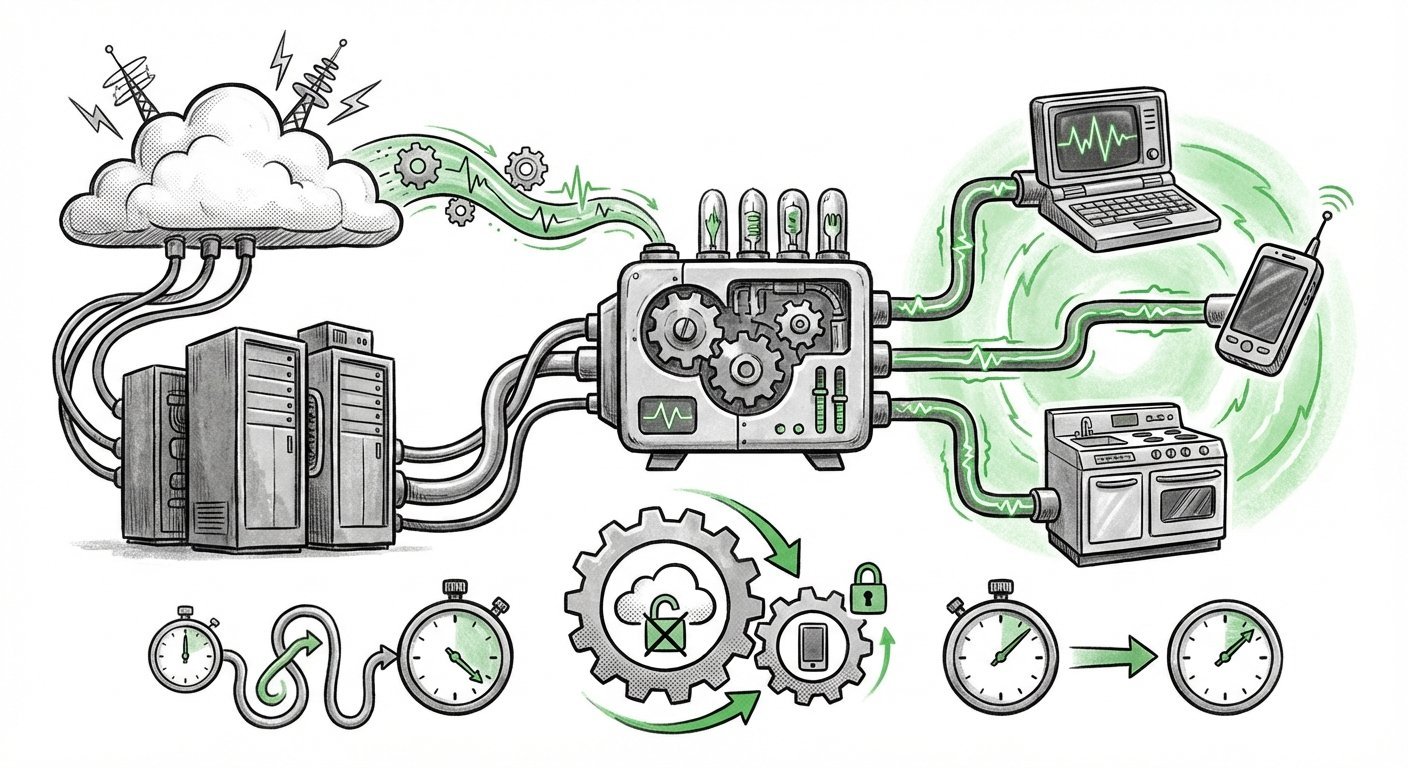
The move from chatbot to agent is the biggest change in consumer AI since the chat interface itself. Here is the difference in plain terms.
A chatbot is a helper that talks. You ask, it answers, you act.
An agent is a helper that does. You give it a goal, it works out the steps, and it carries them out.
That second model needs new things to work well. It needs memory, so it remembers what you told it last week. It needs permission controls, so it knows what it is allowed to touch. It needs judgement, so it knows when to stop and ask. And it needs to be trustworthy enough that people let it act without checking every move.
This is why the launch matters beyond Australia. Every major AI company is racing toward agents. The question has been when ordinary people, not just developers, would get one. Muse arriving in a major English-speaking market with a mainstream pitch is a signal that the race has moved from demos to daily use.
Why "for Everyone" Could Be the Real Story
Technology spreads in two stages. First it works. Then it becomes easy. The second stage is where the money and the social change happen.
Personal computers existed for years before they became something a family could set up in an afternoon. The internet existed for years before a shop owner could build a site without help. AI is at the same turning point. The models have been good enough for a while. What has been missing is a front door that a normal person can walk through.
If Muse delivers on that promise, the effects will show up fast in three places:
- Time. People offload small tasks, forms, scheduling, research, reminders, drafts, that eat hours across a week.
- Skill gaps. Someone who cannot write well can still send a clear message. Someone who is bad at spreadsheets can still get a clean summary.
- Confidence. The biggest barrier to AI use is not access. It is not knowing what to ask. An agent removes that barrier by asking you instead.
That last point is underrated. The killer feature of a personal agent may not be intelligence at all. It may be that you do not need to be good at prompting.
Why Australia First?
Launching in Australia is a deliberate choice, and there are sensible reasons a company might start there.
Australia is a large, wealthy, English-speaking market with high smartphone use and strong broadband. It is big enough to prove a product works at scale, but small enough to fix problems before entering the United States. Its time zone lets teams test changes overnight and review them the next morning. It is also a market where consumers are quick to adopt digital services but quick to complain when something feels wrong.
In other words, Australia makes a good testing ground. If a personal AI agent can win trust there, it can probably win it anywhere. For Australian users, that means early access, and early exposure to the rough edges that come with any first release.
What This Means for Businesses
For companies, a mainstream personal agent changes the baseline. Staff will arrive already used to delegating work to software. They will expect the tools at work to keep up.
That creates pressure in a few clear areas.
1. The bar for internal tools goes up
If an employee's personal agent can draft a report in two minutes, the clunky intranet that takes twenty clicks will feel broken. Expect rising frustration with slow internal systems, and rising demand for AI help inside work software.
2. Small businesses get leverage they never had
A sole trader cannot hire an assistant. A personal agent is the closest thing yet. For the millions of small firms that make up most employment in developed economies, this is genuine capability, not a novelty.
3. Customer expectations shift sideways
Customers who use an agent at home will expect faster, cleaner, more personalised service everywhere else. Companies that still make people repeat their details three times will feel old-fashioned very quickly.
4. Data rules become a board-level issue
An agent that acts on your behalf needs access to your calendar, your messages, your files. That is the price of usefulness. Any business adopting agent technology has to answer hard questions first: what can it see, what can it touch, and who checks its work?
5. The middle layer of work gets squeezed
Agents are best at tasks that are clear, repeatable, and mostly digital. That describes a lot of administrative, research, and coordination work. Firms should map which roles are mostly "hand this to someone" and plan for what changes when that someone is software.
What This Means for Society and Work
The honest answer is that we do not know yet, and anyone who says otherwise is guessing. But we can name the pressures.
Good news first. Personal agents could widen access. A person with a disability, a language barrier, or low digital confidence gets a tool that meets them where they are. That is a real gain, and it is the kind of gain that rarely gets headlines.
The harder news. Delegation is habit-forming. Once people trust an agent to handle email, scheduling, and paperwork, they stop practising those skills. That is fine for most tasks. It matters for judgement. If an agent makes a bad call, books the wrong flight, sends the wrong file, misreads a contract, the human has to catch it. Catching it requires staying sharp.
And the trust question. Agents act. That means mistakes have consequences that a chatbot's mistakes never did. Expect regulators to pay close attention to how personal agents handle consent, disclosure, and liability. Expect users to learn the hard way that "it did it for me" is not a defence.
The Risks Worth Watching
- Over-permission. People grant access fast and revoke it slowly. An agent with broad reach is a broad risk.
- Silent errors. An agent that fails loudly is safe. One that fails quietly is dangerous.
- Lock-in. A personal agent that learns you deeply is hard to leave. That is a business advantage and a consumer trap.
- Uneven benefit. If agents are cheap and easy, they help everyone. If the best ones sit behind subscriptions, they widen the gap.
- Accountability gaps. When an agent acts on your behalf, who is responsible for the outcome? The answer is still being written.
Actionable Insights
For individuals: Try the tool for low-stakes tasks first. Give it narrow permissions and widen them slowly. Keep a habit of checking anything that involves money, contracts, or other people's data.
For small business owners: Pick three repeatable tasks this month, quotes, invoices, follow-up emails, and test whether an agent can handle them end to end. Measure the time saved before you commit to a subscription.
For large organisations: Write an agent policy before you pilot one. Cover what data agents may access, which actions need human sign-off, and how errors get logged. Pair it with a simple rule: any action that cannot be undone needs a human in the loop.
For teams: Treat agent output the way you treat a new colleague's work, useful, but checked until trust is earned. Build review steps into the workflow instead of bolting them on after something breaks.
For leaders: Watch the consumer market closely. What people adopt at home shapes what they expect at work, usually within a year.
The Bigger Picture
The launch of a personal AI agent in Australia is not a world-changing event on its own. It is a marker. It says the industry believes AI is ready for people who are not enthusiasts, people who will judge it only by whether their day got easier.
That is a harder test than any benchmark. Chatbots can impress with clever answers. Agents are judged by results. If Muse passes that test at scale, the next few years will look very different from the last few. Software will stop waiting to be asked and start getting things done.
The winners will not be the people with the smartest AI. They will be the people who learned what to hand over, what to keep, and how to check the difference.