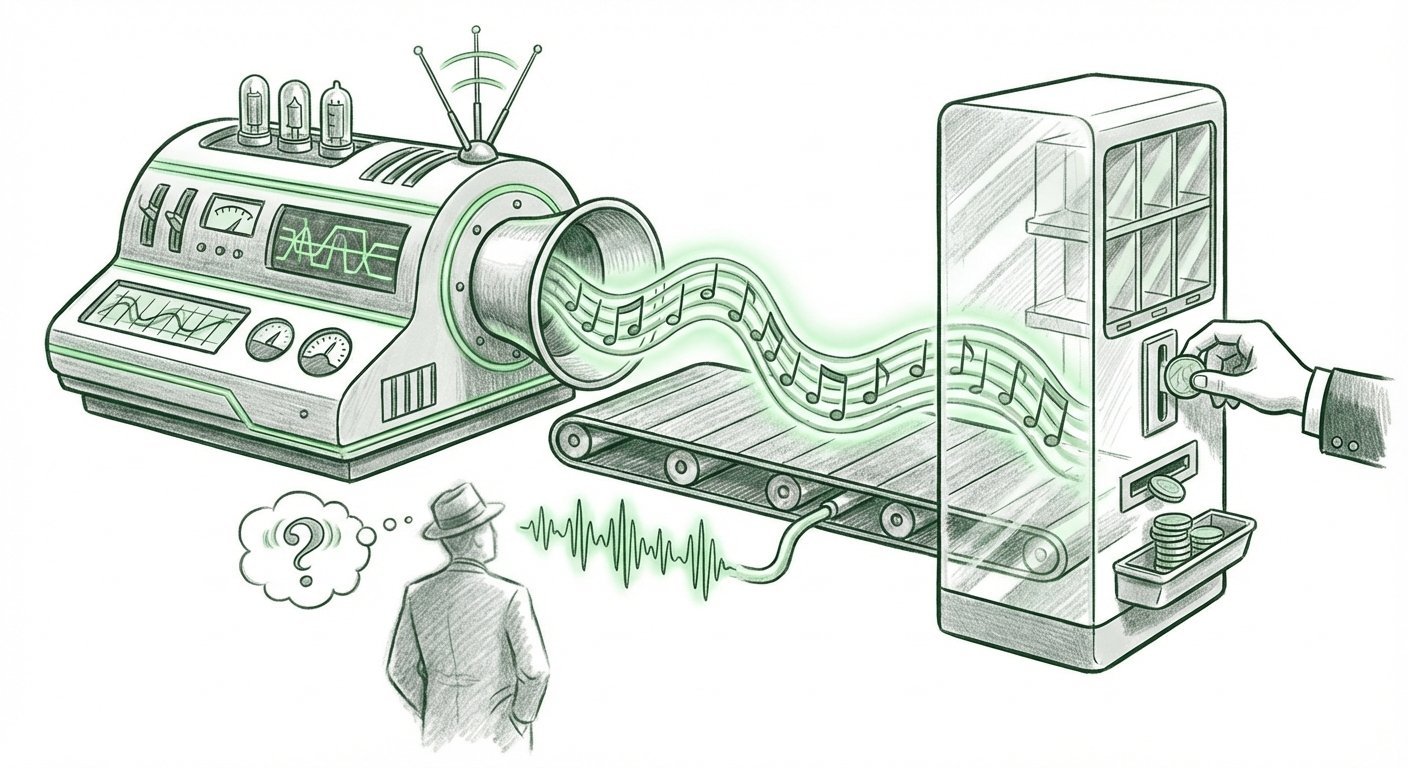
Quantum Computers Are Getting Too Powerful to Check, And That Changes Everything for AI
Here is a strange problem that almost nobody outside the lab saw coming. For years, the big question about quantum computers was simple: can we build one that works? Now a harder question is taking its place: once one works really well, how do we know it actually did what it says it did?
That is the puzzle behind a wave of new scientific work on quantum verification. The short version: quantum machines are crossing a line where ordinary computers can no longer keep up. And when a machine gets faster than anything that can double-check it, trust becomes the bottleneck, not speed.
This is not a small technical footnote. It is a turning point. It affects how quantum computing gets sold, regulated, insured and, most importantly for our purposes, how it eventually plugs into artificial intelligence. If you run a business that will one day rent time on a quantum machine, or a team building AI on top of one, the question "how do we verify this?" is about to land on your desk.
The Checking Problem, Explained Simply
Normal computers are easy to trust because we can copy their work. If a laptop claims it added two giant numbers, another laptop can redo the math and confirm it. The second machine is not slower in any way that matters. Verification is cheap.
Quantum computers break that habit. They explore many possible answers at once and lean on interference to push the right answer to the front. The result comes from a process that has no simple step-by-step replay. You cannot just "run it again on a normal computer" once the problem gets big enough, because the normal computer would need more time than the universe has.
So we end up in an awkward spot. The machine produces an answer. It might be brilliant. It might be noise wearing a lab coat. And the tool we would normally use to tell the difference has run out of road.
Why "Just Run It Twice" Doesn't Work
A common instinct is to check that the machine gives the same answer twice. That helps catch random glitches, but it does not prove correctness. A machine with a subtle, repeatable flaw will happily give you the same wrong answer every time. Consistency is not the same as truth.
The other instinct is to trust the vendor. That works right up until real money, real medicine or real security decisions depend on the output. At that point, "trust us" stops being an acceptable answer for regulators, auditors or customers.
What the Solution Actually Looks Like
The new direction in the field is not about building a bigger classical computer to referee the match. It is about designing clever checks that need far less power than the calculation itself. The core idea is to make the quantum computer prove its work, in small pieces, in ways a modest classical machine can confirm.
Three approaches tend to show up in this kind of research:
- Spot-checkable structure. Design problems so the answer contains built-in clues. A small sample of the output can reveal whether the whole thing is sound, the way a few random pages can reveal whether a whole ledger is fake.
- Interactive proof. The quantum machine and a classical verifier go back and forth in a short conversation. The verifier asks tricky questions. A machine that actually did the work can answer them; a machine that guessed cannot, at least not reliably.
- Cross-checks between machines. Run the same task on different quantum hardware or different algorithms. If independent systems agree in ways that are statistically unlikely by chance, confidence goes up sharply, even without a classical simulation to compare against.
None of these is a magic wand. Each has limits, and each adds overhead. But together they point at the real shift: verification is becoming a design requirement, not an afterthought. The teams that build checking into their quantum stack from day one will be the ones who can actually sell results to the outside world.
Why This Is an AI Story, Not Just a Physics Story
At first glance this looks like a problem for physicists. It is not. Here is why it matters to anyone working in AI.
1. AI Is the Most Likely First Customer
Quantum hardware is expensive, fiddly and scarce. The workloads that justify the cost tend to be simulation, optimization and sampling, all of which sit close to modern machine learning. Hybrid systems, where a classical AI model hands a hard sub-problem to a quantum processor and takes back an answer, are one of the most practical paths to real use.
But a hybrid system is only as good as its weakest link. If the AI model cannot tell whether the quantum answer is trustworthy, the whole pipeline inherits the uncertainty. Verification is what turns a quantum coprocessor from a science experiment into a component you can put in production.
2. Trust Is the Currency of AI Right Now
We are living through a loud, messy argument about whether AI outputs can be trusted. Quantum adds a new chapter to the same book. Both fields are wrestling with the same fundamental issue: systems that are powerful, opaque, and hard to audit.
The verification techniques being developed for quantum machines, sampling, spot checks, adversarial questioning, independent agreement, rhyme closely with how people are trying to audit large AI models today. Expect the two conversations to merge. A company that gets good at verifying opaque systems will have an advantage in both worlds.
3. Verification Becomes a Product
Once outputs need proof, proof becomes something you sell. Think of the industries that grew up around financial auditing or food safety certification. Quantum verification is likely to follow a similar path: independent checking services, certified benchmark suites, and insurance products that only exist because someone can put a number on confidence.
Practical Implications for Businesses
Most companies are years away from running quantum workloads in production. That does not mean this is someone else's problem. Three things are worth doing now.
Start Asking Vendors the Awkward Question
When a quantum provider shows you a benchmark, ask how that benchmark was verified and by whom. "Our machine produced this result" is not the same as "this result has been independently confirmed." The gap between those two sentences is where risk lives. Vendors who have a clear answer will pull ahead; vendors who do not will get filtered out.
Treat Quantum Output Like Any Other Unverified Input
Your data pipeline probably already has rules for dirty data. Extend them. Any quantum-derived number entering a model, a forecast or a decision should carry a confidence flag and a note on how it was checked. This sounds bureaucratic. It is actually the difference between pilot projects that scale and pilot projects that die in review.
Watch the Cost of Checking, Not Just the Speed of Computing
Headline numbers about quantum speed get all the attention. The number that will decide commercial viability is the ratio of verification cost to computation cost. If checking a result takes nearly as long as getting it, the advantage shrinks fast. Solutions that keep that ratio low are the ones that will actually get deployed.
The Bigger Picture: A New Kind of Trust Problem
For most of computing history, we have lived in a comfortable world where any computation could, in principle, be repeated and checked by someone else. That comfort is quietly ending, not just with quantum computers, but with the most advanced AI systems too.
Both technologies are moving into a zone where the output is easier to produce than to explain, and easier to explain than to independently prove. Society has not yet built the institutions for that. We have auditors for money and inspectors for food. We do not yet have a mature profession for "checking the machines that are too complex to check."
The research on quantum verification is an early, concrete step toward building those institutions. It says something important: instead of accepting that powerful systems must be trusted on faith, we can design the systems so they can prove themselves. That is a design choice, and it is one we should make deliberately rather than by accident.
What to Do Next: Actionable Takeaways
- For technical leaders: Add "how would we verify this?" to every quantum and frontier-AI evaluation. If the answer is vague, that is a finding, not a formality.
- For business leaders: Include verification costs in your quantum business cases. A result you cannot defend is not an asset.
- For product teams: Design for confidence scores, not just answers. Users trust systems that admit uncertainty far more than systems that pretend to be certain.
- For investors: Look beyond qubit counts. Verification tooling, benchmarking and auditing are likely to be undersupplied markets for years.
- For everyone else: Expect to hear the phrase "trust, but verify" a lot more in technology over the next few years. It is becoming literal.
Conclusion
The headline news is that quantum computers are getting too powerful to check. The real story is what the response tells us about where computing is heading. Rather than slowing down, the field is building proof into the machine itself, small checks, clever questions, independent agreement, so that power and trust can grow together.
For AI, this is a preview. We are heading into a decade where the most valuable systems will be the ones that are not only capable, but demonstrably correct. The teams that figure out verification early will not just build better quantum computers or better models. They will be the ones other companies are willing to buy from.