SFX v3 Lands in ElevenCreative and ElevenAPI: Why AI Sound Effects Are the Next Big Shift in Content Creation
Most of the conversation about generative AI has been about what we can see. Text, images, video, that is where the attention, the funding, and the headlines have gone. Sound has quietly sat in the corner. That is starting to change, and a small announcement in late October 2026 makes the shift easier to see.
SFX v3 is now available in ElevenCreative and ElevenAPI. That is the headline. A third-generation sound-effects system has moved into both the company's creative studio for makers and its developer platform for builders. On paper, it reads like a routine version bump. In practice, it is a useful marker of something bigger: audio generation is maturing into infrastructure, and it is arriving on two fronts at once, the people who make content by hand, and the software that makes content automatically.
What Actually Happened Here
The release puts the same sound-effects engine in front of two very different audiences at the same time. ElevenCreative is the hands-on surface. It is where a video editor, a game designer, a podcaster, or a social media producer sits down and asks for a sound, a door slamming, rain on a tin roof, a crowd murmur, a sci-fi door whoosh, and gets one back without opening a stock library or hiring a Foley artist.
ElevenAPI is the other half. It is where that same capability becomes a building block. Developers can wire sound generation directly into their own apps, pipelines, and products. A video editing tool can add sound suggestions. A game engine can generate ambience on the fly. A learning platform can score a lesson without touching a music library.
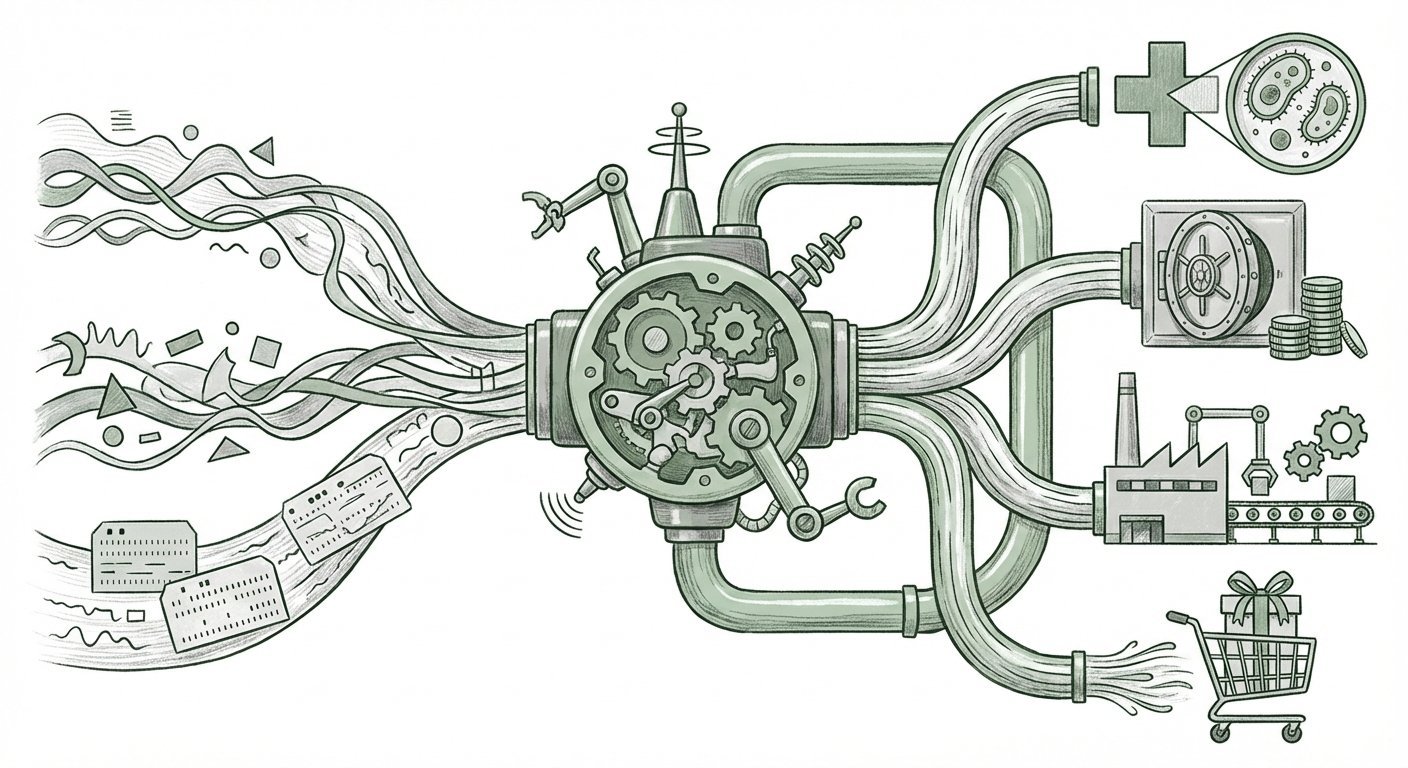
The interesting part is not the version number. It is the delivery pattern. When a capability shows up in a creator tool and a developer API in the same breath, it usually means the company sees it as both a product and a platform primitive. That is the moment a technology stops being a novelty and starts being plumbing.
Why Sound Was the Missing Piece
Think about how most AI-generated video looks today. It is often visually impressive and emotionally flat. That flatness is rarely a visual problem. It is a sound problem. Humans are wired to notice audio. A scene with the wrong room tone, the wrong footsteps, or no ambience at all feels fake, even when the viewer cannot say why.
Professional productions have always solved this with layers of work: foley artists, sound designers, stock libraries, and hours of editing. That work is expensive and slow. It is also the first thing to get cut when a budget shrinks or a deadline moves. Small teams and solo creators almost never get to do it properly.
Generative sound effects attack that gap directly. Instead of searching a library of thousands of pre-recorded clips and hoping one fits, a creator describes what they need and gets a match. The cost of trying a sound drops to almost nothing. That changes behavior. When each attempt is free, people experiment. When people experiment, quality goes up, not because the model is perfect, but because the creator can iterate.
The speed problem nobody talks about
Search is slow in a way that is easy to miss. Finding the right clip means guessing the right keywords, auditioning results, checking licenses, and often settling for something close enough. Anyone who has spent an afternoon hunting for a single doorbell sound knows the pain. Description-based generation collapses that loop. You write what you hear in your head, and you get a version of it back. That is a workflow change, not just a feature.
The API Side Is Where the Real Leverage Lives
Creator tools get the attention. APIs get the scale.
When sound generation becomes an API call, it stops being a destination and becomes an ingredient. That matters for a few reasons:
- It becomes automatable. A pipeline can generate audio for a thousand videos a night without a human in the loop. That is what makes personalized, high-volume content economically possible.
- It becomes composable. Teams can combine sound generation with voice, music, translation, and video to build products that none of those pieces could support alone.
- It becomes measurable. Developers can test, version, and swap models the same way they handle any other dependency, which is how a creative capability earns trust inside an engineering organization.
The release of SFX v3 in ElevenAPI signals that the company expects sound to be requested by machines, not just by people. That is the difference between a feature and a foundation.
Practical Implications for Businesses
Media and marketing
Ad teams produce enormous volumes of short-form video. Sound design is usually the bottleneck at the end of the process, when everyone is tired and the deadline is close. On-demand sound effects compress that final stretch. The bigger win is versioning: the same ad can be re-scored for different markets, moods, or platforms in minutes.
Games and interactive media
Game audio is notoriously expensive because it must respond to player behavior. Procedural, generated sound opens the door to environments that sound different every time you enter them. For indie studios with small budgets, that is a genuine competitive shift.
Learning and training
Educational content is chronically under-produced. A training video with clean audio cues, a chime on a correct answer, a soft click on a transition, feels dramatically more professional. Most organizations skip this because it is not worth the cost. That math changes when sound is a line of code.
Accessibility and localization
Audio cues help people who learn better by hearing and support accessibility features in apps. Generating them per language or per region is far easier than licensing a global library. Localization stops being an audio problem and becomes a configuration step.
The Honest Caveats
It would be irresponsible to pretend this is solved. Three issues deserve real attention.
Quality control is still on you. Generated audio can sound convincing in isolation and wrong in context. A convincing explosion is useless if it does not match the visual scale of the scene. Human judgment does not disappear, it moves later in the process, to selection and mixing.
Rights and provenance are unsettled. The legal picture around generated audio is still being written. Businesses should keep records of how audio was produced and where it was used, especially for anything customer-facing or broadcast.
Sameness is a real risk. When everyone has access to the same engine, the default sound of content can flatten. The teams that stand out will be the ones that push past the obvious prompts and treat generation as a starting point, not a finish line.
What This Means for the Future of AI
The SFX v3 release points to a pattern that will define the next few years: modalities converging into single, multimodal production pipelines. Text, voice, music, sound, image, and video are no longer separate industries with separate tools. They are becoming parts of one workflow, accessed through one interface and one API key.
That has two consequences worth planning for.
First, the job changes shape. The scarce skill is no longer execution, anyone can generate a sound. The scarce skill is taste and direction: knowing what a scene needs, understanding pacing and tone, and having the judgment to reject the seventh version. Creative roles will look more like editing and less like manufacturing.
Second, the barrier to professional-grade output keeps falling. A two-person team can now produce work that would have needed a small studio a few years ago. That is good news for small businesses and independent creators, and a real pressure on middle-tier agencies whose main value was production capacity.
There is also a quieter implication. Once audio is generated on demand, the amount of audio in the world goes up sharply. Interfaces will need better sound design discipline, not less. Otherwise we get apps that chirp, ding, and whoosh at every tap. The tools are getting smarter; the standards still have to be set by people.
Actionable Takeaways
- Try it before you need it. Spend an hour in ElevenCreative on a real project, not a demo. You will learn the prompt language faster than any tutorial can teach you.
- Audit your audio costs. If you spend money or hours on stock libraries or freelance sound work, estimate what portion could be generated instead. Start with the low-stakes 20 percent.
- If you build software, prototype the API. A single afternoon integrating ElevenAPI will tell you more about fit than a spec sheet will.
- Set a review step now. Decide who signs off on generated audio before it ships. Quality and rights checks are easier to add at the start than to retrofit later.
- Keep a prompt library. Save the descriptions that work. It becomes an internal asset that compounds over time.
The Bottom Line
SFX v3 arriving in both ElevenCreative and ElevenAPI is not a dramatic announcement. It is a directional one. It says that AI sound generation is done being a demo and is ready to be infrastructure, available to the person at the edit bay and the developer in the code editor at the same moment.
The visual side of generative AI got the first wave of excitement. The audio side may end up being where the practical value lands, because sound is the layer that makes content feel real, and because there is far less of it to go around. The tools are here. What happens next depends on what people decide to build with them.