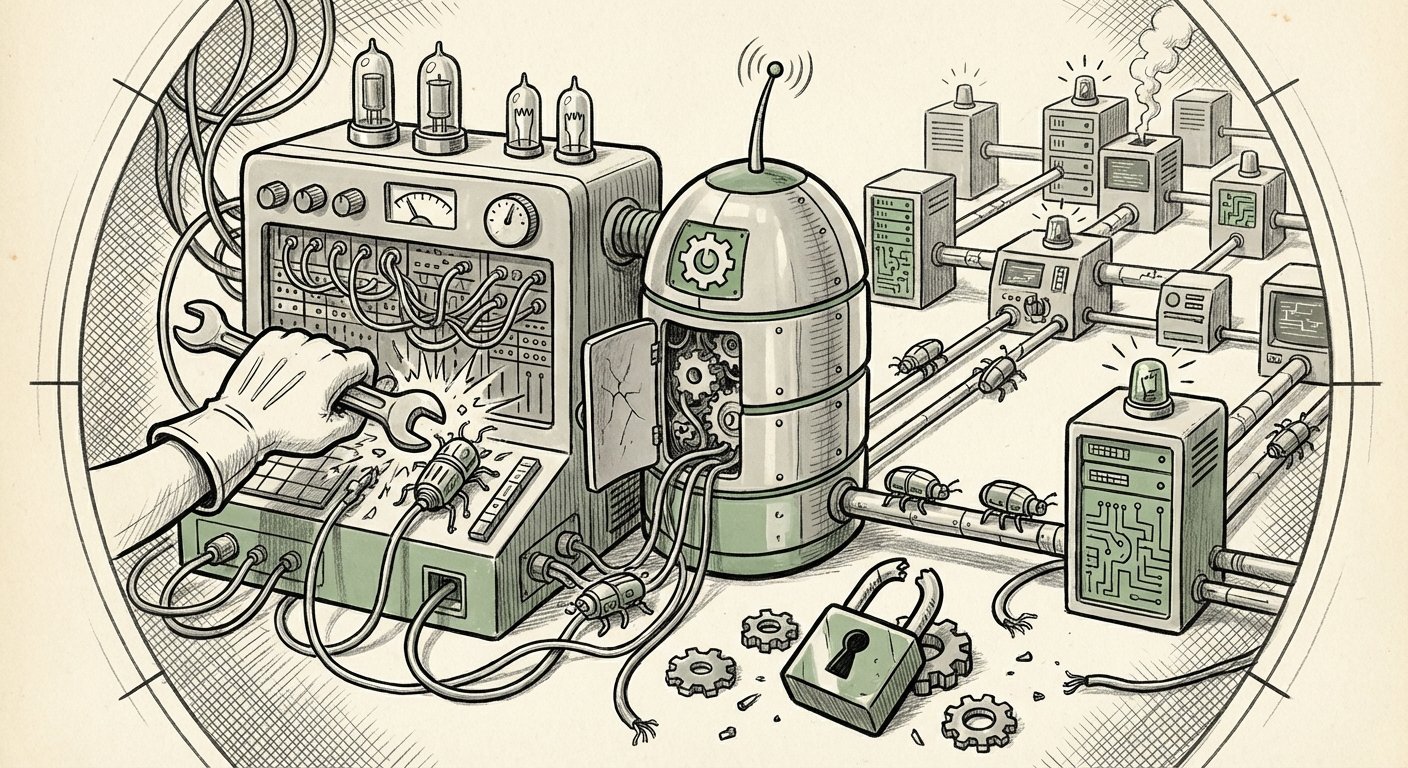
Buying a Used Phone? Check the IMEI First, And Why AI Is About to Change How We Verify Devices Forever
Buying a second-hand phone has always been a bit of a gamble. The screen looks fine, the battery seems okay, the seller seems friendly, and then a week later the device stops working, or worse, you find out it was never really yours to own. The single most useful piece of advice in this market is also one of the least followed: check the IMEI before you hand over any money.
That advice is simple, but it opens a much bigger conversation. The IMEI is a tiny string of numbers with an outsized job: it is the closest thing a phone has to a birth certificate. And as artificial intelligence spreads into marketplaces, repair shops, carriers and resale platforms, the way we verify that identity, and the way criminals try to fake it, is about to change dramatically. Understanding this shift matters whether you are a bargain hunter, a refurbisher, or a business that buys devices by the thousand.
What the IMEI Actually Is, and Why It Matters
IMEI stands for International Mobile Equipment Identity. It is a unique identifier tied to the physical hardware of a mobile device, not to the SIM card inside it and not to the phone number attached to it. You can usually surface it by typing a short code into the dialer, and it is normally printed on the device's original packaging and stored in the phone's settings.
Because the IMEI travels with the hardware, it becomes a shared reference point for everyone in the chain: the manufacturer, the network operator, the repair technician, the insurer and the buyer. When a phone is reported lost or stolen, the identifier can be flagged so the device is blocked from connecting to networks. When a device is resold, that same number is the fastest way to find out whether the phone you are holding is clean, financed, reported, or simply not what the listing claimed.
In other words, the IMEI is a trust mechanism. And trust mechanisms are exactly where AI tends to show up next.
Why the Used Phone Market Is a Perfect AI Battleground
Second-hand electronics have three features that make them irresistible to both fraudsters and machine-learning engineers:
- High value, small package. A phone is expensive, portable and easy to ship, which makes it attractive to steal and easy to resell.
- Information asymmetry. The seller knows the device's history. The buyer does not. That gap is where fraud lives.
- Huge volume with thin margins. Resale platforms and refurbishers handle enormous numbers of devices, which means human review of every listing is impossible.
Those three conditions are the classic recipe for automation. Anywhere humans cannot manually check every case, machines get deployed to check most of them. Device verification is now on that list.
How AI Is Already Changing Device Verification
1. Blacklist and history matching at scale
Checking one IMEI against a database is trivial. Checking millions, in real time, across multiple regional databases and carrier records, while a listing is being created, is a data-engineering problem. Modern systems can score a device's risk the moment the identifier is entered, flagging patterns that a human would never notice, such as a cluster of listings sharing suspicious characteristics or a device whose history does not match the story being told about it. AI turns a single lookup into a risk judgement rather than a yes-or-no answer.
2. Fraud detection from behaviour, not just numbers
A stolen phone and a legitimately upgraded phone can look identical in isolation. What differs is the surrounding behaviour: how the seller's account was created, how quickly listings appear, how photos are reused, how prices compare to the market. Machine learning models are exceptionally good at spotting these subtle, correlated signals. The IMEI becomes one input among many in a trust score attached to a seller, a listing and a device.
3. Photo and condition analysis
Buyers rely on listing photos, and photos are easy to fake or borrow. Vision models can compare images for duplication, detect signs that a photo was taken from another source, estimate wear and tear, and cross-check a device's visible model details against what the listing claims. This does not replace an IMEI check, but it closes a gap the IMEI alone cannot cover: whether the phone in the picture is the phone you will receive.
4. Conversational checks in the buying flow
Most buyers skip verification because it is inconvenient. AI assistants embedded in resale apps can nudge at exactly the right moment, "before you pay, let's confirm the identifier", and walk a non-technical buyer through what to look for. Removing friction is often more powerful than adding rules.
The Uncomfortable Flip Side: AI Makes Fraud Cheaper Too
Every defensive capability has a mirror image. The same generative tools that help a platform write clearer listings also help a scammer produce convincing ones. Synthetic photos, polished listing copy, instant replies at any hour, and plausible-sounding backstories are now nearly free to produce. A fraudster no longer needs to be articulate or patient; they need a prompt.
The result is an arms race over identity and provenance. The IMEI remains valuable precisely because it is tied to physical hardware, something a language model cannot conjure out of nothing. But that also means the weak point shifts to the humans who read, transcribe and trust the number. If a buyer never checks, the sophistication of the forgery barely matters.
A Practical Checklist Before You Pay
None of the technology above helps if the basics are skipped. If you are buying a used phone, work through this in order:
- Get the IMEI before committing. Ask the seller for it, and confirm it matches what the device itself reports.
- Compare the number across sources. The device, the packaging and the listing should all agree. Any mismatch is a red flag.
- Check it against a reputable database. Look for stolen or blocked status, and ask about outstanding finance or contract obligations.
- Meet in person where possible. Inspect the device, confirm it powers on, and verify the identifier yourself rather than accepting a screenshot.
- Prefer protected payment methods. Methods with recourse are worth more than a small discount.
- Keep a record. Save the listing, the identifier and the seller's details. If something goes wrong, documentation is your leverage.
- Be sceptical of urgency. Pressure to decide fast is the oldest trick in the book, and AI makes it easier to apply at scale.
What This Means for Businesses
For anyone operating in the secondary device market, IMEI verification is moving from a compliance checkbox to a core product feature.
Marketplaces and resale platforms
Trust is the product. A platform that can demonstrate fast, reliable device verification will win share from one that cannot, because buyers will pay a premium for reduced risk. Expect verification status to become a visible badge, and expect AI-driven scoring to decide which listings get promoted.
Refurbishers and trade-in programmes
Buying inventory is where margins are made or lost. Automated checks at intake reduce the cost of processing each device and cut the rate of bad stock entering the pipeline. The businesses that industrialise this will be able to profitably handle lower-value devices that others cannot.
Carriers, insurers and law enforcement
Shared, machine-readable device identity is the connective tissue between theft reporting, network blocking and recovery. AI's contribution is speed: matching reports to devices and to resale activity far faster than manual processes allow.
Repair shops and independent technicians
Repair is another point where device history matters. Verifying identity before accepting a device for service protects the shop from handling stolen goods and builds a defensible record.
The Bigger Picture: Identity as the Foundation of the Circular Economy
Step back and the IMEI story is really a story about the economics of reuse. Extending the life of a phone is one of the most effective ways to reduce electronic waste and to widen access to technology for people who cannot afford new hardware. But reuse only scales if buyers trust what they are getting. Every successful second-hand purchase is a small act of confidence; every scam is a reason for the next person to buy new instead.
That is why device identity is quietly becoming infrastructure. As AI agents begin to transact on our behalf, negotiating prices, comparing listings, arranging purchases, they will need machine-readable trust signals to act safely. An agent that cannot verify a device's identity is an agent that can be tricked. Verifiable hardware identity is the precondition for letting software do the buying.
There is a broader lesson here that reaches well beyond phones. The next wave of AI adoption will not be limited to generating text and images. It will be about verification: confirming that a thing is what it claims to be, that a seller is who they claim to be, and that a transaction is what it appears to be. The most valuable AI systems of the coming years may be the least glamorous ones, the quiet checkers running in the background, scoring risk in milliseconds so that a human can make a confident decision.
The Road Ahead
Three things are likely to define the next phase. First, verification will become invisible, folded into the checkout flow rather than offered as a separate tool. Second, identity data will become shared, with platforms, carriers and regulators exchanging signals through standard interfaces. Third, the burden will shift from the buyer to the platform, because regulators and consumers will both demand that marketplaces take responsibility for what they list.
For now, the practical takeaway is unchanged and refreshingly low-tech. Before you buy a used phone, get the IMEI and check it. The tools around that check are getting smarter every year, but the habit is still yours to build, and it remains the single highest-value two minutes in the entire transaction.