AI and Data Science Salaries in 2026: What Practitioners Are Actually Earning
For the past few years, the story about AI pay has been simple. Demand went up. Salaries followed. Everyone with a machine learning line on their resume got a raise, and companies fought each other with offers.
That story is over. Not because the money dried up, but because it stopped being spread evenly. In 2026, the AI job market is not one market. It is several, and they behave in very different ways.
Some people are earning more than ever. Some are earning less than they expected. And a large group in the middle is discovering that "working with AI" is no longer a rare skill worth a big premium on its own. What matters now is which part of AI work you actually do.
Here is what practitioners are seeing in their paychecks, why the pattern looks this way, and what it means for the next few years of the field.
The Big Split: Pay Has Fragmented, Not Grown Evenly
The clearest trend of 2026 is a widening gap. Pay at the top of the field keeps climbing. Pay in the middle has flattened. And entry-level pay has come under pressure.
This is the opposite of what many people expected. The usual assumption was that as AI tools got better, everyone in the field would become more productive, and that productivity would turn into higher pay across the board.
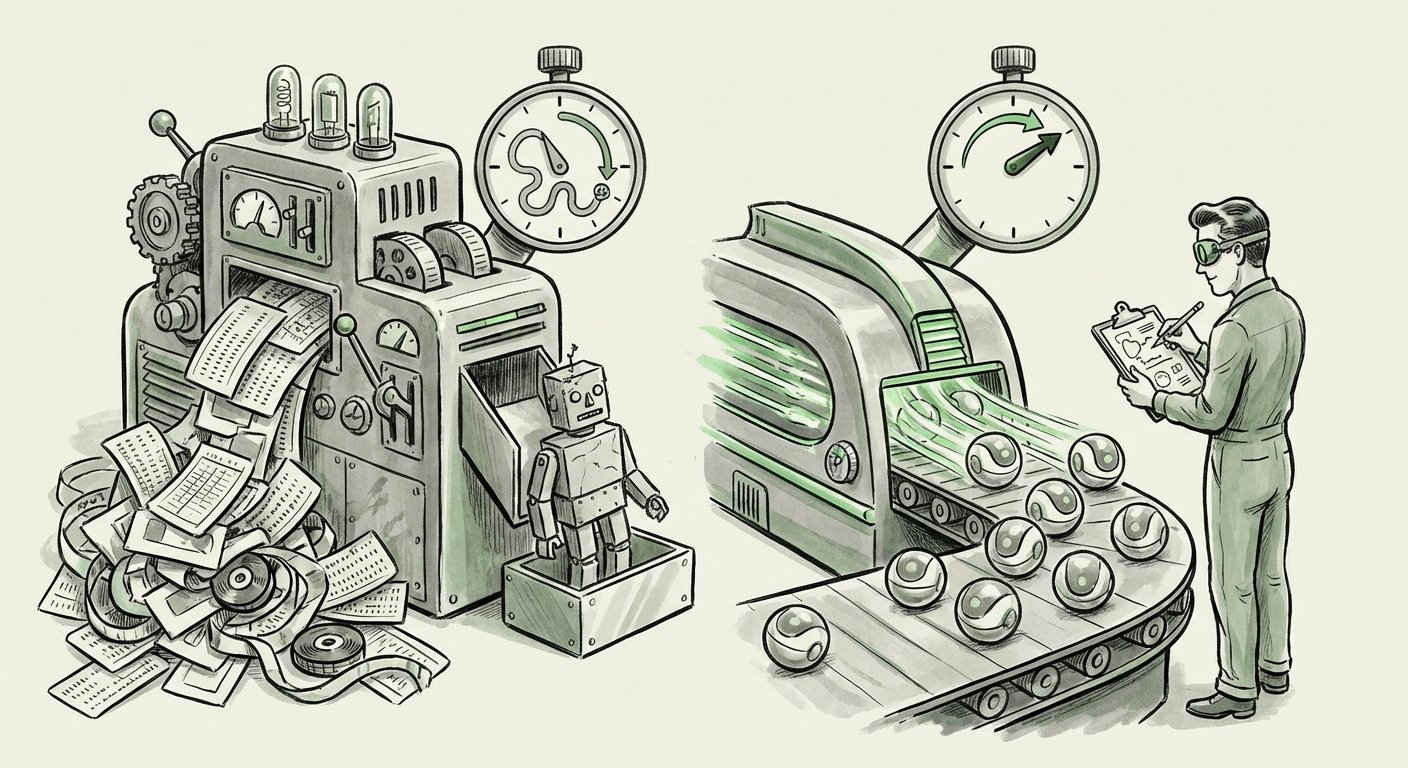
That is not what happened. Instead, the tools raised the floor. A single engineer can now do work that used to take a small team. When one person can do more, companies need fewer people to reach the same output. And when a role becomes easier to fill, the price of filling it tends to drop.
What stays expensive is the work the tools cannot do well. That is where the top of the market lives.
Who Is Earning the Most, and Why
If you look at where compensation is strongest in 2026, four kinds of people stand out.
1. People Who Can Prove Results, Not Just Build Models
The highest earners are generally not the people who train the biggest models. They are the people who can connect a model to a business outcome and prove the link with numbers.
Companies have spent years funding AI projects that looked impressive in a demo and did nothing for the bottom line. Leadership teams have learned to ask harder questions. The practitioners who can answer them, who can show cost saved, revenue gained, or errors caught, are the ones getting the strongest offers.
In practical terms, this means the job has shifted toward measurement. It is less about the cleverness of the architecture and more about whether the system works reliably in production, month after month, at a cost the business can live with.
2. People Who Own Reliability and Evaluation
Two roles that barely existed as career tracks a few years ago are now among the most valuable: evaluation and reliability engineering for AI systems.
The reason is straightforward. AI systems fail in strange ways. They drift. They hallucinate. They break quietly when an upstream data source changes. Someone has to build the guardrails, the test suites, and the monitoring that catches these problems before customers do.
That work is hard, unglamorous, and in very short supply. Hard, unglamorous, short-supply work is exactly what gets paid well.
3. Deep Specialists in One Narrow Area
Generalists are plentiful. Specialists are not. The strongest premiums in 2026 go to people with real depth in a specific slice of the field, retrieval systems, model efficiency and cost control, speech, computer vision in industrial settings, or privacy-preserving data work.
The pattern here is that depth beats breadth at the top of the market. A person who has shipped one type of system many times is worth more than someone who has read about many types of systems once.
4. People With Domain Knowledge Outside Tech
One of the most consistent findings from the current market is the value of pairing AI skills with a second field. Healthcare, insurance, logistics, manufacturing, energy, public sector, each has rules, data quirks, and failure modes that take years to learn.
A data scientist who genuinely understands clinical workflows, or a machine learning engineer who understands grid operations, is far harder to replace than one who only understands models. That scarcity shows up directly in pay.
The Squeeze in the Middle and at the Entry Level
The harder story of 2026 is what is happening to people earlier in their careers.
Entry-level data work has been hit hardest. The tasks that used to train junior analysts, cleaning data, writing routine queries, building basic dashboards, drafting reports, are now the tasks AI tools handle best. That removes the learning ladder that used to exist.
The result is a strange paradox. Companies say they want more AI talent. But they are hiring fewer people at the bottom of the ladder, and expecting those they do hire to arrive with skills that used to take two or three years to build.
For mid-level practitioners, the pressure is different. The risk is not losing the job. It is being paid like a generalist while being asked to do specialist work. Roles with titles like "data scientist" now cover a very wide range of actual responsibility, and pay has started to follow the responsibility rather than the title.
Geography and Remote Work Have Rewired the Numbers
Location still matters, but less than it used to. Fully remote roles have pulled local pay scales toward a national or even global average. In high-cost cities, that has meant slower growth in real terms. In lower-cost regions, it has meant access to salaries that were previously out of reach.
The catch is competition. A remote role that pays well anywhere attracts candidates from everywhere. That competition tends to pull pay toward the middle over time, which is another reason the top of the market has pulled away from the rest.
There is also a counter-trend. Some companies have brought AI teams back to offices, or into hybrid setups, arguing that tight collaboration matters more for this kind of work than for others. Where that happens, local pay differences start to reappear.
The Parts of Pay That Do Not Show Up in the Base Salary
Base salary tells only part of the story in 2026. Three other components now carry real weight.
- Equity. For senior AI roles, stock often makes up a large share of total compensation. It is also the most volatile part, which makes comparing offers harder than it looks.
- Compute and tooling budget. Practitioners increasingly ask what they will be allowed to spend on models and infrastructure. A role with a tight budget can be a career dead end, no matter what the salary says.
- Learning access. In a field that changes this fast, being on a team that lets you work with current tools is a form of compensation. People who fall behind on tooling find their market value drops quickly.
What This Means for the Future of AI
Pay is a signal. When a skill gets cheaper, it usually means the skill has been absorbed into the tools. When a skill gets more expensive, it usually means it is the bottleneck.
Right now, the expensive skills are reliability, evaluation, measurement, and deep domain understanding. The cheap skills are routine model building and standard data work. That tells us where the field is heading.
AI is moving out of the experimental phase and into the operations phase. The hard problems are no longer "can we build this?" They are "can we run this safely, cheaply, and at scale, and can we prove it works?" The people who solve those problems are being paid accordingly.
This has a second effect that matters for society. If entry-level roles keep shrinking, the field risks building a narrow pipeline. A industry that only hires people with years of experience will eventually run out of experienced people. Companies that keep investing in junior talent, even when tools make it less urgent, are likely to have an advantage a few years from now.
Practical Implications for Businesses
For leaders, the salary picture carries a few clear messages.
- Stop paying for titles, start paying for outcomes. Job titles in this field have become unreliable. Define the role by the results you need and hire against that.
- Budget for the boring work. Evaluation, monitoring, and data quality are where projects succeed or fail. If those roles are not funded, the savings will show up later as failed deployments.
- Protect your junior pipeline. It is tempting to cut entry-level hiring when tools can do the basics. But skills have to come from somewhere, and buying them from competitors gets more expensive every year.
- Compete on more than salary. Compute access, real problems to solve, and a team that ships are often what convince strong candidates. Money alone rarely wins the best people.
Actionable Insights for Practitioners
If you work in this field, the current market rewards a few specific moves.
- Attach yourself to a measurable outcome. Be the person who can say what your work saved or earned. That story is worth more than any list of tools on a resume.
- Go deep in one area. Pick a slice of the field and get genuinely good at it. Depth is what separates the top of the pay range from the middle.
- Learn a second domain. Pair your technical skills with a real industry. That combination is the hardest thing for employers to find and the easiest thing for you to defend.
- Own the unglamorous parts. Evaluation, reliability, and cost control are where demand outruns supply. They are also the fastest route to senior responsibility.
- Keep your tools current. The half-life of technical knowledge in this field is short. Treat learning as part of the job, not something you do on the side.
The Bottom Line
The easy money in AI is gone. The serious money is not.
What changed is who earns it. In 2026, pay follows proof, depth, and reliability. It no longer follows curiosity about the field or a broad set of general skills. The people who can show that an AI system works, that it works safely, and that it is worth what it costs are in the strongest position they have ever been in.
For everyone else, the message is less comfortable but just as clear. Being near AI is not the same as being valuable in AI. The premium now goes to the people who solve the problems that remain hard after the tools have done their part.