Booking.com's AI Evolution: What the Unpolished Story Means for the Future of AI
Most stories about artificial intelligence in business follow a familiar script. A company stands on a stage, shows a slick demo, promises a transformation, and leaves the crowd imagining a fully automated future. The story behind Booking.com's AI evolution is a useful counterweight to that script, a look at what AI adoption actually looks like inside a large, complex business, with the rough edges left visible rather than polished away for the cameras.
That "unpolished" framing is the most interesting thing about it. Because the gap between how AI is sold and how AI is actually built and used is where the next several years of the technology will be decided. For anyone who runs a business, builds software, or simply books travel online, this story offers a map of where AI is genuinely working, and where it still needs a human hand on the wheel.
The Big Trend: AI Is Moving From the Demo to the Plumbing
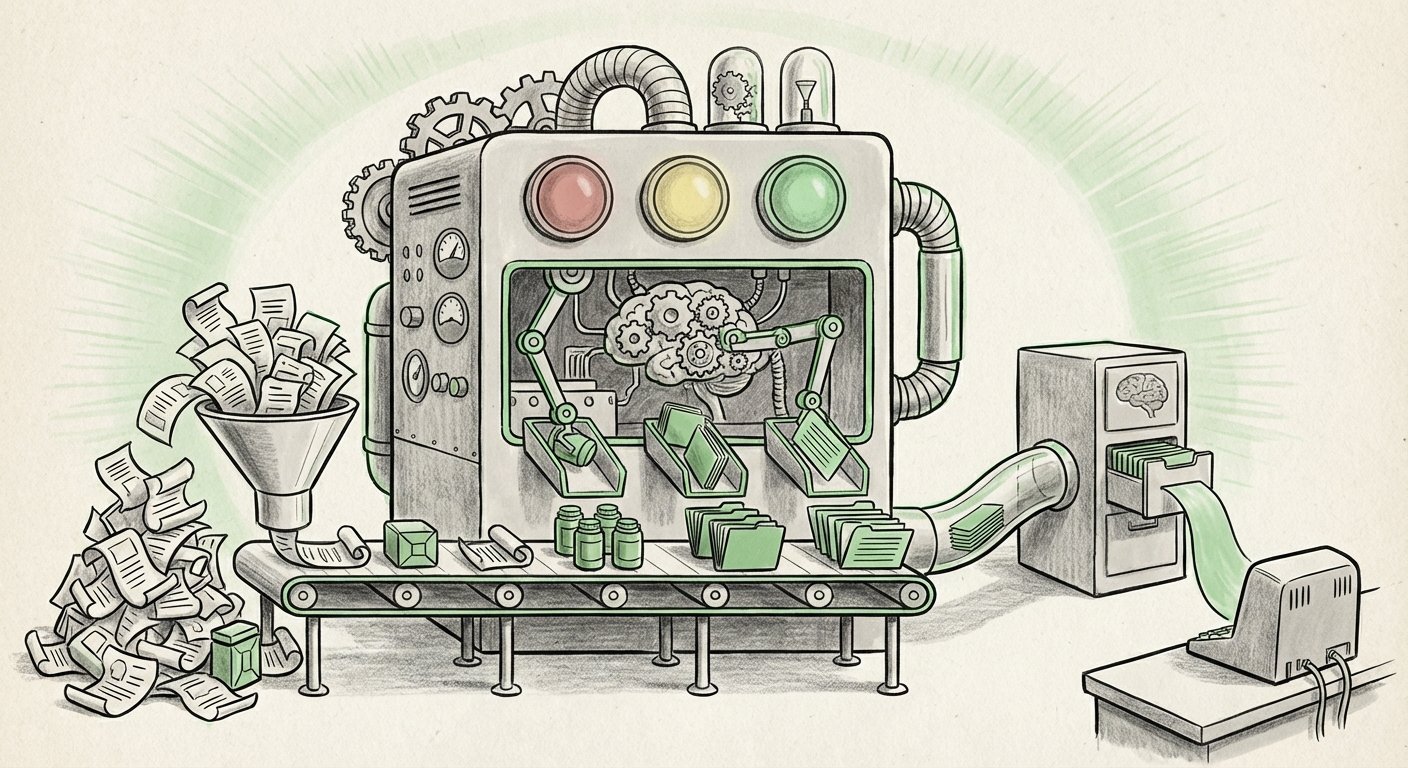
The defining shift in enterprise AI is not the arrival of a single powerful model. It is the move from pilot projects to plumbing, the unglamorous work of wiring AI into the systems a business already runs on.
That is the core theme of the Booking.com story. Travel is one of the most data-rich, transaction-heavy industries on earth, and it has been using machine learning behind the scenes for years: ranking search results, predicting what a traveler wants, spotting fraudulent bookings, and estimating demand. What has changed is the arrival of large language models and generative tools, which push AI from the back office into the conversation with the customer, search, recommendations, content, support, and the messy middle where a traveler is not sure what they want yet.
The trend is bigger than one company. Across retail, banking, media, and travel, the winners in this phase will not be the firms with the flashiest demo. They will be the firms that can connect AI to real inventory, real customer data, real pricing rules, and real support workflows, without breaking anything.
What "Unpolished" Actually Means
A presentation that drops the marketing gloss tends to surface four uncomfortable realities. Each one is a lesson that applies far beyond the travel industry.
1. Experiments Fail Loudly and Often
For every AI feature that ships, many more are tested and quietly dropped. This is not a sign of failure; it is what a healthy AI program looks like. The problem is that most public storytelling hides the discard pile, which leaves other companies believing they are behind when they are simply normal.
2. Data Quality Still Decides Everything
No model rescues a business from messy, inconsistent, or poorly labelled data. In travel, that means room types, cancellation policies, property descriptions, and pricing rules that vary enormously across suppliers and languages. AI systems inherit all of that complexity. The companies that win are the ones that treat data cleanup as a core strategic investment, not a side project.
3. Humans Stay in the Loop Longer Than Expected
Customer-facing AI handles the easy cases well. It struggles with the cases that matter most: the missed connection, the wrong room, the refund that needs judgment. The most effective pattern is not full automation but triage, AI handles volume and drafts, humans handle ambiguity and stakes. That hybrid model is quietly becoming the industry standard.
4. Measurement Is Harder Than Building
It is easy to launch a chatbot. It is hard to prove it increased conversion, reduced support cost, or improved satisfaction without damaging something else. Booking.com's story makes clear that the evaluation layer, testing, guardrails, and honest scorecards, is where most of the real engineering effort now goes.
Why Travel Is the Perfect Stress Test for AI
Travel sits at the intersection of almost every hard AI problem at once.
Intent is vague. A traveler typing "somewhere warm in February, not too expensive" is asking for something a keyword search cannot answer. Language models are genuinely good at this kind of soft, conversational intent, which is why AI search has become one of the most promising frontiers for travel platforms.
Supply is fragmentary. Inventory comes from hotels, chains, and partners, each with their own rules and descriptions. AI can help standardize and enrich this at scale, but only if the underlying systems are strong enough to support it.
The stakes are personal. A bad recommendation in a shopping app costs a click. A bad recommendation for a family holiday costs trust that is hard to win back. That raises the bar for accuracy, transparency, and the ability to explain why a system suggested what it did.
Trust is the product. People book travel with money they cannot easily get back. Any AI system that touches pricing, cancellation, or refunds must be conservative by design.
This is why travel companies make such useful case studies. If AI can work reliably here, it can work almost anywhere.
What This Means for the Future of AI
Three shifts follow directly from the behind-the-scenes story now taking shape at large platforms.
The moat moves from models to workflows
Access to a strong foundation model is no longer a competitive advantage, everyone has it. The advantage is the work around it: proprietary data, tight integration with transaction systems, and carefully designed human handoffs. Expect the next wave of AI winners to be defined by process, not by which model they use.
Evaluation and trust become products in their own right
As AI features multiply, so does the need to test them continuously, catch regressions, and document how decisions get made. Tools for AI evaluation, monitoring, and governance are becoming a category of their own. Companies that build this muscle early will ship faster and break less.
Voice and conversation reshape discovery
As conversational interfaces improve, the way people find what they want will shift, from scanning lists of filters to describing a need in plain language and getting a shortlist. That changes what platforms need to be good at: not just ranking, but understanding, explaining, and reassuring.
Practical Playbook: What Businesses Should Do Now
For leaders watching these developments, the lessons are actionable.
- Start with a high-volume, low-risk workflow. Internal search, support triage, content drafting, and summarization are proven starting points that build organizational confidence.
- Invest in data before models. Clean, well-labeled, well-governed data is the asset that compounds. Models change every few months; good data lasts.
- Design for human handoff from day one. Decide up front which cases escalate and how the AI hands off context. Retrofitting this later is painful and expensive.
- Build a measurement layer before you scale. Define success in business terms, conversion, resolution time, satisfaction, cost per contact, and test against it relentlessly.
- Be honest about what AI cannot do. Setting realistic expectations internally and externally prevents the trust damage that comes from overpromising.
- Keep a portfolio, not a bet. Run several experiments, kill them fast, and scale only what proves out. The discard pile is a feature, not a bug.
The Wider Implication for Society and Consumers
There is a public-interest angle here too. If the real AI story at major platforms is messier than the marketing suggests, then consumers should expect, and demand, clarity about when they are talking to an AI, how their data is used, and how decisions about prices and availability are made.
Regulators are beginning to ask the same questions, especially in markets where travel and pricing affect millions of people. The companies that get ahead of this by being transparent about AI's limits will earn something more valuable than a headline: durable trust. The ones that oversell will spend years cleaning up the damage.
There is also an opportunity. Used well, AI can make complex services simpler for people who struggle with them, first-time travelers, non-native speakers, people with disabilities, anyone overwhelmed by a wall of filters. That is a genuinely good outcome, and it comes from the unglamorous work of integration and testing, not from a demo reel.
The Takeaway: Normalize the Mess
The most valuable thing about an unpolished account of AI at a major travel platform is that it normalizes the mess. AI transformation is not a single launch. It is a long series of experiments, failures, data cleanups, guardrails, and human handoffs. The companies that look effortless from the outside are usually the ones that built the least glamorous infrastructure underneath.
For businesses, the message is clear: stop comparing your internal reality to someone else's highlight reel. Build the plumbing, measure honestly, keep humans where judgment matters, and ship in small, safe steps. For everyone else, expect AI to get better gradually rather than suddenly, and expect the companies that admit the rough edges to be the ones you end up trusting with your next booking.