LeRobot Community Datasets: The ImageNet Moment for Robotics, When Will It Arrive and How Will It Work?
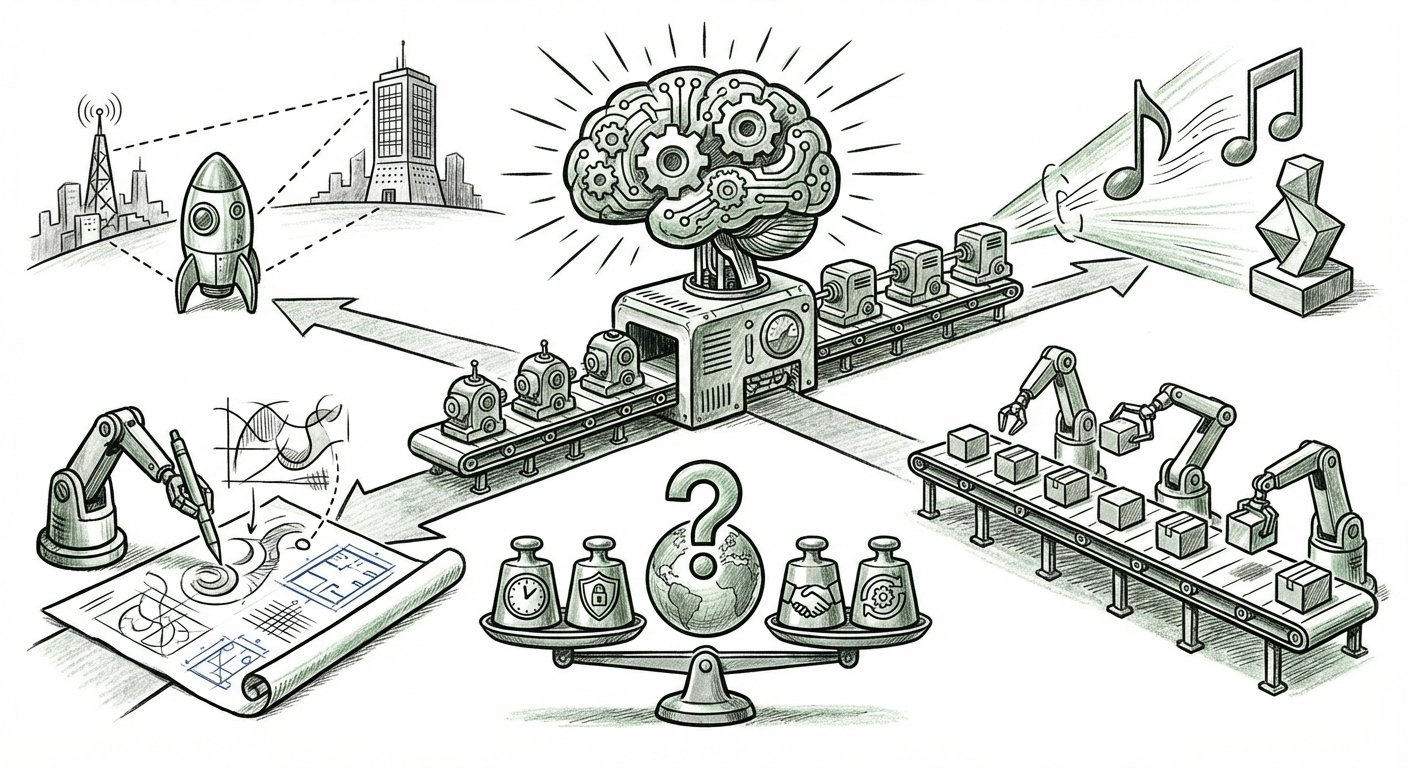
Robotics has a data problem. Everyone wants robots that can see, reason, and act in the real world. But real-world action data is hard to collect, hard to share, and hard to compare. That is why the idea behind LeRobot Community Datasets matters so much. The project asks a big question: can robotics get its own shared data commons, an “ImageNet” moment, and if so, when and how?
The comparison to ImageNet is not just marketing. ImageNet became shorthand for a shared benchmark and a common dataset that helped computer vision move from isolated lab projects to broad, reusable progress. Robotics needs something similar. But robots are not cameras. They move, touch, and act. That makes the challenge bigger, and the opportunity larger.
Why Robotics Needs a Shared Data Moment
Most robot learning today is stuck in silos. One team collects data for one arm, in one lab, with one camera setup. Another team uses a different robot, different sensors, and different labels. The data cannot be easily combined. The results cannot be easily compared. Every new project starts from a low base.
This is the opposite of how modern AI scales. Large models learn from huge, shared datasets. They get better when more data is added. They become useful across many tasks because they see many examples. Robotics has not had that flywheel. The field has strong demos but weak shared infrastructure.
LeRobot Community Datasets points to a different path. The goal is a community-owned collection of robot data: demonstrations, sensor readings, actions, and outcomes. If done well, this could become a common language for robot learning. It could let researchers and companies build on each other’s work instead of starting over.
The “ImageNet” label is useful because it sets the right expectation. A true robotics ImageNet would not be one giant file. It would be a system: standard formats, clear licenses, quality tiers, evaluation tasks, and tools that make data easy to use. That is the real target.
What LeRobot Community Datasets Could Change
The first change is scale through sharing. No single company can collect every grasp, every push, every doorway, and every kitchen counter. But a community can. When many contributors add data in a common format, the total becomes far larger than any one lab could build alone.
The second change is benchmarking. Today, robot results are hard to compare. A policy that works on one robot may fail on another. A shared dataset can define common tasks and common scoring. That makes progress visible. It also makes it harder to hide weak results behind a polished demo video.
The third change is pretraining for robot foundation models. Just as language models learn from broad text, robot models can learn from broad action data. A shared dataset could help create general-purpose robot skills: pick, place, open, pour, fold, and more. Teams could then fine-tune for their own tasks instead of training from zero.
The fourth change is lower barriers. Startups, universities, and small labs cannot always afford large data collection efforts. A community dataset gives them a running start. That can spread innovation beyond a few well-funded players.
The Hard Part: The Embodiment Gap
Robotics data is not like image data. A photo of a cat is a photo of a cat. A robot action depends on the robot’s body. The same task looks different for a large arm, a small gripper, a mobile base, or a humanoid. This is the embodiment gap. It is the central reason a robotics ImageNet is harder to build than an image dataset.
There are other hard problems too:
- Sensor diversity: Cameras, depth sensors, force sensors, and joint states all produce different data.
- Action labels: A robot’s action is a stream of commands, not a single label. It must be recorded and aligned carefully.
- Quality control: A bad demonstration can teach bad behavior. Community data needs review and clear quality levels.
- Safety and privacy: Robot data can capture homes, workplaces, and people. Consent and governance matter.
- Licensing: Data must be usable for research and business. Mixed licenses can kill a commons.
- Evaluation: A dataset is only useful if it comes with fair, repeatable tests.
These problems do not make the goal impossible. They define the work. The “when” depends on how fast the community solves them.
When Could the Robotics ImageNet Arrive?
It will not arrive all at once. The realistic path is phased.
Phase 1: Common formats and small shared collections
The first phase is already the most important: agree on how to store robot data. That means a standard schema for observations, actions, timestamps, and metadata. It also means simple tools to record, upload, search, and load data. Without this, every contribution becomes a new integration project. With it, data can compound.
Phase 2: Quality tiers and benchmark tasks
Next, the community needs trusted subsets. Not all data is equal. A small, well-labeled, well-tested set can be more valuable than a huge messy one. Benchmark tasks should be clear and repeatable. They should cover common skills and common failure modes. This is where the ImageNet analogy becomes real: a shared test that everyone uses.
Phase 3: Pretrained models and fine-tuning
Once data and benchmarks exist, pretrained robot models can improve. Teams can start from a general model and fine-tune on their own robot. This is the moment the flywheel starts. More data leads to better models. Better models attract more users. More users add more data.
Phase 4: A living commons
The long-term goal is a living data commons. It grows with new robots, new tasks, and new environments. It has governance, versioning, and clear rules. It is not a one-time release. It is infrastructure.
So when? The honest answer is: sooner than a single lab could do alone, but not overnight. The limiting factors are standards, trust, and tooling, not raw enthusiasm.
How to Build It: A Practical Blueprint
A robotics data commons needs more than a upload button. It needs a product mindset.
- Start with a strict schema. Define observations, actions, timestamps, robot metadata, and task labels. Make the format easy to validate.
- Make contribution easy. Provide recording tools, converters, and clear examples. If uploading data takes a week, most people will not do it.
- Use quality tiers. Mark data as raw, reviewed, or benchmark-grade. Let users filter by trust level.
- Publish clear licenses. Separate research use from commercial use where needed. Avoid license mixing that blocks reuse.
- Build evaluation into the commons. A dataset without a benchmark is just a pile. A benchmark without a dataset is just a leaderboard.
- Reward contributors. Recognition, citations, leaderboards, and access to better tools can motivate sharing.
- Plan for privacy and safety. Remove sensitive content, document consent, and set rules for human data.
- Federate where possible. Not all data must sit in one place. A common format can connect many hosts.
The most successful version will feel less like a file dump and more like a public utility. It will be easy to use, easy to trust, and easy to build on.
What This Means for Businesses
For business leaders, the rise of shared robot data changes the build-versus-buy math. Companies will still need private data for their own edge. But they will not need to collect every basic skill from scratch. Shared data can lower the cost of pilots and speed up proof-of-value.
It also changes where advantage lives. If basic robot data becomes a commons, the moat moves to workflow data, deployment know-how, safety, and integration. The companies that win will be the ones that turn general robot skills into reliable operations in real sites.
There are risks too. Companies must check licenses before using community data in products. They must protect private footage and employee data. And they must avoid overtrusting demos. A shared benchmark is only useful if it matches real-world conditions.
The smart move is to engage early. Audit your robot tasks. Identify which data is generic and which is proprietary. Contribute where it helps the ecosystem. Keep the crown jewels private. Build internal tools that can ingest community formats.
What This Means for Society
A shared robotics data commons could make automation more accessible. Smaller companies, hospitals, farms, and research groups could benefit from robots that are easier to train. That could spread productivity gains beyond the largest firms.
It could also improve safety. Common benchmarks can expose failure modes before robots reach homes and workplaces. Shared data can help the field measure what works, not just what looks good in a video.
But society needs guardrails. Robot data can reveal private spaces and personal routines. Community datasets need consent, removal policies, and clear rules. If trust breaks, the commons breaks with it.
Actionable Insights
- For builders: Adopt a common robot data schema now. Publish at least a small, well-documented subset with a clear license.
- For businesses: Separate generic skill data from proprietary process data. Use the commons for pretraining and keep your edge data private.
- For researchers: Focus on benchmarks that are repeatable across robots. A fair test is as valuable as a large dataset.
- For investors: Look for data tooling, quality control, and evaluation layers. The picks and shovels of robot data may matter more than another demo.
- For policymakers: Support open standards and privacy rules together. One without the other will fail.
Conclusion
LeRobot Community Datasets asks the right question at the right time. Robotics does not just need better models. It needs shared data, shared tests, and shared tools. The ImageNet analogy is powerful because it points to a system, not a single file. The “when” will be gradual: formats first, then benchmarks, then pretrained models, then a living commons. The “how” is community work with strong governance. If the field gets this right, robot learning could become faster, cheaper, and more trustworthy. That is a future worth building.