Microsoft's Seven New MAI Models: What a Bigger In-House AI Portfolio Means for the Future of AI
On November 18, 2026, Microsoft expanded its MAI model portfolio with seven new models. That single sentence hides a much bigger story. Most AI news is about one giant model getting smarter than the last one. This is different. This is a company building a family of models instead of chasing a single champion.
That shift, from one big model to a whole shelf of them, is one of the most important changes in AI right now. It changes what AI costs, who controls it, and how ordinary businesses will actually use it. Here is what the announcement means, and how to get ready for it.
What Actually Happened
Microsoft added seven new models to its MAI line, the company's own family of AI models built in-house. The detail level is thin. We do not have a per-model scorecard, a price sheet, or a list of benchmarks in this announcement. But the shape of the news tells you a lot.
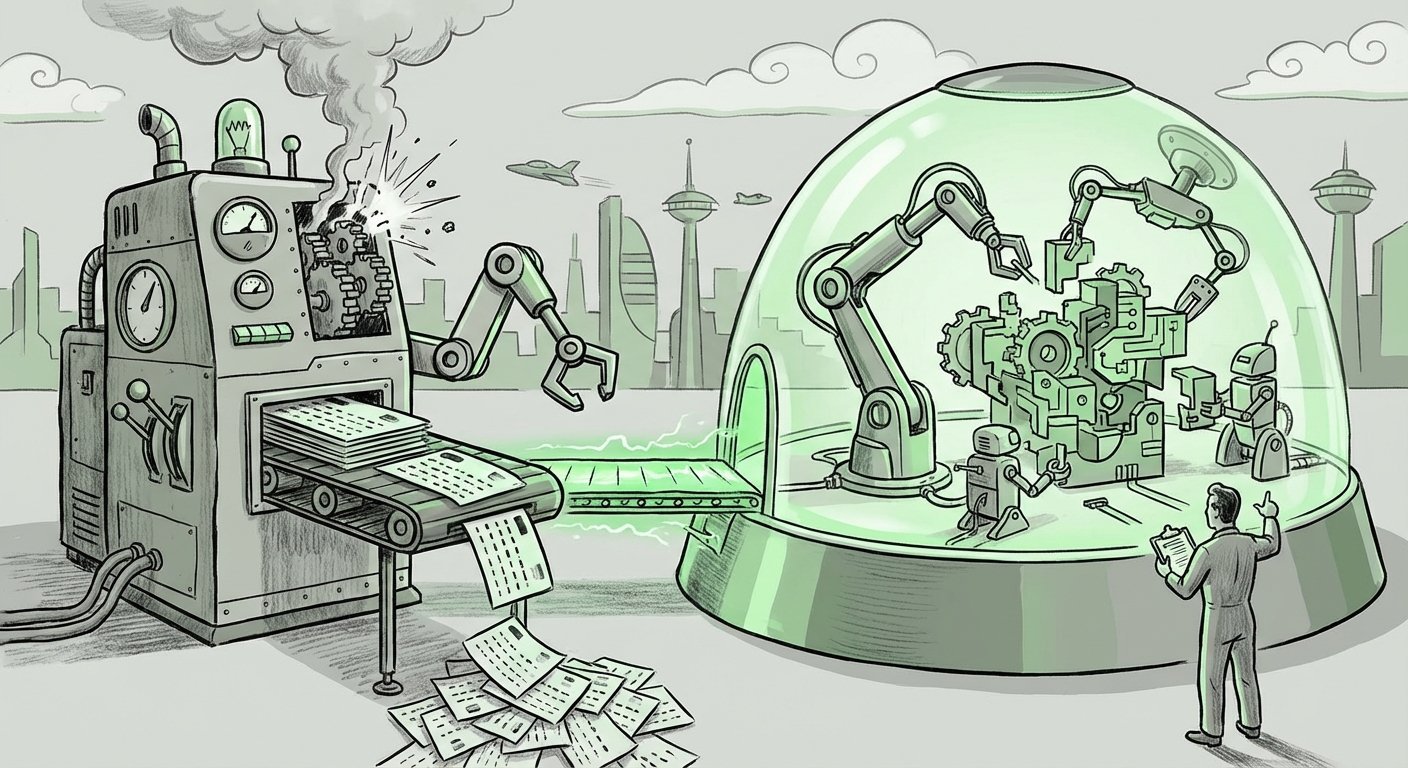
A company does not add seven models when it is trying to win a single headline benchmark. It adds seven when it is trying to cover many jobs at once. Think of it like a car company launching a whole lineup instead of one flagship sedan. The flagship gets the press. The lineup pays the bills.
Why "in-house" matters
For years, Microsoft's AI story leaned heavily on partners and open models. Building your own models changes the math. It means Microsoft can tune models to its own products, control costs at the source, and ship features without waiting on someone else's roadmap. It also gives the company leverage in every deal it signs.
This is not a small strategic pivot. It is a company deciding it wants to own more of the stack, from chips to cloud to model to the app on your screen.
The Real Trend: Model Portfolios Beat Single Giants
The biggest idea here is the portfolio approach. For a while, the AI world assumed one huge model would do everything. That assumption is breaking down in practice.
Here is why. A massive model is expensive to run and slow to answer. If a user just wants to sort an inbox or fix a typo, running a giant reasoning model is like using a freight train to deliver a letter. It works, but the cost per delivery is absurd.
A portfolio fixes that. Different models handle different jobs:
- Small, fast models for simple, high-volume tasks like sorting, tagging, and routing.
- Mid-size models for everyday writing, summarizing, and chat.
- Large models for hard reasoning, planning, and complex code.
- Specialized models for images, audio, speech, or code, where a general model is a jack of all trades and master of none.
You do not need to know which of the seven covers which job to see the pattern. The pattern is fit: match the model to the task, and stop paying premium prices for basic work.
Why This Changes the Economics of AI
Every AI answer has a price, measured in tokens, the chunks of text the model reads and writes. When a company runs its own models, it controls that price at the source instead of paying a partner's rate.
Three things follow. First, margins improve for the company selling AI features, because it is no longer handing a cut to an outside model provider for every query. Second, prices can fall for customers, because the seller has room to cut. Third, leverage shifts in negotiations across the industry.
For buyers, the lesson is simple and slightly uncomfortable: the price of AI is not fixed. It is falling, and it will keep falling as more companies build their own models. Any contract you sign today should assume cheaper options arrive in twelve months.
What This Means for the Future of AI
1. Vertical integration becomes the winning play
The companies pulling ahead are the ones that own more layers of the stack at once. Chips, data centers, models, developer tools, and the apps people actually touch. When one company owns all of it, it can tune each layer for the others. That tuning is where speed and cost advantages come from. Expect more of it, not less.
2. Competition moves from "smartest" to "cheapest good enough"
Benchmark bragging rights still matter for marketing. But in the real market, most work is not cutting-edge. It is routine. The winner in routine work is whoever delivers good enough quality at the lowest cost and fastest speed. Portfolios are how you compete there.
3. AI gets embedded everywhere, quietly
Cheaper models mean AI shows up in places that never made economic sense before. Drafting routine emails. Tagging support tickets. Reading invoices. Summarizing long documents. None of it is glamorous. All of it is where the real hours get saved.
4. Control and compliance become selling points
When a company owns its models, it can offer customers clearer answers about where data goes, how models are tuned, and what rules apply. For regulated industries, finance, health, government, that is not a nice-to-have. It is the difference between a deal and no deal.
Practical Implications for Businesses
More models is good news, but it also creates a new problem: choice overload. If you are a business leader, here is what actually changes for you.
Build a model decision framework now
Do not pick one model for everything. Sort your AI use cases by difficulty and volume. High volume and low difficulty go to small, cheap models. Low volume and high difficulty go to the big ones. This single habit can cut AI costs dramatically without hurting quality.
Test on your own work, not on leaderboards
Public benchmarks measure public tests. They do not measure your invoices, your support tickets, or your legal contracts. Build a small set of real examples from your own business, fifty is enough to start, and score every new model against them. When seven new models land in a single day, that library of test cases is the only thing that keeps you sane.
Keep your options portable
Model portfolios change fast. Design your systems so swapping a model is a config change, not a rebuild. Keep prompts, evaluation sets, and data pipelines separate from any one vendor. That way a cheaper or better option next quarter is an opportunity, not a crisis.
Watch the integration layer
A model only matters if it reaches users. Pay attention to which of these models appear in developer tools and everyday productivity apps, and how they are priced. That is where the real business value gets unlocked.
What It Means for Society and Work
Cheaper AI means more AI. That is the honest summary. When a task costs a fraction of a cent instead of a dollar, it gets automated. That is mostly good: fewer hours spent on dull, repetitive work, and faster service for customers.
But it also means the pressure spreads. Tasks that were "too small to automate" are now worth automating. Jobs built mostly from small tasks will feel that first. The people who thrive will be the ones who move up a level, deciding what work should be done and checking whether the AI did it right, rather than doing every step by hand.
There is a power question too. A handful of companies now build chips, run the cloud, and train the models. That concentration deserves attention. The counterweight is competition: as more firms build their own model families, buyers get real alternatives and prices stay honest.
What to Watch Next
- Independent benchmarks. Seven models means seven sets of claims. Third-party testing will matter more than launch-day slides.
- Pricing and access. Which models are cheap, which are premium, and where developers can actually get them.
- Product placement. Which of these models reach mainstream productivity and coding tools, and how quickly.
- Safety and transparency reporting. With a bigger family comes a bigger duty to explain what each model can and cannot do.
- Competitor response. Portfolios invite portfolios. Expect other AI labs to answer with lineups of their own.
The Bottom Line
The headline is seven new models. The real story is a maturing industry. AI is moving out of its "one giant brain" phase and into its "right tool for the job" phase. That is what happens to every technology that grows up, cars, computers, and now AI.
For businesses, the message is not to chase every launch. It is to build the habits that let you absorb launches cheaply: a use-case map, a test set built on your own data, and systems that do not lock you to one model. Do that, and seven new models becomes seven new ways to save money. Skip it, and seven new models becomes seven new headaches.