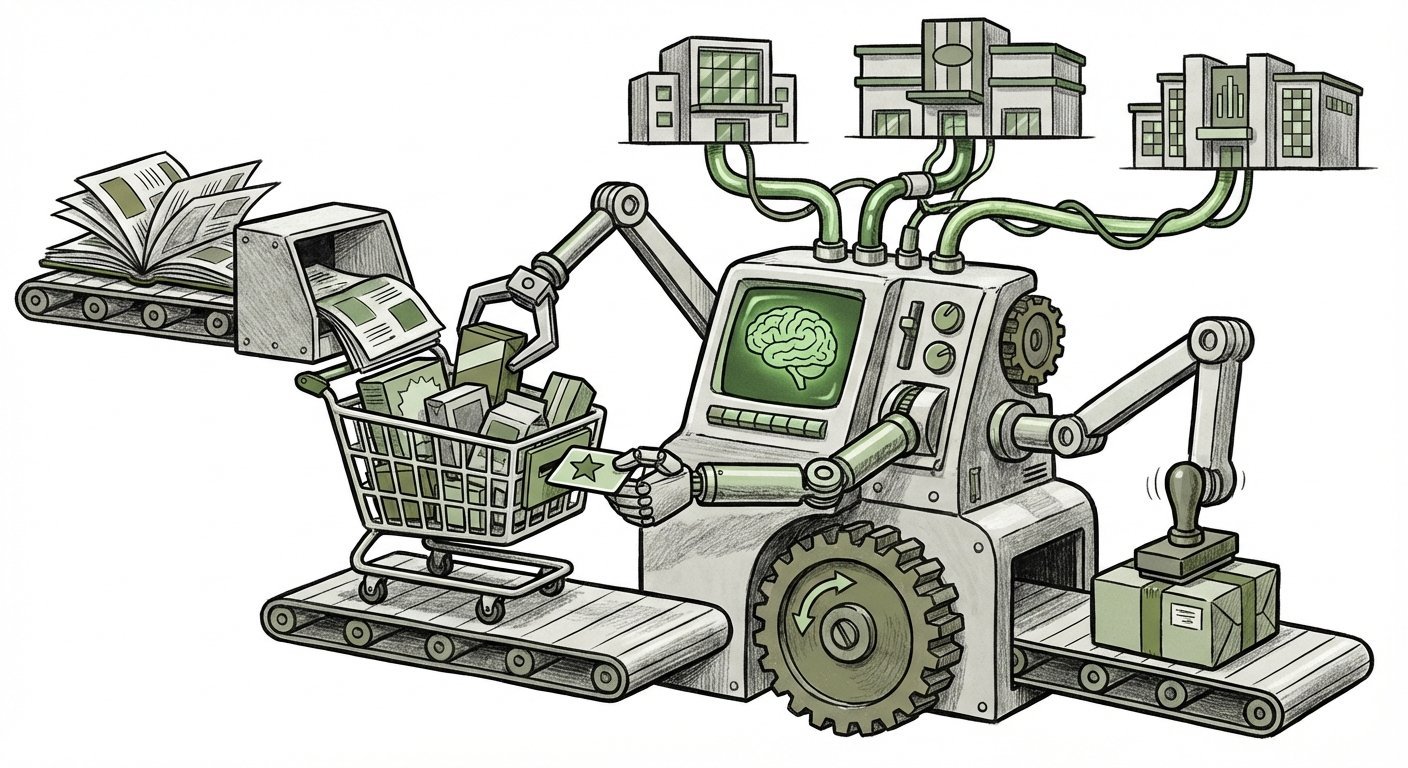
Optimizely Cyberattack: Stealer Malware Hit Customer Websites, and What It Means for AI
When a company that thousands of businesses trust to run their websites gets compromised, the damage does not stay inside that company. That is the hard lesson behind Optimizely's confirmation of a massive cyberattack that saw stealer malware injected into customer websites. In mid-November 2026, the web platform confirmed that attackers had found a way to push malicious code out through the very tools businesses use to build and manage their digital experiences.
This is not a story about one bad password or one broken server. It is a story about trusted pipes, the third-party scripts, widgets, and tag managers that load on nearly every modern website. And it is a story that is impossible to separate from artificial intelligence, because the same techniques that make these attacks cheap to run are the ones AI now makes almost free.
Here is what happened, why it matters far beyond Optimizely's customer list, and how AI is reshaping both the attack and the defense.
What Actually Happened
Optimizely confirmed a significant security breach in which stealer malware was injected into customer websites. The phrase "injected into customer websites" is the critical part. Attackers did not need to break into each individual business. Instead, they went after a shared dependency, the platform layer that delivers code to many sites at once.
That pattern has a name in security circles: a supply chain attack. Think of it like a water utility instead of a single home. Poison the source, and every tap downstream runs bad water, often without anyone noticing for days or weeks.
Stealer malware is software built to quietly grab sensitive data from a visitor's browser or a site's users. That can include login credentials, session cookies, saved payment details, and form entries. It is designed to be invisible. It does not lock files or flash warnings. It just takes, silently, while the site looks and behaves normally.
Because the malicious code rides along with legitimate site assets, it inherits the site's trust. Browsers, users, and even some security tools treat it as part of the page. That is what makes this class of attack so damaging.
Why Third-Party Scripts Are the Soft Spot of the Modern Web
Visit almost any business website today and count the outside services loading in the background: analytics, chat widgets, personalization engines, A/B testing tools, ad tech, customer data platforms. Each one is a piece of code from another company running inside your page.
For a business, this is efficiency. You do not build everything yourself. For an attacker, this is opportunity. Every one of those connections is an entry point that leads to many sites at once.
There is a structural problem here that has existed for years and is getting worse:
- Concentration risk. A small number of platforms serve a huge share of the web. Compromise one, and the blast radius is enormous.
- Blind trust by default. Many organizations still load vendor scripts without strict controls on what those scripts are allowed to do.
- Slow detection. Malicious code hidden inside a legitimate vendor bundle can look normal to scanners that only check for known bad files.
- Long dwell time. Stealer malware is quiet by design. The longer it sits, the more data walks out the door.
None of this is new. What is new is the speed and scale at which these attacks can now be found, written, and launched.
The AI Connection: Attackers Got a Force Multiplier
It is tempting to treat this incident as a pure security story. But look at the mechanics and the AI story writes itself.
1. Finding weak links is now automated
Reconnaissance, the work of mapping which sites use which vendors, which versions, which configurations, used to be slow, manual, specialist work. AI tools can crawl, cluster, and prioritize targets at a scale no human team can match. Attackers no longer need to guess where the soft spots are. They can let a model surface them.
2. Writing convincing malicious code is faster
Stealer scripts need to look ordinary. They need to blend into a minified bundle, avoid obvious patterns, and target the right data without breaking the page. Generative tools dramatically lower the skill floor for producing that kind of code, and they let attackers iterate quickly when a payload gets caught.
3. Social engineering got personal
Many supply chain breaches start with a convincing message to a vendor employee. AI-generated phishing is fluent, context-aware, and written in the right tone for the right person. The weakest link in the chain is still a person, and that person is now being targeted by a machine that never gets tired.
4. Attack windows are compressing
When discovery, payload creation, and deployment can all be accelerated, the gap between "new vulnerability" and "weaponized exploit" shrinks. Defenders who rely on quarterly reviews and manual patching are structurally behind.
The uncomfortable conclusion: AI has lowered the cost of running a sophisticated supply chain attack from "nation-state budget" to "small criminal crew." That is the shift this incident represents.
The Defense Side: AI Is Also the Best Available Answer
If AI is part of the problem, it is also the only realistic path to a proportionate response. Human review cannot inspect every script change on every page in real time. Machines can.
Behavioral monitoring instead of blocklists
Traditional security asks, "Is this file known to be bad?" Modern AI-assisted tooling asks, "Is this script doing something it has never done before?" That shift, from signatures to behavior, is the single most important upgrade available to website operators right now. A stealer script inside a legitimate vendor bundle may have no signature at all, but it still has to touch form fields, cookies, or network endpoints it has no business touching.
Baseline learning and anomaly detection
Models can learn what normal looks like for a site: which scripts load, in what order, from which domains, at what times. Deviations get flagged fast. For a breach that spreads through trusted channels, speed of detection is the whole game.
Automated triage at machine speed
Security teams are drowning in alerts. AI triage can rank, correlate, and summarize, letting a small team cover ground that used to require dozens of analysts. For mid-sized businesses, the ones most exposed to platform-level attacks, this is the difference between having a response and having none.
Code review at scale
AI-assisted review can flag suspicious patterns in third-party code before deployment. It will not catch everything, and it must never be treated as a guarantee, but it raises the floor considerably compared with manual spot checks.
Practical Implications for Businesses
If your website depends on any outside platform, this incident is a direct prompt to act. The good news: most of the highest-value steps are cheap and do not require a big security team.
- Inventory every third-party script. If you cannot list what loads on your site and why, that is the first problem to fix. Remove anything you are not actively using.
- Deploy a Content Security Policy. A strict CSP limits which domains can execute code on your pages. It is one of the few controls that directly frustrates script injection.
- Use Subresource Integrity where possible. It ensures a browser only runs a script if it matches the expected fingerprint. If the vendor's file changes without notice, it does not run.
- Require security commitments from vendors. Ask how they monitor for tampering, how fast they disclose incidents, and whether they provide audit logs. Put it in the contract.
- Watch the browser, not just the server. Much of this attack surface lives client-side, where traditional server monitoring is blind.
- Assume credentials are already exposed. Enforce multi-factor authentication, shorten session lifetimes, and monitor for unusual logins. Stealer malware's favorite prize is a valid session.
- Rehearse the response. Know in advance who calls the platform, who talks to customers, and who decides whether to take the site down.
What This Means for the Future of AI
Three shifts are coming, and this incident points at all of them.
First, security will become an AI-versus-AI contest by default. The era when a careful human process was enough is ending. Both offense and defense will run at machine speed, and the organizations that win will be the ones whose detection loops close fastest.
Second, the "trusted third party" model needs a rewrite. Every platform that injects code into customer sites is now, fairly or not, a security vendor. Expect buyers to demand tamper-evident delivery, signed assets, and transparent change logs, and expect regulators to follow.
Third, AI agents are about to make this problem bigger. As autonomous agents begin browsing, filling forms, and completing purchases on behalf of users, the data flowing through web pages gets richer and the incentives for stealing it grow. An agent that acts on your behalf is a high-value target. Protecting the browser layer stops being an IT chore and becomes a core part of how AI gets safely deployed in commerce.
There is a broader societal point too. People do not evaluate supply chains. They evaluate the website in front of them. When a platform they have never heard of is compromised, trust in every business that used it takes the hit. That gap between technical reality and public perception is exactly where AI-driven fraud thrives.
The Bottom Line
The Optimizely breach is a reminder that modern websites are assemblies, not monoliths. They are built from parts made by other people, and every part is a potential doorway. AI did not create that architecture, but it has made exploiting it faster, cheaper, and more scalable than ever before.
The response is not to retreat from third-party tooling. It is to bring the same automation to defense that attackers bring to offense, and to stop treating vendor trust as a substitute for verification. Inventory your scripts. Lock down what can run. Watch for behavior, not just names. And build your response plan before you need it.
The organizations that treat this as a warning will be fine. The ones that treat it as someone else's problem will be the next headline.